Senegal’s Power Duo Breaks
Diomaye dismisses Sonko, reshaping Senegal's political landscape.
Model Diplomat3 min readAfrica
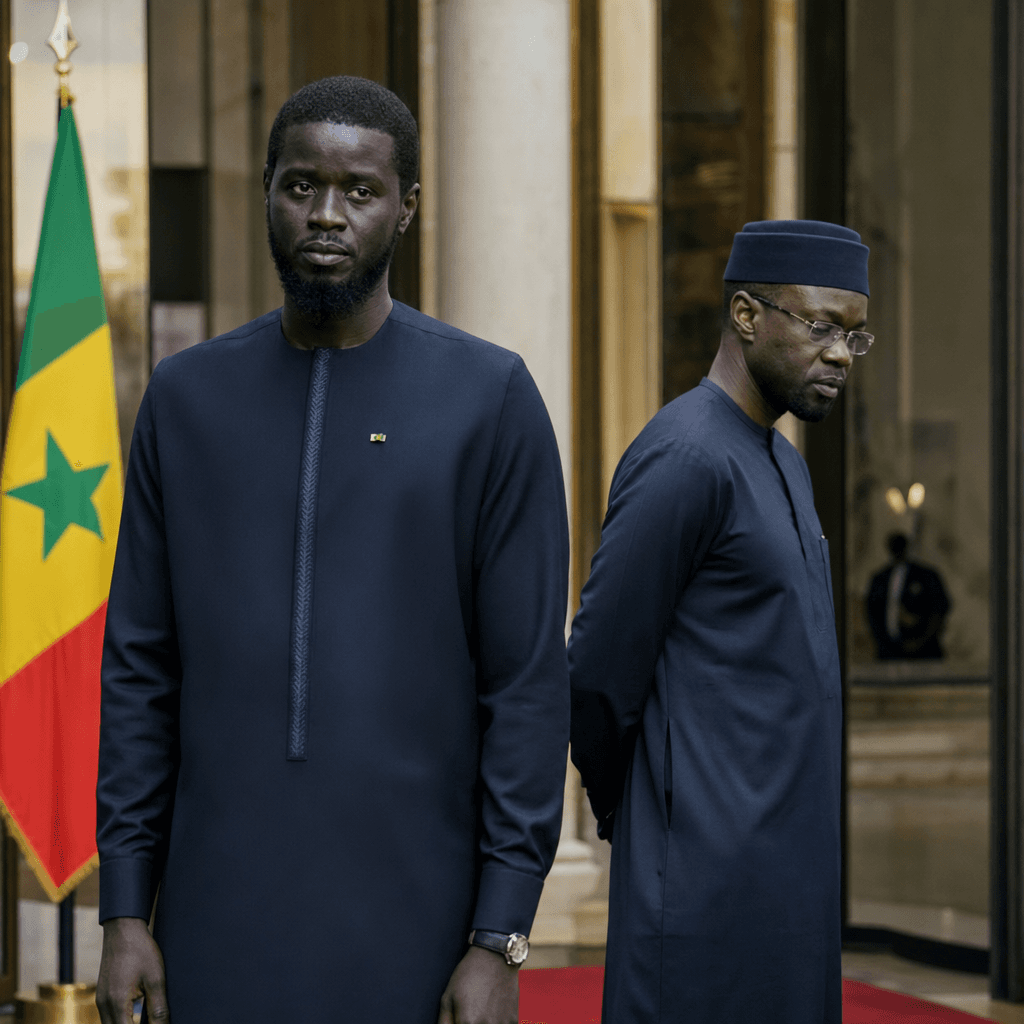
Senegal’s Power Duo Breaks — Diomaye Moves Against Sonko
Bassirou Diomaye Faye has fired Ousmane Sonko and dissolved the cabinet, shifting Senegal’s ruling coalition from partnership to open contest over control.
Bassirou Diomaye Faye has the constitutional leverage and used it on Friday to dismiss Prime Minister Ousmane Sonko and dissolve the government, ending the tandem that carried Pastef to power in 2024, according to France 24 and
BBC News Afrique. The move follows months of public friction over who really controls the ruling camp, after Diomaye moved to restructure the presidential coalition and named Aminata Touré to lead it — a choice Pastef rejected outright, saying it did not share her “values” or “principles” (
BBC News Afrique;
France 24).
Who actually held the stronger hand
This was never a normal president–prime minister relationship. Sonko remains the movement’s political engine: he built Pastef, commanded the street, and chose Diomaye as his substitute after his own disqualification from the 2024 presidential race following a defamation conviction (France 24;
BBC News Afrique). Diomaye, by contrast, controls the state machine: he appoints and removes the head of government, and he has now shown he is willing to use that power when the partnership stops serving him (
France 24).
That asymmetry explains the timing. Sonko’s public pressure for Pastef to dominate coalition restructuring collided with Diomaye’s effort to widen his base beyond the party faithful, especially around Touré’s appointment (BBC News Afrique). In
Global Politics terms, this is the classic split between institutional authority and movement legitimacy. Diomaye can sign decrees. Sonko can still mobilize the base.
What the rupture means for Senegal
The immediate winner is Diomaye, because he has forced the center of gravity back toward the presidency. The immediate loser is Sonko’s claim that Pastef, not the palace, should set the terms of the transition (BBC News Afrique;
France 24). But the state itself is the bigger risk. Senegal is already negotiating over an economy weighed down by debt equal to 132% of GDP, according to the IMF, after the government accused the previous administration of hiding liabilities (
France 24). A leadership feud now raises the cost of every fiscal decision, because investors and lenders will read division at the top as policy drift.
The longer-term beneficiary could be Diomaye’s camp if he uses the rupture to build a broader governing coalition ahead of 2027 local elections and the 2029 presidential race (France 24). But that only works if he can replace Sonko’s street legitimacy with something durable in parliament and the regions. If not, he inherits the office but not the movement.
What to watch next
The next decision point is simple: who replaces Sonko, and on what political terms. If Diomaye names a technocrat, he signals a break with Pastef. If he names a loyalist, he is trying to contain the damage while keeping the party inside the tent. Watch Sonko’s response over the coming days: whether he stays disciplined, rallies Pastef into opposition, or tries to turn his dismissal into leverage for 2029.
Discover more
India
Romanian Coalition Party Demands PM Resign
Romania's Social Democrats withdrew from coalition, joining far-right AUR to topple PM Bolojan, risking €10 billion in EU funds by August 2026.

Global Politics
US Seizes Iranian Ship, Tensions Surge
The US seizure of the Iranian ship Touska highlights a shift in control over the Strait of Hormuz, favoring Iran's strategic position.

Conflict & Security
Drone Warfare Killing Aid Workers at Unprec
Over 1,000 humanitarian workers killed in three years as cheap armed drones collapse legal protections. Gaza, Sudan, Ukraine, and DRC see deliberate targeting of aid convoys and hospitals with zero prosecutions.
Global
World Normalises Taliban as Afghan Women Eras
UN data shows Afghan women erased from public life as Russia recognises the Taliban, EU hosts officials in Brussels, and ICC warrants for gender persecution go unenforced.

