Senegal's Political Crisis
A power struggle unfolds in Senegal's political landscape.
Model Diplomat3 min readAfrica
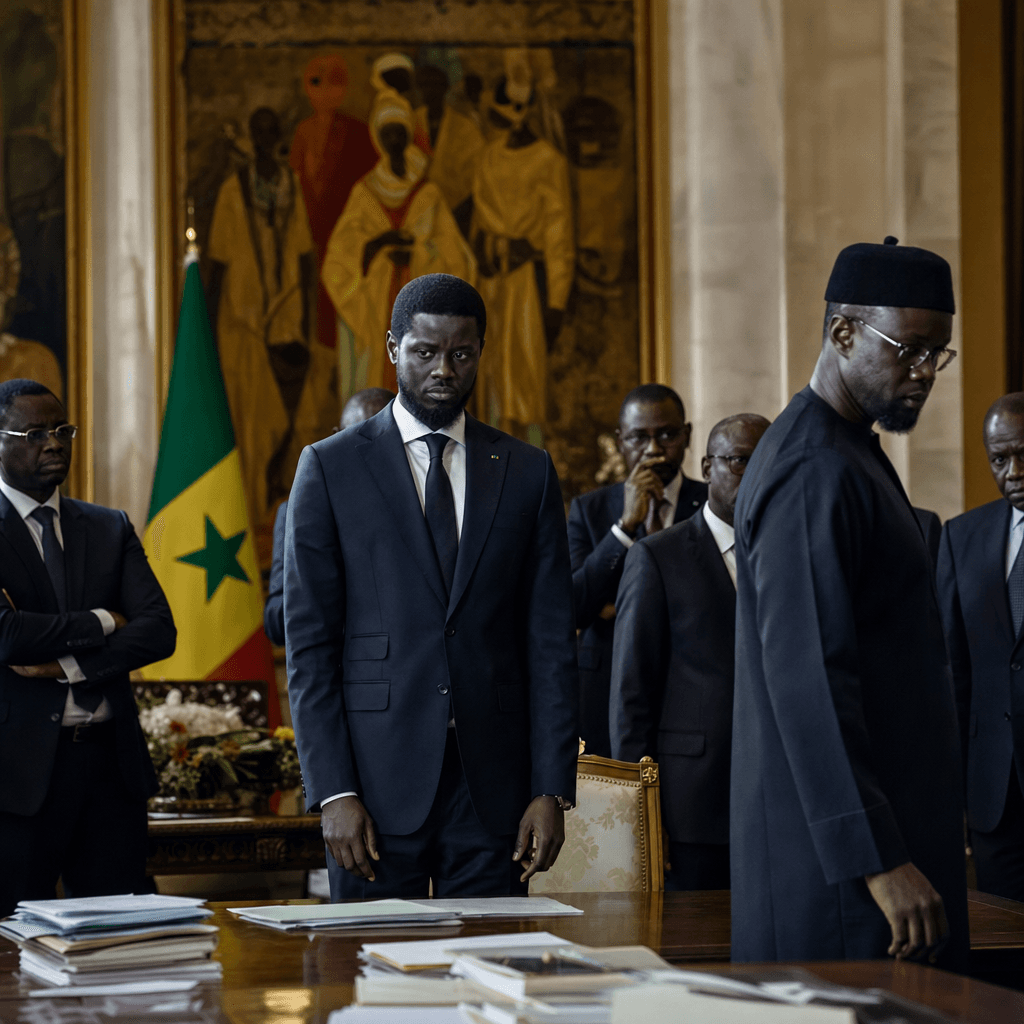
Senegal’s ruling duo just hit the wall
Bassirou Diomaye Faye has fired Ousmane Sonko and dissolved the government, exposing the real contest in Dakar: state power versus party power.
Bassirou Diomaye Faye has dismissed Prime Minister Ousmane Sonko and dissolved the government, ending the governing tandem that carried PASTEF to power in 2024, according to France 24. The decree was read on state television, and no successor was announced. Diomaye Faye now holds the formal leverage, but the move only works if he can keep Sonko’s party from turning its parliamentary and street power into a governing blockade.
Why the split matters
This is not just a personal rupture. It is a battle over who owns the mandate that brought them in. France 24 notes that Senegal is already burdened by a debt crisis and that the president moved after months of mounting tension with his prime minister. The core problem is structural: Faye controls the constitutional office, while Sonko remains the movement’s dominant political brand.
That imbalance is why the split has been so hard to contain. BBC News Afrique reported that the pair had been marketed as a single political project — “Diomaye moy Sonko, Sonko moy Diomaye” — and that disagreements over governance, coalition restructuring and the role of PASTEF had been widening for months (BBC News Afrique). Once the symbolism of unity collapses, every policy dispute becomes a test of loyalty.
Who gains, who loses
For Faye, the immediate gain is authority. He has shown he is not merely Sonko’s placeholder. That matters because Senegal’s presidency still concentrates the state’s coercive and administrative tools, and Faye can use them quickly.
For Sonko, the loss is institutional, not political. He may no longer run the government, but he still has the movement, the activists, and a large part of the parliamentary machine. France 24 says PASTEF won a dominant share of the National Assembly in the 2024 legislative election. That gives Sonko leverage even outside office: he can pressure Faye, shape candidate selection, and make any successor prime minister look temporary.
BBC’s wider framing is the more important warning. It places Diomaye-Sonko in a long African pattern where revolutionary or reformist duos fracture once they reach office — from Sankara-Compaoré to Mugabe-Mnangagwa (BBC News Afrique). The lesson is not sentimental. Coalitions built around personalities break when the presidency becomes the prize and the party becomes the battlefield.
What to watch next
The first decision point is the new prime minister. If Faye picks a technocrat with no party base, he risks alienating PASTEF. If he picks a Sonko loyalist, he concedes that the rupture is only partial.
The second is the parliamentary reaction. If PASTEF disciplines its bloc, Faye can govern. If it does not, Senegal moves from elite split to institutional deadlock.
The third is 2029. France 24 reports that parliament recently opened the way for Sonko to run again, which means this fight is not only about who governs today; it is about who gets to claim the succession tomorrow (France 24). That is the date that will tell you whether this was a reset or the start of a longer power war.
Discover more
India
Romanian Coalition Party Demands PM Resign
Romania's Social Democrats withdrew from coalition, joining far-right AUR to topple PM Bolojan, risking €10 billion in EU funds by August 2026.

Global Politics
US Seizes Iranian Ship, Tensions Surge
The US seizure of the Iranian ship Touska highlights a shift in control over the Strait of Hormuz, favoring Iran's strategic position.

Conflict & Security
Drone Warfare Killing Aid Workers at Unprec
Over 1,000 humanitarian workers killed in three years as cheap armed drones collapse legal protections. Gaza, Sudan, Ukraine, and DRC see deliberate targeting of aid convoys and hospitals with zero prosecutions.

Global
World Normalises Taliban as Afghan Women Eras
UN data shows Afghan women erased from public life as Russia recognises the Taliban, EU hosts officials in Brussels, and ICC warrants for gender persecution go unenforced.

