Senegal Speaker Exit Tilts Power Back Toward
Ndiaye's resignation empowers Sonko's allies in Senegal.
Model Diplomat3 min readAfrica
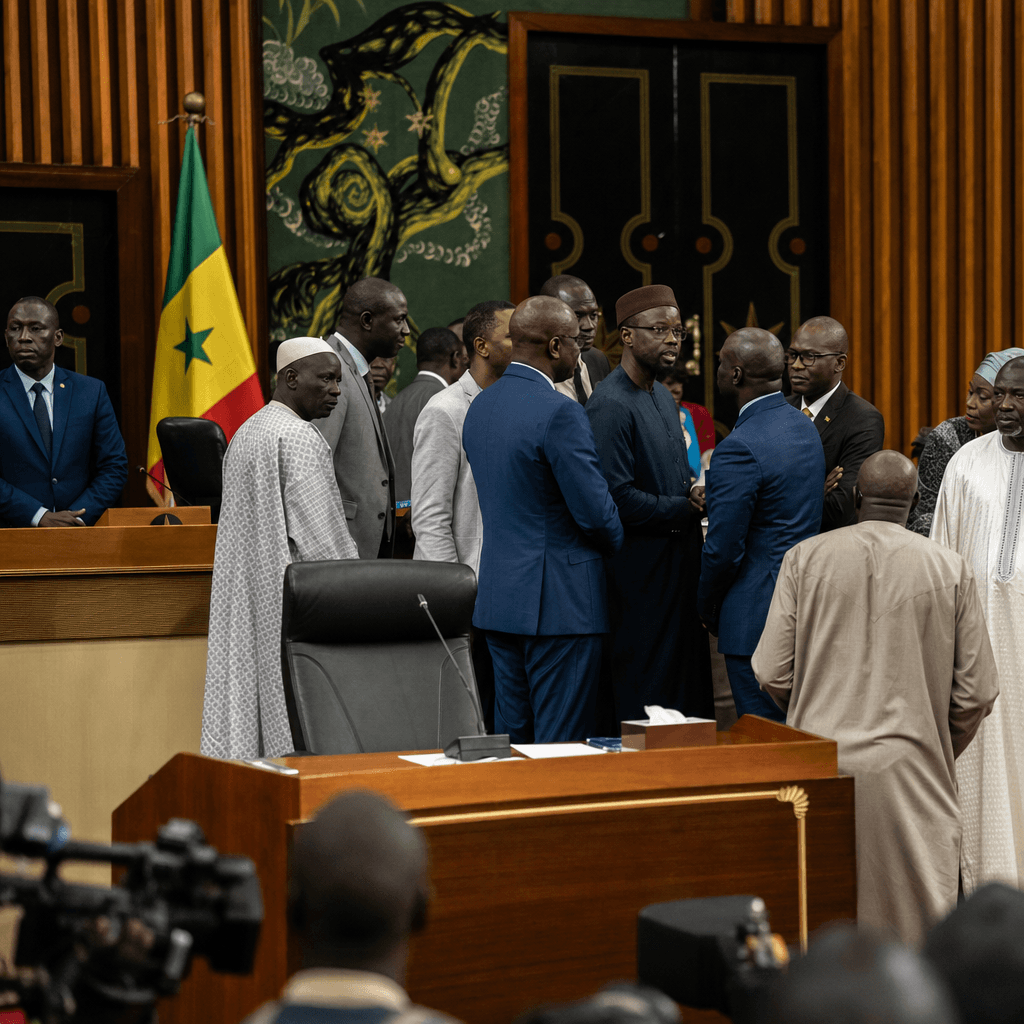
Senegal Speaker Exit Tilts Power Back Toward Sonko
El Malick Ndiaye’s resignation clears a path for Ousmane Sonko’s allies, sharpening the showdown with President Bassirou Diomaye Faye.
El Malick Ndiaye resigned as speaker of Senegal’s National Assembly on Sunday, saying only that “deep reflection” and “the sense of statehood” guided his decision, according to the BBC. The timing is the point: Ndiaye stepped down days after President Bassirou Diomaye Faye fired Prime Minister Ousmane Sonko and dissolved the government, a move that has turned a political rupture inside Senegal’s ruling camp into an open contest for institutional control (
BBC,
AP).
Who has the leverage now
The immediate winner is Sonko’s camp. Ndiaye’s exit removes an obstacle to a likely parliamentary bid for the speaker’s post by Sonko loyalists, and the BBC reports that lawmakers are being summoned on Tuesday to bring Sonko back into parliament and vote for a new speaker. That matters because Sonko’s Pastef party already holds an absolute majority in the Assembly, giving it real leverage over the agenda even as Faye controls the presidency (BBC). In other words, Faye can dismiss a government; he cannot easily command the legislature.
That is why this is more than a personnel shuffle. If Sonko returns to parliament and takes the speaker’s chair, he gains a platform, procedural control, and a direct counterweight to the presidency. The presidency still has formal authority, but the ruling coalition would then be split across the two most important branches of government. Senegal’s Global Politics problem is not instability in the abstract; it is a fight over who gets to define the “project” that brought both men to power.
Why Faye is now under pressure
Faye’s decision to sack Sonko was supposed to reassert presidential authority after months of friction, but the effect may be the opposite. AP reported the firing followed a period of open confrontation between the two former allies from Pastef, the movement that powered their 2024 victories (AP). Ndiaye’s resignation suggests the split is no longer just personal; it is institutional. Faye may have the presidency, but Sonko still appears to have the street appeal, the party machinery, and now possibly the parliamentary majority to pressure him from the other side.
That combination benefits Sonko’s faction and hurts Faye’s ability to govern by consensus. It also raises the cost of any compromise. If Faye appoints a new prime minister, that nominee will have to survive a parliament where Sonko’s allies can slow, reshape, or block the government’s start. The BBC says lawmakers have up to three months to approve a nominee, which gives the Assembly time to extract concessions (BBC).
What to watch next
The key date is Tuesday’s parliamentary session. If Sonko’s allies use it to put him back in the Assembly and elect him or another loyalist as speaker, Faye will be forced to negotiate with a legislature aligned against him. Also watch the new prime minister nomination: Senegal’s next government will show whether Faye is trying to rebuild a governing coalition or simply manage a split ruling camp. The president cannot dissolve parliament until at least two years after the last election, so this power struggle is likely to play out inside the institutions rather than through a fresh vote (BBC).
Discover more
India
Romanian Coalition Party Demands PM Resign
Romania's Social Democrats withdrew from coalition, joining far-right AUR to topple PM Bolojan, risking €10 billion in EU funds by August 2026.
India
BJP Congress Clash Over MP Bill Defeat
The BJP's defeat of the women's quota amendment sparks a political narrative war with Congress, impacting future elections.

Conflict & Security
Drone Warfare Killing Aid Workers at Unprec
Over 1,000 humanitarian workers killed in three years as cheap armed drones collapse legal protections. Gaza, Sudan, Ukraine, and DRC see deliberate targeting of aid convoys and hospitals with zero prosecutions.
Global
World Normalises Taliban as Afghan Women Eras
UN data shows Afghan women erased from public life as Russia recognises the Taliban, EU hosts officials in Brussels, and ICC warrants for gender persecution go unenforced.

