Senate Republicans Block Iran War Powers Vote
Congress resists limiting presidential military authority in Iran
Model Diplomat3 min readUnited States
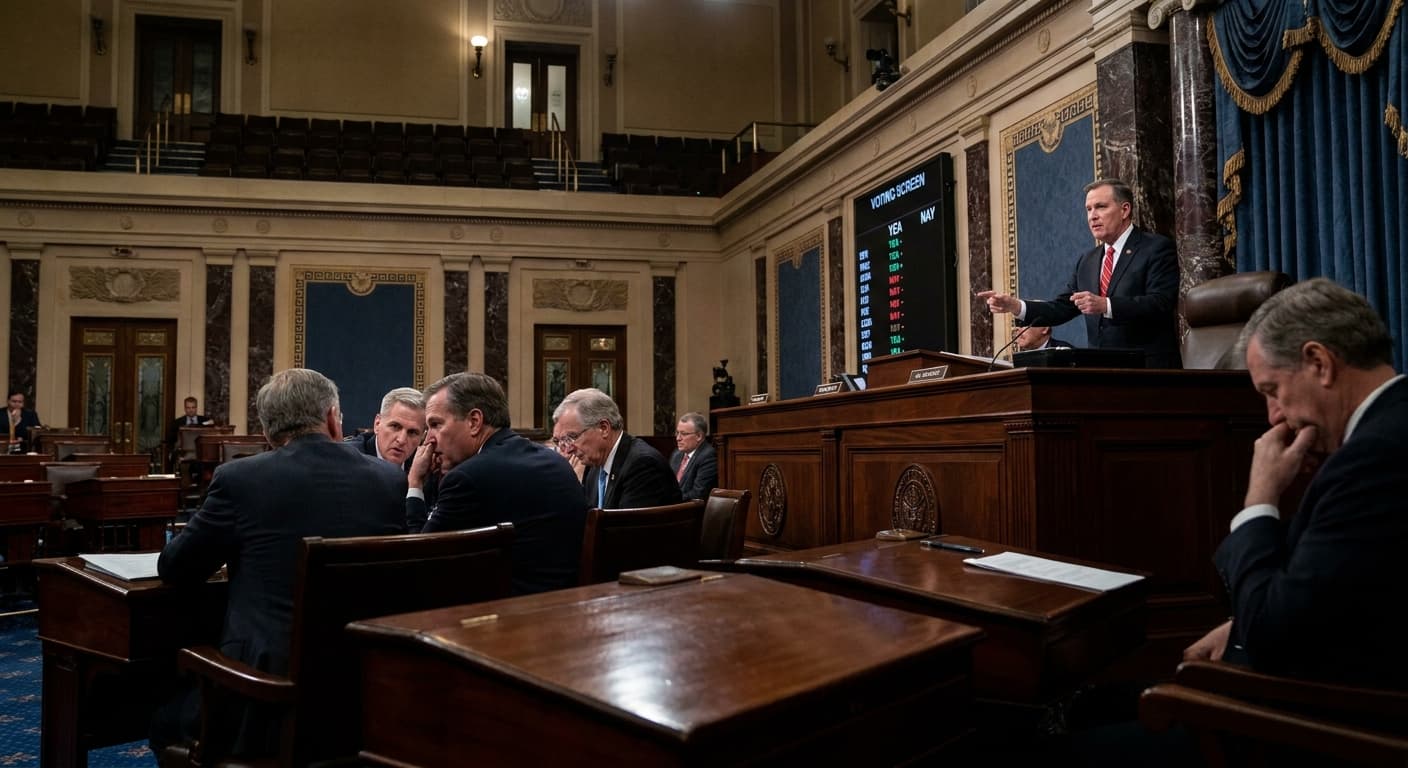
Senate Republicans Block Effort to Restrict Iran War Powers Again
Senate Republicans have blocked a Democratic attempt to curb U.S. military action in Iran, underscoring Congress's continued reluctance to limit presidential war authority in this conflict.
In a 52-47 vote on April 17, 2026, Senate Republicans once again rejected a Democratic-led resolution to halt U.S. military operations in Iran pending explicit congressional authorization for continued use of force. This is the fourth such attempt this year to rein in the president’s war powers in relation to the ongoing conflict in Iran, which all Republican senators have now opposed. The measure sought to reassert congressional oversight over military engagement, a core constitutional principle that has repeatedly been challenged since hostilities escalated last year. AP News
Why This Matters
The rejection reflects a persistent partisan divide over congressional authority on war powers. Democrats argue that prolonged military action without new authorization undermines Congress’s constitutional role under Article I to “declare war,” effectively granting the executive branch unchecked power. Repeated resistance to these measures signals Republican alignment with a broad interpretation of presidential war powers, often justified by national security concerns and the desire to maintain operational flexibility against Iran.
This standoff is not unique to the current conflict. Since the post-9/11 era, presidents have frequently engaged in military actions without explicit congressional declarations, relying instead on authorizations passed years earlier or on their role as commander-in-chief. Notably, former President George W. Bush’s 2002 Iraq War Authorization and the 2001 AUMF against terror groups have served as enduring legal cover for various conflicts over two decades, including those in the Middle East.
What is striking here is the consistency and unity of the Republican caucus in blocking these resolutions. This solid front could reflect strategic calculations about the political risks of appearing weak on national defense ahead of the upcoming midterm elections, or a genuine belief that congressional micromanagement hinders effective military strategy. Nonetheless, this dynamic raises concerns about the erosion of legislative checks on war-making that have traditionally been a bedrock of U.S. democratic governance.
Historical Parallel and the Way Forward
Historically, congressional pushback has at times led to reassertions of legislative war powers, notably during the Vietnam War era, culminating in the War Powers Resolution of 1973. Yet, enforcement of that resolution has been inconsistent, and presidents continue to interpret it narrowly. The Iran conflict exemplifies the ongoing battle over this balance.
Watching Congress’s next moves will be critical. If Republicans maintain unity, Democrats’ only recourse might be public pressure, judicial challenges, or negotiating a more bipartisan compromise on war authorization language. Meanwhile, the executive branch appears confident that it does not require new Congressional approval to pursue its objectives in Iran.
For those following U.S. foreign policy and constitutional governance, this episode underscores a crucial tension: how much say Congress should wield over war powers in a rapidly evolving global threat landscape. It also signals the geopolitical stakes involved; the U.S. sees Iran as a critical national security challenge that may justify an expansive reading of executive authority.
Explore more on how Congress and the presidency interact on matters of war in our Global Politics section, and see a profile of
United States political dynamics around military engagement.
The ongoing Iran conflict thus remains a litmus test for U.S. democratic institutions balancing security with constitutional limits. Given the consolidation of Republican opposition to limiting war powers, the question is not just if but how Congress can reassert its constitutional role before further military escalation.
Discover more

US Politics
GOP House Blocks Limits on Trump's Iran War
House Republicans narrowly defeated a resolution to limit Trump's war powers over Iran, intensifying the fight in Congress over presidential military authority.
US Politics
House Rejects Resolution on Trump's Iran Host
The House voted down a resolution to limit Trump's military actions in Iran, laying bare partisan divides and reigniting debate over presidential war powers.

US Politics
House GOP Rejects Limit on Trump's Iran War
The House narrowly rejected a resolution limiting Trump's military actions in Iran, exposing deep GOP divisions over war powers and presidential authority.

Conflict & Security
Drone Warfare Killing Aid Workers at Unprec
Over 1,000 humanitarian workers killed in three years as cheap armed drones collapse legal protections. Gaza, Sudan, Ukraine, and DRC see deliberate targeting of aid convoys and hospitals with zero prosecutions.