House GOP Rejects Limit on Trump's Iran War
A narrow vote exposes GOP divisions over war powers and authority.
Model Diplomat3 min readUnited States

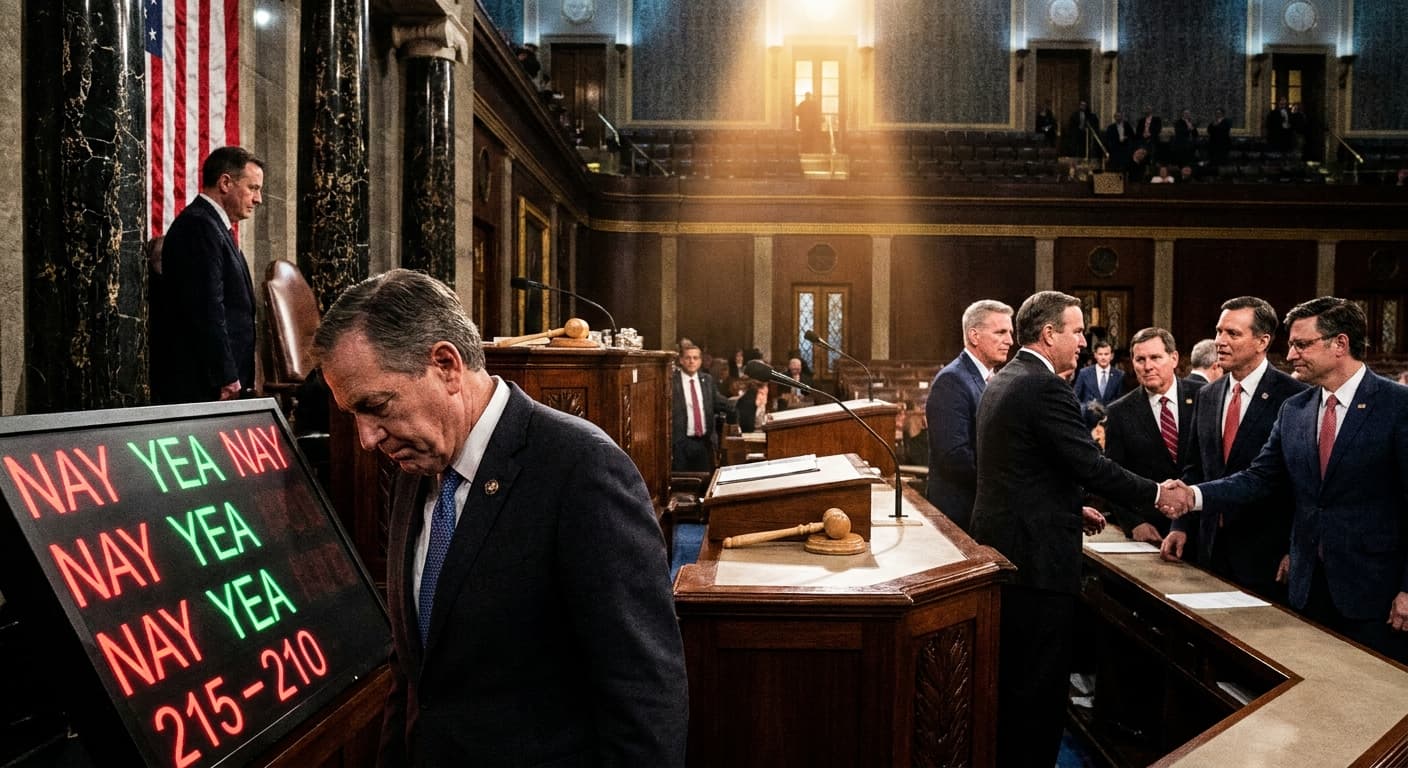
House Republicans narrowly reject effort to end Trump's war with Iran
The House voted 214-213 against a resolution to limit U.S. military involvement in Iran’s war, exposing deep fissures over war powers and presidential authority.
The House of Representatives on April 16, 2026, came within a single vote of passing a measure aimed at reining in U.S. involvement in the ongoing conflict with Iran. The resolution, which failed 214 to 213, would have curtailed the president’s authority to conduct military operations without explicit congressional approval, effectively challenging President Trump’s conduct of what critics call an unauthorized war. The razor-thin margin highlights the increasingly fraught debate within the Republican Party and across Congress about executive war powers.
Why this matters
This vote is a rare rebuke of Trump’s aggressive Iran policy within a Republican-controlled House, signaling a fracture between traditional conservative views on unchecked presidential military freedom and a growing faction that wants to restore congressional oversight. Notably, Rep. Thomas Massie (R-KY) broke with most of his party to support the resolution, emblematic of a libertarian-leaning subset wary of endless foreign entanglements and executive overreach.
The measure sought to invoke the War Powers Resolution to compel the withdrawal of U.S. forces engaged in hostilities with Iran unless Congress explicitly authorized continued action. Since Trump escalated tensions—following a drone strike that killed Iranian General Qassem Soleimani in 2020—Congress has struggled to reassert its constitutional role in war declarations. This close vote suggests increasing legislative fatigue with open-ended conflicts fought under broad presidential mandates.
The vote also reflects broader political calculations: support for tougher action on Iran remains strong among many Republicans aiming to appear hawkish on national security ahead of the 2026 midterms. Yet, there is also a vocal anti-war cohort concerned about the cost and risks of another Middle East conflict. This internal GOP tension complicates the party’s messaging and could shape its foreign policy platform.
Historical and strategic parallels
This episode echoes previous congressional pushbacks against unilateral military actions—such as the 1973 War Powers Resolution’s attempt after Vietnam to limit presidents’ war-making capacity. However, just like in those earlier eras, enforcement remains elusive without presidential cooperation.
The near passage of this resolution signals that Trump no longer has unanimous party support for his Iran policy, reminiscent of how presidents like George W. Bush faced internal GOP dissent over the Iraq War. The stakes are even higher as the Biden administration, succeeding Trump, has sought to recalibrate Iran policy, reopening the debate on how America should engage Tehran.
Observers should watch whether this vote emboldens Congress—both parties—to take further steps to clarify and reclaim war powers amid ongoing tensions in the Persian Gulf and nuclear negotiations. It also tests the balance between national security priorities and constitutional checks, a perennial issue in U.S. foreign policy.
What to watch next
- The White House’s reaction: Will the Trump administration double down on unilateral actions or seek some form of negotiation with Congress to avoid legislative confrontations?
- Senate actions: Whether a similar resolution—or a modified version—could gain traction in the evenly divided Senate.
- Congressional midterm dynamics: How this narrow vote influences Republican primaries and policy platforms heading into November 2026.
- Iran developments: Any escalation or de-escalation on the ground, including nuclear talks, that could shift U.S. political calculations dramatically.
This close vote reveals that the question of who controls America’s wars—the president or Congress—remains a live, contentious issue with real consequences for U.S. foreign policy and democracy.
For more on U.S. political dynamics, see United States and broader
Global Politics.
Discover more

US Politics
GOP House Blocks Limits on Trump's Iran War
House Republicans narrowly defeated a resolution to limit Trump's war powers over Iran, intensifying the fight in Congress over presidential military authority.
Global Politics
House Rejects Iran War Powers Resolution
The House narrowly rejected a resolution to limit Trump's war powers in Iran, deepening political divides over the scope of U.S. military involvement abroad.

US Politics
House Vote on Trump Iran Strikes Reveals Divs
The House narrowly declined to block Trump from striking Iran, a close vote that laid bare deep partisan divides over war powers and U.S. military action.

Economics
Fed's Amex AML order puts correspondent banking on notice
Federal Reserve's Amex AML order requires board-level controls and a 90-day plan; OCC fined the bank $350 million over enterprise-wide deficiencies.