Senate Passes Short-Term FISA Extension
Congress buys time on Section 702 surveillance law renewal
Model Diplomat3 min readUnited States
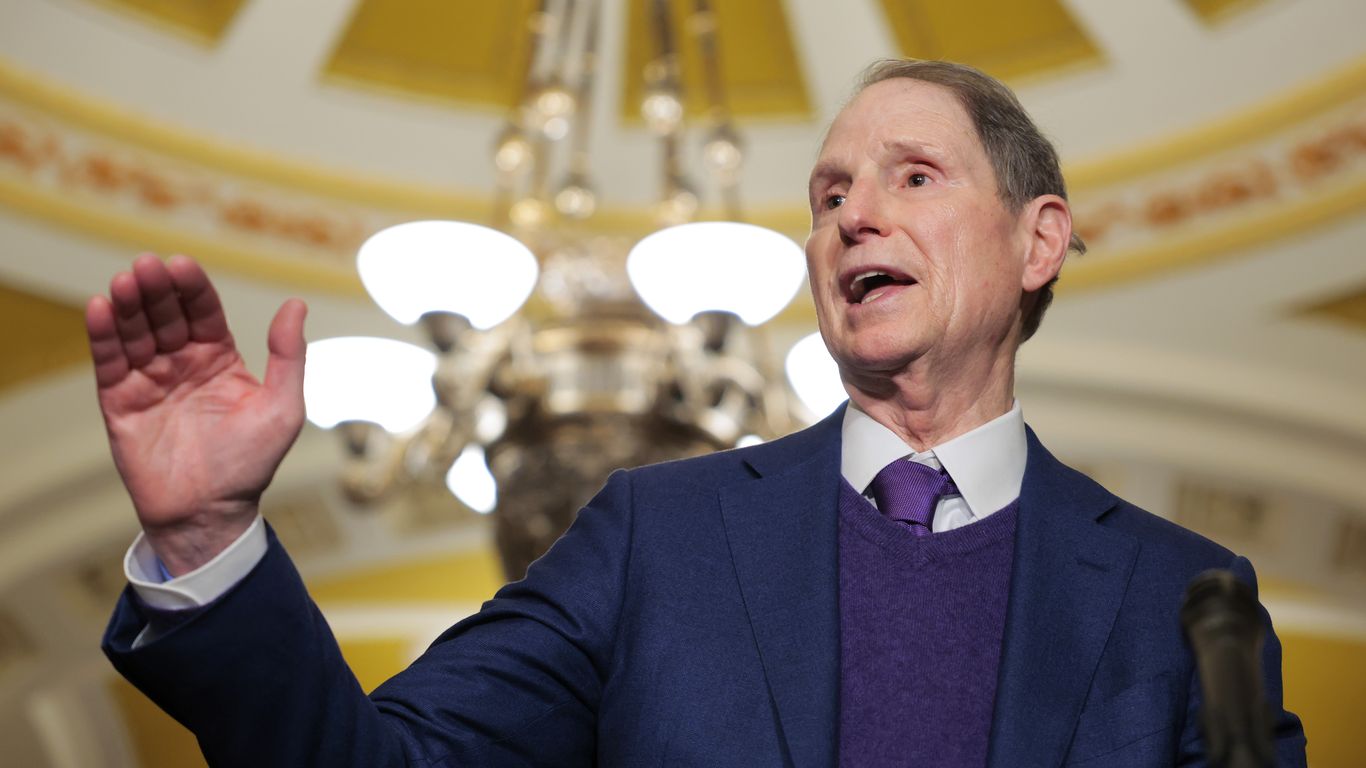
Senate clears short-term FISA extension—Congress buys two weeks on surveillance debate
The Senate approved a short-term extension of the controversial Section 702 surveillance law through April 30, giving lawmakers a brief pause to navigate a fiercely divided renewal fight.
On April 17, the Senate passed a short-term extension of Section 702 of the Foreign Intelligence Surveillance Act (FISA) by voice vote, pushing the law's expiration back two weeks to April 30. The bill now heads to President Trump for signature. This fleeting extension reflects a fraught and unfinished battle over the legality and oversight of U.S. intelligence surveillance powers. Congress has until the end of the month to negotiate a more durable reauthorization, or face a shutdown of a key surveillance tool used primarily to monitor foreign targets.
Why this matters: Section 702’s centrality and controversy
Section 702 authorizes the intelligence community to collect electronic communications of people reasonably believed to be outside the United States, including emails, phone calls, and other digital data. Its reach—used to monitor foreign terrorists and spies—has also swept up incidental data of Americans, raising entrenched privacy and constitutional concerns. Renewing it is a perennial tightrope for lawmakers who must balance national security imperatives with civil liberties.
The short extension belie the intense political divisions threatening a longer-term deal. A faction of House Republicans and civil libertarians have pushed back against broader renewal bills, objecting to indefinite or expanded surveillance powers without reforms. Meanwhile, national security advocates, including the administration, warn that failure to extend would imperil intelligence capabilities and national security.
This month’s ongoing clash echoes battles in 2017, 2020, and 2023, when similarly timed stopgap extensions delayed votes amid Republican defections and Democratic demands for stronger privacy safeguards. The clock is now tighter than ever given the congressional calendar and upcoming midterm elections, amplifying the stakes.
What to watch next: Negotiations and the political calculus
Over the next two weeks, Congress will face tough choices. Will lawmakers reach compromises on reforms—such as enhanced minimization procedures, independent oversight, or warrant requirements for certain queries—that can satisfy privacy advocates without unraveling intelligence workflows? Or will partisan deadlock on broader surveillance issues deepen?
President Trump’s signature on the extension unlocks a temporary reprieve, but his past mixed signals on intelligence oversight could influence negotiations. Stakeholders will closely monitor whether the executive branch exerts pressure for a swift resolution or leverages the limbo for policy concessions.
The outcome will set the tone not only for U.S. surveillance policy but for broader debates on cybersecurity, digital privacy, and government powers in an era of pervasive tech. With Section 702 underpinning much of the U.S. intelligence architecture, failure to renew could disrupt national security operations and harm intelligence-sharing partnerships with allies.
In a closely divided Congress, the extension is a breathing room, not a solution. The political theater around Section 702’s future will be a bellwether for how America reconciles its security needs with democratic norms in the digital age.
For more on U.S. surveillance laws and political dynamics, visit United States and
US Politics.
Source: Axios, April 17, 2026
Discover more
US Politics
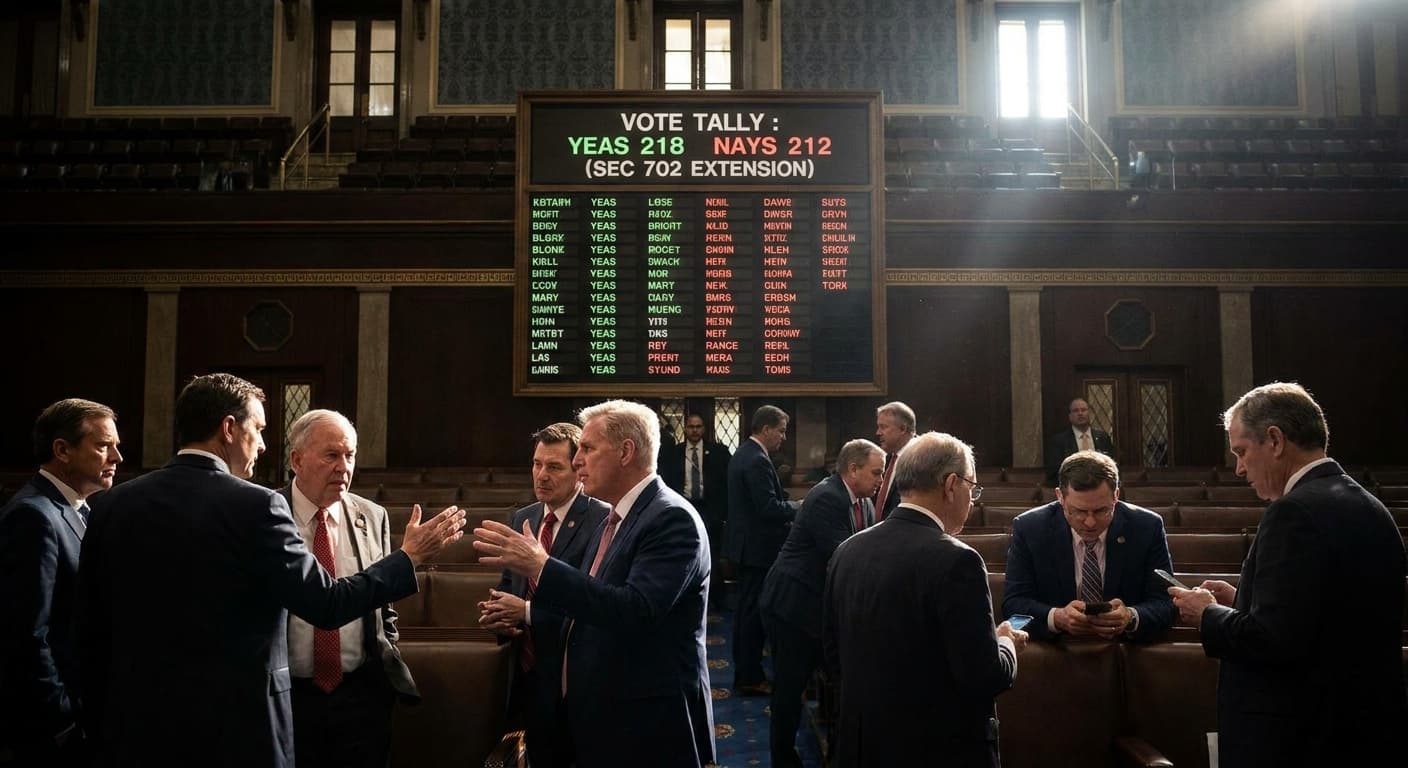
House Passes Short-Term Section 702 Extension
The House approved a short-term extension of Section 702 surveillance despite GOP pushback, exposing deep divisions over privacy and national security.

US Politics
House Passes 10-Day FISA Section 702 Bill
The House approved a 10-day extension of FISA Section 702, exposing deep partisan divides over digital surveillance, privacy and national security powers.
US Politics
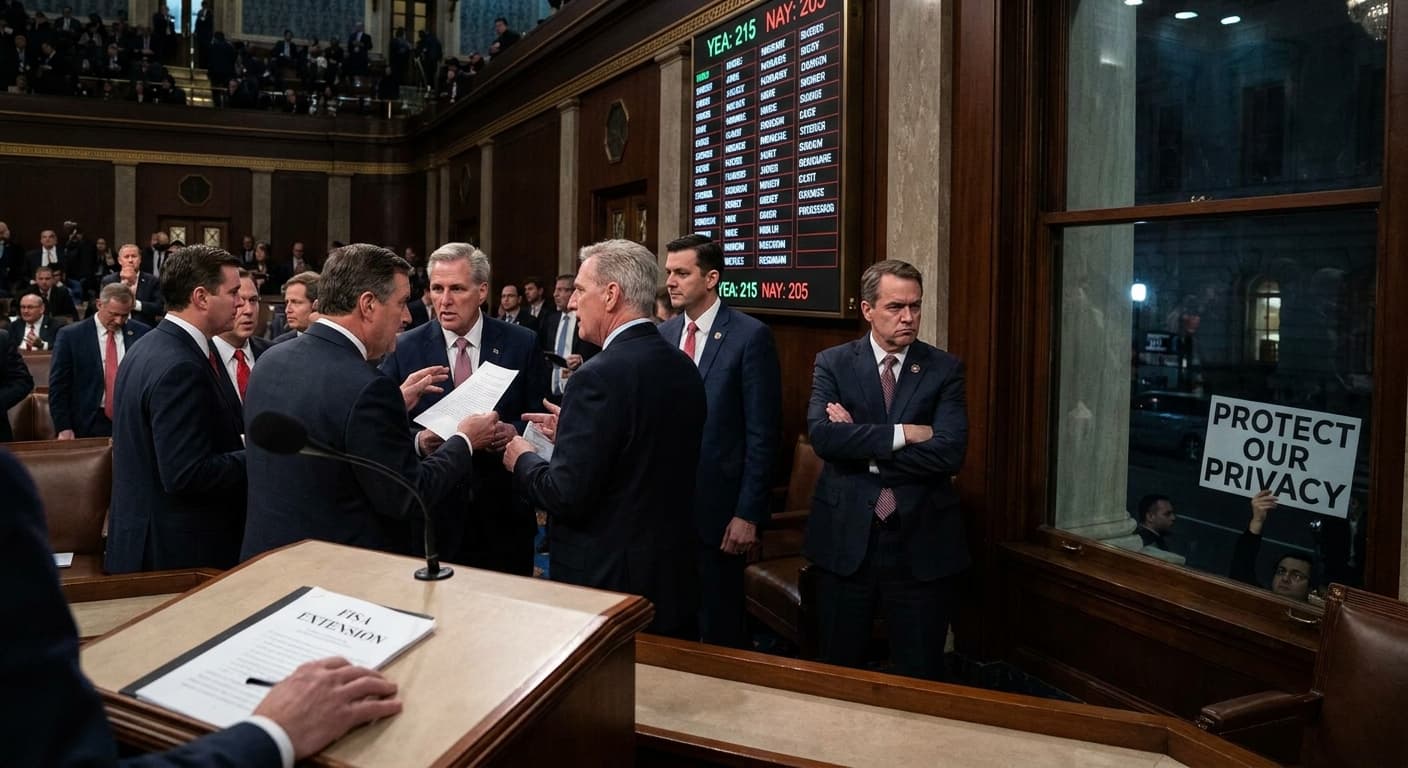
House Extends Surveillance Powers Amid GOP Rr
The House extended federal surveillance powers until April 30, revealing sharp GOP divisions and reigniting privacy concerns over intelligence collection.

Economics
Fed's Amex AML order puts correspondent banking on notice
Federal Reserve's Amex AML order requires board-level controls and a 90-day plan; OCC fined the bank $350 million over enterprise-wide deficiencies.