House Passes 10-Day FISA Section 702 Bill
Short-term extension highlights partisan divides over surveillance.
Model Diplomat3 min readUnited States

House Approves 10-Day Extension of FISA Section 702 Amid GOP Pushback
The U.S. House passed a 10-day stopgap extension of FISA Section 702, buying time but underscoring deep partisan fault lines over digital surveillance.
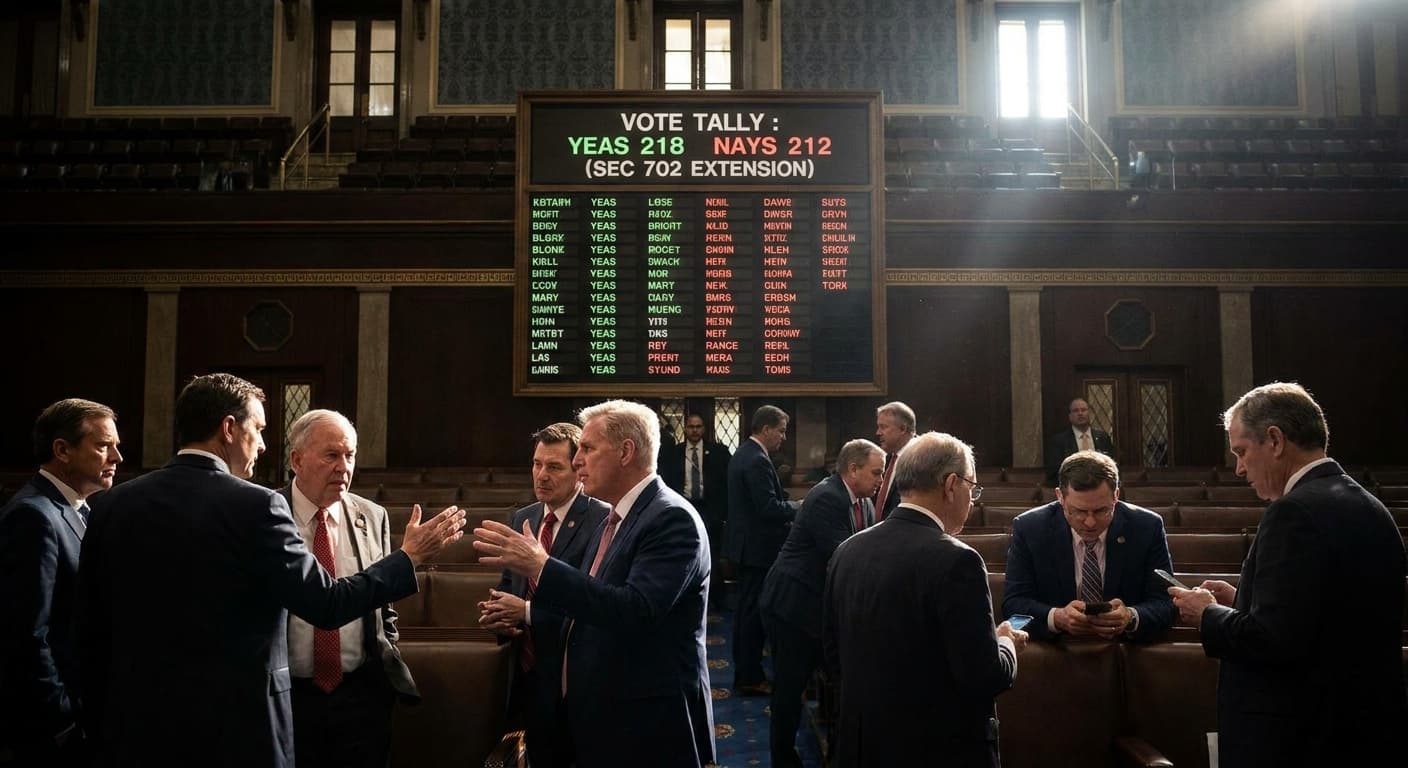
On April 17, 2026, the U.S. House of Representatives approved a short-term 10-day extension of Section 702 of the Foreign Intelligence Surveillance Act (FISA), a critical legal framework that authorizes warrantless surveillance of non-U.S. persons outside the country. The vote came after Republican leadership narrowly overcame two failed attempts to pass longer extensions, highlighting the continuing political struggle over privacy, security, and oversight. Now the issue shifts to the Senate, with the program’s current authorization set to expire imminently.
Why This Matters: A Key Surveillance Program in Limbo
Section 702 permits the National Security Agency and other intelligence entities to collect electronic communications—such as emails and phone calls—without individual warrants, providing vital tools to disrupt foreign terrorist threats and cyberattacks. Congress originally approved it in 2008, and it has since been reauthorized multiple times amid contentious debates.
The short 10-day extension marks a tactical pause rather than a solution. It shows GOP leaders in the House seeking to keep the program alive while buying time to negotiate terms that could range from enhanced privacy protections to stricter oversight measures. Some Republicans and civil liberties groups criticize the program’s potential overreach and inadequate safeguards for Americans’ incidental data swept up during foreign-targeted surveillance.
This legislative impasse resembles prior battles seen in 2017 and 2023 when FISA renewals also faced last-minute extensions and fierce partisan disagreements. The looming expiration creates legal uncertainty for intelligence agencies and risks gaps in U.S. national security capability.
Political Stakes and the Broader Context
The narrow nature of the House’s vote signals a split not just between parties but within them. GOP hardliners want tighter restrictions or even a clean break from the program, while moderate Republicans and Democrats largely view Section 702 as indispensable for counterterrorism and foreign intelligence.
Democrats argue that without it, U.S. intelligence operations would suffer setbacks, citing data on terrorism plots foiled under Section 702 authority. Republican critics focus on alleged abuses and new calls for transparency, especially after revelations about incidental collection of American communications.
The timing is key: with the midterm elections approaching, both parties are willing to use surveillance—and privacy—as wedge issues to galvanize base voters. Yet the short extension indicates neither side has enough consensus to enact a durable reform or permanent authorization now.
What to Watch Next
The ball moves to the Senate, where floor debates and committee hearings will intensify over the next 10 days. Senate Majority Leader will face the pressure of reconciling competing demands:
- Will lawmakers come to a bipartisan agreement on reforms that enhance privacy protections—such as stronger minimization procedures or reporting requirements for incidental collection?
- Could the Senate pass another short-term measure, extending the program further while negotiations continue into the summer?
- Might political brinkmanship lead to a temporary lapse, risking intelligence gaps and public backlash?
The outcome will shape U.S. surveillance policy for years. Section 702 is a cornerstone of American signals intelligence, and its renewal—or failure—signals how the U.S. balances national security with civil liberties in an era of rapid digital evolution.
For those interested, this debate fits squarely into broader themes in U.S. politics and impacts American global intelligence capabilities within
international relations.
Source: CNN: House approves short-term extension for FISA surveillance
Discover more
US Politics
House Passes Short-Term Section 702 Extension
The House approved a short-term extension of Section 702 surveillance despite GOP pushback, exposing deep divisions over privacy and national security.

US Politics
House Vote on Trump Iran Strikes Reveals Divs
The House narrowly declined to block Trump from striking Iran, a close vote that laid bare deep partisan divides over war powers and U.S. military action.
US Politics
House Rejects Resolution on Trump's Iran Host
The House voted down a resolution to limit Trump's military actions in Iran, laying bare partisan divides and reigniting debate over presidential war powers.

Economics
Fed's Amex AML order puts correspondent banking on notice
Federal Reserve's Amex AML order requires board-level controls and a 90-day plan; OCC fined the bank $350 million over enterprise-wide deficiencies.