House Extends Surveillance Powers Amid GOP Rr
Short-term renewal of surveillance authorities sparks political tensions
Model Diplomat3 min readUnited States
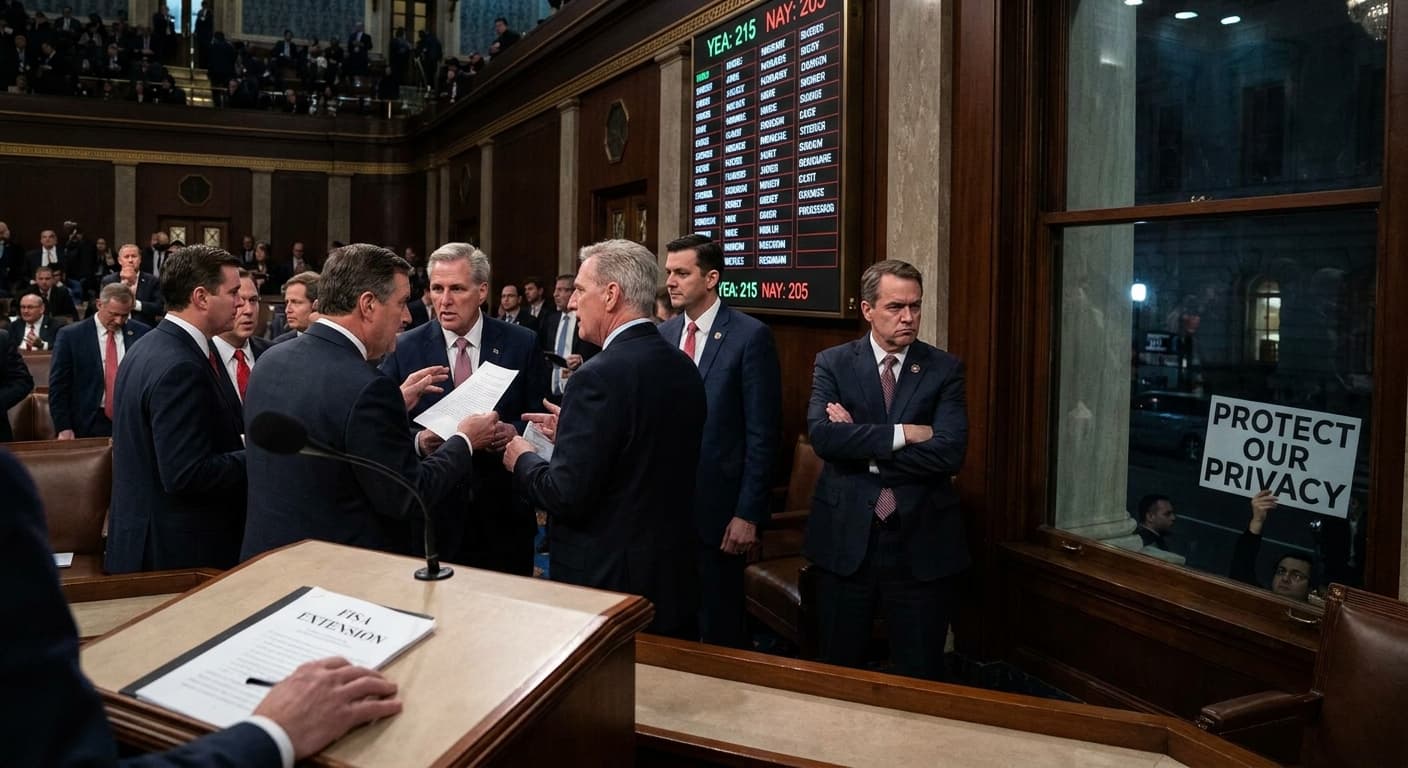
House Extends Surveillance Powers Until April 30 After GOP Revolt
The U.S. House narrowly extended spy agencies’ surveillance authorities through April 30 after Republican opposition blocked a longer renewal President Trump sought.
The U.S. House of Representatives voted late Thursday to renew key surveillance authorities used by intelligence agencies for just two weeks, instead of the longer extension backed by President Donald Trump. The short-term extension keeps critical spying powers active through April 30 but underscores sharp divisions within the GOP, which blocked the broader renewal proposal.
Why the Short Extension Matters
The surveillance powers in question stem from provisions of the Foreign Intelligence Surveillance Act (FISA), crucial for U.S. intelligence and counterterrorism operations. These authorities allow agencies like the NSA and FBI to collect certain communications data as part of national security efforts, including tracking foreign threats and preventing attacks on U.S. soil.
The failure to pass a longer renewal reflects growing tensions in Congress over privacy and civil liberties, party priorities, and trust in the intelligence community. While the Trump administration argued the powers are indispensable for counterterrorism, some Republicans oppose what they see as overreach or inadequate oversight.
This temporary extension is a stopgap measure designed to avoid a lapse that could disrupt intelligence operations. But it also signals a precarious political environment heading into the end of April, raising the prospect of a showdown over the future scope and oversight of U.S. surveillance.
The Political Implications
Republicans revolted in a late-night session, effectively forcing a compromise that limits the timeline for renewal to just two weeks. This internal GOP rebellion highlights fractures not just over policy substance but over control of messaging and leverage.
For President Trump, this outcome is a setback. He had pushed for a longer renewal—at least through the summer—to provide certainty for intelligence agencies and avoid repeated Congressional fights. The House GOP revolt illustrates lawmakers’ increasing willingness to challenge executive priorities, even within their own party.
Democrats, meanwhile, have consistently sought more robust safeguards on privacy and stronger intelligence oversight, wary of potential abuses of these surveillance tools. Though this brief extension keeps intelligence capabilities intact, the political wrangling suggests that broader reform discussions will intensify soon.
What to Watch
The crucial deadline now is April 30. Congress must decide whether to extend surveillance powers for a longer term or risk a gap in one of the U.S. government’s key national security tools. Given current divisions, negotiations will be difficult and closely watched by intelligence officials and civil liberties advocates alike.
A prolonged impasse could have operational consequences for counterterrorism efforts, but it will also fuel debates about surveillance’s balance with privacy rights as technology advances.
This episode is part of a broader contest in U.S. politics regarding intelligence powers, executive authority, and legislative oversight. How Congress resolves it will shape the trajectory of U.S. intelligence policy for years.
For background on U.S. politics and intelligence oversight, see United States and
Global Politics.
House extends surveillance powers until April 30 after late-night revolt sinks GOP plan
Discover more
US Politics
House Passes Short-Term Section 702 Extension
The House approved a short-term extension of Section 702 surveillance despite GOP pushback, exposing deep divisions over privacy and national security.

US Politics
House Passes 10-Day FISA Section 702 Bill
The House approved a 10-day extension of FISA Section 702, exposing deep partisan divides over digital surveillance, privacy and national security powers.

US Politics
House Vote on Trump Iran Strikes Reveals Divs
The House narrowly declined to block Trump from striking Iran, a close vote that laid bare deep partisan divides over war powers and U.S. military action.

Economics
Fed's Amex AML order puts correspondent banking on notice
Federal Reserve's Amex AML order requires board-level controls and a 90-day plan; OCC fined the bank $350 million over enterprise-wide deficiencies.