SAVE Act's Influence on Nevada, New Mexico Vp
Republicans aim to reshape voter registration in key states.
Model Diplomat2 min readNorth America
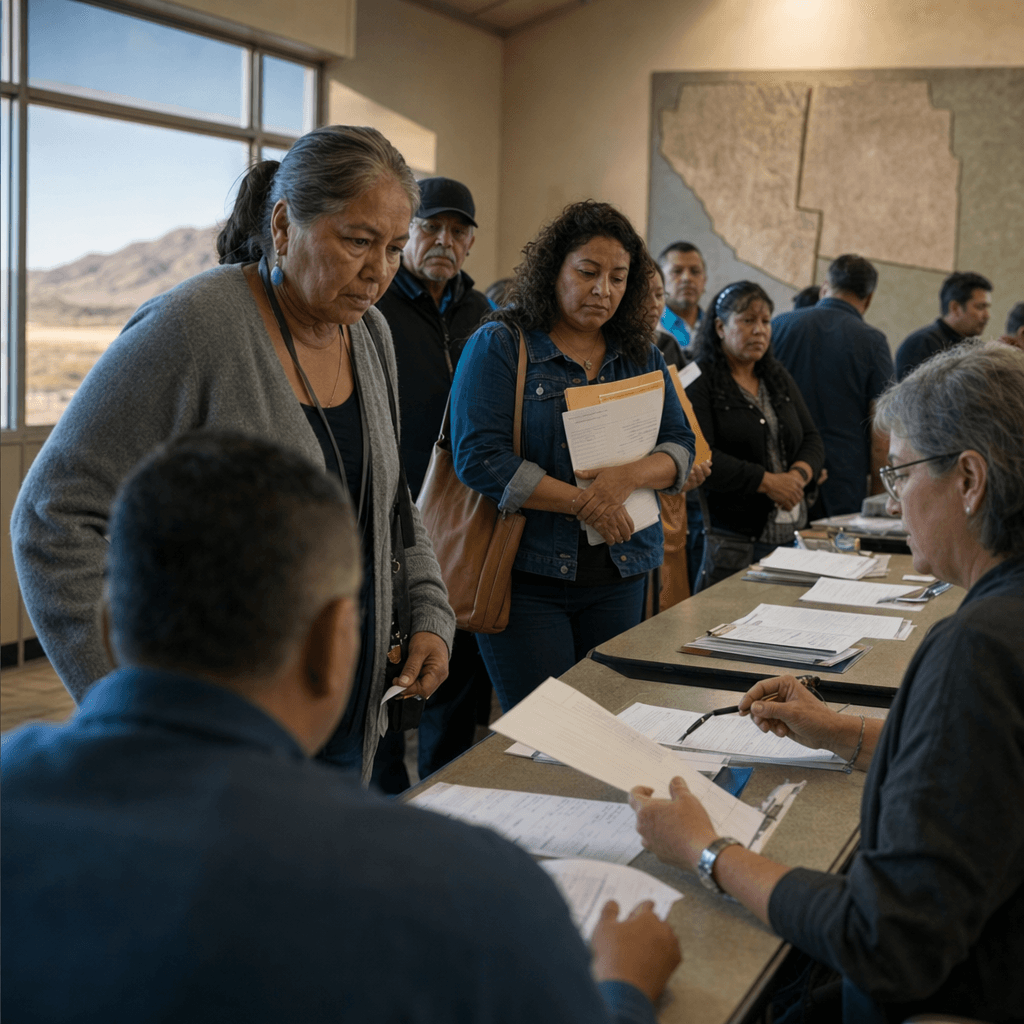
Why the SAVE Act Puts Nevada and New Mexico in Play
Republicans are using the SAVE Act to reshape the voter pool, not just the argument. Nevada and New Mexico matter because small barriers can move close states.
Republicans’ leverage is procedural, not rhetorical. The Washington Post opinion by Ian Ayres and Jacob Slaughter argues that the SAVE America Act could push Nevada and New Mexico from swing territory toward the GOP by changing who can successfully register and vote, not by changing minds [The Washington Post]. That matters because the bill is no longer theoretical: the House passed it 218-213 on Feb. 11, 2026, and it would require documentary proof of U.S. citizenship to register plus photo ID for federal voting; in the Senate, movement has stalled after a March 26 vote on a related amendment failed 53-47 [
USA Today].
Why these two states matter
The Ayres-Slaughter argument is strategically important because it shifts the debate from “election integrity” to electoral composition [The Washington Post]. In plain terms: if a federal rule adds paperwork friction at registration, the effect is largest where politics is decided on the margin.
That is why Nevada and New Mexico are useful test cases. They are not the biggest states, but they are exactly the kind of states where modest registration losses among otherwise eligible voters can have national consequences. Republicans benefit if the law narrows the electorate in competitive Western states. Democrats lose if they are forced to defend current registration rules while Republicans frame the fight around citizenship verification.
Supporters of the bill argue it is a straightforward guardrail against noncitizen voting [USA Today]. Critics argue the bigger effect would fall on eligible citizens who cannot easily produce the required documents, turning administration into a turnout filter [
The Washington Post].
The larger power play
The bill also fits a broader federal push. The Trump administration is trying to assemble a large voter-data system by obtaining unredacted state voter rolls and linking them to federal citizenship data, while the Justice Department has pressed states for access [CNN]. Separate reporting shows DOJ efforts to run voter-roll data through the DHS SAVE verification system, often with limited transparency to state officials [
CNN].
That combination is the real story. The SAVE Act is the legislative front; federal data enforcement is the administrative front. Together, they give Republicans two bites at the same objective: tighten registration and make eligibility checks central to the 2026 campaign narrative.
For more on the wider political picture, see Diplomat’s US Politics and
United States pages.
What to watch next
Watch two decision points. First, whether Senate Republicans revive the bill after the stalled March vote [USA Today]. Second, whether DOJ succeeds in forcing more states to share voter-roll data [
CNN]. If either moves, Nevada and New Mexico stop being edge cases and become a preview of how election administration itself can shift partisan terrain.
Discover more
US Politics
Next Generation Republicans
A leaked survey shows 39% of Republicans under 30 do not identify as MAGA, revealing a split in the GOP's future leadership.
India
Women’s Reservation Bill 2026
The Constitution (131st Amendment) Bill, 2026 was defeated in Lok Sabha, revealing deeper political conflicts over women's reservation and delimitation.

Conflict & Security
Drone Warfare Killing Aid Workers at Unprec
Over 1,000 humanitarian workers killed in three years as cheap armed drones collapse legal protections. Gaza, Sudan, Ukraine, and DRC see deliberate targeting of aid convoys and hospitals with zero prosecutions.

Global
World Normalises Taliban as Afghan Women Eras
UN data shows Afghan women erased from public life as Russia recognises the Taliban, EU hosts officials in Brussels, and ICC warrants for gender persecution go unenforced.