Sabarimala Case
Debate on faith and rights unfolds in India's top court
Model Diplomat2 min readAsia
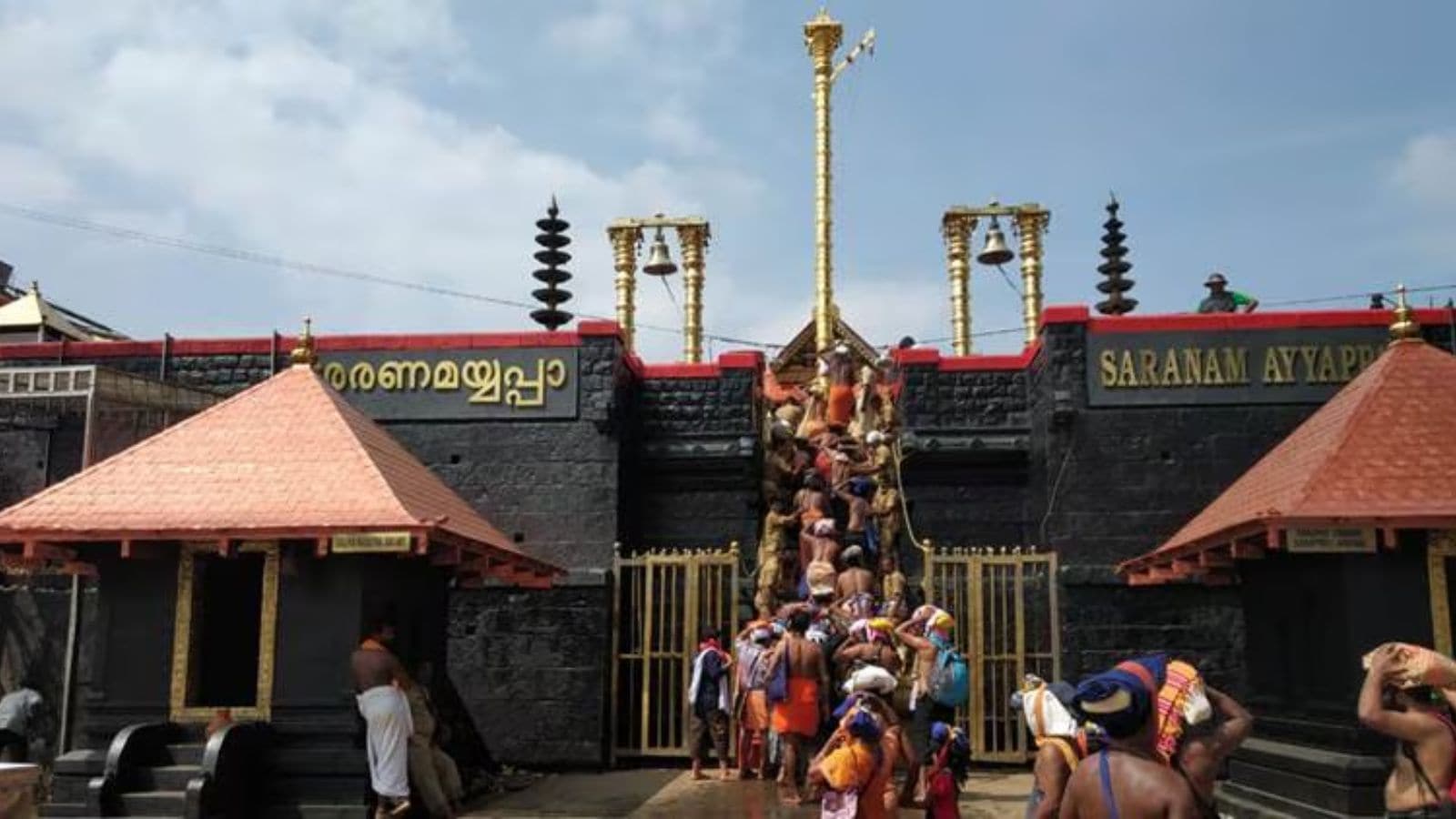
Sabarimala Day 10: Who Controls Reform—Court or State?
India’s top court is reframing the rules on religion and reform, with a nine-judge bench weighing denomination autonomy against equality claims.
The leverage
The Supreme Court’s nine-judge bench holds the pen on how India will police the boundary between faith and rights. Day 10 of the Sabarimala reference is set to resume, after Justice B.V. Nagarathna underscored that religious denominations enjoy autonomy in worship but only within constitutional limits, with hearings “to start” imminently. Indian Express The bench, led under Chief Justice of India Surya Kant, is using the Sabarimala dispute to revisit the “Essential Religious Practices” (ERP) test that has steered courts for decades.
The Hindu
The Hindu
- The Union government, via Solicitor General Tushar Mehta, is pressing for legislative primacy on religious reform and warning that tight judicial definitions of “denomination” and ERP would compress Hinduism’s plural traditions.
The Hindu
- Justice Nagarathna has signaled the equality floor by pushing back on stigmatizing women—“women cannot be seen as ‘untouchables’ for three days a month.”
Who benefits depends on the doctrinal rewrite: a narrower ERP or a pivot to testing the “sincerity of belief” would expand denominational space and reduce judicial theology—helping temple boards and sects; a dignity-forward approach would strengthen access claims by women petitioners and rights groups. Frontline
Why this matters
This bench is not just revisiting Sabarimala’s 2018 ruling allowing entry to women of menstruating age; it is deciding how courts will evaluate faith claims across India under Articles 25–26 for years. The Hindu The Centre’s bid to keep reform in the legislature narrows judicial reach; the Court’s early remarks that “social ill cannot be branded as religious practice” keep space for constitutional scrutiny of exclusionary customs.
The Hindu
Power dynamics:
- Court: Controls the doctrinal test—ERP’s redesign sets the enforcement map nationwide. Winners: Supreme Court institutional authority; women petitioners if equality prevails.
- Union government: Seeks to channel change through statutes and preserve denominational breadth. Winners: State and central legislatures; religious bodies claiming distinct traditions.
- Temple boards/devotee groups: Gain if denomination is defined broadly and ERP narrows. Losers if ERP bolsters equality/dignity claims at the altar.
For broader context, see our India coverage at Diplomat: India and
Global Politics.
What to watch next
- The test: Does the bench retain ERP, narrow it, or swap in a “sincerity” standard? A sincerity test would curb courts’ role as theological arbiters and tilt leverage to denominations.
Frontline
- Denomination definition: If the Court recognizes greater intra-Hindu diversity, more sect-specific rules may survive—unless they breach equality baselines flagged by Justice Nagarathna.
- Institutional lane-marking: How far the bench accepts the Centre’s “legislature leads on social reform” argument will determine whether future access battles are fought in Parliament or court.
The immediate marker: the bench reconvenes for Day 10 arguments; watch for whether the Court crystalizes a draft framework before reserving. Indian Express
Discover more
India
BJP's Misunderstanding of Women's Quota Needs
The BJP's linking of the Women Reservation Bill to delimitation risks delaying women's empowerment in India, misreading the aspirations of female voters.
India
Women’s Reservation Bill 2026
The Constitution (131st Amendment) Bill, 2026 was defeated in Lok Sabha, revealing deeper political conflicts over women's reservation and delimitation.
India
CPI(M) Calls to Decouple Quota from Delimita
CPI(M) advocates for a 33% women's quota in Lok Sabha by 2029, removing the need for delimitation and census linkage.

Conflict & Security
Drone Warfare Killing Aid Workers at Unprec
Over 1,000 humanitarian workers killed in three years as cheap armed drones collapse legal protections. Gaza, Sudan, Ukraine, and DRC see deliberate targeting of aid convoys and hospitals with zero prosecutions.