Russia's Sahel Model Cracks: Bamako Under Sie
Moscow's strategy falters as jihadists gain ground in Mali.
Model Diplomat7 min readAfrica
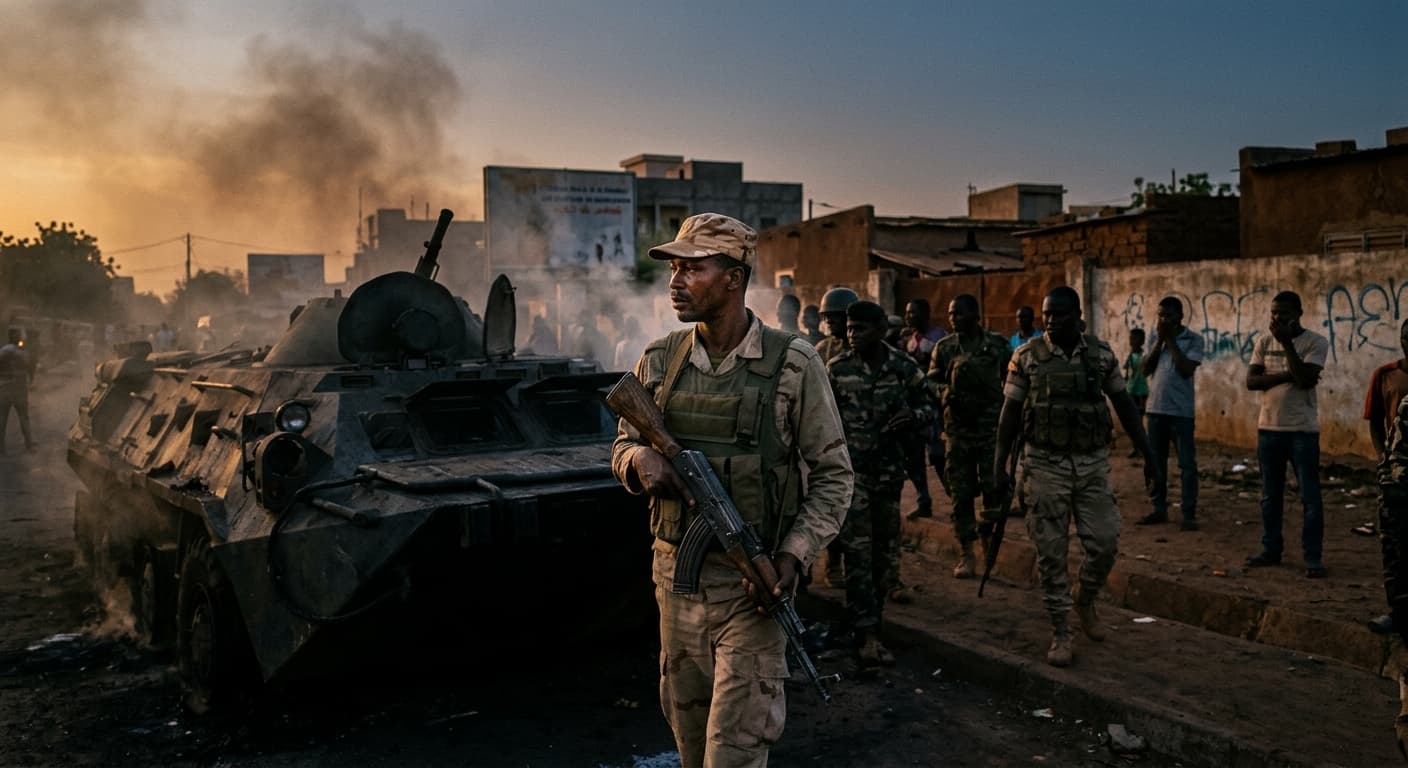
Russia's Sahel Model Cracks: Bamako Under Siege, Coastal West Africa Next
Russia's Africa Corps is losing the Sahel militarily even as Moscow's information war pushes into Nigeria, Ghana and Côte d'Ivoire — the real frontier is the ballot box, not the battlefield.
Russia's Sahel project is collapsing on the ground and expanding online at the same time — and that split, not the Africa Corps' battlefield reversals, is the story Western policymakers keep missing. Jihadists have besieged Bamako, forced Russian troops out of Kidal and killed Mali's defence minister since April 2026, yet the Africa Center for Strategic Studies counts 80 documented Russian information operations targeting two dozen African countries, now pivoting to destabilise the democracies of coastal West Africa. Moscow spent barely 1% of the continent's foreign direct investment to displace France and the United States in three capitals; it is now spending pennies again to try to topple the next ring of governments before its Sahel clients fall.
The thesis: Russia's Sahel strategy has failed at counterinsurgency but succeeded as a template — and the template is being redeployed against Abuja, Accra, Dakar, Abidjan and Cotonou while the original collapses. The winners are the juntas and the jihadists. The losers are ECOWAS, the AU and any Western partner still measuring influence by troop numbers.
The battlefield: a client state under siege
On July 7, 2026, Al Jazeera reported that Russia was flying weapons into Bamako to help Mali's junta hold off a rebel siege — a scene that would have been unthinkable when Wagner arrived in 2021 as an alternative to French counterterrorism. The Bamako siege is the culmination of a spring rout. On April 26, an alliance of the Azawad Liberation Front (FLA), al-Qaeda-linked JNIM, and Fulani-Arab rebels launched coordinated attacks that killed Defence Minister Sadio Camara — the architect of the Russia partnership — and forced Africa Corps out of Kidal via an Algerian-brokered corridor,
according to the BBC.
Russian units, BBC Verify documented, launched helicopter strikes on rebel convoys 20 km from Bamako. They also abandoned armoured personnel carriers in Kidal in what looked like a hasty retreat. A senior French military official has told the BBC the Africa Corps footprint in Mali tops out around 2,500 fighters — 80% of them former Wagner personnel, according to
Foreign Affairs — with only about 100 in Niger and 300 in Burkina Faso.
That is a rounding error against ACLED's numbers. The Centre for Democracy and Development's West Africa Security Tracker recorded 12,964 fatalities across 5,903 violent incidents in West Africa in the first half of 2025 alone — with Burkina Faso, Mali and Niger accounting for the bulk. JNIM killed roughly 2,370 people in Burkina Faso in that window. ACLED senior analyst Heni Nsaibia told Al Jazeera that in Mali, "the Malian army and Russian fighters have inflicted more violence on civilians than the armed groups combined" over the past two years — an assessment
Al Jazeera published alongside refugee testimony of executions and buried-alive victims.
The template: cheap coup, dear consequences
Africa Center director Joseph Siegle's July 8 assessment is the primary document to anchor on: Russia's playbook is "promoting unconstitutional seizures of power and then propping up these regimes," built on information operations that ran for a year before Mali's August 2020 coup, and replicated with two attempts in Burkina Faso before a Moscow-aligned officer took power.
The Polish Institute of International Affairs' report on the Africa Corps makes the transactional logic explicit: the formation, controlled by Deputy Defence Minister Yunus-Bek Yevkurov and GRU General Andrey Averyanov, provides regime protection in exchange for access to "gold, diamonds, oil, timber, uranium, and rare earth metals." Russia settled a $1.75 billion contract for 6,000 Iranian Shahed-136 drones in gold in 2022, PISM notes, though it could not verify the gold's origin. The
Elcano Royal Institute's July 2026 analysis calls this "institutionalising Russia's regime-protection model and sidelining European actors."
The uranium file shows the same logic pushed into the resource layer. Niger's junta nationalised the Somaïr mine on June 20, 2025, Al Jazeera reported, stripping French state-owned Orano of a 63% stake it had held since 1971. Orano filed for ICSID arbitration in March 2025 (
Case No. ARB/25/9); the memorial on the merits was filed April 29, 2026. Six weeks after the nationalisation, Russian Energy Minister Sergei Tsivilev arrived in Niamey to sign a Rosatom cooperation agreement, dangling a nuclear power plant — a project
the BBC noted is a "distant prospect" but a decisive political win. Niger supplies about a quarter of Europe's natural uranium, and EU imports of Russian uranium have already risen more than 70% since 2022.
The pivot: from Bamako to Abidjan
Here is what Western analysts are underweighting. As the Sahel project rots, the disinformation infrastructure that produced it is being repointed. Siegle's Africa Center flags Russian- and junta-linked social media campaigns "targeting neighboring democratically oriented governments in Nigeria, Ghana, Senegal, Côte d'Ivoire, and Benin." The South African Institute of International Affairs' Occasional Paper 363 reports that Russian officers have trained Burkinabè counterparts specifically in "information warfare techniques" to burnish Ibrahim Traoré's image and target perceived opponents inside Côte d'Ivoire. Russia House branches — controlled by the Russian foreign ministry via Rossotrudnichestvo — have proliferated across the continent since 2023, with associated Russian nationals detained in Angola in August 2025.
The messaging is not sophisticated; it does not need to be. Traoré, taking over the AES rotating chair in December 2025, delivered what Al Jazeera called his "black winter" speech — recasting West African neighbours, not jihadists, as the enemy. The speech travelled to millions online. Nigeria, Ghana and Benin now face jihadist entrenchment on their northern borders that ISPI's Nsaibia
describes as a shift "from expansion to sustained presence" — a security shock arriving on top of an information shock.
That is what makes the pivot dangerous. The coastal democracies are approaching high-stakes elections — Côte d'Ivoire held a presidential vote in October 2025, and Ghana, Nigeria and Benin all face contested cycles before 2027. If Russian narratives that "democracy has failed, only a strongman brings order" gain traction as jihadist pressure spreads south, the Sahel template does not need Russia to succeed militarily to succeed politically.
The paradox: losing while winning
The Africa Corps performance in the field is, by any measure, weak. Foreign Affairs' verdict — Russia is "losing the Sahel" — reflects the Tinzaouaten ambush in summer 2024 that killed 46 Russian soldiers, the Kidal withdrawal, the Bamako siege, and Niger's spring 2025 termination of Russian signals-intelligence cooperation. The Egmont Institute's
Nina Wilén notes that Africa Corps troops in Burkina Faso and Niger "have so far not appeared to take part in operations against jihadist groups" — they are a tripwire, not a solution.
Yet the geopolitical outcome Moscow wanted has largely arrived. France is gone; the United States has vacated Agadez; Germany ended operations in Niger by mid-2024. Even the Trump administration's rapprochement — the State Department announced Nick Checker's mission to Bamako to "move past policy missteps" — implicitly concedes the Russian security presence. The Council on Foreign Relations
called this a "dubious turn," noting Washington abandoned longstanding U.S. legislation prohibiting aid to countries whose elected leaders were deposed by coup.
The UN's independent expert on Mali, Eduardo González, warned in December 2024 that counterterrorism operations by Malian forces and "their foreign partners (commonly referred to as 'Wagner' by many sources)" must comply with international humanitarian law — the last quasi-formal UN accountability mechanism after Russia
vetoed the Mali sanctions Panel of Experts in August 2023 in a Security Council vote (S/2023/638).
Two things follow. First, ECOWAS is being deliberately hollowed out from both sides — the AES bloc rejecting it, its Commission President Omar Alieu Touray warning of "risk of disintegration." Second, the AU's coup norms — automatic suspension after unconstitutional changes — have been rendered largely symbolic by a Russian veto shield at the UN and by U.S. and French exhaustion. Chatham House's
Alex Vines argues the destinies of ECOWAS and AES "remain deeply entwined" — which cuts both ways.
Diplomat View
Moscow's Sahel project is on a two-year clock. If Bamako falls to JNIM, or Ouagadougou to a counter-coup, or Niamey to an ISSP-led breach beyond the airport, the Russian narrative of "strongmen bring order" collapses inside the countries running it — and Traoré's black-winter messaging loses its most valuable asset, the appearance of success.
The forecast: the Africa Corps will not save Bamako, but Russia's information operations will continue to punch above their weight until a coastal democracy visibly resists the template. Watch Côte d'Ivoire's post-election governance and Ghana's early 2027 politics; those two, more than any Sahel battlefield, will determine whether Siegle's "collapsing house of cards" collapses inward on Moscow's clients or falls outward onto its neighbours.
What would revise this call: a durable Africa Corps counteroffensive that clears JNIM from Mali's central highway network; a Rosatom deal in Niger that actually delivers megawatts, not press releases; or a Nigerian, Ghanaian or Ivorian election that swings decisively toward AES-style anti-Western pan-Africanism. Absent those, Russia's dominant position in the Sahel is a hedge — not a strategy — and the Kremlin knows it.
What to watch next
- August–September 2026: Whether JNIM's Bamako siege escalates to a direct assault on ministries or forces a negotiated transition; and whether Russia's July 7 airlift of weapons shifts the tactical balance.
- Q4 2026: ICSID scheduling in Orano Mining SAS v. Republic of Niger (ARB/25/9) — the first legal test of West Africa's mine-nationalisation wave, and a signal to investors about Rosatom's prospects.
- Early 2027: Ghana's political cycle and Nigeria's pre-election disinformation environment — the first coastal test of whether the Sahel template travels.
Discover more
Human Rights
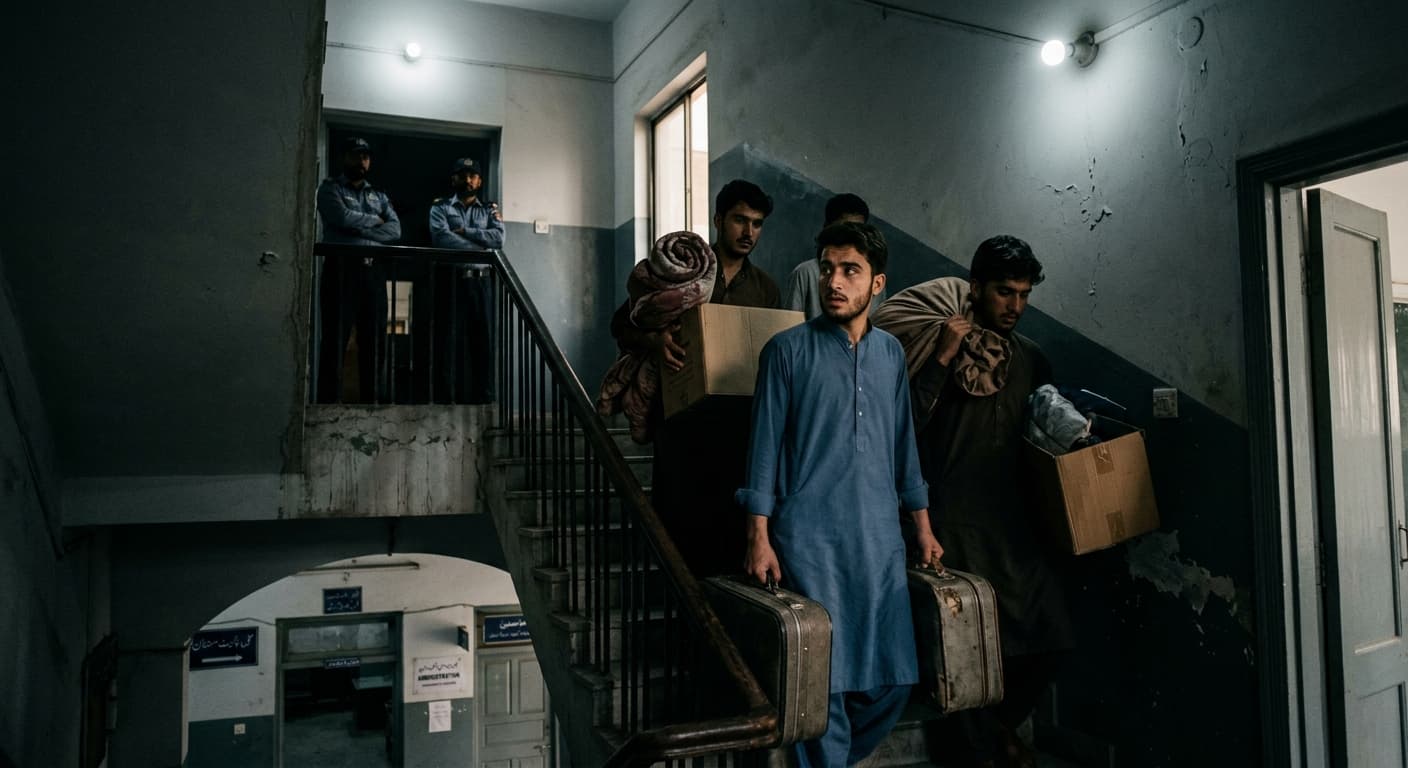
Pakistan's Quiet Siege on Afghan Students
KEMU orders Afghan medical students to vacate hostels within 48 hours, part of Pakistan's deportation drive that has expelled over 1.5 million Afghans since 2023, now targeting higher education.
Conflict & Security
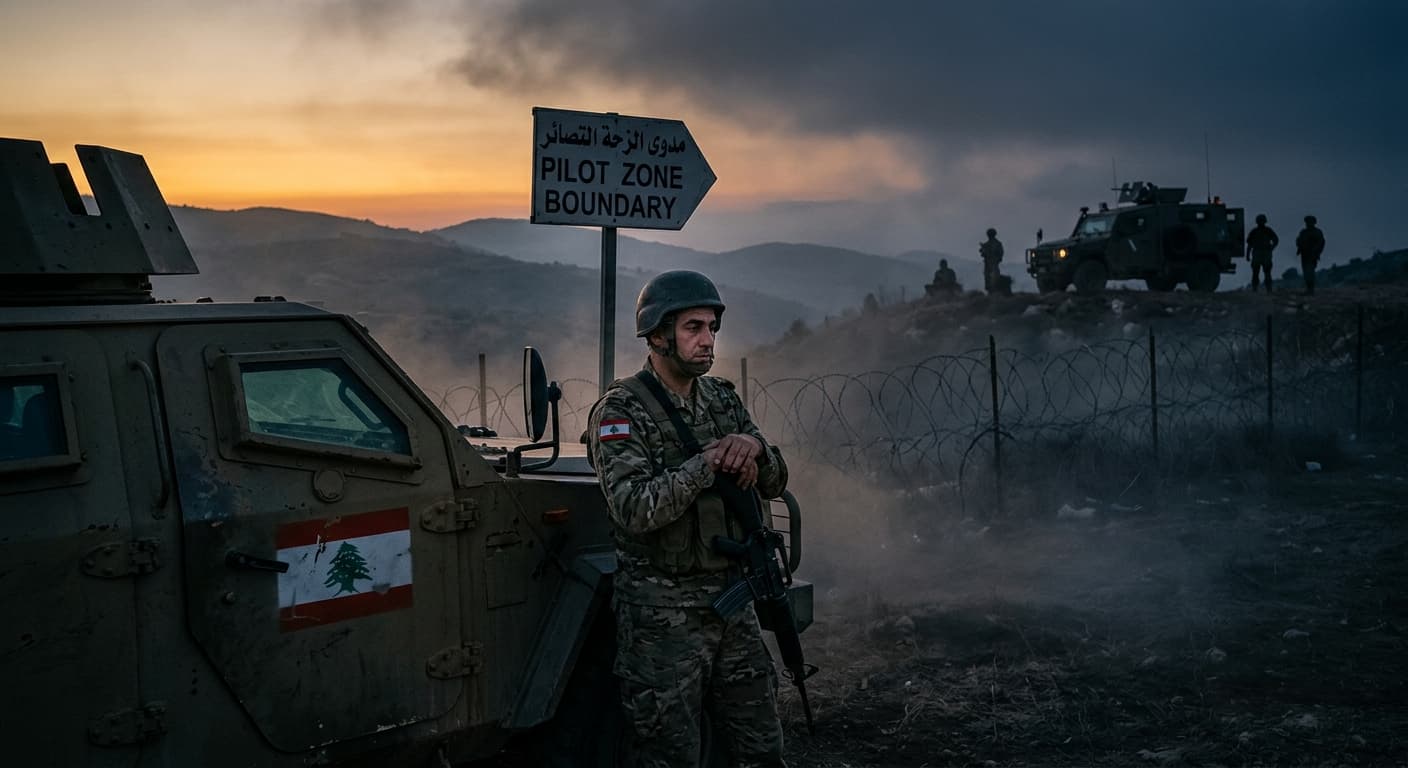
Lebanon pilot zone plan masks Israeli hold
US-brokered Lebanon pilot zone plan lets Israel keep 20% of Lebanese territory while the Lebanese army is tasked with disarming Hezbollah, a task it cannot do.
Global
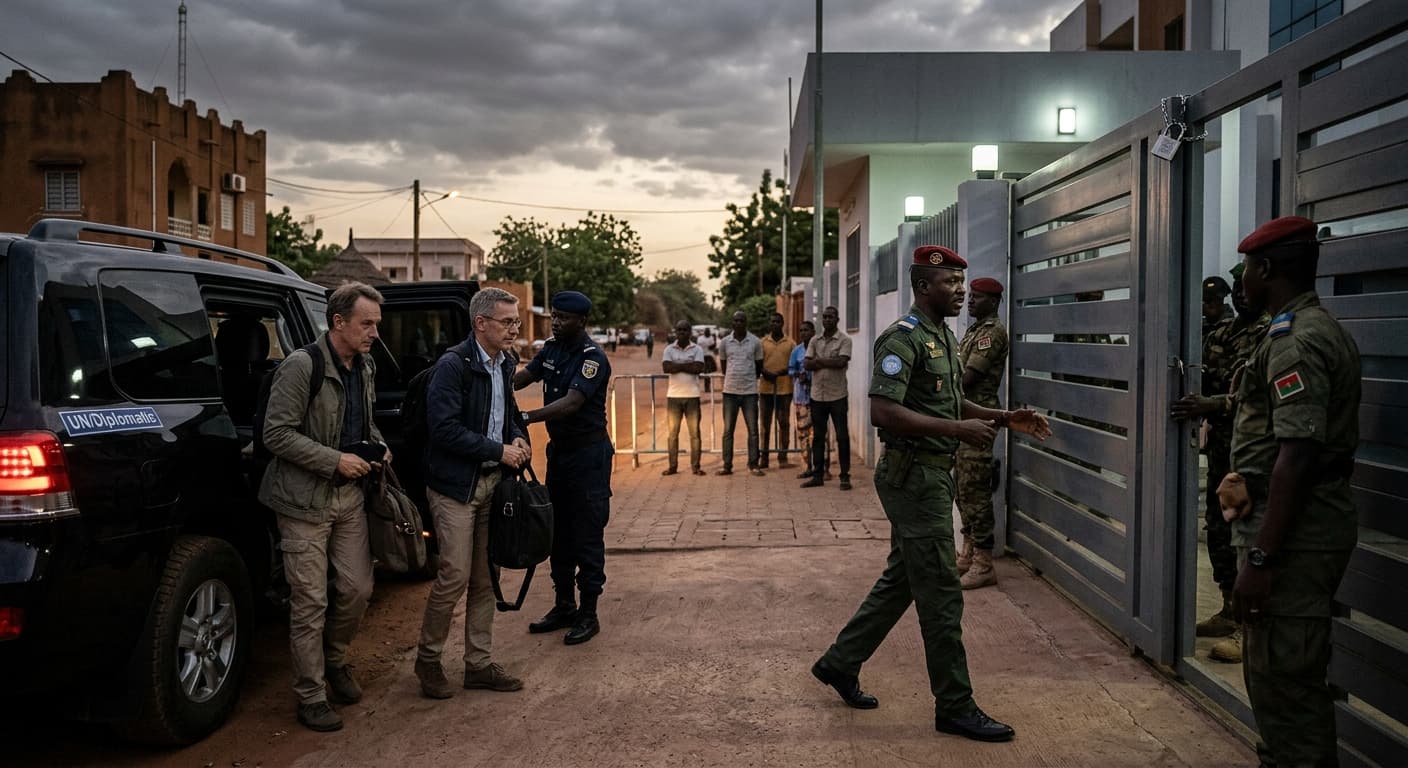
Burkina Faso Expels EU Diplomats, Seals Monit
Burkina Faso expels two EU diplomats, completing a 19-month campaign to remove all independent international monitors. Captain Ibrahim Traoré now rules with no elections, no parties, and no external scrutiny as jihadist attacks double.
Global
US Withdraws from South China Sea Talks
The US withdraws from South China Sea Code of Conduct talks, leaving ASEAN to negotiate with China, impacting regional dynamics.