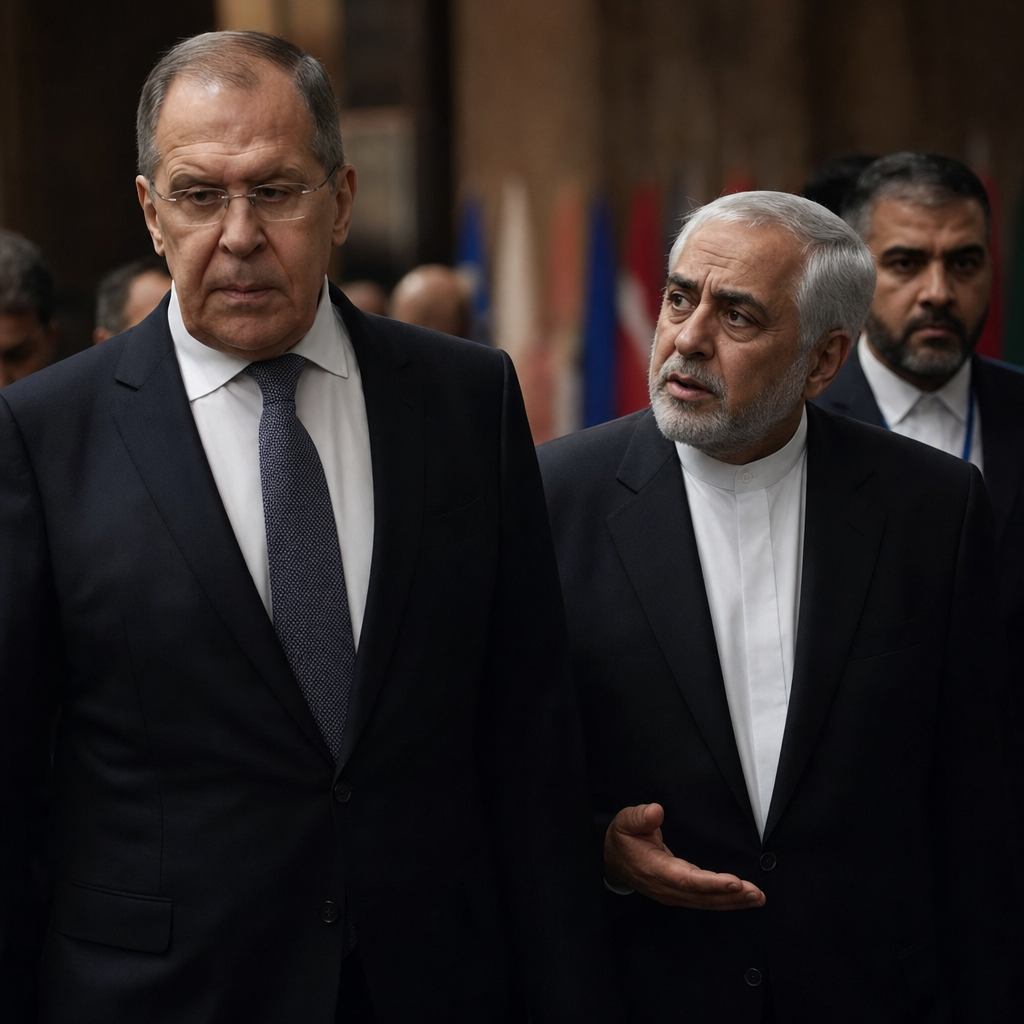
Russia Won’t Fight for Iran — and Tehran Knows It
Moscow and Tehran still coordinate, but the war with Israel and the U.S. is exposing the ceiling on a partnership built on convenience.
Russia is backing away from any promise that would drag it into war for Iran. Al Jazeera reports that Moscow and Tehran still have no mutual-defense pact, that Vladimir Putin never seriously considered sending troops after the US-Israeli attacks on Iran, and that Pakistan — not Russia — has been chosen to mediate the talks.  Al Jazeera
A marriage of convenience, not a war pact
That is the key power dynamic: Russia wants the benefits of alignment with Tehran without the liabilities of a real alliance. Al Jazeera’s core argument is that the relationship has always been transactional, with both sides drawn together by isolation, sanctions and shared hostility to Washington, but never by trust. The article quotes Russia-Iran analyst Nikita Smagin saying the two countries’ convergence is driven “exclusively” by pragmatism — and that “they don’t like each other.” Al Jazeera
That matters because it explains the behavior under pressure. Moscow has helped Tehran at the margins — sanctions diplomacy, drone transfers, political cover — but it has stopped well short of commitments that would force Russia into direct confrontation with the United States or Israel. INSS makes the same point from Moscow’s side: Russia is offering broad diplomatic support, but it is carefully avoiding “irreversible escalation” because the Kremlin still wants room to maneuver on Ukraine and to preserve channels with Washington.  INSS
INSS
Moscow has other clients, and Tehran knows it
The alliance is also constrained by Russia’s other regional relationships. Al Jazeera notes that Moscow never severed ties with Iran’s rivals in the Arab world, especially Saudi Arabia and the United Arab Emirates. That is not a side note; it is the reason Russia cannot turn an anti-Western alignment into an anti-Israel or anti-Gulf bloc. In practical terms, Moscow is trying to keep everyone talking — and keep itself in the room. Al Jazeera
For policymakers following  Global Politics, the bigger lesson is that Russia’s leverage comes from mediation, not sacrifice. Reuters reports that Pakistan is now carrying the diplomacy between the U.S., Israel and Iran, underscoring how little confidence there is in Moscow as an honest broker. Reuters also says the emerging deal would start with a one-page memorandum, then open 30 days of detailed talks — a timeline that gives all sides room to claim progress without solving the underlying conflict.
  Reuters
That leaves Russia in a familiar position: rhetorically useful to Iran, but strategically unwilling to pay the price of rescue. Tehran may still need Russian weapons, diplomatic cover and nuclear-market access, but it cannot count on Moscow to fight, nor even to mediate when the stakes are highest.
What to watch next
The next decision point is whether Pakistan’s shuttle diplomacy turns into a formal memorandum and whether Russia is granted any role in the postwar nuclear track. If Moscow is sidelined, the partnership’s value to Tehran drops fast. If it is pulled back in, Russia gains leverage over both Iran and Washington — without having to commit troops. Reuters INSS
For now, the evidence points to a hard ceiling: Russia will support Iran, but only up to the point where support stops serving Russian interests. That is not collapse. It is the logic of the relationship finally showing through.