Russia's Balancing Act with India and China
Moscow's ties with Beijing complicate its relationship with New Delhi.
Model Diplomat3 min readAsia
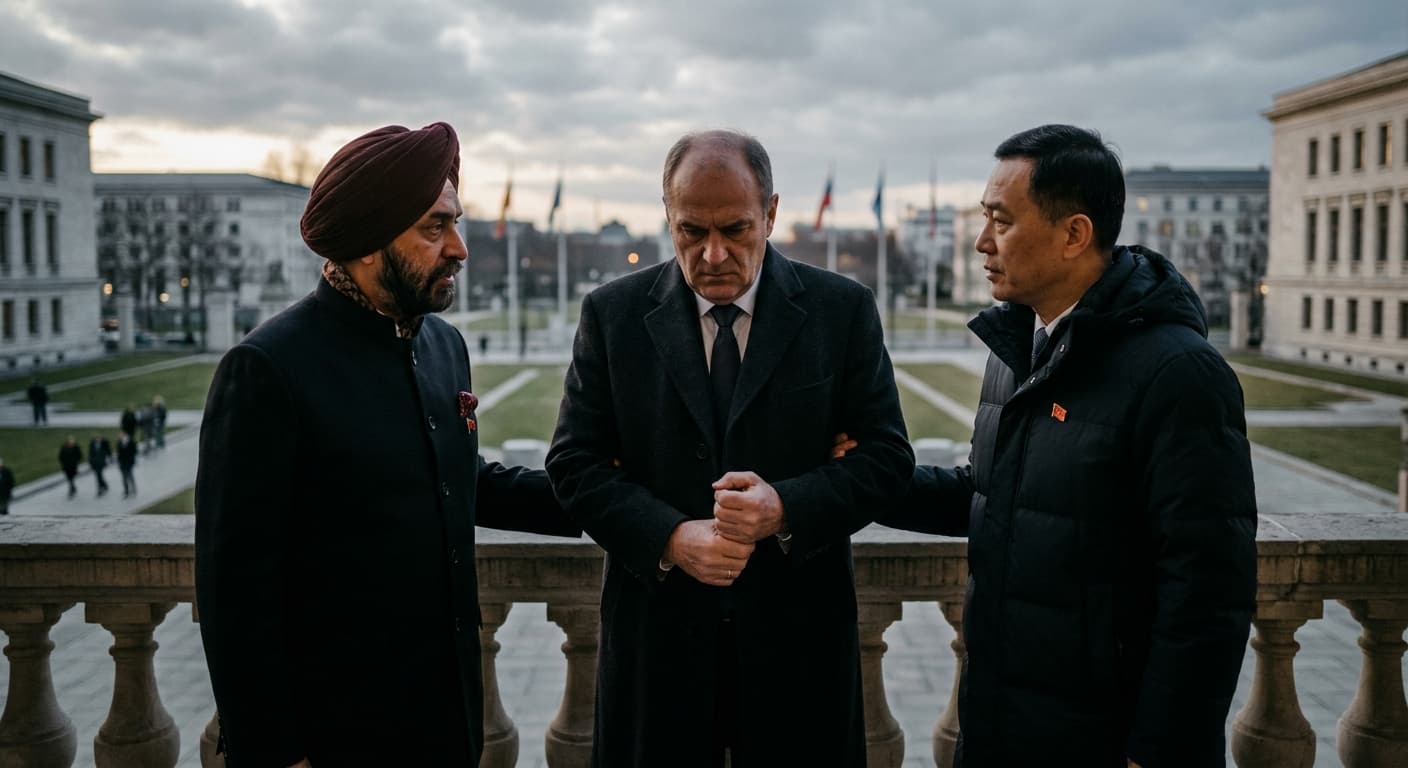
Russia Pins India Closer as China Ties Deepen
Alipov signals Moscow won't let Beijing shape its New Delhi strategy, but the balancing act is showing strain.
Russia has a problem: it is now more dependent on China than at any point in its recent history, yet it still needs India to remain a loyal strategic partner. On June 22, Russian Ambassador Denis Alipov tried to square that circle, telling The Indian Express that "we will never allow China to affect our ties with India, which remains a high priority in our foreign policy." The statement was as much a reassurance against Indian anxiety as a signal of Moscow's own constraint—and both readings suggest that Russia's ability to maintain independent relationships is being tested.
The backdrop is not subtle. Over the past four years, Russia-China trade has exploded; bilateral commerce exceeded $200 billion in 2025 alone, according to Chinese state media. When Putin visited Beijing in May 2026, he brought with him not just symbolic affirmation—he brought economic necessity. Russia's oil and gas, starved of Western buyers by sanctions over Ukraine, now flows east. China's appetite is insatiable, and Moscow has become Beijing's appendage in energy markets. Russian Foreign Minister Sergei Lavrov had already admitted in January that Russia-China relations stand "unprecedented in their level and depth."
Into this hierarchy steps India, which has its own reasons to keep Russia close. New Delhi buys discounted Russian oil, depends on Russian defense systems, and views Moscow as a hedge against both China and American pressure. India's position on Ukraine—abstentionist, focused on dialogue—aligns with Russia's diplomatic interest. But India also shares a 3,500-kilometer border with China and has fought a military skirmish with Beijing in 2020. The unspoken fear in Delhi is that when Moscow's China relationship tightens further, India becomes disposable.
Alipov's statement was his answer to that fear. When a journalist asked whether Russia's "growing proximity to China" would test India-Russia ties in a China-India conflict, Alipov did not equivocate: "We will never allow our relationship with China to affect our ties with India, and vice versa." The language was careful—our relationships, plural. He was claiming that Moscow maintains separate, parallel relationships, not a hierarchy. He went further: "India remains one of the highest priorities in our foreign policy and economic engagement."
Yet the cracks in that claim are visible. On the economic track, Alipov himself acknowledged that Indian response to deepening bilateral ties has been "more cautious" than Russia would wish. NDTV reported in April that Alipov emphasized India-Russia ties as "strong despite global turbulence," but the data tell a different story: defense purchases, energy deals, and manufacturing partnerships with China have surged while comparable expansion with India has stalled. Russia-China trade grew nearly 20 percent in the first four months of 2026 alone. India-Russia trade has grown, but more modestly, and India has shown restraint on military contracts and sensitive technology as it pursues its own independent foreign policy.
The second crack is structural. Russia introduced the language of "balancing" relationships with a disclaimer: "A broader and more diversified economic partnership between Russia and India would help alleviate such concerns." Translation: New Delhi needs to buy more. Alipov was not just reassuring India; he was asking for it. If India remains "cautious," as he noted, then Moscow cannot offset Chinese leverage through economic interdependence with Delhi. Russia's leverage with India is mostly in the past—legacy defense platforms, supply chains locked in—not in new frontiers where Russia competes with China, the West, and even South Korea. That asymmetry is not recoverable by rhetoric.
What to Watch
The real test comes not in diplomatic statements but in action. India-Russia military exercises, technology transfer, and defense procurement decisions over the next 12 months will signal whether New Delhi trusts Alipov's assurance. A hardening Indian stance on China—or a Chinese military move in South Asia—would force Moscow to choose publicly, and any choice will narrow its room for maneuver. The June 8 statement from China's Foreign Ministry that it is willing to maintain "communication" with Russia and India on three-nation cooperation suggests Beijing is watching the same space. If Moscow cannot translate Alipov's rhetoric into concrete economic engagement with India, the "high priority" language will be exposed as a defensive crouch by a power no longer able to calibrate its great-power relationships independently.
Discover more

International Relations
Pakistan's Key Role in US-Israel-Iran Meddle
Pakistan is seeking to mediate the US-Israel-Iran conflict, balancing high-stakes diplomacy against severe economic pressures and steep regional challenges.

India
India-South Korea $50B Trade Expansion Plan
India and South Korea target $50 billion in bilateral trade by 2030, focusing on industrial cooperation and strategic alignment amid US pressures.
India
CPI(M) Calls to Decouple Quota from Delimita
CPI(M) advocates for a 33% women's quota in Lok Sabha by 2029, removing the need for delimitation and census linkage.

Conflict & Security
Drone Warfare Killing Aid Workers at Unprec
Over 1,000 humanitarian workers killed in three years as cheap armed drones collapse legal protections. Gaza, Sudan, Ukraine, and DRC see deliberate targeting of aid convoys and hospitals with zero prosecutions.