Rubio's India Trip Highlights Trump's Issues
Rubio aims to repair US-India ties amid rising tensions.
Model Diplomat3 min readAsia
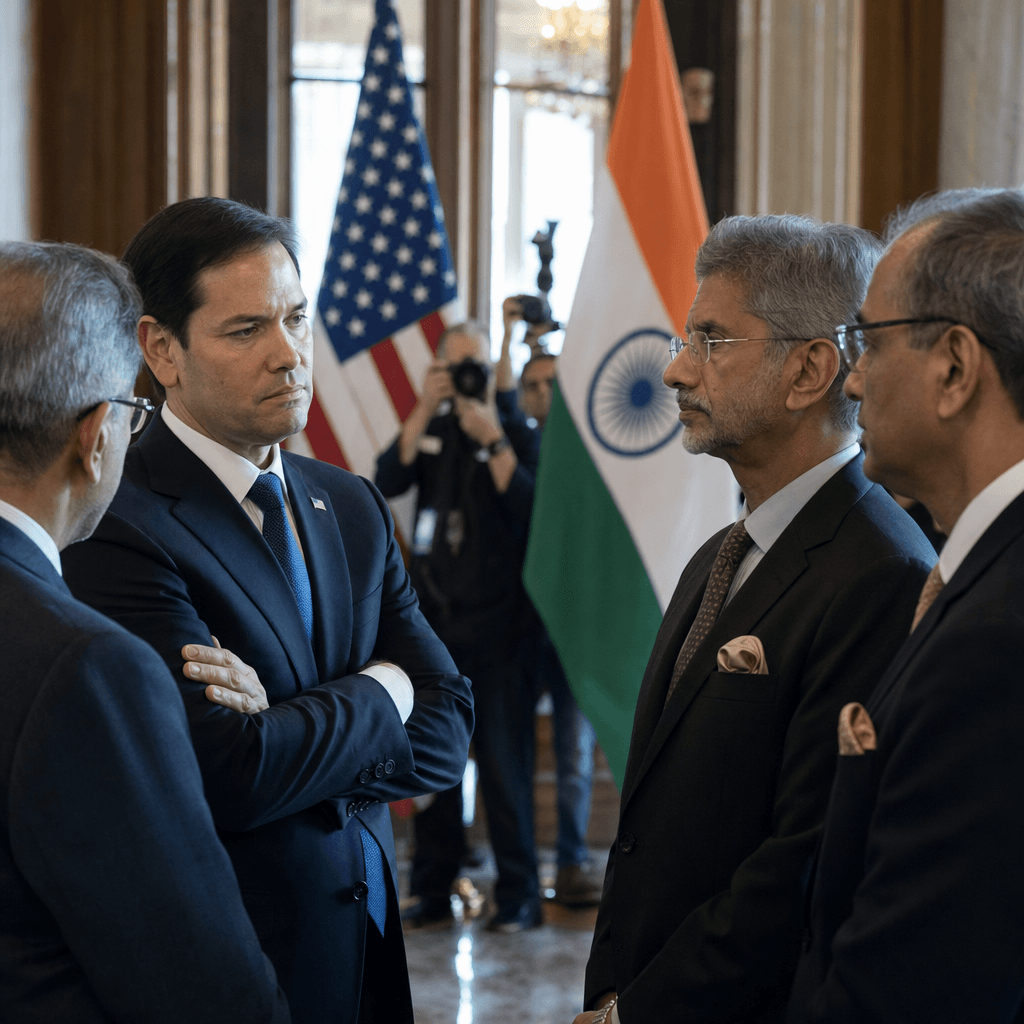
Rubio’s India Visit Exposes Trump’s Leverage Problem
Rubio is in India to steady a fraying partnership as tariffs, energy shocks and Pakistan policy pull Washington and New Delhi in different directions.
Marco Rubio lands in India on Saturday for a four-day trip meant to repair a relationship that Washington has helped fray: tariffs, closer U.S. engagement with Pakistan, and uncertainty over how hard the Trump administration wants to press China all put strain on the bilateral tie, Reuters reported (Reuters). The immediate U.S. goal is simple: stop India from drifting while keeping it useful as a counterweight to Beijing. India’s goal is just as clear: get relief on trade and energy without giving up strategic autonomy.
Washington still has leverage — but India has options
Rubio is not arriving empty-handed. The U.S. still controls the larger market, the tariff schedule and the tone of the alliance. But India has leverage of its own: it is too important to ignore in the Indo-Pacific, too large a market to write off, and too central to any long-term China-balancing strategy. That is why the administration is trying to talk about energy and defense cooperation even as the trade dispute hangs over everything.
The tariff issue is the sharpest example. Reuters said Trump’s tariffs hit India’s relationship hard, while the BBC reported that reciprocal tariffs were cut from 50% to 18% earlier this year, and then to 10% after a Supreme Court ruling, easing pressure on Indian exporters (BBC). That is not a normal diplomatic reset; it is coercive bargaining. India got partial relief, but only after signaling it would buy more U.S. energy, aircraft, technology and agricultural goods.
This is why the economic side matters more than the photo-op. India posted $87.3 billion in exports to the U.S. in the year to March 2026, the BBC said, despite the tariff shock (BBC). That tells you the two economies are still tightly linked, but also that New Delhi can absorb pain longer than Washington may have expected. U.S. exporters, especially in energy and farm products, gain if Rubio can lock in a broader trade framework. Indian textiles and other labor-intensive exporters lose if the tariff truce breaks down.
The Quad is the strategic cover story
The strategic overlay is the Quad. Rubio is expected to meet Indian officials in New Delhi and attend a Quad foreign ministers’ meeting on May 26, with the broader message that the U.S., India, Japan and Australia still stand for a “free and open Indo-Pacific,” Reuters and the BBC both said (Reuters;
BBC). But the Council on Foreign Relations argues the grouping is already losing momentum: a planned Quad summit in India last year never materialized, and the bloc now looks less like an ascendant coalition than a relationship Rubio has to keep from drifting apart (
CFR).
That is the deeper problem for Washington. If India concludes the U.S. is treating the relationship as transactional — tariffs up one month, Pakistan outreach the next — then the Quad becomes a talking shop, not a strategic anchor. India will still cooperate, but more selectively, and with more hedging toward Russia, the Gulf and Europe. For India, that is insurance. For
Global Politics, it is a warning that the anti-China coalition still has no stable political center.
What to watch next
The key date is May 26, when Rubio joins the Quad foreign ministers in New Delhi. Watch for two things: whether the U.S. signals another tariff carve-out or energy concession, and whether both sides can announce a concrete trade deadline. If they cannot, this trip will be remembered less as a reset than as a damage-control exercise.
Discover more
Global Politics
Trump's Conflicting Messages on Iran War
Trump's mixed messages on Iran reflect a strategy of audience management, benefiting Tehran amid a complex geopolitical landscape.

Conflict & Security
Drone Warfare Killing Aid Workers at Unprec
Over 1,000 humanitarian workers killed in three years as cheap armed drones collapse legal protections. Gaza, Sudan, Ukraine, and DRC see deliberate targeting of aid convoys and hospitals with zero prosecutions.

Global
World Normalises Taliban as Afghan Women Eras
UN data shows Afghan women erased from public life as Russia recognises the Taliban, EU hosts officials in Brussels, and ICC warrants for gender persecution go unenforced.
Conflict & Security
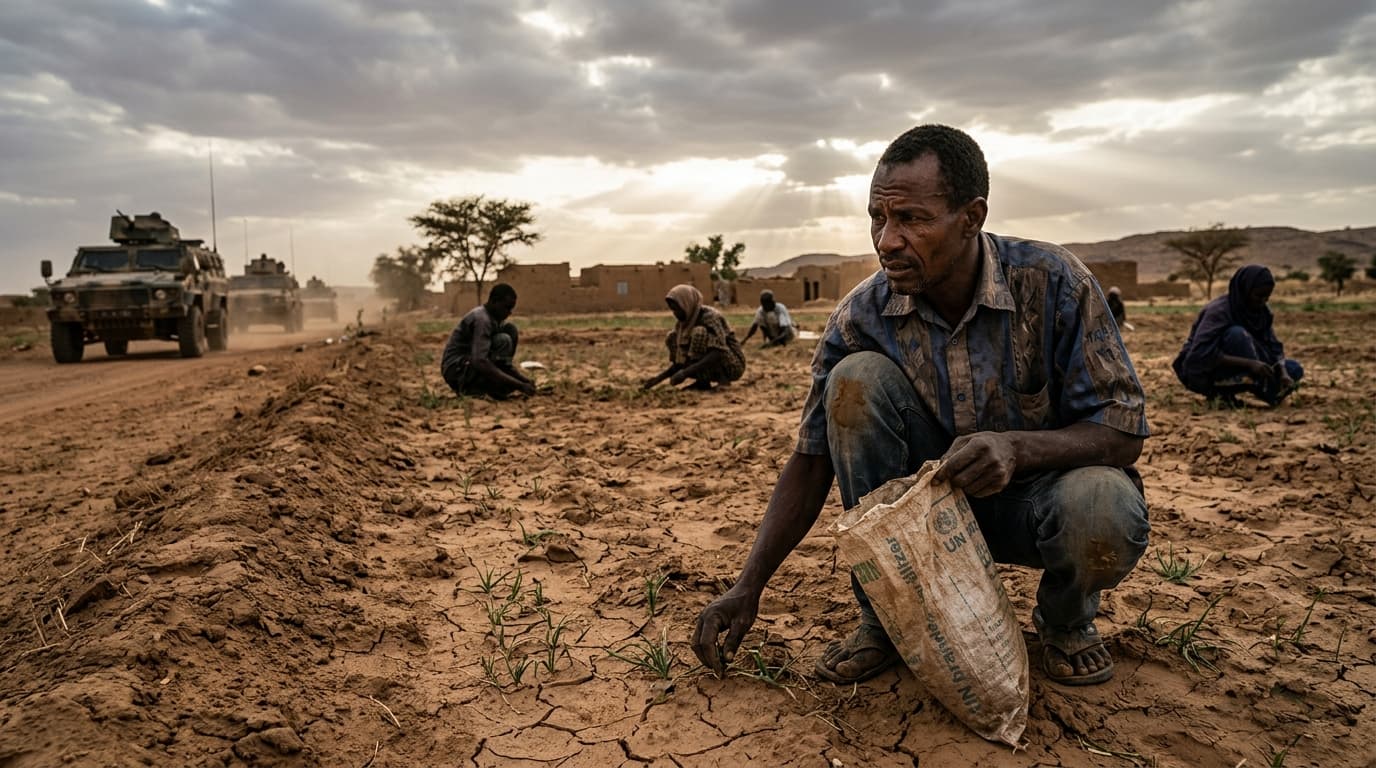
West Africa Food Crisis: Three Shocks in 2026
Conflict, climate extremes, and the Strait of Hormuz closure drive a severe food crisis in West and Central Africa, with fertilizer prices surging 80% and millions displaced.