Rubio's India Visit: Trump-Modi Relations at
Rubio's visit aims to repair US-India relations amid tensions.
Model Diplomat2 min readAsia
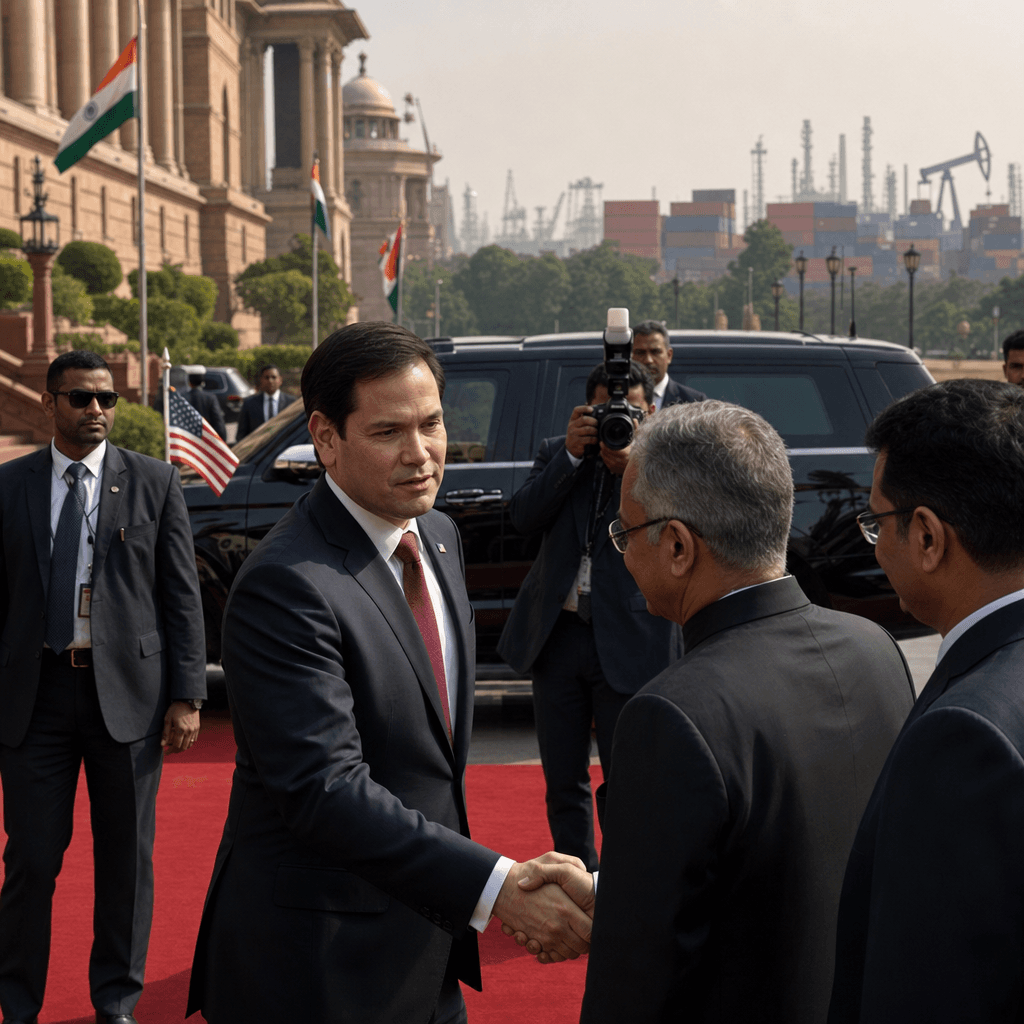
Rubio’s India Trip Tests a Fragile Trump-Modi Reset
Trump’s tariff pressure and India’s Russian-oil dependence have turned Rubio’s first India trip into a repair mission, not a victory lap.
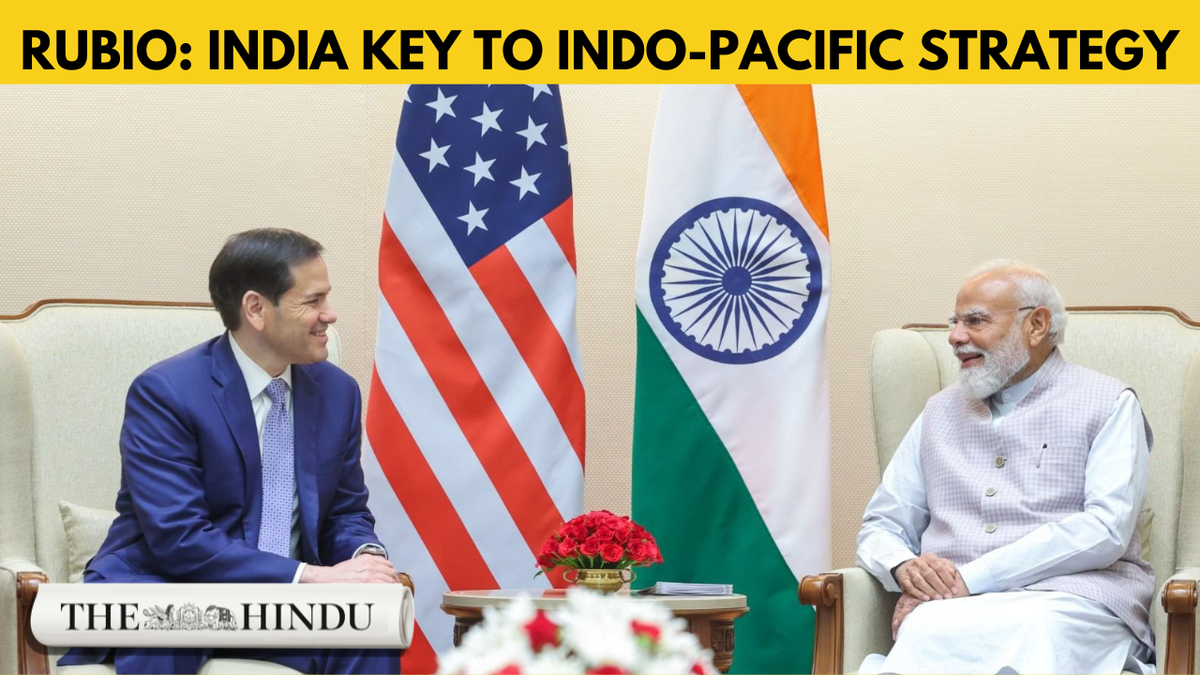
Marco Rubio is landing in India with Washington in the weaker bargaining position: the U.S. wants to stabilise a relationship damaged by Trump’s tariff shock, India-Pakistan friction and Washington’s pressure over Russian oil, while New Delhi is using the visit to extract a cleaner trade and security deal (Al Jazeera,
The Hindu). Rubio’s itinerary — Kolkata, Delhi, Agra and Jaipur — is less important than the agenda: energy security, trade, defence and the Quad foreign ministers’ meeting on May 26 (
The Hindu,
The Hindu).
Tariffs and oil are the real leverage
The core dispute is not symbolism. It is coercion. Trump’s 2025 tariff escalation — described in the reporting as punishment for India’s purchases of discounted Russian crude — jolted Indian policymakers into treating the U.S. as less predictable and more transactional (Al Jazeera,
The Straits Times). New Delhi’s response has been simple: keep energy options open and avoid signing up to a posture that makes India look like a junior partner.
That is why Washington is now trying to trade pressure for supply. Rubio has said the U.S. wants to sell India “as much energy as they’ll buy,” while the administration is also floating Venezuelan oil as an alternative to Russian barrels (The Hindu,
The Economic Times). That tells you the market power cuts both ways: India is a huge energy buyer, and Washington needs that market if it wants to reduce Russian leverage without forcing a rupture with New Delhi.
The Quad is the cover story, not the main event
The Quad meeting on May 26 matters because it gives both sides a strategic frame that is harder to reject publicly. India gets to present the visit as part of Indo-Pacific cooperation; the U.S. gets to keep the China-balancing agenda alive even as bilateral trust is thin (The Hindu,
The Straits Times). But the Quad is also where the relationship’s limits show up: India is cooperating, not aligning. It will work with the U.S., Japan and Australia on supply chains and maritime security, while still preserving room for Russian oil, Gulf ties and BRICS.
That is the practical bargain. The U.S. wants India closer on security, but India wants the benefits without the discipline.
What to watch next
The decisive moment is May 26, when Rubio and S. Jaishankar sit down around the Quad table and signal whether the two governments can freeze the trade fight long enough to claim momentum (The Hindu). Watch for three things: whether Washington softens tariff language, whether India hints at reducing Russian crude purchases, and whether any new trade framework is announced. If none of that happens, this visit will have achieved only the minimum: damage control.
Discover more
India
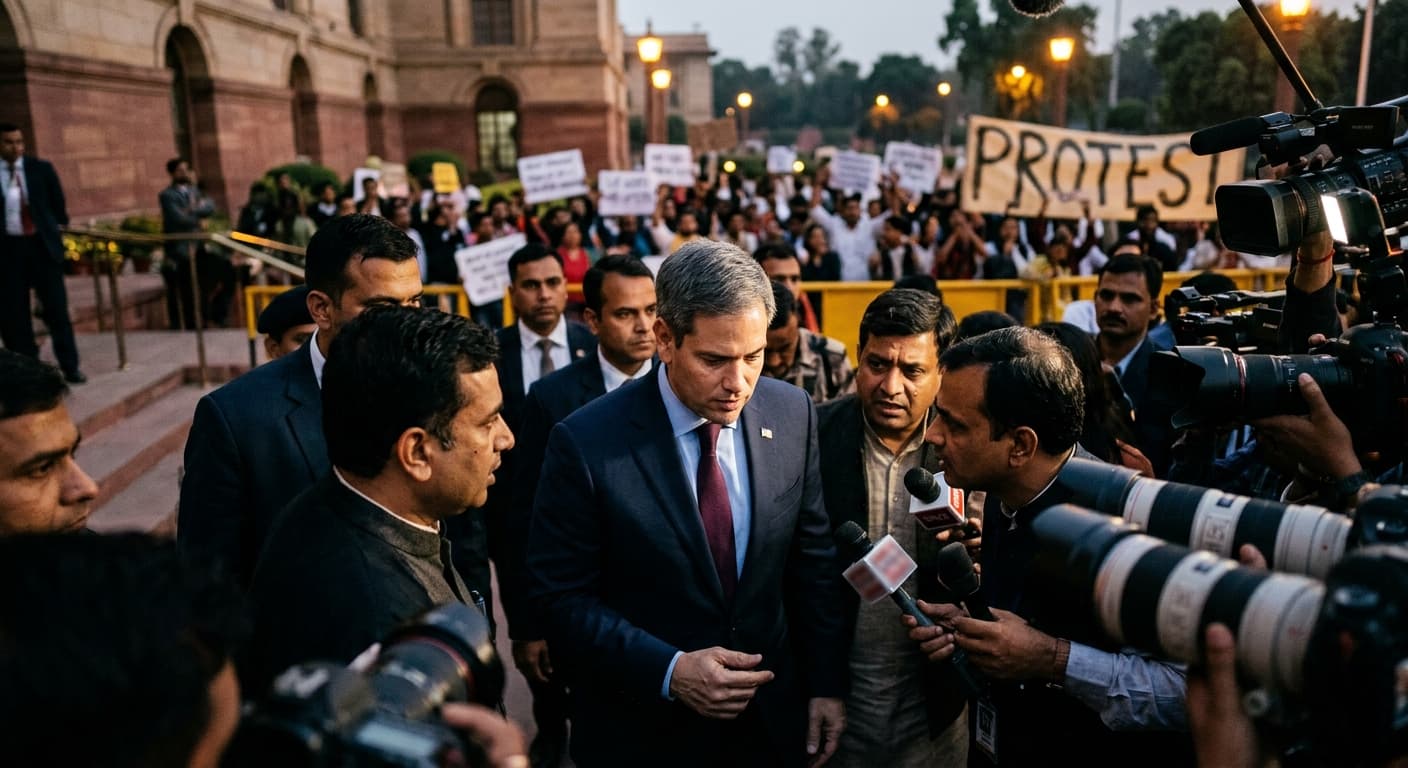
Rubio Defends Hormuz Blockade Amid India Pro
US Secretary of State Marco Rubio's defense of the Hormuz naval blockade escalates maritime-security tensions and sharply strains relations with India.
India
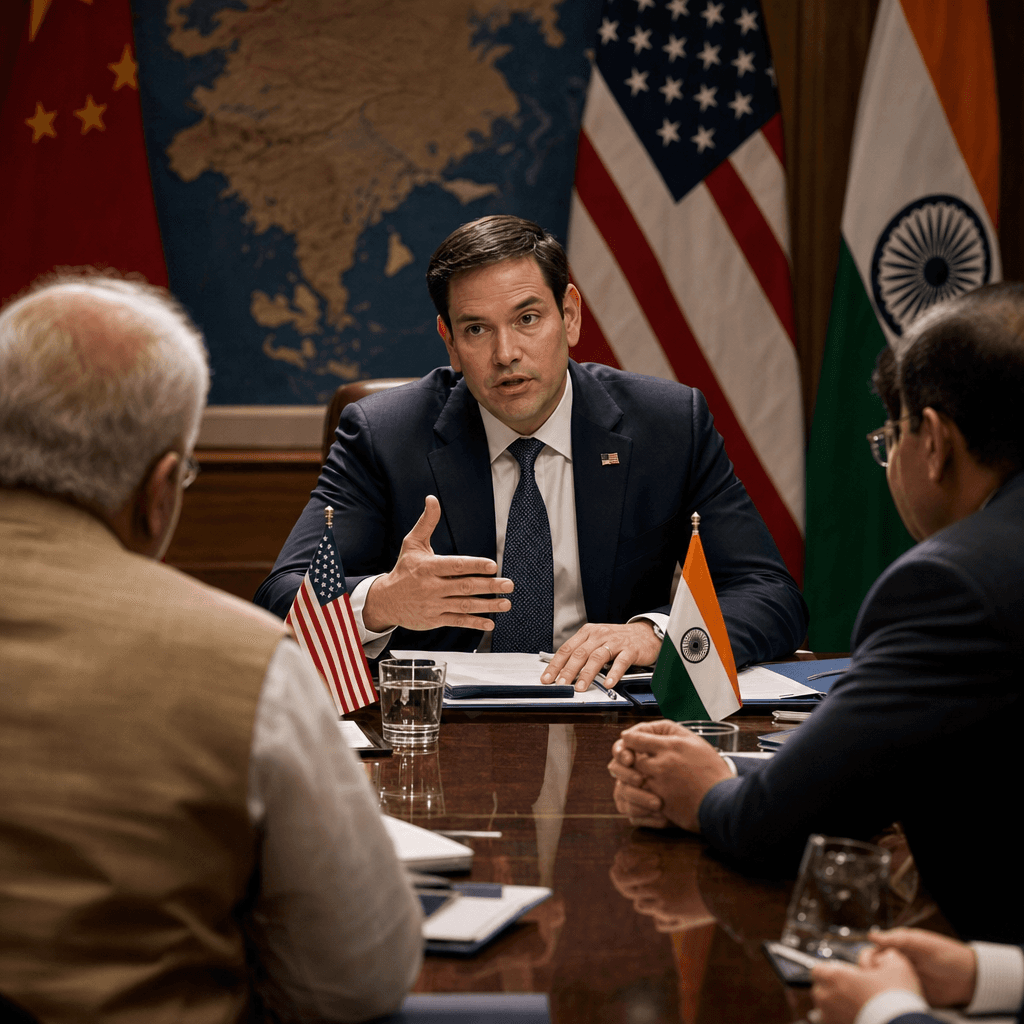
Rubio Recasts India as a Strategic Lever
Marco Rubio is recasting India as a strategic lever against China, framing the partnership around the Indo-Pacific even as trade frictions complicate the ties.
India
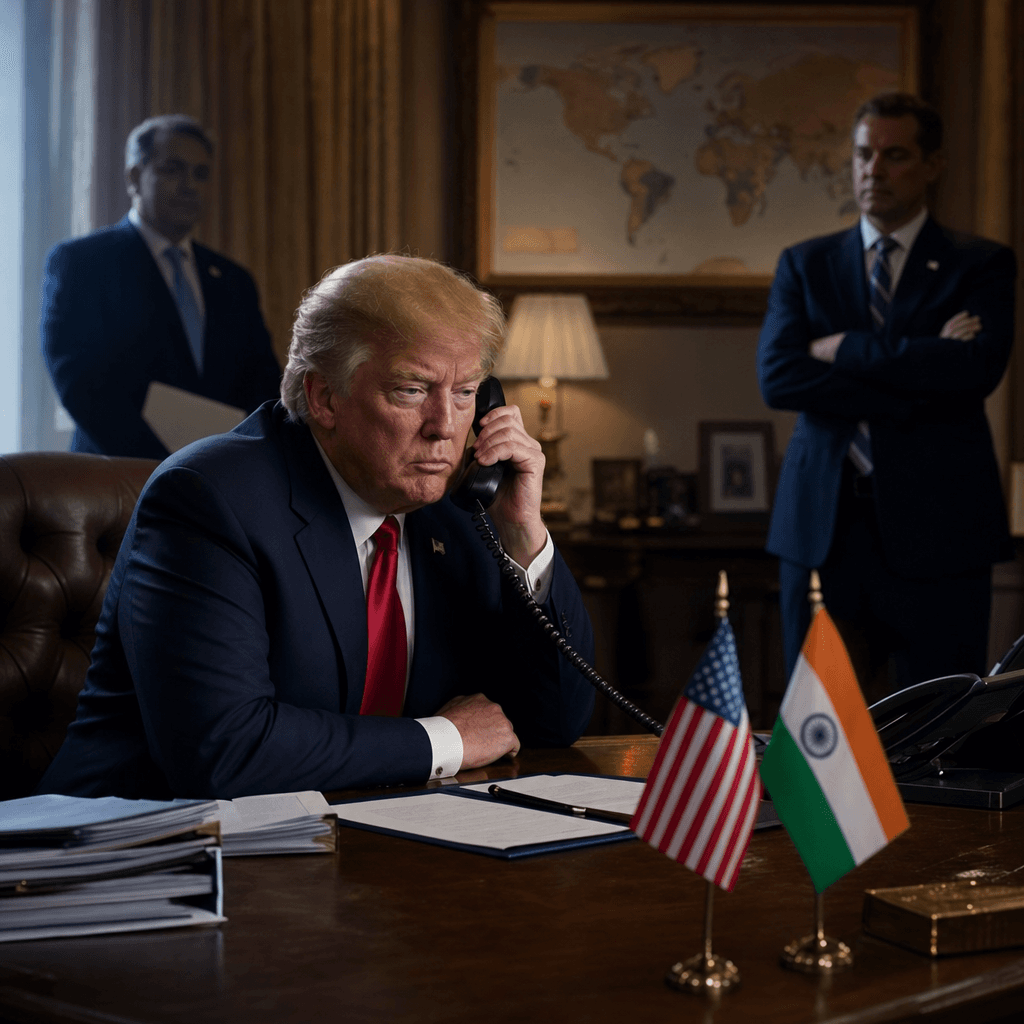
Trump’s Delhi Phone-In Signals Thaw
Trump's phone call to India signals a strategic thaw with Modi's government, hinting at warmer US-India relations even as unresolved trade tensions cloud ties.
India
Rubio's Modi Invite: U.S.-India Relations
Marco Rubio's invitation to Modi signals a fragile US-India reset, with Quad cooperation, trade friction, and Indo-Pacific strategy all hanging in the balance.