RSF Atrocities in Kordofan Signal Fight
Paramilitary forces kill civilians in Sudan's Kordofan region.
Model Diplomat3 min readAfrica
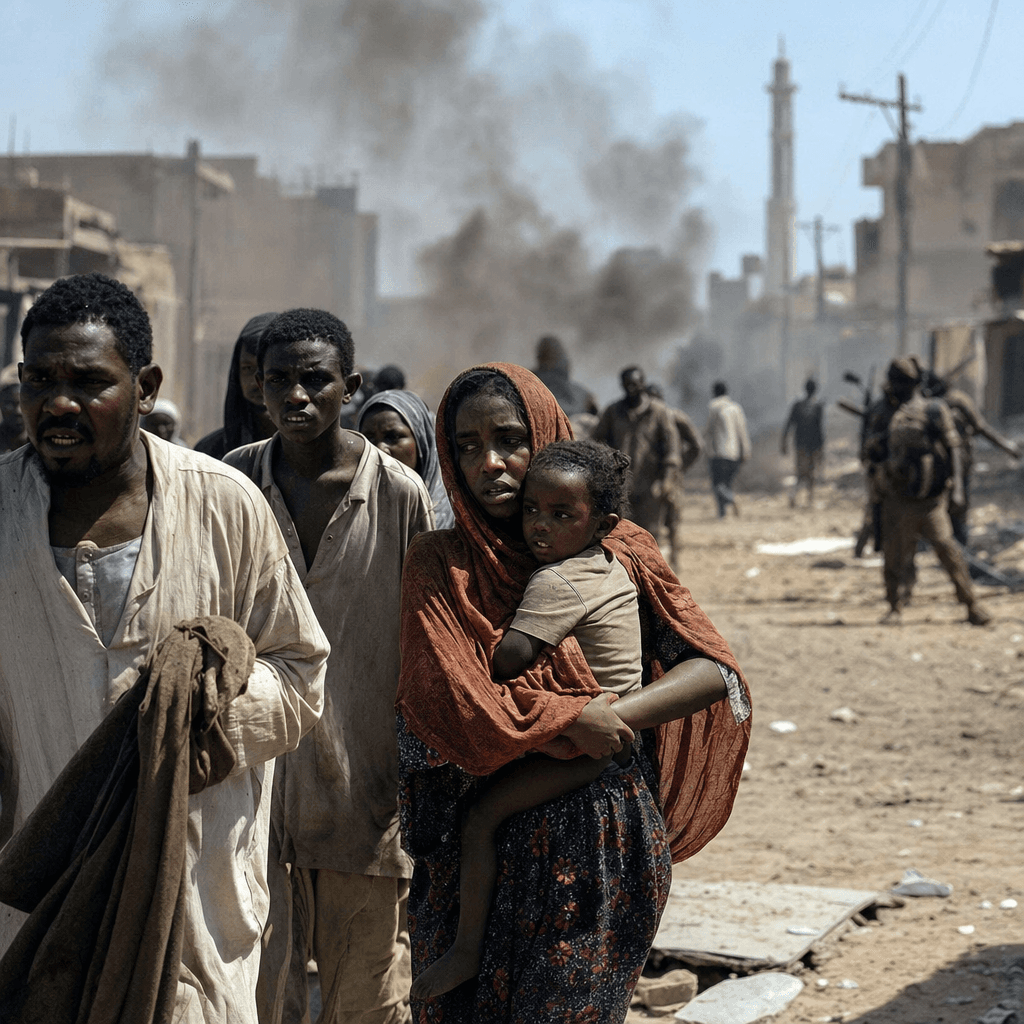
RSF Atrocities in Kordofan Signal Fight to Isolate el-Obeid
Paramilitary forces kill 27 civilians in North Kordofan, mounting tactical pressure on the Sudanese Armed Forces’ last western stronghold.
On Thursday, RSF-affiliated fighters killed at least 27 civilians, including elderly residents, in the rural al-Murrah area west of Bara in Sudan's North Kordofan state, according to reports by the Cairo-based Sudan Doctors Network (Al Jazeera). The assault, which took place during the holiday of Eid al-Adha, marks a persistent campaign of violence against non-combatants in areas lacking active military presence. For the RSF, terrorizing these village networks is a calculated strategy to isolate the strategic hub of Bara, disrupt military supply lines, and suppress local resistance across the wider Kordofan region.
The Battle for the Bara Corridor
Bara resides at the intersection of critical logistical corridors linking the capital city of Khartoum to the western Darfur region and oil-rich southern states. Control of this hub has shifted repeatedly, reflecting its immense strategic value in the wider conflict. In March 2026, the government-aligned Sudanese Armed Forces (SAF) launched a combined air-and-ground counter-offensive to expel the RSF from Bara (
Al Jazeera). While the army temporarily secured the town's perimeter, the surrounding countryside remains highly contested territory where the SAF struggles to project power.
By attacking undefended villages west of Bara, the RSF is demonstrating military impotence on the part of the state, signaling that the SAF cannot protect civilians even in areas it claims to control. This is a classic insurgent strategy: targeting the defenseless margins to keep government forces pinned down in urban garrisons. This dynamic has turned North Kordofan into a critical battlefield, forcing thousands of civilians to flee towards the state capital of el-Obeid to escape random summary executions (Al Jazeera).
The Siege of el-Obeid
The ultimate prize in North Kordofan is el-Obeid, the state capital and home to a major SAF military base. The city is currently structured as a lonely government-held island in a sea of RSF-controlled territory. Strategists note that the RSF is actively seeking to completely isolate el-Obeid (BBC). If the SAF permanently loses its highway link through Bara, resupply or reinforcement of el-Obeid will become nearly impossible, paving the way for a repeat of the brutal siege and fall of el-Fasher in North Darfur.
To throttle el-Obeid without engaging in costly urban operations, the RSF has increasingly turned to drone warfare. The group has repeatedly launched drone strikes targeting civilian gatherings and vital supplies, including a devastating attack on a funeral near el-Obeid that killed at least 40 mourners (BBC), and strikes on humanitarian aid convoys (
Al Jazeera). Denying logistical access to el-Obeid allows the RSF to systematically degrade the SAF’s defensive capabilities through attrition rather than direct military confrontation.
What to Watch Next
The key variable to monitor is the SAF's logistics corridor to the east. If the army is unable to secure the Bara-to-el-Obeid highway, el-Obeid will face acute shortages of food, medicine, and munitions. Watch for whether the Sudanese Armed Forces launch a renewed, heavy armored push from their bases north of el-Obeid to clear the rural areas of North Kordofan of RSF pockets. If they fail to do so before the rainy season worsens transport conditions, the RSF’s siege will tighten, making the fall of el-Obeid increasingly likely before the end of the year.
Discover more

Global Politics
US Seizes Iranian Ship, Tensions Surge
The US seizure of the Iranian ship Touska highlights a shift in control over the Strait of Hormuz, favoring Iran's strategic position.

Conflict & Security
Drone Warfare Killing Aid Workers at Unprec
Over 1,000 humanitarian workers killed in three years as cheap armed drones collapse legal protections. Gaza, Sudan, Ukraine, and DRC see deliberate targeting of aid convoys and hospitals with zero prosecutions.

Global
World Normalises Taliban as Afghan Women Eras
UN data shows Afghan women erased from public life as Russia recognises the Taliban, EU hosts officials in Brussels, and ICC warrants for gender persecution go unenforced.
Conflict & Security
West Africa Food Crisis: Three Shocks in 2026
Conflict, climate extremes, and the Strait of Hormuz closure drive a severe food crisis in West and Central Africa, with fertilizer prices surging 80% and millions displaced.