Rhyolite Ridge: $996M DOE Loan Meets Seoul
Ioneer's lithium-boron mine tests US critical-minerals policy.
Model Diplomat7 min readNorth America
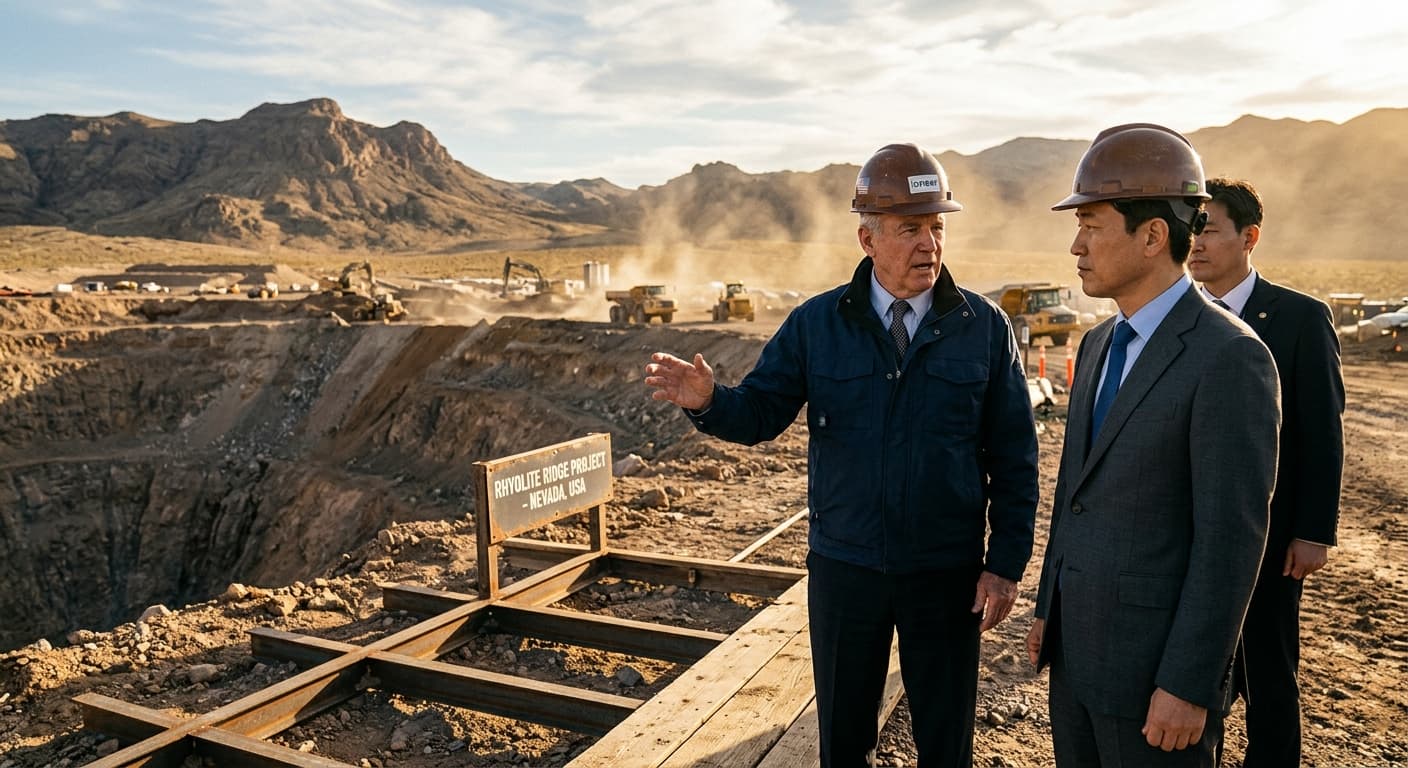
Rhyolite Ridge: A $996m DOE Loan Meets Seoul in the Nevada Desert
How Ioneer's lithium-boron mine became the test case for whether Washington's critical-minerals push can survive a Trump-era rewrite — and why Korean state capital, not American, is closing the gap.
Ioneer's Rhyolite Ridge mine in Esmeralda County, Nevada is no longer a Biden-era clean-energy story. It is the clearest live example of how US critical-minerals policy is being rewired under President Donald Trump: a US$996 million Department of Energy loan that closed in the last days of the outgoing administration, a Bureau of Land Management permit issued October 24, 2024, and — as of last month — non-binding letters of intent with Korea Overseas Infrastructure & Urban Development Corporation (KIND) and Hyundai Engineering that are due to become memoranda of understanding this July. The thesis: the marginal dollar and the marginal engineer keeping America's second permitted lithium mine on track for a second-half-2026 final investment decision are increasingly Korean, not American — and that is the shape the entire US critical-minerals strategy is quietly taking.
The loan that survived a transition
Rhyolite Ridge's federal-money story is not a Biden story anymore. Ioneer disclosed that the US$996 million project loan, originally sized under the Advanced Technology Vehicles Manufacturing (ATVM) program, "closed in January 2025 through the US Department of Energy's Office of Energy Dominance Financing," according to trade outlet Smallcaps. That closing sits inside a very particular window. The Loan Programs Office (LPO) announced eight conditional commitments totaling $22.92 billion on January 16, 2025, and the incoming administration then "temporarily froze these and other previous loans up to $41.2 billion" for case-by-case review, according to
testimony filed with the House Science Committee.
Ioneer's loan survived that review. The Trump White House's March 20, 2025 executive order Immediate Measures to Increase American Mineral Production instructed federal lenders to "take steps to rescind any policies that require an applicant to complete and submit… the disclosures that are required by Regulation S-K part 1300" — deregulating the pipeline for exactly the kind of hard-rock lithium project Rhyolite Ridge represents. In October 2025, DOE followed with its "Energy Dominance Financing Amendments," implementing the One Big Beautiful Bill Act; the
Government Accountability Office reported that the rule "materially expands the types of projects eligible for Title XVII loan guarantees" and could affect up to $250 billion in guarantees through September 30, 2028.
Translation: Rhyolite Ridge is now legally financed under a rebranded loan authority whose primary deregulatory effect, GAO noted, was to eliminate the community-engagement disclosure that Biden-era LPO had layered on. The credit is intact. The politics around it are different.
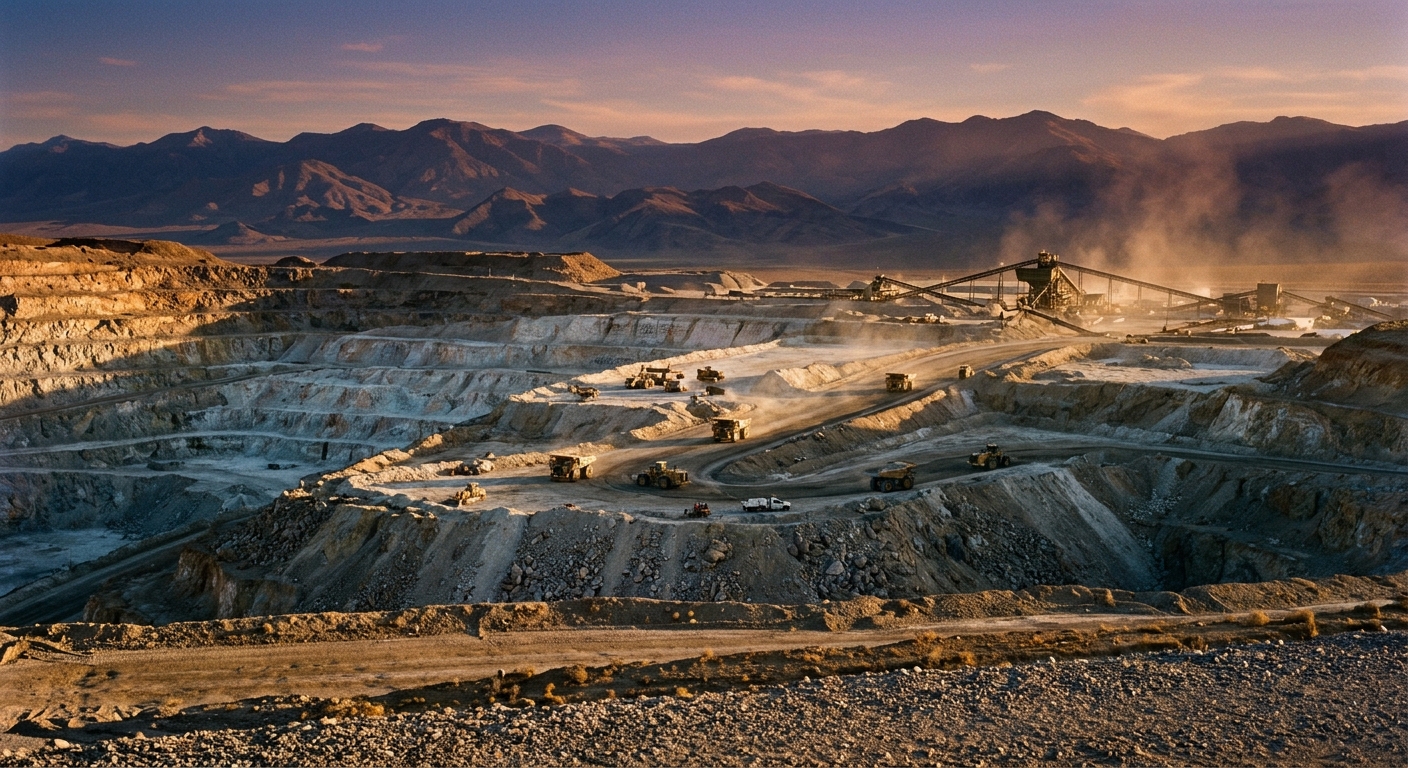
What Rhyolite Ridge actually is
The geology is what makes the project singular. Rhyolite Ridge is one of only two known lithium-boron co-deposits in the world and the only one in active development, according to reporting by NPR from the site. Ioneer plans to produce 27,800 tonnes per annum of lithium hydroxide and 135,500 tpa of boric acid, per its October 2025 project economics. Boric acid is the stabilizer: when lithium prices fall — as they have since 2023 — a boron revenue stream cushions the project's cash flow in a way pure-play brine and spodumene mines cannot match.
Federal permitting is complete. The Bureau of Land Management's Record of Decision, signed October 24, 2024, approved a 23-year mine life, 7,166-acre plan-of-operations boundary, and roughly 2,271 acres of surface disturbance under the modified layout designed to protect Tiehm's buckwheat critical habitat, according to the Federal Register notice. The US District Court for Nevada upheld that permit on March 31, 2026; plaintiffs — including tribes and environmental groups — appealed to the Ninth Circuit on April 9, 2026, with a ruling expected in mid-2027. Ioneer says the appeal will not delay construction; that assertion has not been tested.
The Section 45X advanced-manufacturing production credit gives the project a second federal backstop. Center for Strategic and International Studies analysis of Treasury's final Section 45X ruling notes that Ioneer can "receive both a 10 percent credit for the mining and a 10 percent credit for the processing of lithium" — a stack the CSIS authors flagged as "especially impactful for companies… facing depressed prices due to low EV demand and an oversupply of cheaper Chinese lithium."
Why Korea is writing the next check
The Biden-era design assumed a single US or Australian strategic partner would close the equity gap between DOE debt and the roughly US$1.4 billion of remaining capex. That did not happen. Sibanye-Stillwater, the South African miner that had held a 50% joint-venture option, exited in 2024; Ioneer's replacement search, launched formally in June 2025, was described in company filings as "more likely to result in a consortium than a single partner." Enter Seoul.
The Korea Institute for International Economic Policy, in a February 2026 brief, described Korea's critical-minerals playbook as an "MOU-centered approach" aimed at reducing import dependence on China "from around 80% to 50% by 2030." KIND, established by the Republic of Korea in 2018 to co-finance overseas infrastructure alongside chaebol contractors, has become the state vehicle of choice; the
UK's Department for Business and Trade signed a first-of-its-kind third-country cooperation MoU with KIND in 2025 covering, among other sectors, clean energy and sustainable infrastructure. Ioneer's June 2026 LOIs, per
Metal Tech News, fit the same template: KIND for structured project finance and equity risk-sharing, Hyundai Engineering for EPC delivery of the process plant.
The commercial logic runs both ways. Rhyolite Ridge already has offtake commitments with Ford, Prime Planet Energy & Solutions (the Toyota-Panasonic battery joint venture), EcoPro Innovation and Dragonfly Energy, per the May 2026 Amnesty International report on Nevada lithium mining. EcoPro is Korean; Prime Planet is a direct downstream customer for Korean-supplied cathode active materials. RAND's
trilateral critical-minerals report argues that South Korea's leverage in ex-China battery supply chains is uniquely valuable — and that the Minerals Security Partnership needs to become the vehicle for this kind of upstream-downstream welding. Rhyolite Ridge is that welding, in practice.
The Thacker Pass shadow
The reason Ioneer is racing to close its consortium before, not after, drawdown is what happened to its Nevada neighbor. Amnesty's report confirms that "in September 2025, as part of a renegotiation of Lithium America's USD$2.26 billion Energy Department loan, the US Government acquired a 5% stake in Lithium Americas and a separate 5% stake in the Thacker Pass project." That precedent — the federal government converting distressed critical-minerals debt into equity — has since been echoed by the BBC's reporting that the Trump administration will invest $1.6 billion for a stake in USA Rare Earth, on top of similar stakes taken in MP Materials and Vulcan Elements.
For Ioneer, that model is a warning as much as a template. A Korean-anchored consortium — KIND on the balance sheet, Hyundai on the EPC contract, EcoPro on offtake — lets the company reach FID without needing Washington to convert its debt into equity, and without diluting Australian minority holders any further. It is Seoul, not Washington, that gives Ioneer optionality against the Thacker Pass outcome.
The China math
The macro pressure keeping this deal alive is Chinese. Benchmark Mineral Intelligence reported on July 17, 2025 that the US Department of Commerce issued a preliminary antidumping determination on Chinese graphite anode material, raising the effective tariff on most Chinese anode imports to 160%. Non-EV lithium-ion battery imports from China face a 25% Section 301 tariff from 2026, per
Benchmark and Brookings' analysis of the
North American critical-minerals landscape. Section 232 investigations opened in 2025 are still pending. The Atlantic Council's
June 2026 issue brief argues bluntly that the US should "avoid tariffs on South Korea and other friendly actors wherever possible, especially when these measures risk cementing a Chinese monopoly in dual-use technologies."
In that policy environment, a permitted, DOE-financed, Korean-consortium-backed lithium-boron mine in Nevada is not just a project. It is the physical embodiment of the strategy the Atlantic Council and RAND are recommending — and, uncomfortably for both administrations that have taken credit for it, it is the strategy that is actually being executed.
Diplomat View
Rhyolite Ridge is now the cleanest test in the US critical-minerals portfolio of whether the alliance model can replace the government-equity model. The forecast: Ioneer converts July's MOUs into a binding consortium term sheet before September, closes FID in the fourth quarter of 2026, and draws first tranches on the DOE loan by mid-2027 — with Korean equity, not a federal equity stake, filling the gap. That outcome would validate KIND as a serious co-financier of US-based upstream projects and give Seoul a template it will replicate in Argentina, Indonesia and Australia within 18 months.
What would change the call: a Ninth Circuit reversal on the BLM permit in mid-2027, a DOE decision to condition drawdown on a federal equity stake in the manner of Thacker Pass, or a collapse in the lithium hydroxide price below roughly US$10/kg that forces boric acid to carry unrealistic margin. Any one of those and the Korean consortium walks — and Ioneer, like several US-listed peers, ends up with Washington as an unwilling shareholder rather than Seoul as a willing partner.
What to watch next
- July 2026: KIND and Hyundai Engineering are expected to convert their June 24, 2026 LOIs into memoranda of understanding — the market's first read on whether Korean commitments contain any binding equity or EPC pricing.
- Q4 2026: Ioneer's targeted final investment decision, which triggers DOE loan drawdown eligibility and locks in the 36-month construction schedule toward first production in 2029.
- Mid-2027: Ninth Circuit ruling on the tribal-environmental appeal of the BLM Record of Decision — the last legal switch that can still derail the project even after financing closes.
Discover more
US Politics
House Ethics Committee Pushes Sexual Miscond.
The House Ethics Committee has shifted responsibility for sexual harassment settlement records to the Office of Congressional Workplace Rights, complicating disclosure efforts.
India
700 Activists Accuse PM Modi of MCC Breach
Over 700 activists allege PM Modi breached election code with a televised address attacking opposition parties just before state elections.
Global Politics
Trump's Conflicting Messages on Iran War
Trump's mixed messages on Iran reflect a strategy of audience management, benefiting Tehran amid a complex geopolitical landscape.

Economics
Fed's Amex AML order puts correspondent banking on notice
Federal Reserve's Amex AML order requires board-level controls and a 90-day plan; OCC fined the bank $350 million over enterprise-wide deficiencies.