Revanth Reddy Backs a Signal-Free Hyderabad Vision
Hyderabad’s CM is pitching a traffic-free, green-mobility model — and asking Delhi to help fund the Musi and city infrastructure.
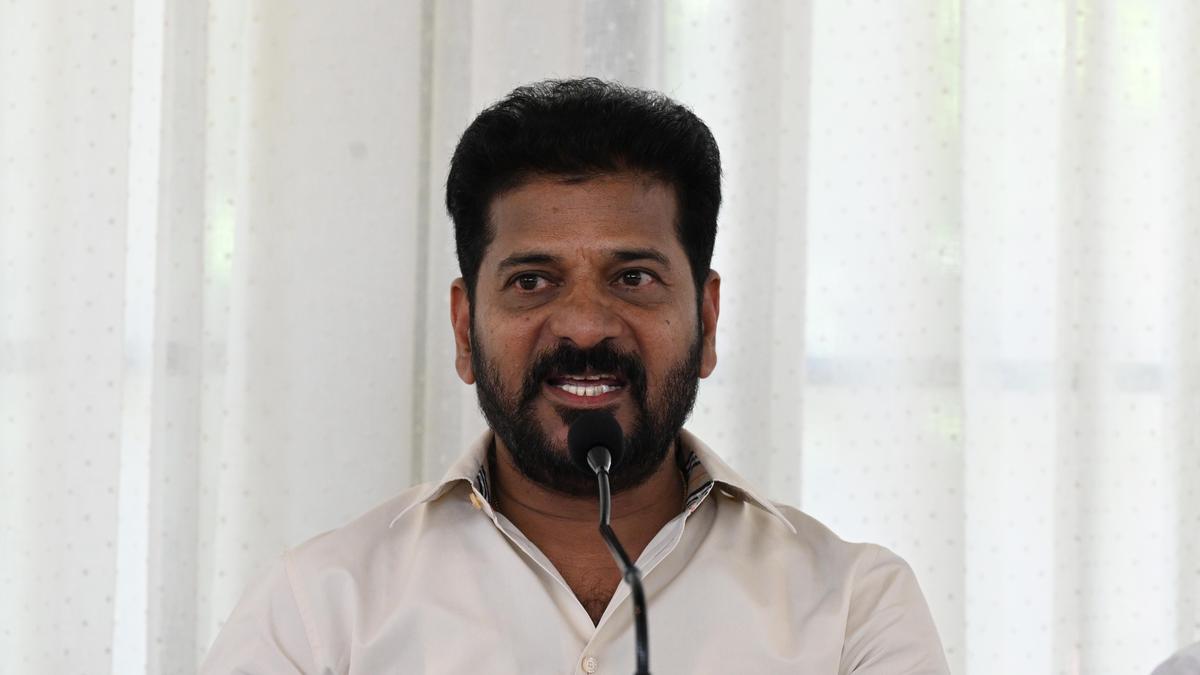
Chief Minister A. Revanth Reddy is using the Parliamentary Standing Committee on housing and urban affairs to do two things at once: sell a long-term urban reset for Hyderabad and signal that New Delhi’s money and cooperation are part of the plan. According to  The Hindu, he told the committee the state wants Hyderabad to become “traffic-free” and “signal-free,” backed by underpasses, surface corridors, elevated structures and multi-level parking.
  Siasat and
  Deccan Chronicle reported the same pitch, including a multi-transport system rather than simple road widening.
Why this matters
The political point is not the slogan; it is the financing model. Hyderabad’s traffic, water and river-rejuvenation problems are now being framed as a national urban policy issue, not just a state-level engineering problem. That matters because committee hearings are where states press for central support, especially on projects like the Musi Riverfront and broader urban infrastructure that need approvals, convergence funding and coordination with Union ministries. In  India, that is often where big-city plans are made viable or stalled.
Revanth’s larger frame is the “Telangana Rising-2047” master plan, which he tied to a three-zone economic map: CURE inside the Outer Ring Road as a services hub, PURE between the ORR and the proposed Regional Ring Road for manufacturing, and RARE beyond that for agriculture, as reported by The Hindu and Siasat. That is a land-use strategy as much as an infrastructure one: it tries to channel private investment, housing pressure and industrial growth into separate corridors instead of letting Hyderabad sprawl randomly.
Who gains, who loses
The winners are obvious. Real-estate developers, transport contractors, EV suppliers and firms positioned around the Musi project gain a clearer policy direction. Hyderabad’s municipal and state planners also gain a stronger case for central backing if they can package roads, water, mobility and river cleanup as one integrated urban program. Revanth also benefits politically: he gets to look like the chief minister with a long-range city plan, not just a manager of congestion.
The losers are the usual ones in Indian urban renewal: commuters facing construction disruption, informal land users near redevelopment corridors, and any bureaucracy that prefers incremental fixes over bundled megaprojects. The more ambitious the Musi and mobility agenda becomes, the more it depends on coordination across departments and with the Centre. The promise of a “signal-free” city is attractive, but the real test is whether the state can deliver land assembly, traffic redesign and capital spending without the plan fragmenting into separate schemes.
What to watch next
Watch for two things: whether the parliamentary committee translates this hearing into support for central assistance, and whether Telangana follows up with concrete timelines for the Musi Riverfront, EV bus rollout and multi-level parking. The next serious checkpoint is not the speech; it is the budget, the approvals and the first contract awards.