Repsol's Horcón Deal Tests Trump's Oil Order
Spain's Repsol takes lead in US-controlled Venezuelan oil trade.
Model Diplomat9 min readAmericas
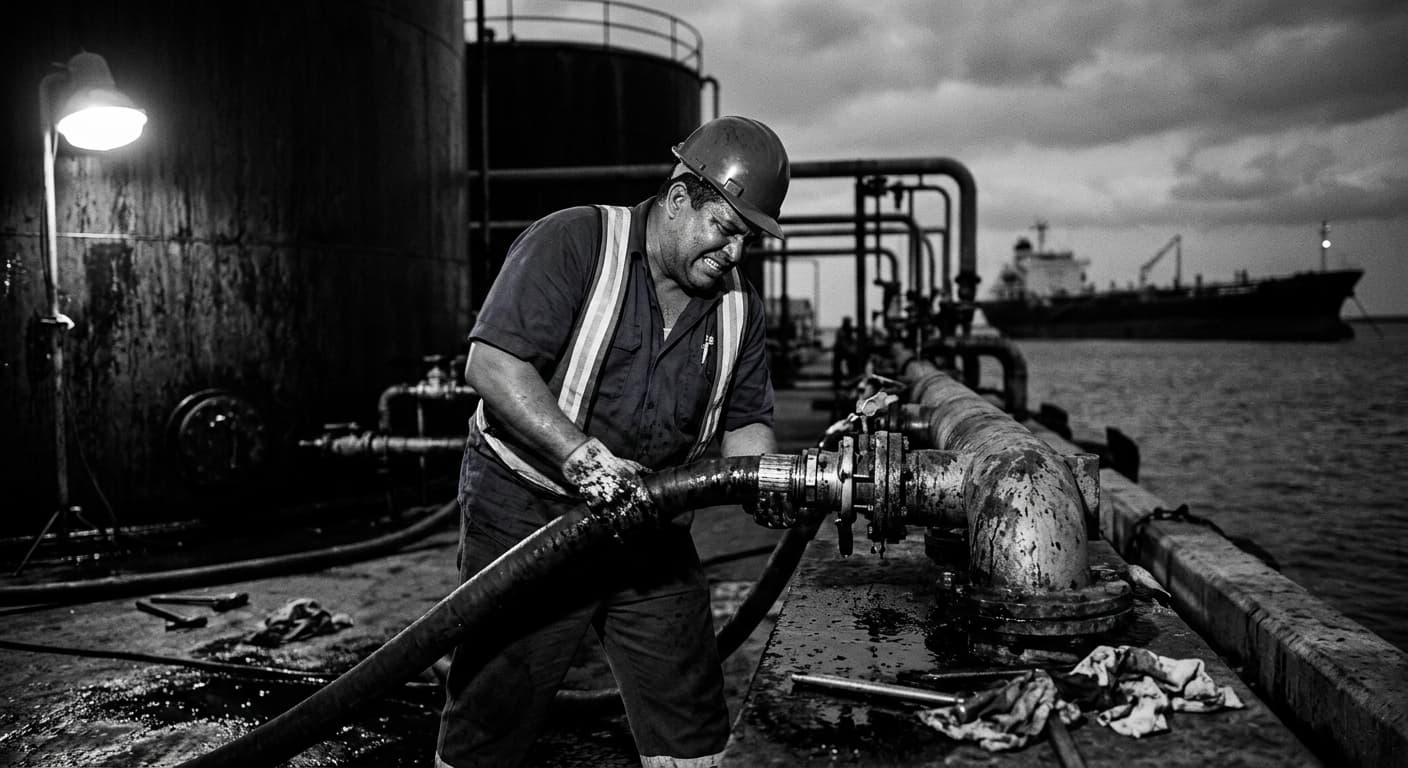
Repsol's Horcón Deal Is the Test Case for Trump's Venezuela Oil Order
Repsol's June 2026 exploration accord with PDVSA over the Horcón block quietly hands Spain the No. 3 slot in the US-controlled Venezuelan oil trade — and locks Chinese capital out of the world's largest reserves.
Repsol signed a letter of intent with Venezuela's Ministry of Hydrocarbons and Petróleos de Venezuela (PDVSA) on June 16, 2026, to explore and develop the Horcón block southeast of Lake Maracaibo — and the significance is not the geology. It is that a Spanish company, six months after US forces captured Nicolás Maduro and rewrote the rulebook on Venezuelan crude, is the first foreign operator to take fresh acreage under Washington's new licensing regime. The Horcón agreement is the first live test of whether Trump's "US-controlled" Venezuelan oil order can attract capital without American majors — and the early answer is that Spain, Italy and France are moving while ExxonMobil calls the country "uninvestable."
What was signed, and what Horcón is
The memorandum was inked at the Palacio de Miraflores in Caracas in a ceremony presided by interim President Delcy Rodríguez, according to El Periódico and
Energiminas. Horcón sits adjacent to Repsol's existing Barúa and Motatán fields and its Petroquiriquire and Petrocarabobo joint ventures, extending a footprint the Spanish major has held since 1993. Venezuelan state media reported that the deal would add roughly 20,000 barrels per day of light crude and open a parallel track for offshore gas development, according to
Extra News Mundo.
The wider ambition is bigger. Chief Executive Josu Jon Imaz told investors in February that Repsol expects to raise gross Venezuelan oil output by more than 50% within twelve months and to "multiply production by three within three years," according to the Financial Times. The company produced 71,300 barrels of oil equivalent per day in Venezuela in 2025, up from 67,000 the year before. Horcón is the vehicle that gets Imaz to his headline number.
The primary document that made this possible
The deal exists because of a single Treasury authorization. On February 13, 2026, the Office of Foreign Assets Control issued General License 50, superseded five days later by General License 50A, naming just six companies authorized to conduct oil and gas sector operations in Venezuela: BP, Chevron, Eni, Établissements Maurel & Prom, Repsol, and Shell. The license carves the market in advance — and it does so with two provisions that matter more than any contract clause.
First, GL 50A prohibits any transaction "involving a person located in the Russian Federation, the Islamic Republic of Iran, the Democratic People's Republic of Korea, the Republic of Cuba, [or] the People's Republic of China." Second, all royalty and tax payments must flow into the Foreign Government Deposit Funds established by Executive Order 14373 of January 9, 2026 — accounts held in custody by the US Treasury, not disbursed at Caracas's discretion. OFAC guidance published on
March 4, 2026 makes explicit that authorized transactions include "new investment in oil or gas sector operations in Venezuela, including expanding existing operations… engaging in new oil or gas exploration, production, or development activities."
That last phrase is the legal foundation of Horcón. Without it, Repsol's memorandum would be a sanctions violation.
The six firms Washington picked
That short list, published as the annex to GL 50A, is a policy weapon. Every foreign operator not on it — most importantly China's CNPC and Sinopec, and Russia's Rosneft — is frozen out. In the first four months after Maduro's capture, the Council on Foreign Relations tracked roughly 100 million barrels worth about $8 billion moving through US-controlled channels, with the top destinations being the United States (43%), India (26%) and Spain (8%). Monthly export value climbed from $600 million in January to about $3.7 billion in April as volumes ramped to 1.1 million barrels per day.
Spain's 8% share is not incidental. It is Repsol.
Why Madrid — not Houston — moved first
The consensus at Trump's January 9 White House oil summit, per Al Jazeera, was that American majors would lead a $100 billion reinvestment. What has actually happened is close to the opposite. ExxonMobil CEO Darren Woods told the
BBC that the country was "uninvestable" and warned re-entry would require "significant changes from what we've historically seen." Shell and ConocoPhillips have committed nothing beyond a monitoring posture.
Repsol's calculus is different for three reasons.
The first is a €4.55 billion receivable. According to Repsol filings cited by the Financial Times, PDVSA owes the Spanish company that sum for gas delivered for Venezuelan power generation, with US pressure on Caracas in the run-up to Maduro's capture "jeopardising those payments" and building a "sizeable debt." Every barrel Repsol lifts under GL 50A is, in effect, a payment against that debt — a workout mechanism no American firm can match.
The second is legal exposure. ExxonMobil and ConocoPhillips still carry arbitration awards from Venezuela's 2007 nationalizations — $1.6 billion and $8.7 billion respectively, according to a Congressional Research Service brief — with additional Chávez-era Petroquiriquire history documented in
Indian government filings from the 2010 Carabobo consortium. Any US major re-entering could see revenues attached by creditors before a barrel loads. Repsol has no such history and no such target on its back — a fact the Rodríguez interim government understands and prices into what it offers.
The third is politics. Repsol's specific licenses were revoked by the first Trump administration in early 2025, according to the BBC, as Washington moved to curb funds to the Maduro regime. Its return to the annex twelve months later is the reward for keeping crews on the ground through the sanctions cycle — and a signal from Washington that European allies willing to play by the new rules get first refusal ahead of Wall Street's cautious return.
The China displacement is the story
The exclusion clause in GL 50A does what a decade of secondary sanctions could not. Between 2000 and 2023, per the BBC, Beijing extended more than $100 billion in oil-backed lending to Venezuela; around 80% of Venezuelan crude went to China last year, primarily to independent "teapot" refineries in Shandong. That trade is now legally impossible for any counterparty subject to US jurisdiction — which, in the oil-services and dollar-clearing stack, is almost everyone.
The scale of what Beijing has to lose is real but bounded. A US House Select Committee report cited by Al Jazeera estimated that from sanctioned crude — Venezuelan, Iranian and Russian combined — China assembled a strategic petroleum reserve of roughly 1.2 billion barrels by early 2026, equivalent to about 109 days of seaborne import cover. Venezuela alone accounted for about 4% of Chinese oil imports last year. Beijing can survive the loss. What it cannot survive quietly is the precedent. Renmin University's Cui Shoujun warned on state media, cited by the BBC, that "Chinese enterprises need to fully assess the risks and extent of potential US intervention before investing in related projects."
That is the second-order effect of the Horcón deal. Repsol's incremental barrels — and the acreage Eni, Maurel & Prom and BP will claim next — physically replace Chinese offtake from the same basin. Every barrel Repsol adds is a barrel Beijing loses, and every European operator that signs binds a US ally into a sanctions architecture Beijing calls illegal.
Spain's awkward geopolitical role
Pedro Sánchez's government spent two years distancing itself from Trump's Venezuela policy, including refusing to recognize the January 2025 self-inauguration of Maduro for a third term. Now Spain is the third-largest buyer of Venezuelan crude under a US-controlled sales process it did not design and cannot influence.
That is not a contradiction Madrid can easily talk its way out of. Repsol's €4.55 billion receivable, its Cardón IV offshore gas joint venture with Eni — described by BBC Mundo as one of the largest gas finds in Venezuelan history, with reserves of 1,000–1,400 million barrels of oil equivalent — and its 33-year track record in the country make walking away commercially unthinkable. Yet accepting GL 50A means Spanish oil revenues from Venezuela now transit through Foreign Government Deposit Funds at the US Treasury. Spain has traded reserve access for policy leverage — Washington's, not its own.
The Iraq parallel that reframes it
The historical analogy oil-market analysts keep reaching for is Iraq. Eric Olander of The China-Global South Project told the BBC that "the situation in Venezuela could easily descend into chaos" and warned observers to "not forget the lesson from Iraq, where the US also said the country's oil reserves would pay for the reconstruction of the economy. That did not happen and China is now the largest buyer of Iraqi crude." Rice University's Francisco Monaldi, quoted by
NPR, noted Venezuela is a "brownfield" — well-mapped and relatively low-risk geologically — but political stability, not geology, is the binding constraint.
The numbers reinforce that. Rystad Energy estimates it would take $8–9 billion in fresh investment per year to triple Venezuelan production by 2040, per the BBC. Wood Mackenzie sees output reaching two million barrels per day within two years under improved management. Chevron's stable 220,000 bpd baseline — flagged by
CSIS as the ceiling of what disciplined foreign operation can deliver under Anti-Blockade Law conditions — is the reality check. Horcón's 20,000 bpd is not scale. It is a proof of concept.
The Gulf Coast quiet winner
The other beneficiary is US refining. Nearly 70% of American refining capacity was built to process heavy crude, per the American Fuel and Petrochemical Manufacturers, cited by Al Jazeera. Chevron's Pascagoula refinery is now importing roughly 250,000 barrels per day of Venezuelan crude, with a stated ceiling of 400,000 bpd, according to the
BBC. That flow displaces Canadian heavy grades and, by extension, softens the leverage Ottawa and Mexico City have historically held over Gulf Coast pricing. Repsol's Horcón barrels — light, easier to refine — will more likely end up at Spanish refineries at Cartagena and Bilbao, feeding an EU still weaning off Russian crude.
The counter-view: this is sanctions arbitrage
Not every observer reads Horcón as consequential. CSIS argued before the January intervention that Western oil licenses under Venezuela's 2020 Anti-Blockade Law fund the regime without delivering transparency, since contract terms remain confidential and royalty flows opaque. That critique now applies to the Rodríguez interim government as well. The CFR audit documented $300 million already disbursed from a Qatar-based transit account to Caracas with no public accounting, and Democratic lawmakers have formally asked the Government Accountability Office to audit the entire system.
Rystad's Claudio Galimberti told the BBC that meaningful investment on Trump's $100 billion scale is "fantastical" without political stability, and that smaller-firm commitments in the near term will "hover in the $50m range." Repsol's Horcón outlay likely sits at the upper end of that band.
What to watch next
- The 90-day GL 50A reporting cycle. Under paragraph (d), Repsol and the other five licensees must file transaction reports with the State Department and DOE every 90 days. The next round lands in mid-August 2026 and will be the first hard data on foreign lifts.
- Venezuela's promised presidential election. Democratic lawmakers have introduced legislation demanding a firm election date, per CFR. Any postponement puts GL 50A's political premises — and Repsol's new contract — at risk.
- Eni's follow-on move. If Rome's oil champion signs a comparable exploration deal, likely tied to expanding Cardón IV gas, it will confirm that Europe, not America, is doing the actual capital deployment in post-Maduro Venezuela.
- Chinese arbitration filings. Beijing has around $10 billion in outstanding Venezuelan oil-backed loans, per the BBC. Watch for CNPC to seek attachment of oil cargoes as collateral — the mechanism most likely to complicate GL 50A enforcement.
Diplomat View
The Horcón deal is not about 20,000 barrels. It is Washington testing whether it can run a sanctions-based industrial policy in which allied European majors do the capital work, US refiners get the crude, and the Treasury holds the cash — with China and Russia legislated out of the world's largest oil reserve. On present evidence, the model works: Repsol is expanding, Maurel & Prom was added within days, and Spanish import share has already reached 8%. The forecast would revise if any of three things happens — a US federal court rules Executive Order 14373 unconstitutional in the pending challenges, the Rodríguez interim government collapses without a credible successor, or China secures a workaround using a non-dollar clearing mechanism through a third country. Absent those, expect a second and third exploration block to be tendered to European operators before year-end, and expect no serious American major to sign anything until Q1 2027 at earliest. The winners of Trump's Venezuela order are, awkwardly for Washington's rhetoric, headquartered in Madrid, Rome and Paris.
Discover more
US Politics
House Ethics Committee Pushes Sexual Miscond.
The House Ethics Committee has shifted responsibility for sexual harassment settlement records to the Office of Congressional Workplace Rights, complicating disclosure efforts.

US Politics
SNAP Food Assistance Faces Legal Challenges
In 2026, SNAP faces stricter eligibility rules and mounting legal challenges, threatening food assistance for the millions of Americans who rely on the program.
India
700 Activists Accuse PM Modi of MCC Breach
Over 700 activists allege PM Modi breached election code with a televised address attacking opposition parties just before state elections.

Economics
Fed's Amex AML order puts correspondent banking on notice
Federal Reserve's Amex AML order requires board-level controls and a 90-day plan; OCC fined the bank $350 million over enterprise-wide deficiencies.