Rand Paul Backs Trump’s Iran Deal Against GOP
Paul supports Trump’s Iran negotiations amid GOP opposition.
Model Diplomat3 min readNorth America
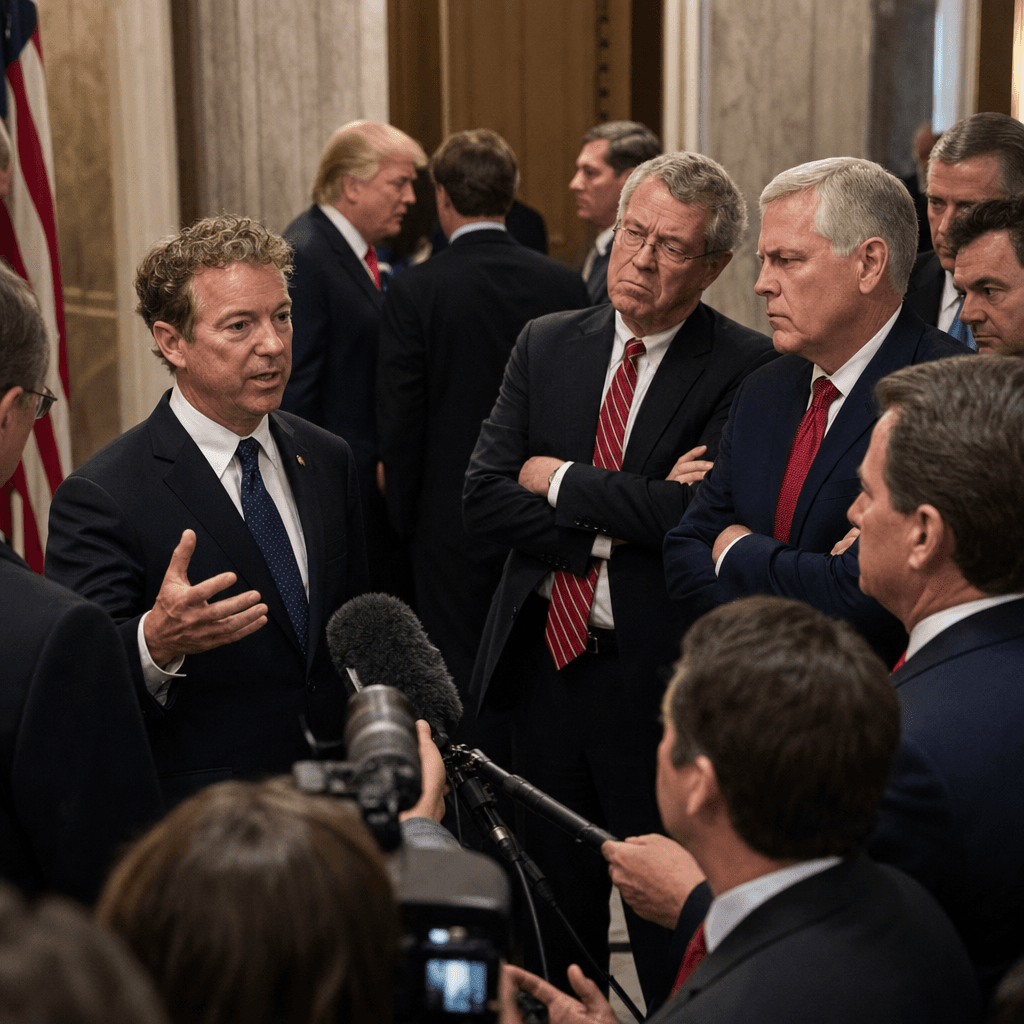
Rand Paul Backs Trump’s Iran Deal Against GOP Hawks
Paul is giving Trump political cover to cut a deal with Iran while hawkish Republicans warn it could entrench Tehran and undercut U.S. leverage.
Sen. Rand Paul is trying to turn the emerging Iran agreement into a test of Trumpian restraint, not Republican orthodoxy. Paul said critics should “give President Trump the space” to pursue a deal, arguing that “war virtually always ends with negotiations,” after Trump said the U.S. was close to an accord that would reopen the Strait of Hormuz and end the war, according to The Hill and
Bloomberg.
Trump holds the leverage — for now
This is less a policy debate than a fight over who gets to define victory. Trump has the strongest hand because he can still threaten renewed strikes, claim credit for any ceasefire, and sell relief for global energy markets if Hormuz reopens. Bloomberg reported that Secretary of State Marco Rubio said there may be “some good news” but not final news, a reminder that the administration is using ambiguity as leverage while talks continue. If the deal materializes, Trump gets the win; if it collapses, he can blame Tehran.
Paul’s intervention matters because it gives the White House a Republican voice against the party’s foreign-policy hawks. The Hill says Sen. Lindsey Graham and Senate Armed Services Chair Roger Wicker were already attacking any settlement that leaves Iran able to threaten Gulf shipping or retain strategic leverage. That split is the real story: Paul is positioning the anti-interventionist wing as the loyal Trumpist camp, while Graham, Ted Cruz, and Wicker are warning that diplomacy could lock in Iranian gains.
Congress is the constraint Trump cannot ignore
The emerging deal is landing at the same time Congress is testing how much room Trump actually has to act alone. The Globe and Mail reported that the Senate advanced a war powers resolution with four Republicans joining Democrats, a sign that support for an open-ended war is thinning even inside Trump’s party. That matters because it changes the bargaining environment: Trump is negotiating not just with Iran, but with Republicans who can turn a peace framework into a domestic liability if they conclude it is too soft.
Paul’s argument is therefore tactical, not charitable. He is helping Trump avoid the appearance of being boxed in by congressional conservatives while also preserving the anti-war lane he has long occupied. The beneficiaries are Trump, if he can announce a deal, and Paul, if he can claim he stood for restraint while the hawks demanded escalation. The losers are the GOP senators who want a harder line but have little appetite for owning a fresh war if negotiations fail.
What to watch next
The next trigger is whether Trump or Rubio announces final terms in the next day or two, as both The Hill and
Bloomberg suggest could happen. More important is what the text actually contains: whether Iran gives up enriched uranium, whether sanctions relief is immediate or delayed, and whether Congress gets any formal role. If those terms disappoint hawks, expect the war-powers fight to intensify in the Senate first.
Discover more
Global Politics
Trump's Conflicting Messages on Iran War
Trump's mixed messages on Iran reflect a strategy of audience management, benefiting Tehran amid a complex geopolitical landscape.

Economics
Fed's Amex AML order puts correspondent banking on notice
Federal Reserve's Amex AML order requires board-level controls and a 90-day plan; OCC fined the bank $350 million over enterprise-wide deficiencies.

Conflict & Security
Guatemala: El Niño 2026–27 becomes regional security test
UNICEF: 25.8M children face El Niño risks in Latin America; Guatemala maps 188 municipalities for drought and food insecurity amid regional security test.

Economics
Fed's stress-test overhaul is a capital-smoothing exercise
Federal Reserve finalized stress-test overhaul: two-year averaging for bank capital buffers and public input, expected to halve volatility.