Rahul Gandhi Defends Tamil Nadu's Autonomy
Gandhi's stance on Tamil Nadu autonomy backfires politically.
Model Diplomat8 min readIndia
Rahul Gandhi Defends Tamil Nadu's Autonomy — and Loses the State
Rahul Gandhi's Tamil Nadu autonomy pitch helped kill the 131st Amendment, then handed the political dividend to Vijay's TVK — not the Congress.
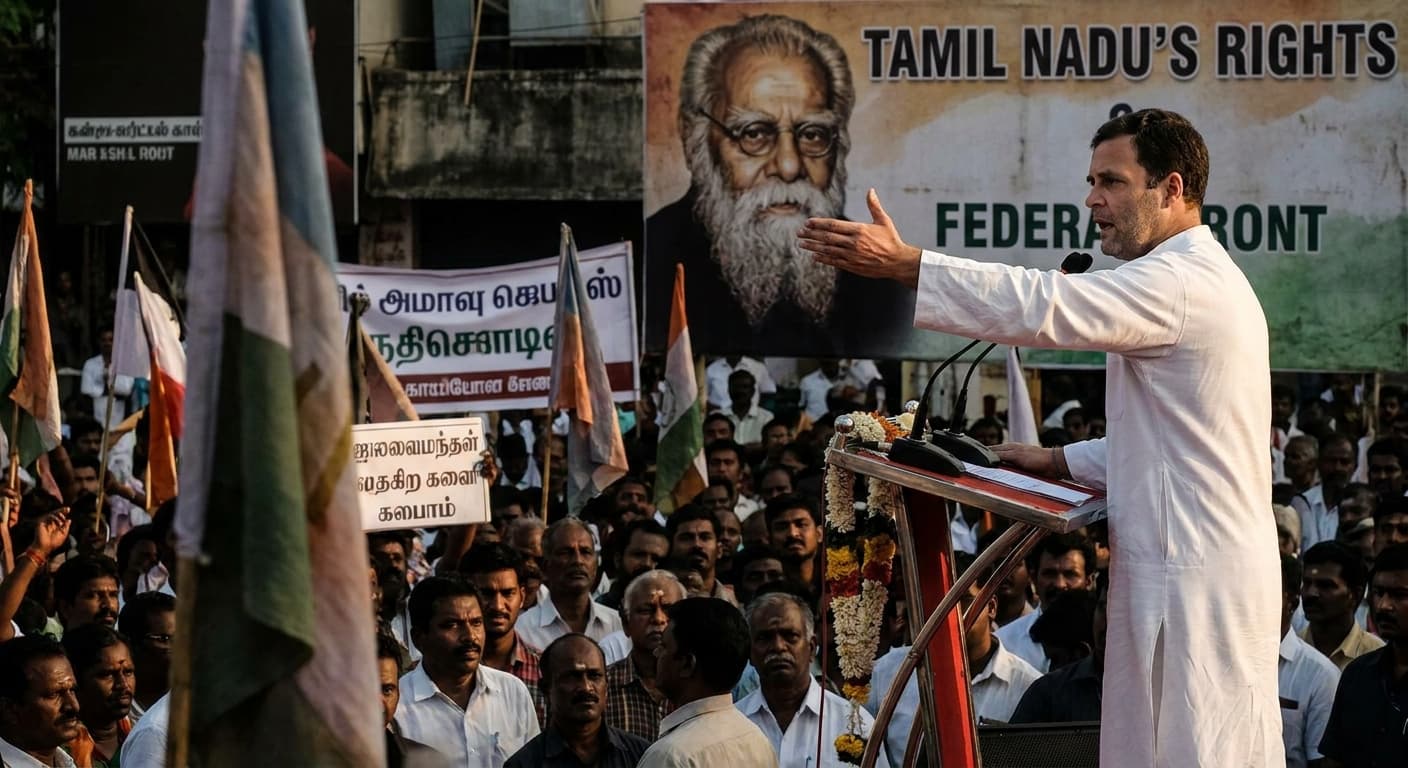
Rahul Gandhi's stand against the Modi government's 131st Constitutional Amendment Bill delivered its most consequential political result on July 6, 2026, when Congress's own Tamil Nadu alliance was buried under the very electoral wave his federalism argument helped generate — and the Congress leader himself flew to Chennai to bless the swearing-in of the man who inherited it. The Ponneri speech in April — "there is no force on this planet that can touch Tamil Nadu or its language" — was the loudest defence of state autonomy any national leader has made in a generation. It won the constitutional fight in Delhi and lost the political fight in Chennai. The primary beneficiary of Gandhi's argument is not the Congress; it is Chief Minister C. Joseph Vijay.
The vote that reset the argument
On April 17, 2026, the Constitution (One Hundred and Thirty-First Amendment) Bill, 2026 was defeated in the Lok Sabha by 298 votes to 230, according to NDTV. Prime Minister Modi's National Democratic Alliance was 62 short of the 360-vote, two-thirds threshold that a constitutional amendment requires. Two linked bills — the Delimitation Bill, 2026 and the Union Territories Laws (Amendment) Bill, 2026 — were shelved, with Home Minister Amit Shah telling the House they were "intrinsically linked" to the women's reservation package, according to the government's own account in a
Press Information Bureau release.
The package would have raised the Lok Sabha's ceiling from 550 to 850 seats, allocated up to 815 to the states, and — critically — removed the constitutional requirement that seats be reapportioned after every census, according to the Carnegie Endowment for International Peace. The
BBC reported that although the cap was raised, the underlying "basis for this number is unclear and does not appear to be proportionate to population growth", in the words of Arghya Sengupta of the Vidhi Centre for Legal Policy.
The southern grievance is arithmetic, not sentiment. A study by Milan Vaishnav and Jamie Hintson, cited by Foreign Affairs, projects that a post-2026 delimitation would give Uttar Pradesh and Bihar together as many as 21 additional Lok Sabha seats, while Tamil Nadu and Kerala could lose a combined 16 — a "punishment", as Tamil Nadu Chief Minister M.K. Stalin then put it in
The Economist, "for having fewer children and generating more wealth".
Gandhi's Ponneri argument, in one line
A day after the vote, Gandhi addressed a rally in Ponneri to campaign for the DMK-led Secular Progressive Alliance. Referring to the defeated bill, he told the crowd: "The idea was to reduce Tamil Nadu's representation in the Union of India, to weaken southern States, small States and the North Eastern States." He closed by saying Tamil is "the language you breathe" — and that "no force on this planet can touch Tamil Nadu or its language", according to NDTV.
Earlier campaign stops had been sharper. In Kanyakumari and Colachel, Gandhi accused the BJP of using its ally, the All India Anna Dravida Munnetra Kazhagam (AIADMK), to install a "puppet CM" run from New Delhi. "The RSS is planning to, and trying to, rule Tamil Nadu by proxy," The Hindu reported him saying. "The same way Donald Trump controls the Prime Minister of India, the Prime Minister of India wants to control Tamil Nadu through the AIADMK." The Congress leader also alleged AIADMK figures were "compromised due to corruption and pressure from central agencies", according to the
Indian Express.
The framing was consistent: this was not a routine dispute over parliamentary seats. It was a bid to relocate sovereignty out of Chennai. The Ponneri speech promised six welfare "guarantees" — ₹2,000 a month for women, 60 percent reservation in Group C and D government jobs, free property registration for first-time women owners — but the ideological core was federalist. Governance, Gandhi said, must "empower panchayats and local leadership rather than centralise authority in Delhi."
The primary document, and what it actually said
The Modi government's own defence, filed in the Amit Shah reply in the Lok Sabha, grounded the bills in Articles 81, 82, and 170 of the Constitution and reframed them as pro-federal. Shah argued that "maintaining federal balance, ensuring representation in the Lok Sabha in proportion to population, and balancing the powers of the states are also key objectives of delimitation." He accused the opposition of denying Scheduled Caste and Scheduled Tribe voters the seat expansion those categories require.
The Takshashila Institution's post-mortem noted the bills' central mechanical proposal — expanding the Lok Sabha to roughly 840 seats to "solve the apportionment problem" — but concluded it did not: expansion softened the political fight without fixing the institutional one, since Parliament's effectiveness is a function of how MPs work, not their count, according to a Takshashila analysis.
The Vidhi Centre for Legal Policy identified a subtler problem: the bill raised the Lok Sabha cap but did not correspondingly expand state assemblies, meaning "fast-growing states could gain more MPs without a corresponding rise in MLAs." That would have created a federalism mismatch inside the amendment itself.
Why Congress won the argument and lost the state
Here is the paradox the July 6 oath in Chennai settled. Gandhi's federalism pitch was the loudest constitutional defence of Tamil Nadu's autonomy since the 1960s anti-Hindi agitations. It was also, quietly, a rescue mission for a DMK-Congress alliance that the Institute of South Asian Studies had flagged as facing a real challenge from "younger, digitally-savvy" voters not necessarily rooted in classical Dravidian ideology, in an ISAS analysis.
The rescue failed. On May 4, 2026, actor C. Joseph Vijay's newly formed Tamilaga Vettri Kazhagam won 108 of 234 assembly seats. The DMK collapsed to roughly 60; the Congress won five. Chief Minister Stalin himself was trailing in his Kolathur stronghold in Chennai, according to live coverage from the BBC. The state that Rahul Gandhi had defended in Ponneri promptly punished the alliance that defended it.
Then came the twist. The Congress's five MLAs pledged support to Vijay within hours of the count. When Vijay was sworn in at Jawaharlal Nehru Stadium — after four increasingly public meetings with Governor Rajendra Vishwanath Arlekar, and after the CPI, CPI-M, VCK and Indian Union Muslim League each pushed the coalition past the 118-seat mark — Rahul Gandhi flew in from Delhi to attend the ceremony, the BBC reported.
The message: the vehicle changed, the argument did not. Vijay had already staked his party's identity on the same axis — Tamil identity against Hindi imposition, state autonomy against a centralising BJP. In an interview to Al Jazeera before the vote, TVK signalled the BJP as its ideological adversary and the DMK as its immediate political rival. He inherited both Gandhi's federalist frame and Stalin's incumbency vacuum.
What the Foreign Affairs argument gets right — and what it misses
The dominant academic reading, articulated in the Foreign Affairs essay "The Indian System Is Breaking Down", is that the Modi government's centralising instincts — the 2023 Delhi law that stripped elected government powers, the education-funding standoff over the National Education Policy's three-language formula — are stressing India's federal bargain. The Institute of Strategic Studies Islamabad noted that ₹2,151 crore in Samagra Shiksha grants have been withheld from Tamil Nadu over the language dispute, in an
ISSI issue brief.
That reading is correct, but incomplete. The 131st Amendment vote suggests something the essay did not fully anticipate: the Modi government cannot force the reengineering through Parliament without buying regional consent, because a constitutional amendment needs numbers the NDA does not have. India's federal bargain is being contested — but it is not, on this evidence, breaking down. It is being negotiated at the arithmetical limit of the two-thirds majority rule.
Carnegie's May 2026 analysis is blunter: with the bills defeated, "the size of the Lok Sabha remains capped at 550 seats, and the long-standing freeze on reapportionment across states continues", and no fresh delimitation can happen until the 2027 census results are published, per the Carnegie Endowment. Women's reservation, tied by the 2023 amendment to that same sequence, waits with it.
What to watch next
- March 2027 census: the government has confirmed the count begins in earnest then. Delimitation is impossible until the data are officially published — realistically, late 2027 or 2028.
- A second attempt: the BJP will need at least a dozen regional-party defections to clear the two-thirds bar. Bihar's JD(U) and Andhra Pradesh's TDP are the swing votes. Watch for pro-rata language written explicitly into the next draft — the missing guarantee that sank the first.
- Vijay's federalism test: the TVK government's first fight with the Union will define whether Gandhi's Ponneri argument has been operationalised or merely inherited. Education funds and GST devolution are the likely trigger points.
- Congress's Tamil Nadu strategy: with five MLAs and a chief-minister ally who is not its own, Congress must decide whether it is building a national federalist coalition or leasing its brand to whichever regional force is winning.
Diplomat View
Rahul Gandhi's defence of Tamil Nadu's autonomy is the most important constitutional argument he has made as Leader of the Opposition, and it worked — the 131st Amendment is dead until at least the 2027 census produces new numbers, and the Modi government now has to buy consent one regional party at a time. The prediction: the next attempt will come in the winter session of Parliament in 2028, framed with an explicit "no state loses a seat" clause written into the constitutional text rather than promised at the podium. The forecast changes if the JD(U) or the TDP break from the NDA before then — either exit puts the two-thirds majority permanently out of reach and forces the BJP to abandon population-based reapportionment altogether, defaulting instead to a "no-state-loses" pro-rata expansion. The falsifiable call: Vijay's TVK, not the Congress or the DMK, will be the loudest southern voice in that negotiation. Gandhi supplied the argument. Vijay owns the state.
The Bottom Line
Rahul Gandhi's stand against the 131st Amendment defeated the Modi government's most ambitious centralising bill in a decade and reset the federalism debate on southern terms. The paradox is that the political capital generated by that stand flowed to Chief Minister Vijay's Tamilaga Vettri Kazhagam, not to the Congress-DMK alliance that generated it. Gandhi's autonomy pitch is now the operating consensus of Tamil Nadu politics — inherited by a chief minister his party helped install, but does not control.
- Data point: Constitution (131st Amendment) Bill, 2026 defeated 298–230 on April 17, 2026 — 62 votes short of the two-thirds constitutional threshold.
- Data point: TVK 108 seats; AIADMK ~64; DMK ~60; Congress 5, in the 234-seat Tamil Nadu assembly.
- What would change the forecast: a JD(U) or TDP exit from the NDA before the 2028 winter session, or a Supreme Court ruling on Article 131 clarifying the Centre's power to condition federal grants on state policy compliance — the case flagged in the
ISSI issue brief.
Story context: India.
Discover more
India
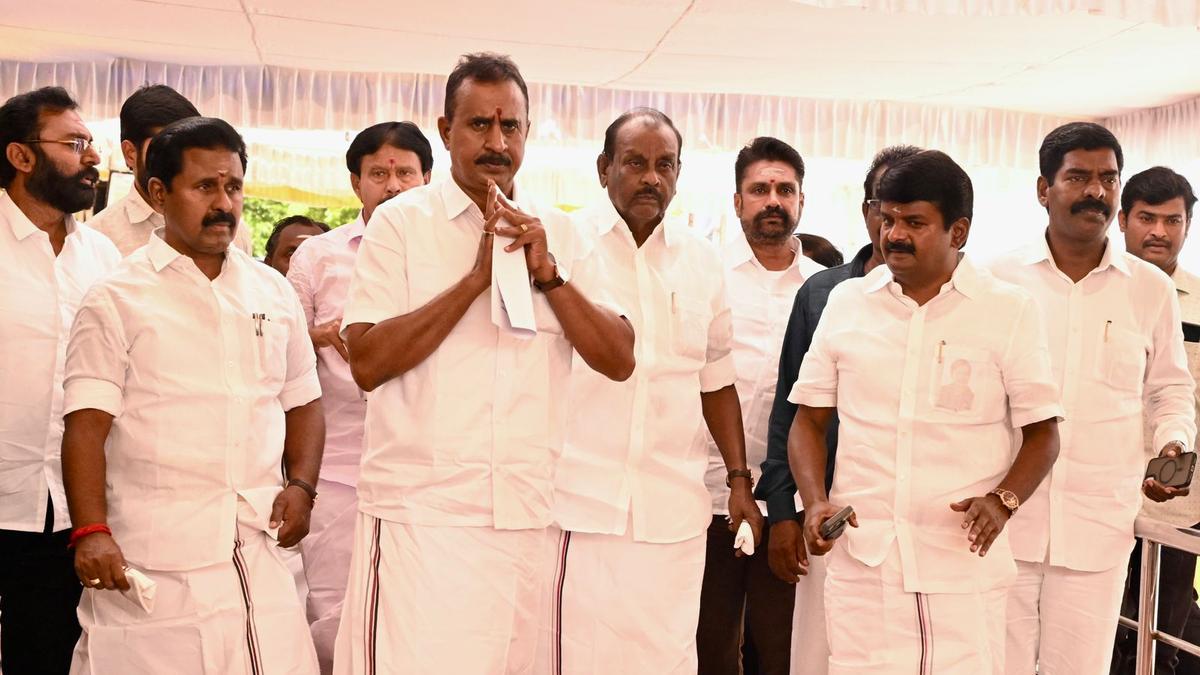
Vijay Gains Power Amid AIADMK Split in Tamil
Internal rifts within the AIADMK hand actor Vijay fresh leverage in Tamil Nadu's power play, strengthening his coalition ahead of a tense political contest.
India
AIADMK Rebels Support TVK, Challenge EPS
An AIADMK rebel bloc shifts support to TVK, tightening the noose on leader Edappadi K. Palaniswami and reshaping Tamil Nadu's volatile opposition power play.
India
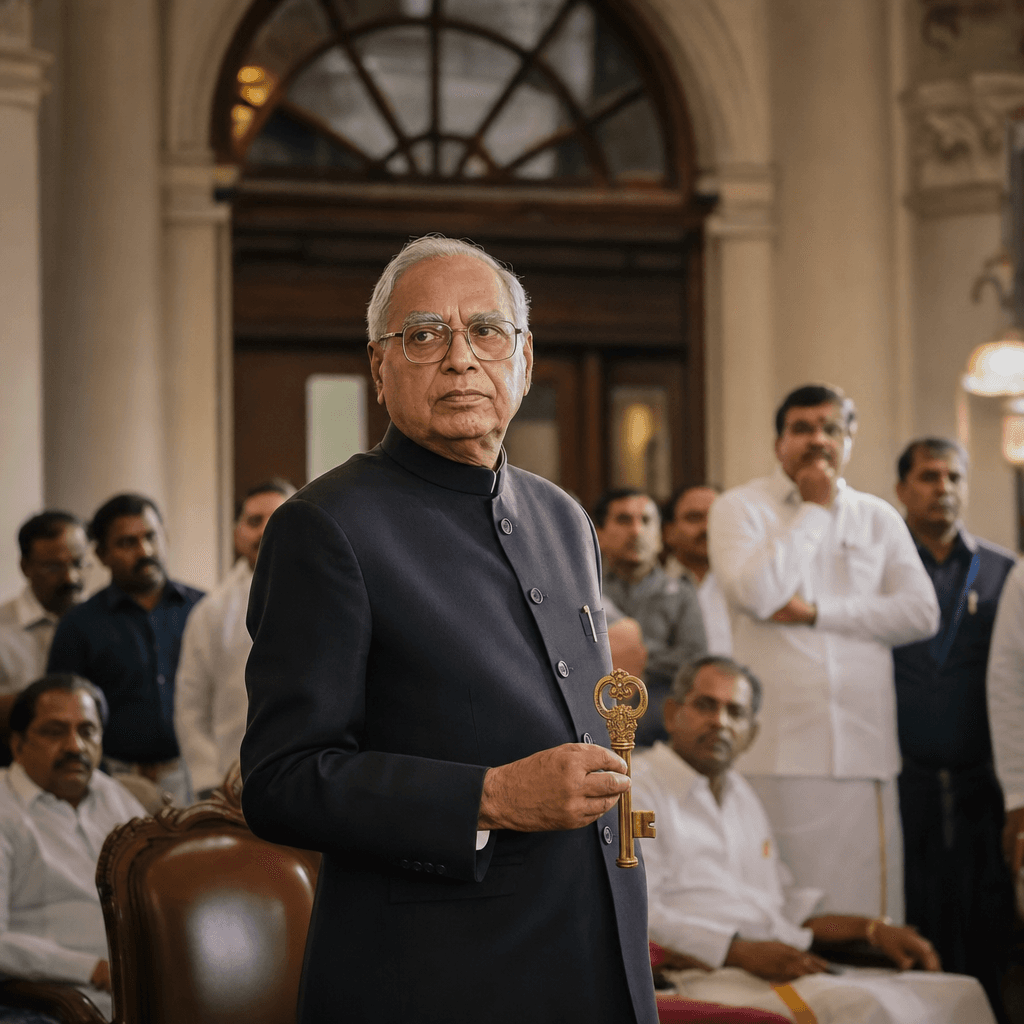
Arlekar's Role in Tamil Nadu Assembly Crisis
Tamil Nadu's political fate hangs on Governor Arlekar's next move, as a hung assembly leaves Vijay's TVK and rival blocs awaiting his decisive call on power.
India
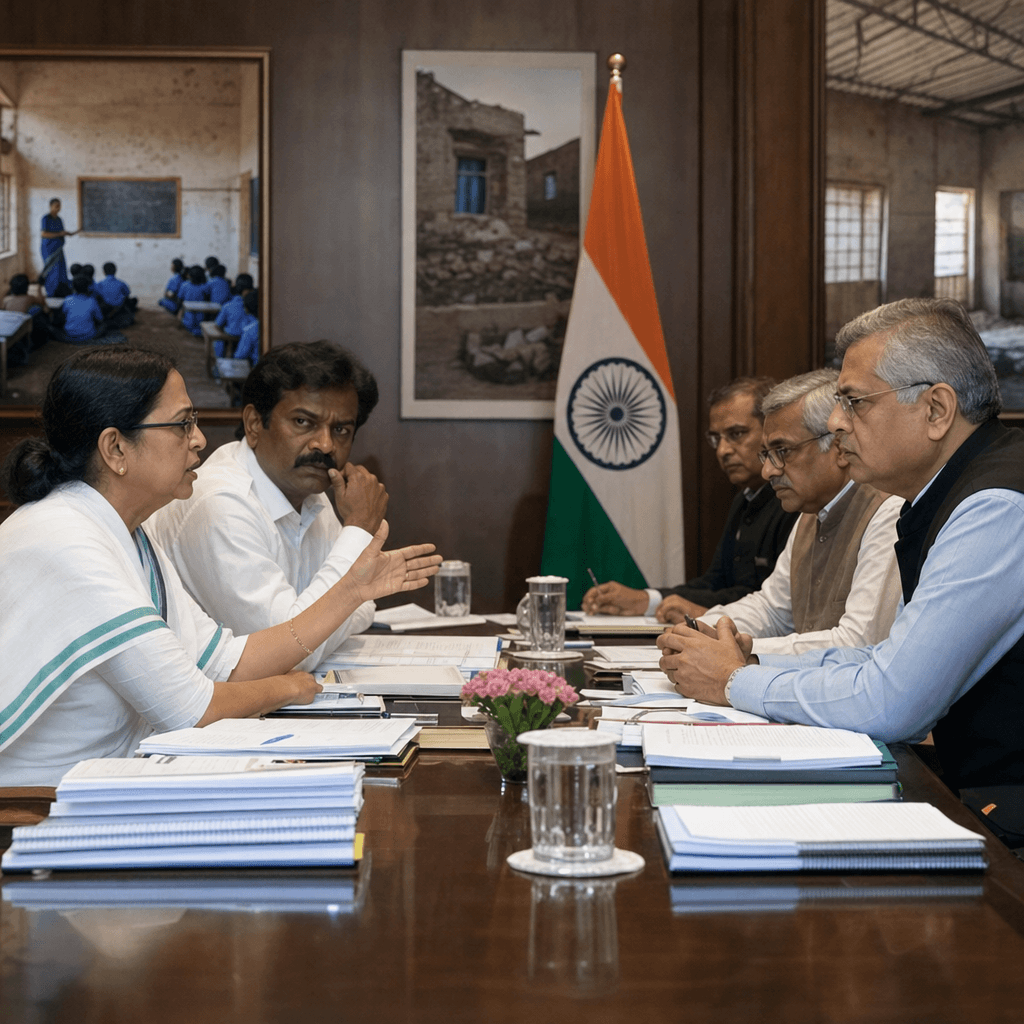
Centre Pressures Bengal, Tamil Nadu on PM SH
The Centre presses West Bengal and Tamil Nadu to sign onto PM SHRI, tying education funds to compliance and reigniting a federalism clash over school policy.