Rahul Gandhi Outvoted on CIC Appointment
Gandhi's dissent raises concerns over transparency in India.
Model Diplomat3 min readIndia
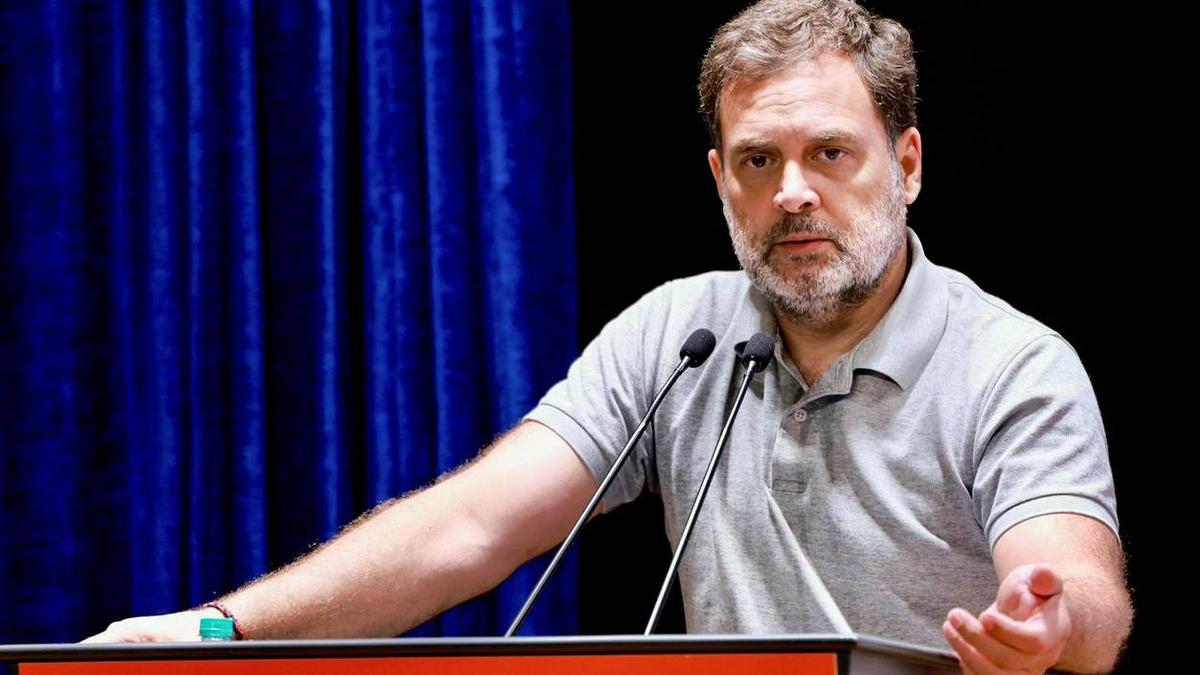
Rahul Gandhi Was Outvoted on India's Top Transparency Watchdog
An RTI response reveals Gandhi formally dissented on the CIC appointment — raising questions about the independence of India's key information watchdog.
A routine RTI response has put a spotlight on a quiet but consequential power play. Minutes from a December 10, 2025 selection committee meeting — obtained under the Right to Information Act — confirm that Rahul Gandhi, Leader of the Opposition, formally rejected the government's preferred candidate for Chief Information Commissioner. Five days later, the government got its man anyway.
The Mechanics of the Overrule
India's CIC selection process under Section 12(3) of the RTI Act requires a three-member committee: Prime Minister Narendra Modi (chair), Home Minister Amit Shah, and the Leader of the Opposition. It is a majority-rules mechanism — structurally guaranteeing that a united ruling coalition can always outvote a single opposition voice.
Gandhi proposed three alternatives: Sumita Dawra (former Secretary, Labour Ministry, 1991 IAS batch), Justice S. Muralidhar (former Chief Justice of the Odisha High Court), and Faizan Mustafa (former Vice-Chancellor of NALSAR). His written submission ranked Dawra first. The government's pick, retired IAS officer Raj Kumar Goyal, was sworn in by President Droupadi Murmu on December 15 — making him the first CIC to lead a fully constituted commission in nine years, with eight Information Commissioners taking oath alongside him.
On seven of the eight remaining commissioner slots, Gandhi did not object. The CIC post was the sole point of open rupture.
Why the Appointment Matters
The CIC is India's apex arbiter of RTI disputes — the final authority on whether citizens receive information the government would prefer to withhold. An appointee perceived as government-aligned has direct downstream effects on accountability journalism, anti-corruption investigations, and judicial transparency petitions.
Government sources pushed back in December, arguing the full slate of eight commissioners reflects meaningful representation across SC, ST, OBC, and minority communities — a direct rebuttal to Gandhi's stated concern about the shortlist's diversity gap, per The Hindu's reporting. That framing — diversity versus institutional independence — defines the competing narratives here.
The broader pattern is hard to ignore. A near-identical structural fight is playing out over Election Commissioner appointments, where a 2023 law removed the Chief Justice of India from the selection panel, and that statute is now under Supreme Court challenge. The CIC and Election Commission fights are, in effect, the same argument in two venues: who controls the referees?
For Indian politics, this is an accelerating pattern — opposition voices included in appointment committees by statute, then structurally sidelined by majority arithmetic.
What to Watch
The Supreme Court remains the live variable. With the CEC appointment challenge already before a reconstituted bench, advocates like Prashant Bhushan of the Association for Democratic Reforms have the institutional runway to challenge the CIC selection process on parallel grounds. A ruling in either case could force a structural redesign of how India fills its transparency watchdogs.
Watch whether Gandhi formalises his dissent beyond the committee minutes — a public challenge or parliamentary motion would signal whether Congress treats this as a campaign issue ahead of state elections, or lets the RTI-revealed record speak for itself.
The next pressure point is Goyal's first major rulings from the newly full commission. His dispositions on politically sensitive RTI appeals will either validate or undercut the opposition's objections faster than any court timeline.
Discover more
India
Congress Accuses Modi of Stalling Women's Law
Congress accuses Modi of stalling women's reservation law by linking it to delimitation, revealing a deeper electoral strategy.
India
BJP Congress Clash Over MP Bill Defeat
The BJP's defeat of the women's quota amendment sparks a political narrative war with Congress, impacting future elections.

Conflict & Security
Drone Warfare Killing Aid Workers at Unprec
Over 1,000 humanitarian workers killed in three years as cheap armed drones collapse legal protections. Gaza, Sudan, Ukraine, and DRC see deliberate targeting of aid convoys and hospitals with zero prosecutions.
Global
World Normalises Taliban as Afghan Women Eras
UN data shows Afghan women erased from public life as Russia recognises the Taliban, EU hosts officials in Brussels, and ICC warrants for gender persecution go unenforced.