Quad's Paper Unity: India and the Indo-Pac
India's confidence in Quad faces U.S. challenges.
Model Diplomat2 min readAsia
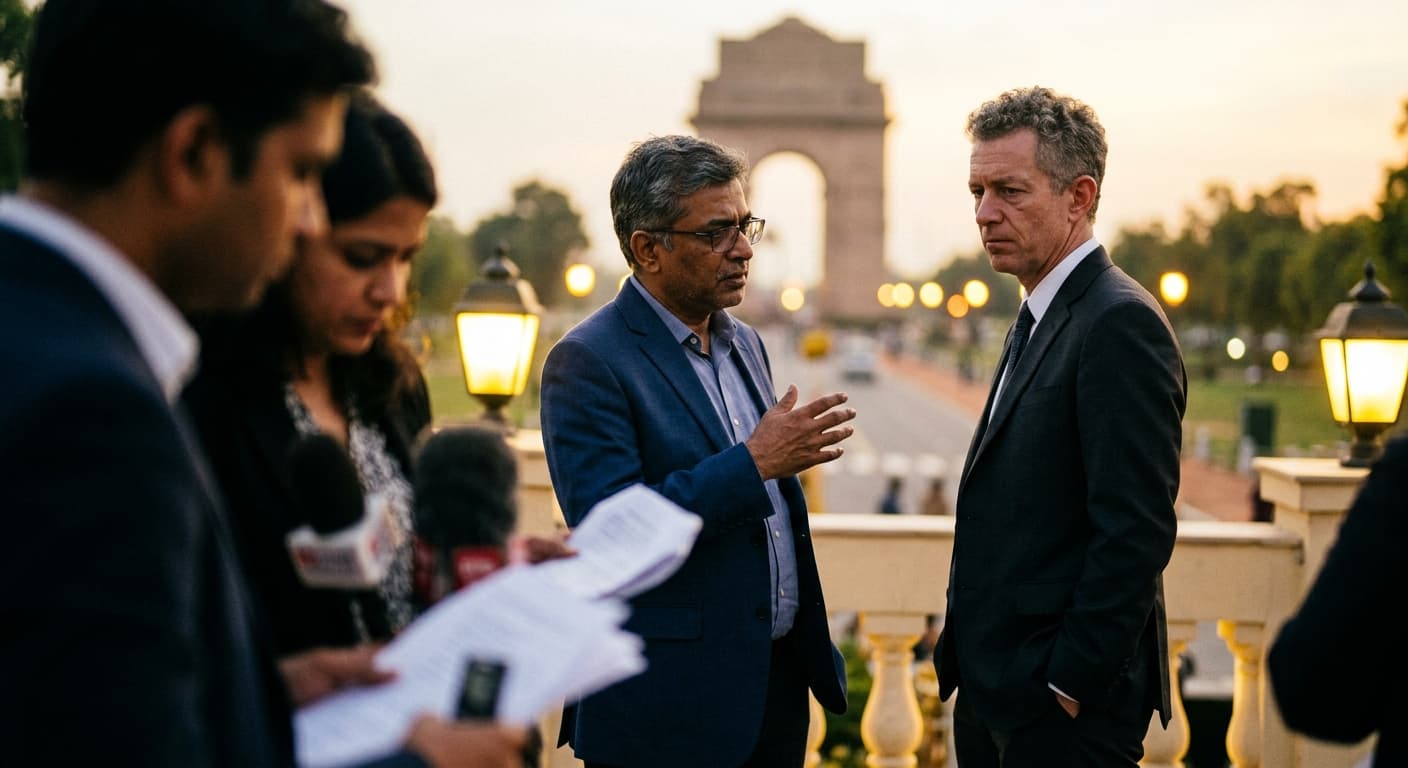
Quad's Paper Unity: Why India Is Overselling Indo-Pacific Alignment
New Delhi projects confidence in the maritime alliance, but shifting priorities in Washington are forcing Quad partners into a transactional scramble.
Indian Ambassador to the United States Vinay Kwatra sought to project a picture of unbroken maritime cohesion on June 12, declaring Indo-Pacific cooperation "robust" and celebrating the achievements of the Quadrilateral Security Dialogue (Quad). Under the reporting of The Hindu, Kwatra argued that the economic center of gravity has structurally migrated toward Asia, driven by the growth of
India, China, and the ASEAN bloc. However, this rhetorical optimism masks a severe underlying power asymmetry within the alliance itself.
The Reinsurance Campaign
Underneath Kwatra’s bullish diplomatic messaging lies a strategic scramble to manage the fallout of an increasingly inward-looking partner in Washington. In his second term, U.S. President Donald Trump has diverted material political capital away from East Asian maritime defense toward domestic interests in the Western Hemisphere, causing the Quad to sputter, according to Al Jazeera. Seeking to counter the perception of American retraction, U.S. Secretary of State Marco Rubio’s recent visit to New Delhi functioned as a high-stakes reassurance mission. Washington is struggling to convince its Asian partners that it will not sacrifice regional security commitments to strike a direct, bilateral trade deal with Beijing.
From Security Alliance to Economic Hedging
To prevent the Quad from sliding into structural irrelevance, its member states are pivoting away from grand joint military designs and toward narrow, targeted economic initiatives. Recognizing that they cannot rely on a binding U.S. security umbrella, India, Japan, and Australia are restructuring the Quad around resource defense and infrastructure diplomacy. This tactical shift is visible in the recently announced Quad Ports of the Future Partnership, which features a pilot project to develop port infrastructure in Fiji to curb Beijing’s backyard maritime expansion, as outlined by Al Jazeera.
Concurrently, the partners have established a framework to mobilize up to $20 billion in loans and subsidies to shield critical mineral supply chains from overwhelming Chinese market control, as reported by Al Jazeera. New Delhi is leveraging these specific sector agreements to extract Western capital while resolutely avoiding formal, binding military alliances that would permanently rupture its relationship with other major powers.
What to Watch Next
The clear beneficiary of this division is China, which increasingly looks at the Quad not as an armored containment ring, but as a weak, decentralized alignment plagued by domestic hedging. Analysis from the Council on Foreign Relations demonstrates that U.S. tariff threats against Indian goods and the downgrade of China's threat level in recent U.S. National Defense Strategy documents have forced India and Japan to quietly prepare for a post-American security architecture in Asia.
The next decisive indicator of the Quad's utility will be whether the four governments can finalize a date for the long-delayed Quad Leaders' Summit in New Delhi, which has been repeatedly postponed due to competing diplomatic schedules and misaligned bilateral priorities.
Discover more

India
BJP's Misunderstanding of Women's Quota Needs
The BJP's linking of the Women Reservation Bill to delimitation risks delaying women's empowerment in India, misreading the aspirations of female voters.
Global Politics
Trump's Conflicting Messages on Iran War
Trump's mixed messages on Iran reflect a strategy of audience management, benefiting Tehran amid a complex geopolitical landscape.
India
Women’s Reservation Bill 2026
The Constitution (131st Amendment) Bill, 2026 was defeated in Lok Sabha, revealing deeper political conflicts over women's reservation and delimitation.

Conflict & Security
Drone Warfare Killing Aid Workers at Unprec
Over 1,000 humanitarian workers killed in three years as cheap armed drones collapse legal protections. Gaza, Sudan, Ukraine, and DRC see deliberate targeting of aid convoys and hospitals with zero prosecutions.