Qatar and Saudi Arabia's Diplomatic Push
Efforts to preserve the Islamabad Memorandum amid US-Iran tensions
Model Diplomat9 min readMiddle East
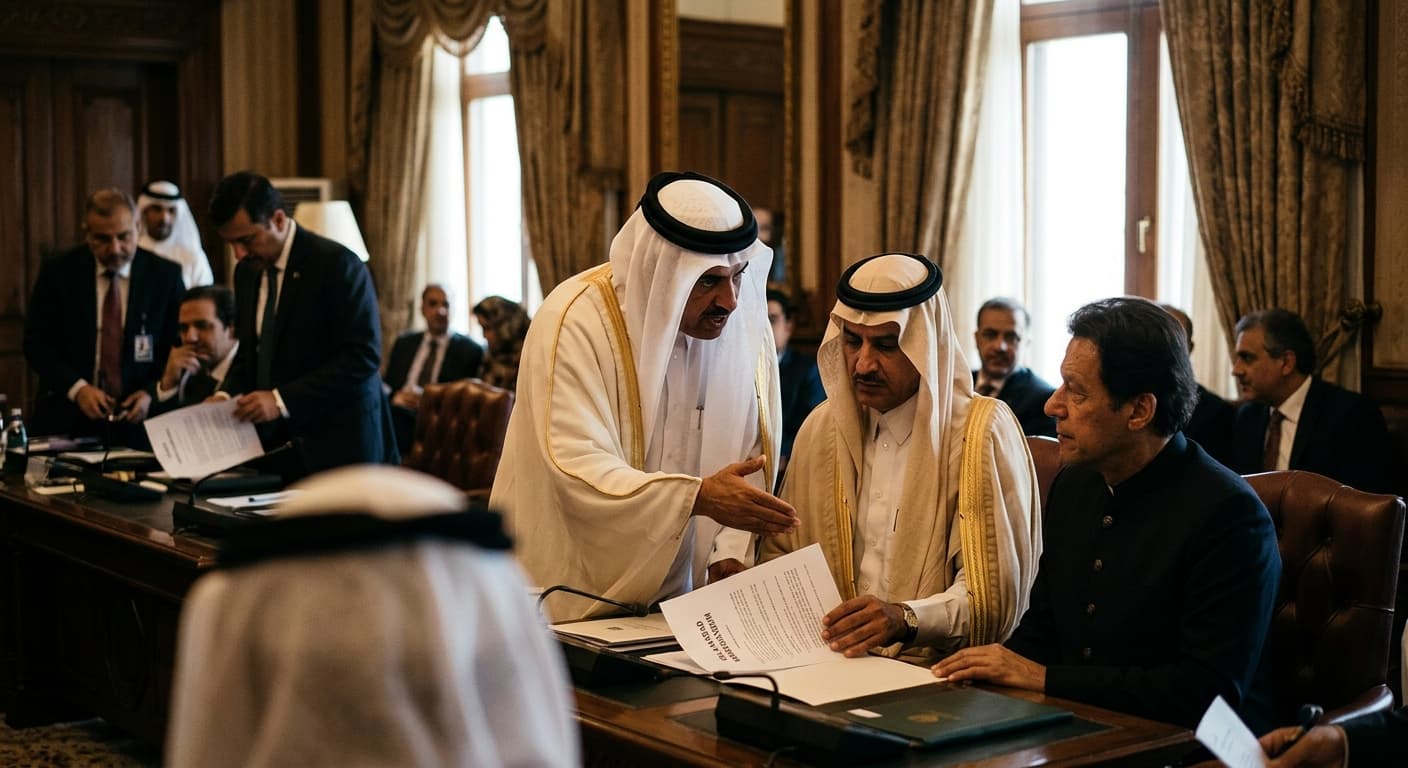
Qatar and Saudi Arabia Move to Save US-Iran Truce Trump Just Called "Over"
Qatar and Saudi Arabia opened a joint diplomatic track on July 9, 2026 to keep the Islamabad Memorandum alive after two nights of US-Iran strikes and Trump's declaration that the ceasefire is finished.
Qatar's Prime Minister Sheikh Mohammed bin Abdulrahman Al Thani telephoned Saudi Foreign Minister Prince Faisal bin Farhan on the morning of July 9, 2026 — hours after US Central Command struck 90 Iranian military targets and Iranian drones and missiles rained on Bahrain, Kuwait and Qatar — with a single purpose: to save the Islamabad Memorandum from the American president, not from Iran. The Qatari-Saudi convergence is the most consequential Gulf diplomatic move of 2026, and it is being made against the wishes of the White House. The two states whose tankers were hit by Iran forty-eight hours earlier are now the ones lobbying to keep Tehran at the table, because they have calculated that another full-scale war would destroy their economies faster than any Iranian revisionism ever could.
What the phone call actually was
According to the readout from Qatar's state news, Sheikh Mohammed and Prince Faisal "reviewed the latest developments in the escalation between the United States of America and the Islamic Republic of Iran over the past two days" and called for "all parties to commit to dialogue and diplomacy, and to implement what has been agreed upon within the framework of the memorandum of understanding," per The Peninsula Qatar. The formula matters. Both foreign ministers went out of their way to reaffirm the 14-point Islamabad MoU signed on June 17 — the same document US President Donald Trump had publicly buried the day before at the NATO summit in Ankara, telling reporters "for me, I think it's over," according to
Al Jazeera.
The Qatari premier ran the same script five more times on July 9: with Iranian Foreign Minister Abbas Araghchi, UAE Deputy PM Sheikh Abdullah bin Zayed, Omani Foreign Minister Sayyid Badr Al Busaidi, and Türkiye's Hakan Fidan. In every call, according to Al Jazeera's regional wrap, the demand was the same — implement the MoU, keep the 60-day window open, do not let it collapse before it expires on August 21.
Why Riyadh signed on with Doha
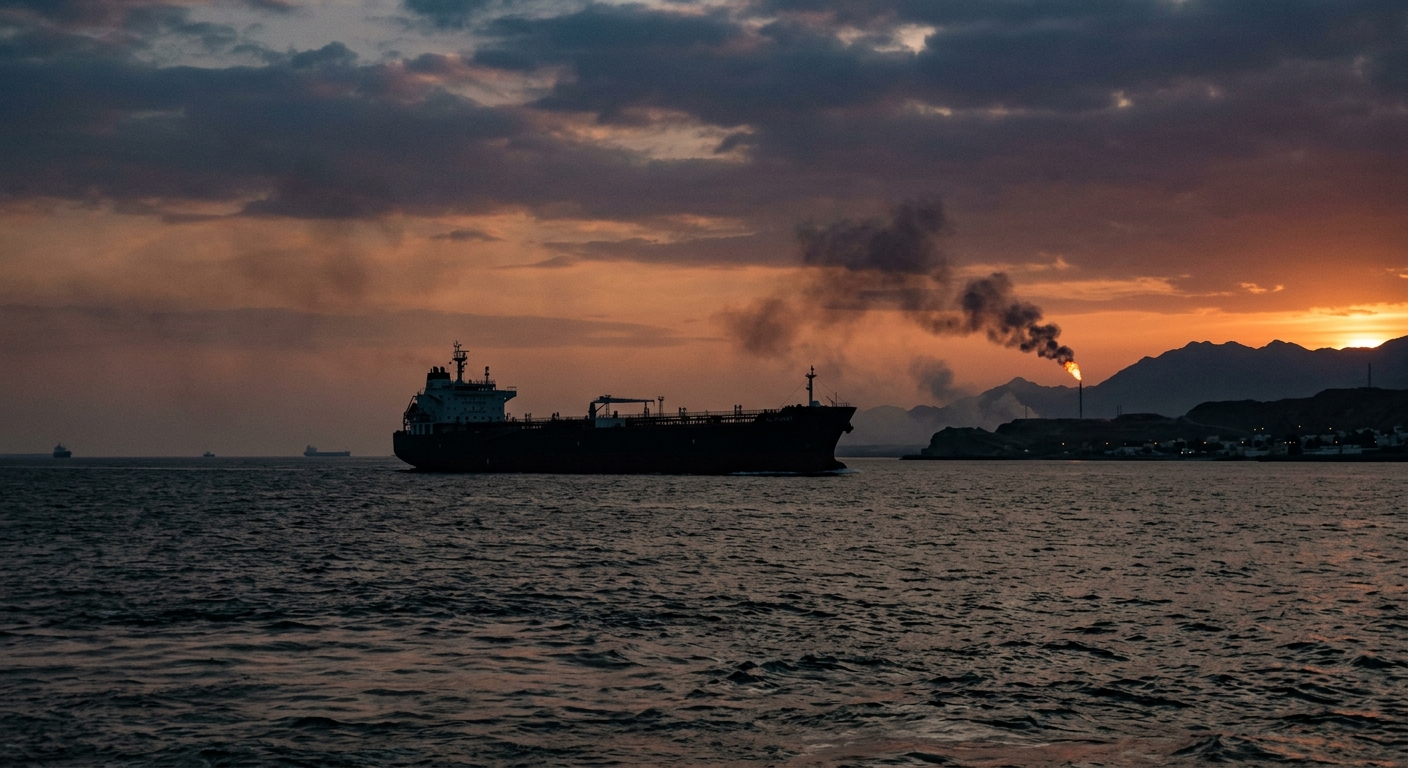
The interesting move is Saudi Arabia's. Six days before the phone call, Iran's Islamic Revolutionary Guard Corps attacked the Saudi-flagged tanker M/T Wedyan in the Strait of Hormuz, alongside the Qatari-owned M/T Al Rekayyat and the Liberian-flagged M/T Cyprus Prosperity, per Al Jazeera's account of the CENTCOM statement. Riyadh publicly blamed Tehran and joined Qatar in denouncing the strikes, according to the
BBC. Under any other decade's playbook, Saudi Arabia would now be channeling US Fifth Fleet posture and calling for punishment.
It is not. The Doha Institute's post-mortem on Riyadh's role in the Islamabad Memorandum captured the mood: Prince Faisal had called the deal "incredibly important" in Vienna, cautioned that verification was everything, and — crucially — kept a direct phone line to Araghchi open throughout the war, per the Doha Institute for Graduate Studies. The kingdom refused to let its airspace be used against Iran even after Iranian drones hit Saudi soil, according to an earlier
Al Jazeera report on the January 2026 Pezeshkian–Mohammed bin Salman call. And it did not repudiate the March 2023 China-brokered normalisation with Tehran, even as five Iranian diplomats were expelled.
The reason is arithmetic. Vision 2030 — the crown prince's $500 billion-plus reordering of the Saudi economy around tourism, giga-projects, and non-oil investment — cannot absorb a second Hormuz closure. Iranian crude is trading at a 20 percent discount to international benchmarks and Iran's exports collapsed by more than 90 percent in May, according to Doha Institute analyst Abdulla Banndar Al-Etaibi writing in Al Jazeera Opinion. Saudi Arabia is not far behind on the damage curve: the country's Aramco cash flow, sovereign wealth expenditure and the entire debt-financed Vision 2030 pipeline are underwritten by seaborne exports that must transit the same waterway.
The Trump variable
The call landed inside a specific rupture with Washington. On July 8, Trump told reporters in Ankara that Iranian leaders were "scum" and "cuckoo" and that the MoU was "over," although he added that his negotiators — special envoy Steve Witkoff and son-in-law Jared Kushner — could keep talking if they wanted to, per the BBC. By Thursday morning, aboard Air Force One, Trump had reversed field, saying a return to full war remained possible but that Tehran "wants to make a deal," according to
Al Jazeera.
That is the president Gulf capitals are managing. The Qatari foreign ministry spokesman, Majed Al Ansari, had already spent the previous week describing the deteriorating Hormuz picture in a rare on-the-record briefing: technical talks continue, but "escalation only widens the gap," and Qatar rejects "any change to the current status of the Strait of Hormuz, whether through unilateral action or otherwise," per the Qatari Ministry of Foreign Affairs. The formal Qatari protest note handed to Iran's deputy ambassador on July 7 was tougher — it "demanded that the Islamic Republic of Iran immediately cease any practices that compromise the security of the region" and reserved Qatar's right "to take any measures it deemed appropriate to protect its interests," according to the
Qatari MoFA. But the diplomatic instrument being defended is still the MoU.
The economic clock behind the diplomacy
Read against the numbers, the Doha–Riyadh call is not a peace gesture; it is a damage-control operation.
The Congressional Research Service's most recent primer on the Iran conflict, R45281, documents that Brent jumped 8 percent — from $71.32 to $77.24 per barrel — in the two trading days around the initial February 28 strikes, and later broke $100. By July 8, Brent was back at $77.24 on a 4.2 percent one-day pop as Trump spoke, per
Al Jazeera. US petrol had climbed back to $3.79 per gallon after peaking above $4.48 in May.
Insurance is where the real vice tightens. War-risk premiums for a Hormuz transit — 0.25 percent of hull value before the war — have oscillated between 1 percent and as much as 8 percent, and the US International Development Finance Corporation has had to backstop up to roughly $40 billion in reinsurance capacity to keep vessels moving, per the CRS report and Al Jazeera reporting on insurance markets. Kpler tracking counted only 23 ships transiting the strait on July 8, down from a normal 130 per day and 70 a week earlier, per
BBC Verify.
The Council on Foreign Relations, in its analysis "Not So Strait-Forward," argues that even a durable political deal will take 8 months or more to restore full flows through Hormuz — with Qatar, the UAE, Bahrain, Iraq and Kuwait all needing to clear storage before production can normalise. Every additional day of shooting compounds the tail. That is the clock behind the July 9 diplomacy.
The GCC split — and why the UAE stayed harder
The Qatari-Saudi convergence is not the whole Gulf. Anwar Gargash, diplomatic adviser to the UAE president, took a visibly harder line on Wednesday, writing that Iran remained "incapable of committing to the requirements of de-escalation and turning the page on war," per Al Jazeera. GCC Secretary-General Jassem Mohamed Albudaiwi denounced Iranian attacks on Bahrain and Kuwait as a "flagrant violation" of sovereignty. Egypt echoed Cairo's usual line on de-escalation.
But the diplomatic centre of gravity remains where Doha and Riyadh want it: on saving the MoU. On July 1, Iran's Deputy Foreign Minister Kazem Gharibabadi announced from Doha that Tehran would open a "communication channel" with Washington on MoU breaches, after indirect talks in the Qatari capital where Emir Sheikh Tamim bin Hamad Al Thani had personally met Witkoff and Kushner, per Al Jazeera. Talks on the release of an initial $6 billion in frozen Iranian assets were also discussed with the Qatari Central Bank.
Pakistan — the formal mediator that shepherded the June 17 signing under Prime Minister Shehbaz Sharif — issued its own statement on Wednesday warning that "renewed conflict is in no one's interest," per Al Jazeera. Jauhar Saleem, a former Pakistani diplomat now at the Institute of Regional Studies, told Al Jazeera the mediation process was "really stressed right now, very fragile."
The structural fault line: Article 5
The whole edifice rests on a single ambiguous clause. Article 5 of the MoU requires Iran to "make arrangements using its best efforts for the safe passage of commercial vessels, with no charge for 60 days only, from the Persian Gulf to the Sea of Oman, and vice versa." Iranian Foreign Ministry spokesman Esmaeil Baghaei read the clause as giving Tehran "responsibility in determining arrangements for the safe passage of ships through the Strait of Hormuz." The US reads the same words as an obligation not to impede passage, per Al Jazeera.
The gap is not academic. Iran's IRGC on July 9 declared that "foreign powers have no claim to this land or to the Strait of Hormuz" and that traffic had reached "around 50%" of pre-war levels only for vessels obtaining "authorisation" from Iran, per BBC live coverage. Prince Faisal, in Vienna, publicly rejected any scheme of Iranian tolls or transit fees, arguing "the strait worked without trouble before the war and needs no new arrangement," per the
Doha Institute. That is the position Qatar and Saudi Arabia are now selling to Tehran together — with Doha as the front channel and Riyadh as the ballast.
What Doha is offering Iran that Washington cannot
The Qatari premier's phone call to Araghchi on July 9 mattered less for its content than for its channel. Iran's leadership does not trust Trump — Deputy Foreign Minister Gharibabadi said his remarks "are not a sign of power but an admission of the failure" of US policy, per NPR/AP. It trusts Sheikh Tamim, who has held Iran's
$6 billion tranche of frozen funds inside the Qatari central bank as a live incentive.
That structural role — banker, host, mediator, and territory that Iran has repeatedly attacked yet not sanctioned — has no substitute in the current architecture. As BBC's Jeremy Bowen put it, "for all his bluster, Trump has no better option than talks with Iran," per the BBC. And for all its bluster, Iran has no better guarantor of a deal than the Qatari checkbook and the Saudi phone line to Prince Faisal.
Diplomat View
The Doha–Riyadh axis has quietly become the load-bearing structure of Middle East de-escalation — and the July 9 phone call is the moment that structure was formalised over Trump's head. Base case: the MoU limps to its August 21 expiration, kept alive by Qatari money, Saudi channels, and Trump's aversion to a war his own Vice President said last week he could not guarantee against. Downside case, which we do not dismiss: Iran overplays its Article 5 hand, hits another Gulf-flagged tanker, and the pragmatists inside Iran lose to hardliners who see the Strait as regime survival — as Reuters-sourced Al Jazeera analysis suggested Iranian negotiator Saleh already framed it. The forecast changes if any of three things happens: Iran strikes a Saudi target on Saudi soil (not offshore); the US executes Trump's threat to "take over" Kharg Island; or Israel — which
Al Jazeera reported has been coordinating renewed-war plans with CENTCOM — moves first. Any of those and the Qatari-Saudi channel breaks.
Catalysts to watch:
- August 21, 2026 — 60-day MoU window expires; either a final deal on Hormuz administration, nuclear programme and frozen assets, or the framework dies.
- July 17, 2026 — US Treasury sanctions on Iranian oil transactions fully reimpose after 12:01am EDT, per the
Al Jazeera reading of the Treasury notice; a live pressure point on whether Tehran continues to talk.
- Next Doha technical round — scheduled to resume after Khamenei's funeral, which ended July 9. If Iran sends Araghchi or Ghalibaf publicly, the process is alive; if only technical negotiators appear, it is on life support.
The Bottom Line
The bottom line: Qatar and Saudi Arabia are no longer just mediating between the US and Iran — they are quietly defending the Islamabad MoU against a US president who declared it dead and an Iranian leadership that treats the Strait of Hormuz as a survival issue. If the Doha–Riyadh channel holds through August 21, the Gulf will have proved that the region's biggest de-escalation power now sits in its own capitals, not Washington's. If it breaks, the next oil shock will price in a war neither Trump nor Tehran wanted to own.
Discover more
US Politics
House Ethics Committee Pushes Sexual Miscond.
The House Ethics Committee has shifted responsibility for sexual harassment settlement records to the Office of Congressional Workplace Rights, complicating disclosure efforts.
US Politics
SNAP Food Assistance Faces Legal Challenges
In 2026, SNAP faces stricter eligibility rules and mounting legal challenges, threatening food assistance for the millions of Americans who rely on the program.
Global Politics
Trump's Conflicting Messages on Iran War
Trump's mixed messages on Iran reflect a strategy of audience management, benefiting Tehran amid a complex geopolitical landscape.

Conflict & Security
Drone Warfare Killing Aid Workers at Unprec
Over 1,000 humanitarian workers killed in three years as cheap armed drones collapse legal protections. Gaza, Sudan, Ukraine, and DRC see deliberate targeting of aid convoys and hospitals with zero prosecutions.