Qatar and Saudi Arabia's Diplomatic Push
Gulf states coordinate to salvage US-Iran ceasefire amid tensions.
Model Diplomat9 min readMiddle East
Qatar and Saudi Arabia Move to Save the US-Iran MoU as Hormuz Burns
Doha and Riyadh coordinated a rare joint diplomatic push on July 9, 2026, to salvage the 14-point US-Iran ceasefire as tanker attacks and 90 US strikes shattered the fragile truce.
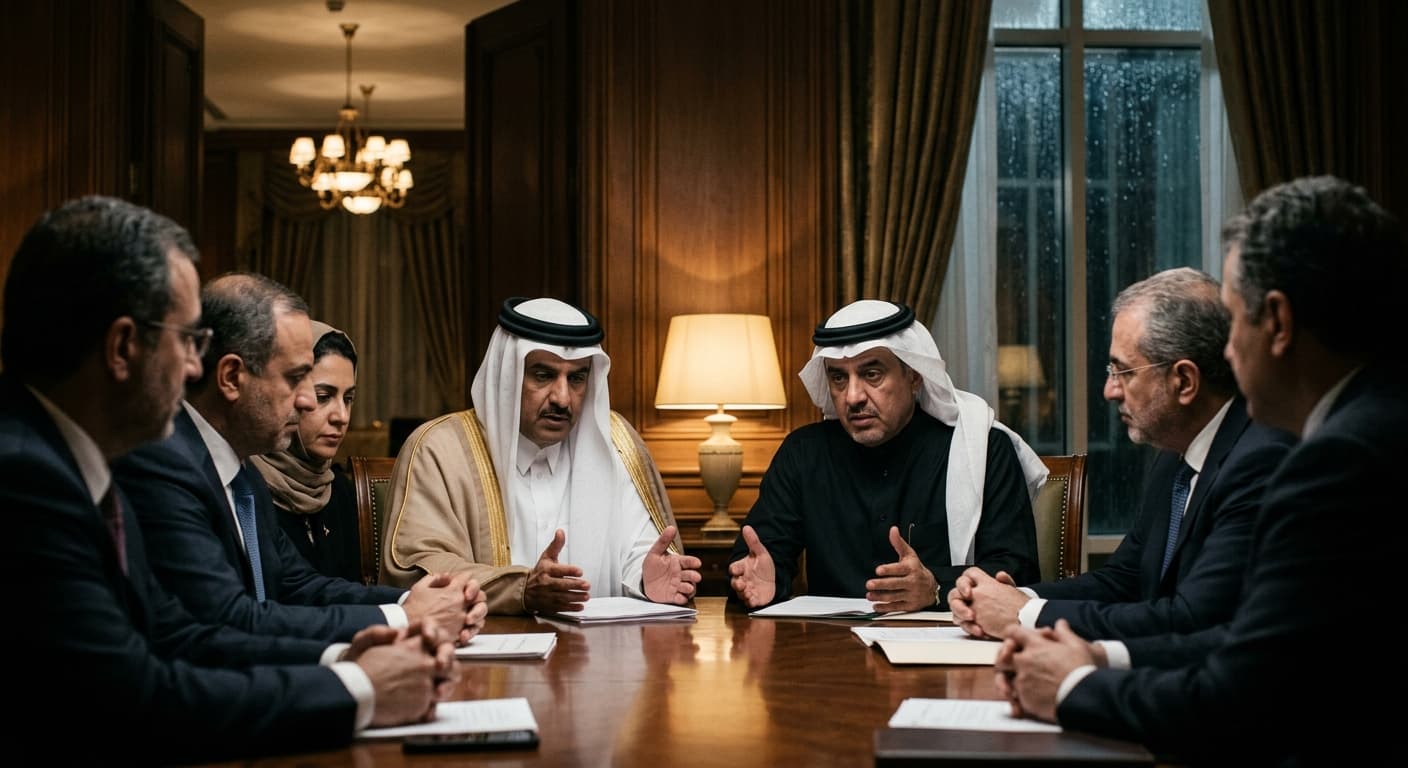
The two Gulf states whose tankers Iran hit this week are now leading the effort to stop the US and Iran from restarting the war. Qatari Prime Minister Sheikh Mohammed bin Abdulrahman Al-Thani spoke with Saudi Foreign Minister Prince Faisal bin Farhan on July 9, 2026, hours after US Central Command struck 90 Iranian military targets and Tehran fired missiles at Bahrain, Kuwait, Jordan and Qatar. The call, confirmed by The Peninsula, reads as boilerplate — condemn the tanker strikes, urge diplomacy, save the memorandum of understanding. It is not boilerplate. It is the first coordinated signal that the Gulf Cooperation Council, not Washington, now owns the diplomatic track keeping the Strait of Hormuz open — because Riyadh and Doha have concluded that neither Donald Trump nor Iran's negotiators can be trusted to manage a waterway that carried a fifth of global oil before February 28.
What Doha and Riyadh actually did on July 9
Sheikh Mohammed's July 9 call sheet reads like a small-state hedging manual. Within 24 hours he spoke to Prince Faisal in Riyadh, Iranian Foreign Minister Abbas Araghchi in Tehran, UAE Foreign Minister Sheikh Abdullah bin Zayed in Abu Dhabi, Omani Foreign Minister Badr Al-Busaidi in Muscat, and Turkish Foreign Minister Hakan Fidan in Ankara. Each conversation carried the same message: return to the June 17 memorandum and implement it.
According to The Peninsula, the Qatari premier told Prince Faisal that the tanker strikes "undermine trust, threaten international navigation security, and harm efforts aimed at establishing regional security and stability," and stressed "the necessity for all parties to commit to dialogue and diplomacy, and to implement what has been agreed upon within the framework of the memorandum of understanding." Sheikh Mohammed used near-identical language in his call to Araghchi,
per Al Jazeera's live blog, which described the two officials as having "underscored the importance of using diplomatic means to resolve regional issues."
The choice of Prince Faisal as interlocutor matters. He is the Saudi minister who, in January 2021, announced the Al-Ula declaration that ended the 43-month Saudi-led blockade of Qatar. BBC coverage from that summit recorded his line that the parties had turned "the page on all points of difference." Five and a half years later, the two men who could not speak in 2019 are running a shared Iran file — and Iran is the country whose downgraded ties Riyadh once demanded as a condition of unblocking Doha.
From Al-Ula to July 9: the historical parallel that reframes this
That parallel is the story most wire coverage misses. In June 2017, Saudi Arabia, the UAE, Bahrain and Egypt severed relations with Qatar and issued 13 demands, including that Doha "downgrade diplomatic ties with Iran" and shutter Al Jazeera. Not a single demand was ever met. Doha instead deepened trade with Tehran to survive the blockade and, as Chatham House observed at the time, the resolution amounted to Riyadh accepting that GCC unity mattered more than the maximalist demands. In 2026, that acceptance has become an operational alliance: Qatar's channel to Iran and Saudi Arabia's channel to Iran now function as parallel back-doors to the same crisis.
The Saudi-Iranian channel was built on March 10, 2023, in Beijing. The joint trilateral statement, archived on UN Peacemaker, committed both states to "respect for the sovereignty of states and the non-interference in internal affairs" and reactivated a 2001 security cooperation agreement. That channel has held under stress: one year ago this week, Araghchi met Crown Prince Mohammed bin Salman in Jeddah, and
Al Jazeera reported that the crown prince told him Riyadh backed "dialogue through diplomatic means as a path to resolving disputes." That is the same language Sheikh Mohammed used on July 9. It is not coincidence — it is a talking point Riyadh and Doha have now agreed to share.
The MoU that Riyadh and Doha are trying to salvage
The document Sheikh Mohammed keeps invoking was signed at the Palace of Versailles on June 17, 2026, at the margins of the G7 summit. Al Jazeera obtained a US official's verbatim read-out of the 14 points. It commits the parties to "immediate and permanent termination of military operations on all fronts, including in Lebanon," a 60-day negotiating window, US removal of its naval blockade within 30 days, and — the clause now shredding — Iran's obligation to allow safe passage of commercial vessels through Hormuz for 60 days at no charge.
The MoU also pledges "at least USD 300 billion" from the US and regional partners for Iranian reconstruction, a status-quo freeze on Iran's nuclear stockpile, and a final deal endorsed by a binding UN Security Council resolution. The BBC's clause-by-clause reading notes that Washington is not itself required to fund the $300 billion — the money is meant to come from "regional partners." Read: Riyadh, Abu Dhabi, Doha, Kuwait. That is why the Gulf states have skin in this — they are the ones being asked to write the cheque that keeps Iran inside the tent, and they will not sign it if the tent is on fire.
The specific point that broke down is Article 5. It says Iran "will make arrangements using its best efforts for the safe passage of commercial vessels with no charge for 60 days only … and will conduct dialogue with the Sultanate of Oman to define the future administration and maritime services and the Strait of Hormuz." Iranian Foreign Ministry spokesman Esmaeil Baghaei said on July 8 that Iran reads this as sole "responsibility in determining arrangements for the safe passage of ships," per Al Jazeera. Iranian parliament speaker and chief negotiator Mohammad Bagher Ghalibaf declared on July 9 that Hormuz "will only open with 'Iranian arrangements', not American threats." Washington reads Article 5 as a guarantee of unfettered transit on a route the US Navy protects. The tanker strikes flow directly from that gap.
Why Riyadh and Doha are now the indispensable mediators
Two of the three ships Iran hit on July 6–7 were Gulf-flagged. The Qatari LNG carrier Al Rekayyat caught fire off Limah, Oman, after being struck by a projectile; Qatar's foreign ministry spokesman Majed Al Ansari held Iran "fully legally responsible." The Saudi crude tanker Wedyan, owned by Bahri, was also damaged. BBC coverage confirms both governments blamed Iran directly — a rare public rebuke from states that have spent three years rebuilding ties with Tehran.
The Gulf coalition tightened again the following day. When Iran fired on Bahrain and Kuwait, Al Jazeera reported that GCC Secretary-General Jasem AlBudaiwi called the attacks "a flagrant violation of international law and the United Nations Charter" and Egypt's foreign ministry joined the condemnation. UAE presidential adviser Anwar Gargash wrote that "the Gulf Arab states cannot remain a target for Iran's wavering between the logic of escalation and the path of rationality." That is the harshest public language from Abu Dhabi toward Tehran since the 2023 rapprochement. Yet none of these states has broken with the MoU framework — they have doubled down on it.
The Quincy Institute's Annelle Sheline captured the underlying calculation in a recent analysis, arguing that Saudi Arabia had concluded after Trump's indifference to the 2019 Aramco attacks that "it could not rely on the US to contain Iran and began to manage tensions itself." What is new in July 2026 is that Qatar — long the outlier — has now merged its channel with Riyadh's.
The oil and shipping numbers driving Gulf urgency
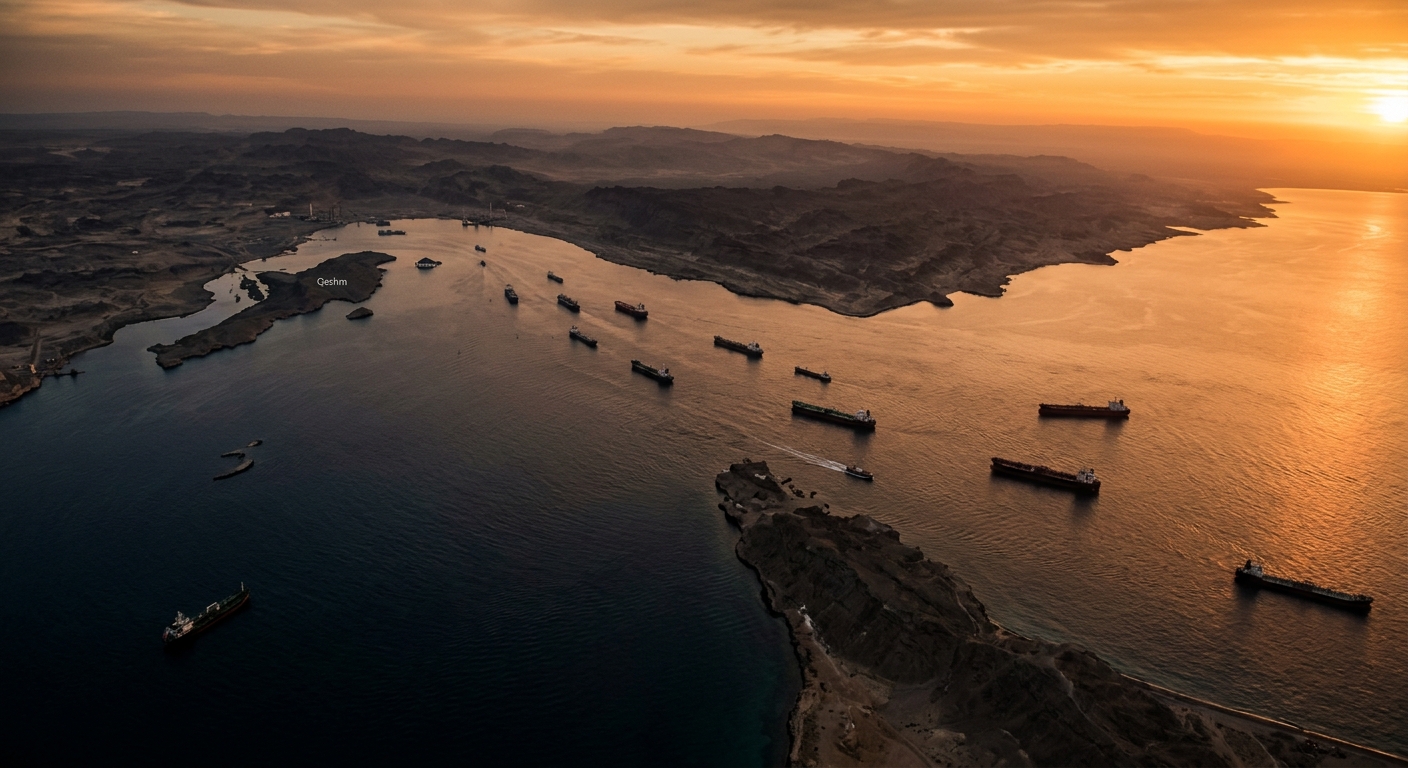
The material stakes are precise. Before the war began on February 28, 2026, an average of 138 ships crossed Hormuz daily, per Joint Maritime Information Centre data cited by the BBC live desk. On July 8, that number was 23. Kpler's shipping intelligence data recorded that no vessels used the US-recommended southern route on July 8, down from three the day before. Intertanko marine director Phil Belcher told BBC Radio that southern-route traffic was in "single figures," and that Iran's Islamic Revolutionary Guard Corps has publicly claimed that traffic through the waterway has reached "around 50%" of pre-war levels — but only for vessels that obtain Iranian "authorisation."
The price of that ambiguity is visible on the tape. Brent crude jumped 4.2 percent to $77.24 on July 8, its highest in two weeks, according to Al Jazeera's markets desk — still well below the $126-a-barrel peak of late April, but rising fast enough to threaten Trump's domestic petrol-price message. AAA data cited in the same report showed US pump prices already up to $3.73 a gallon from $2.98 on the day the war began. That is the political ceiling on how long Washington can afford another naval blockade.
Winners and losers of the July 9 realignment
The unexpected winner is Oman. Article 5 of the MoU tasks Muscat, alongside Tehran, with defining "the future administration and maritime services and the Strait of Hormuz." Sultan Haitham bin Tariq's foreign minister was on Sheikh Mohammed's July 9 call list precisely because Muscat holds the pen on what an Iranian-Omani "management" of Hormuz might look like in practice — including whether transit fees, which Baghaei has publicly floated, will apply.
The clear loser is the US bilateral track. Trump declared the MoU "over" from the NATO summit in Ankara on July 8 and threatened to "take over" Iran's Kharg Island, per Al Jazeera — a threat international law experts in the same report described as constituting war crimes. Yet by July 9, Al Jazeera's Malik Traina was reporting from Doha that "nobody here in the Gulf wants to see a resumption of hostilities" and predicting "a diplomatic push from across the Gulf to bring Iran and the US back to the negotiating table." That push is now visibly Gulf-led, not US-led. Pakistan, which co-mediated the June MoU, joined it:
Al Jazeera reported Islamabad's line that renewed conflict is "in no one's interest."
The second-order loser is Israel. The MoU committed both parties to end operations "on all fronts, including in Lebanon" and pointedly did not mention Israel, whose February 28 strikes started the war. Every day the Gulf-led diplomatic track holds is a day Prime Minister Benjamin Netanyahu's government cannot resume open Iran operations without breaking with Riyadh, Doha and Abu Dhabi simultaneously.
What to watch next
- August 16, 2026: the 60-day MoU negotiating window expires unless both sides extend by mutual consent. Ghalibaf remains Iran's chief negotiator; a new round of indirect talks in Qatar ended without progress in early July.
- The next tanker incident: Kpler and JMIC threat levels are the leading indicator. Another attack on a Gulf-flagged vessel would test whether Riyadh and Doha's public condemnations can survive a second round.
- Oman-Iran Hormuz protocol: whether Muscat and Tehran publish a joint transit framework — with or without fees — will determine whether the MoU's Article 5 has any implementable content, or remains the fault line it is today.
Diplomat View
The July 9 call is a tell. Riyadh and Doha are no longer waiting for Washington to fix a deal Washington itself declared "over." They are running parallel de-escalation channels — Doha to Tehran and Ankara, Riyadh to Tehran through the 2023 Beijing framework — and coordinating them explicitly for the first time. The forecast: the MoU survives past August 16 in some renegotiated form, because the Gulf capitals underwriting Iran's promised $300 billion reconstruction fund will not let it collapse, and Tehran cannot afford to lose that money. What would revise this call: a third tanker strike, a US move against Kharg Island, or evidence that Trump's "over" declaration was operational rather than rhetorical. Absent those, the story of the next 30 days is the quiet transfer of the Iran file from Washington to a Riyadh-Doha-Muscat triangle — the sharpest signal yet that the Gulf's post-2023 diplomacy has priced in an unreliable American partner and built the redundancies to work around one.
The Bottom Line
Qatar and Saudi Arabia's July 9 call is not a routine condemnation of tanker attacks — it is the operational debut of a Gulf-led mediation architecture designed to keep the June 17 MoU alive without Washington in the driver's seat. The Gulf states that were asked to write the $300 billion cheque for Iran's reconstruction have decided they will also write the diplomacy. If that holds through August 16, the story of 2026 will be that Riyadh and Doha, not the White House, kept the Strait of Hormuz open.
Discover more

US Politics
House Ethics Committee Pushes Sexual Miscond.
The House Ethics Committee has shifted responsibility for sexual harassment settlement records to the Office of Congressional Workplace Rights, complicating disclosure efforts.
US Politics
SNAP Food Assistance Faces Legal Challenges
In 2026, SNAP faces stricter eligibility rules and mounting legal challenges, threatening food assistance for the millions of Americans who rely on the program.
US Politics
U.S. House Passes Alert Act for Aviation
The House passed the ALERT Act 396–10, replacing the ROTOR Act after Pentagon intervention, impacting aviation safety regulations.

Conflict & Security
Drone Warfare Killing Aid Workers at Unprec
Over 1,000 humanitarian workers killed in three years as cheap armed drones collapse legal protections. Gaza, Sudan, Ukraine, and DRC see deliberate targeting of aid convoys and hospitals with zero prosecutions.