Péter Magyar Becomes Hungary's New Prime Min
A new chapter begins in Hungary's political landscape.
Model Diplomat3 min readEurope
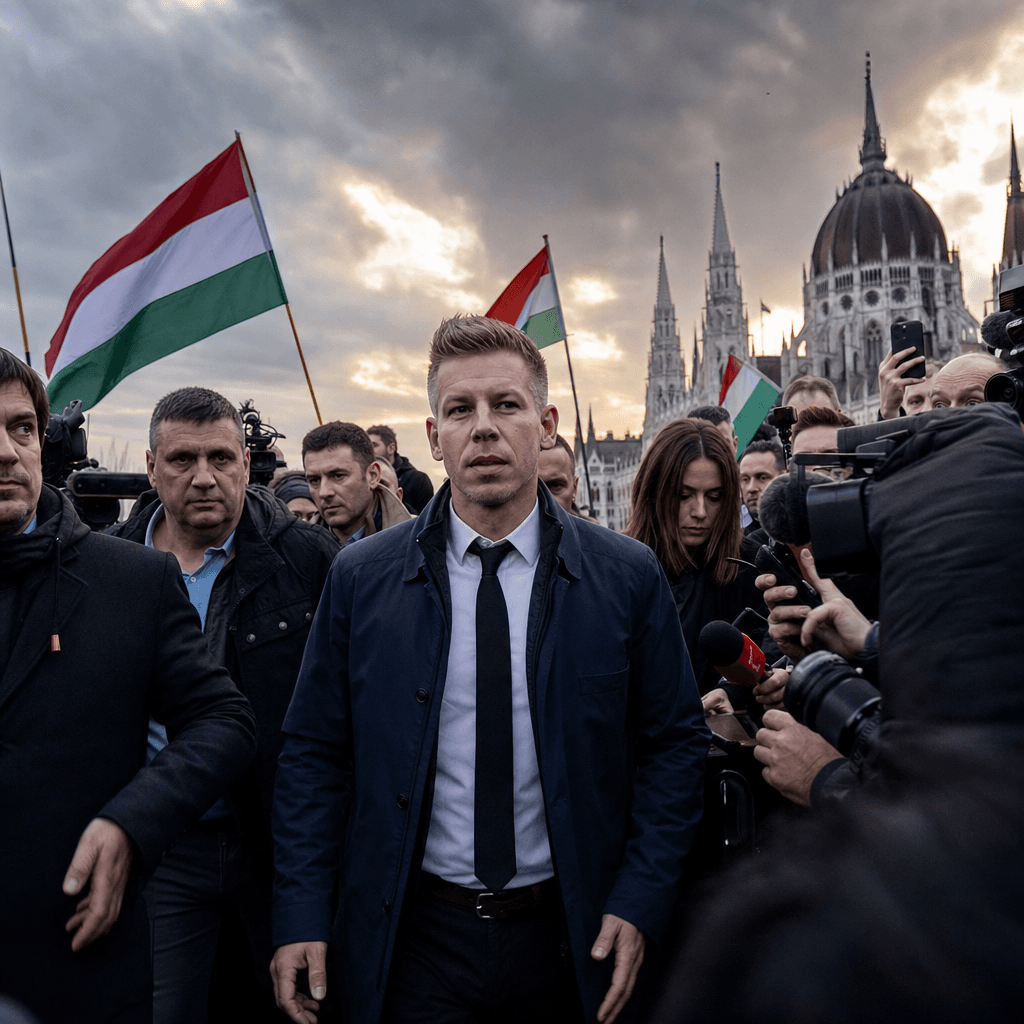
Péter Magyar Takes Power as Orbán’s Era Ends in Budapest
Magyar’s oath is less a ceremonial handover than a seizure of leverage: a two-thirds majority, an EU reset, and a fight over Hungary’s state machinery.
Péter Magyar was sworn in on Saturday as Hungary’s new prime minister, formally ending Viktor Orbán’s 16-year run after a decisive election defeat and a parliamentary reshuffle that stripped Fidesz of power (Al Jazeera;
NBC News). The power dynamic is now clear: Magyar holds the institutional advantage, not because he won a new political mood, but because Tisza’s supermajority gives him room to rewrite the rules Orbán used to entrench himself (
NBC News;
POLITICO Europe).
Why this matters
This is not just a смена of faces in Budapest. Magyar enters office with a parliamentary margin big enough to change the constitution, restore checks and balances, and remove Fidesz loyalists from key institutions if he moves quickly (NBC News;
POLITICO Europe). That matters because Orbán’s Hungary was not only a domestic political project; it was a blocking force inside the EU, where Budapest repeatedly slowed or vetoed decisions on Ukraine and broader bloc policy (
NBC News;
BBC).
Brussels is the immediate beneficiary if Magyar follows through. He has made unlocking frozen EU money one of his first priorities, with roughly €10 billion in recovery funds at risk if Hungary misses an August deadline, plus additional funds still blocked over rule-of-law and corruption concerns (BBC;
POLITICO Europe). The European Commission has already signaled openness to talks, which suggests Brussels sees Magyar as a credible interlocutor after years of deadlock with Orbán (
POLITICO Europe;
BBC). For Hungary’s economy, that is not optional politics; it is financing.
What Magyar inherits
Magyar is promising a reset on three fronts: anti-corruption enforcement, judicial independence, and Hungary’s relationship with the EU (EFE;
NBC News). He has also floated a new office to recover state assets allegedly diverted under Orbán-era networks, a direct challenge to the business interests that benefited from Fidesz rule (
NBC News;
EFE). That is where the real resistance will come from: not just from Orbán himself, but from the party-aligned media, courts, and patronage system that outlived any single election cycle (
BBC;
POLITICO Europe).
Orbán loses the levers of government, but he does not instantly lose his network. Fidesz still controls a substantial parliamentary bloc, and any serious investigation into public funds, oligarchs, or media capture will trigger pushback from the people and institutions built under his rule (NBC News;
BBC). Magyar’s advantage is that he can now act faster than Orbán’s system can adapt.
What to watch next
The next decision point is the EU funding clock. Magyar says he wants a deal in late May, and Brussels is willing to talk, but the money will only flow if Budapest can prove real movement on courts, procurement, and anti-corruption safeguards (POLITICO Europe;
BBC). Watch the late-May Brussels talks, the first personnel changes inside Hungary’s media and justice ministries, and whether Magyar uses his supermajority to lock in reforms before Orbán’s network can regroup. For
Global Politics, this is a test case: not whether a leader can win power, but whether he can dismantle the machinery that made power durable.
Discover more
India
Romanian Coalition Party Demands PM Resign
Romania's Social Democrats withdrew from coalition, joining far-right AUR to topple PM Bolojan, risking €10 billion in EU funds by August 2026.

Conflict & Security
Drone Warfare Killing Aid Workers at Unprec
Over 1,000 humanitarian workers killed in three years as cheap armed drones collapse legal protections. Gaza, Sudan, Ukraine, and DRC see deliberate targeting of aid convoys and hospitals with zero prosecutions.

Global
World Normalises Taliban as Afghan Women Eras
UN data shows Afghan women erased from public life as Russia recognises the Taliban, EU hosts officials in Brussels, and ICC warrants for gender persecution go unenforced.
Conflict & Security
West Africa Food Crisis: Three Shocks in 2026
Conflict, climate extremes, and the Strait of Hormuz closure drive a severe food crisis in West and Central Africa, with fertilizer prices surging 80% and millions displaced.