Pope Leo XIV's Peace Mission in Bamenda
Pope Leo XIV promotes peace amid Cameroon’s Anglophone conflict.
Model Diplomat3 min readCameroon
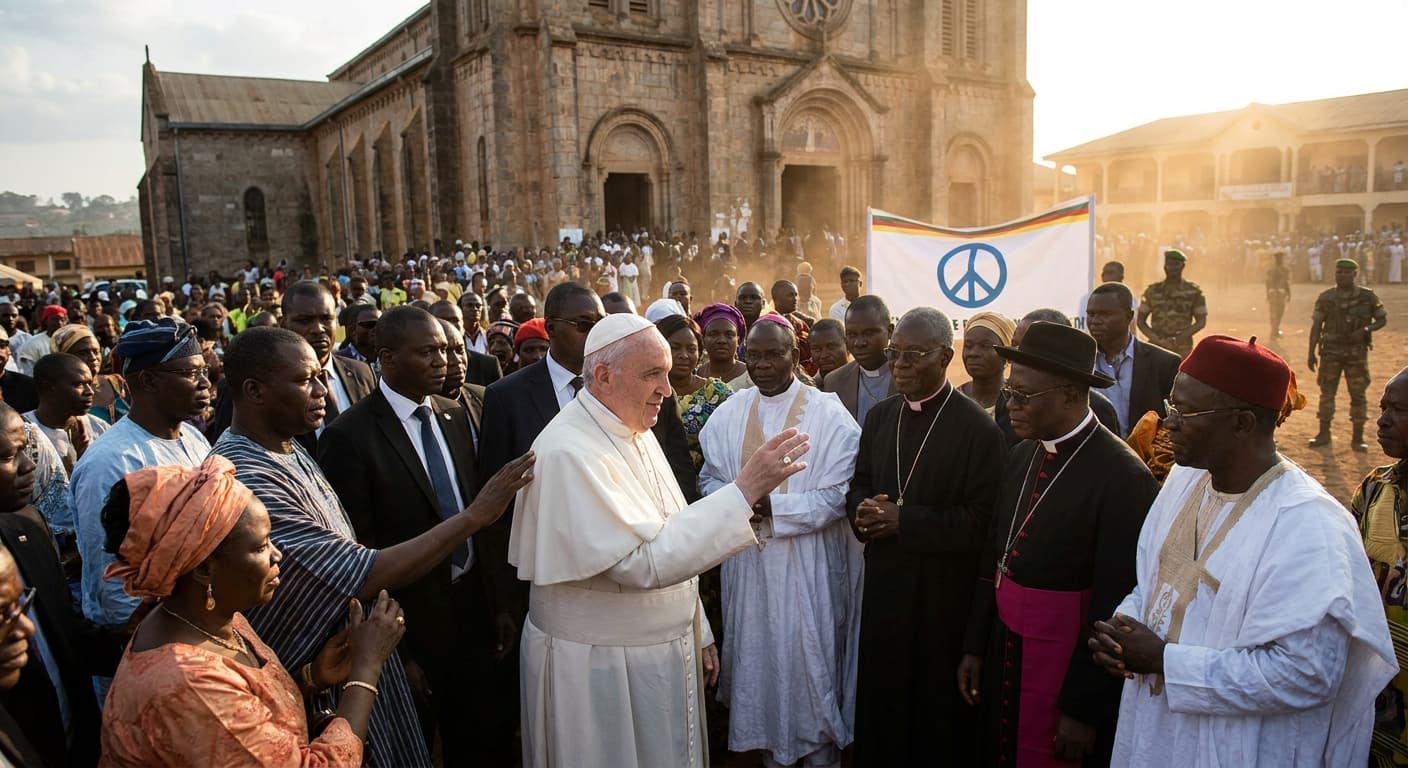
Pope Leo XIV’s Visit to Cameroon’s Bamenda Highlights Deep Roots of Separatist Crisis
Pope Leo XIV’s peace mission to Bamenda spotlights Cameroon’s ignored Anglophone conflict and tests the role of religion in a fragmented society.
Pope Leo XIV arrived in Bamenda, the heart of Cameroon’s English-speaking northwest, on April 17, 2026, aiming to promote peace amid one of Africa’s longest-running separatist conflicts. The Pope’s visit centers on an interfaith gathering with traditional, Protestant, Muslim, and Catholic leaders—a rare moment of unity in a region fragmented by violence that’s claimed thousands of lives since 2017.
The Crisis: A Lingering Anglophone War
Cameroon’s Anglophone regions—northwest and southwest provinces—have been wracked by a violent separatist insurgency since 2017, when English-speaking groups declared the independent state of Ambazonia. This followed decades of grievances over political marginalization and cultural suppression by the Francophone-dominated government. The conflict has escalated into guerrilla warfare, with government forces and separatists committing human rights abuses. Estimates say over 10,000 have died and over 700,000 displaced, according to human rights organizations.
Bamenda is both a hub of separatist activity and a symbol of the Anglophone identity. Yet, despite the international community’s calls for peace talks, little meaningful dialogue has happened. Cameroon’s central government has mostly pursued a security-heavy approach, while separatists remain fragmented and resilient. Against this backdrop, Pope Leo XIV’s pilgrimage to Bamenda carries distinct symbolic weight: the first papal visit to the insurgent zone and an appeal to faith and coexistence.
Why Religion Matters Here
Cameroon is religiously diverse, with roughly 40% Christian (split among Catholics and Protestants), 20% Muslim, and significant indigenous beliefs. In Anglophone regions especially, the Protestant church historically played a key role in education and cultural identity. The Catholic Church, led by the papacy, commands deep respect but has stayed relatively neutral politically. This visit disrupts that cautious stance by publicly embracing interfaith solidarity, including a Presbyterian moderator and an imam alongside Catholic and traditional leaders.
This alliance is significant for several reasons:
- It counters the separatist narrative that frames the conflict as ethnic or religious warfare.
- It emphasizes peacebuilding via communal and spiritual reconciliation rather than armed resistance.
- It highlights how faith institutions can act as mediators in states where political trust is eroded.
Bamenda’s traditional ruler and religious leaders form a fragile coalition that Pope Leo XIV hopes can stimulate grassroots reconciliation.
What to Watch Next
The Pope’s visit could shape several trajectories:
- Political pressure for dialogue: His presence may embolden moderate Cameroonian actors to push for inclusive peace talks that address Anglophone grievances. However, entrenched positions on both sides mean breakthroughs remain uncertain.
- Religious mediation: Monitoring whether the religious leaders’ coalition sustains momentum post-visit will reveal if faith-based peace efforts can supplement or replace failed political negotiations.
- Government reaction and securitization: President Paul Biya’s administration has historically framed separatists solely as terrorists. Any sign of openness to dialogue or reform would mark a significant policy pivot.
In the wider picture, this papal visit underscores how global religious soft power interacts with African conflicts. The Pope’s choice of Bamenda echoes historical precedents where religious figures played critical peace roles, from South Africa’s anti-apartheid movement to Northern Ireland’s Good Friday Agreement.
Cameroon’s Anglophone separatist war has been underreported globally, despite its severe humanitarian toll and regional destabilization risks. Pope Leo XIV’s intervention shines a spotlight on this forgotten conflict, reminding the international community that durable peace requires political as well as spiritual healing.
For more on African conflicts and peace processes, see our Global Politics and
Cameroon profiles.
AP News: Pope to go to Cameroon’s separatist region to urge peace
Discover more

Global Politics
Trump Pressures Pope Leo on Iran Threat
Trump pressed Pope Leo to recognize Iran as a global threat, exposing a widening ideological divide that is complicating diplomacy across the Middle East.
Global Politics
Trump's Lebanon-Israel Talks Claim Questioned
Trump's claim of imminent Lebanon-Israel talks drew skepticism as Beirut denied any plans, underscoring the fragility of diplomacy across the tense region.
US Politics
Dave Chappelle's Capitol Hill Visit
Dave Chappelle's Capitol Hill appearance spotlights the clash of culture and politics in America, reflecting deep social divisions and shifting narratives.

Conflict & Security
Drone Warfare Killing Aid Workers at Unprec
Over 1,000 humanitarian workers killed in three years as cheap armed drones collapse legal protections. Gaza, Sudan, Ukraine, and DRC see deliberate targeting of aid convoys and hospitals with zero prosecutions.