

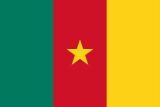
Cameroon
Republic of Cameroon
Population
28.6M
GDP
$45.2B
Capital
Yaounde
Government
Unitary presidential republic
At a Glance
Human Development
0.6
HDI (0-1)
Democracy
3.2
EIU (0-10)
Press Freedom
—
RSF score
Corruption
—
TI CPI (0-100)
Innovation
—
GII score
Happiness
—
WHR (0-10)
Cameroon, often called 'Africa in miniature' for its geographic and cultural diversity, straddles West and Central Africa. Under President Paul Biya, who has ruled since 1982 (making him one of the world's longest-serving leaders), the country faces multiple security challenges: a violent Anglophone separatist crisis in the Northwest and Southwest regions since 2016, Boko Haram attacks in the Far North, and spillover from the Central African Republic crisis.
The Anglophone crisis -- rooted in the marginalization of English-speaking communities in the former British Southern Cameroons -- has killed thousands and displaced over 700,000 people. The situation has drawn increasing international attention, though Cameroon has resisted external mediation. The country is the largest economy in the Central African Economic and Monetary Community (CEMAC) and is a member of the AU, the Commonwealth, the Francophonie, and the Organization of Islamic Cooperation.
Cameroon possesses significant natural resources including oil, timber, and agricultural products (cocoa, coffee, bananas). The country's bilingual character -- one of only a few in Africa with both French and English as official languages -- gives it a unique role in bridging Francophone and Anglophone Africa.
Want deeper analysis on Cameroon?
Ask Atlas anything about CameroonMUN Delegate Guide
As Cameroon's delegate, emphasize the country's unique bilingual identity and role as a bridge between Francophone and Anglophone Africa. This gives you flexibility to build coalitions across linguistic lines. Present Cameroon as a pillar of Central African stability and a leader in regional counter-terrorism.
On security, highlight Cameroon's role in combating Boko Haram through the MNJTF and contributions to regional stability. On the Anglophone crisis, maintain that it is an internal matter and emphasize efforts at national dialogue. Be prepared for pushback from Western delegations on human rights.
Align with the African Group, the Francophonie, and Central African states. Cameroon works closely with France, China, and Nigeria. On major votes, Cameroon generally follows the African consensus and is cautious about endorsing intervention in sovereign states. Build coalitions with Chad, Gabon, and Congo (Republic) within CEMAC. The Bakassi resolution with Nigeria can be cited as a positive example of ICJ dispute settlement.
Foreign Policy
Cameroon's foreign policy prioritizes regime stability, sovereignty, and resistance to external interference. France remains the most important bilateral partner, providing military cooperation, economic ties, and diplomatic support. However, Cameroon has diversified relationships with China (a major infrastructure partner), Russia, and Gulf states.
Regionally, Cameroon is the dominant power in CEMAC and plays a leading role in the Gulf of Guinea maritime security architecture. The country participates in the Multinational Joint Task Force (MNJTF) against Boko Haram alongside Nigeria, Niger, Chad, and Benin. Relations with Nigeria -- Cameroon's most important neighbor -- are generally cooperative, anchored by the ICJ's 2002 ruling on the Bakassi Peninsula (awarded to Cameroon and peacefully transferred in 2008).