PM Modi Apologizes for Women's Quota Bill Def
PM Modi's apology after women's quota bill defeat raises questions.
Model Diplomat7 min readIndia
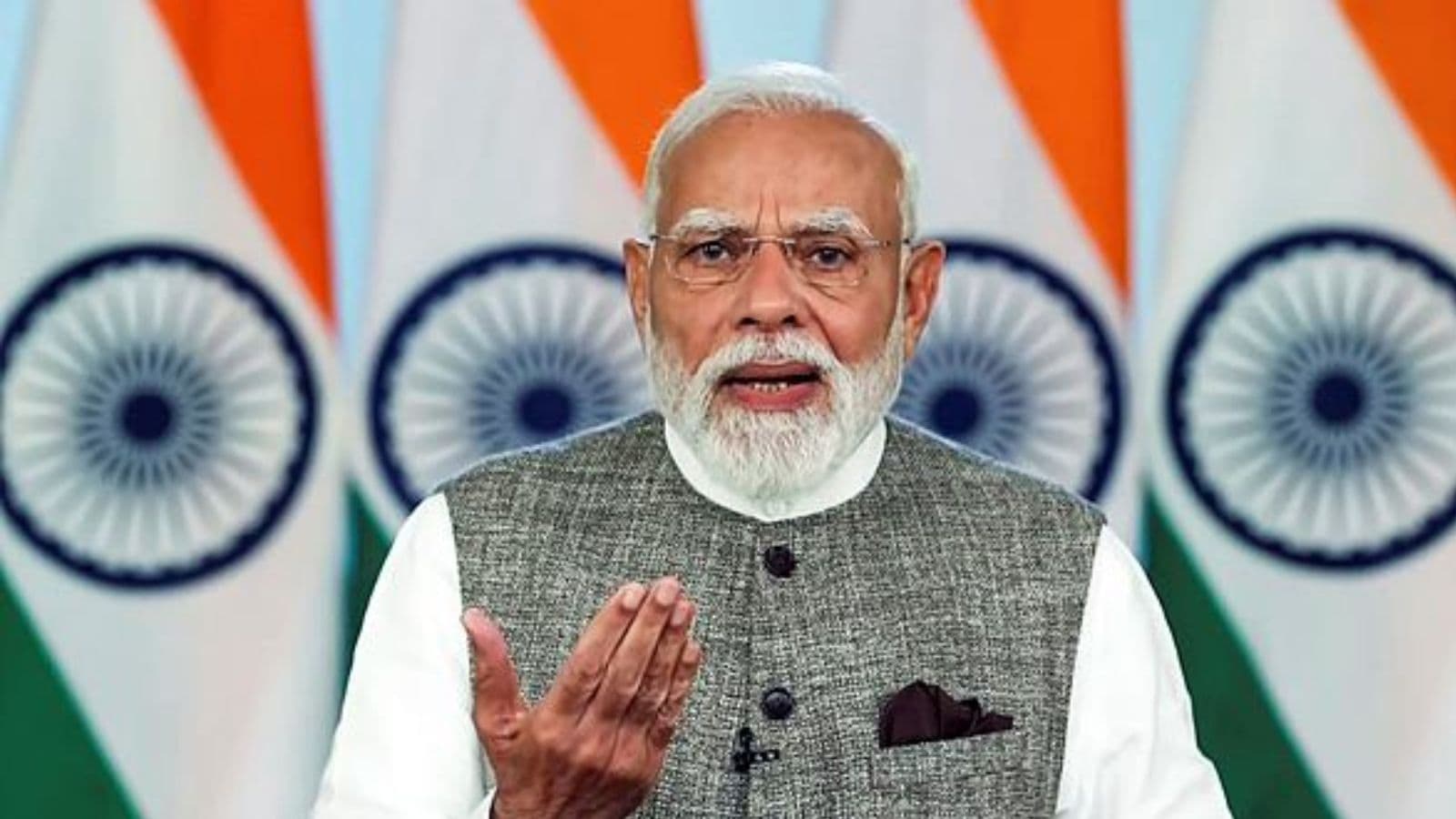
Modi's Women's Quota Apology: The Political Trap Inside the Defeat
PM Modi apologised to India's women on April 18, 2026 after the Lok Sabha rejected the 131st Amendment 298–230 — but the defeat may have been the point.
Prime Minister Narendra Modi's televised apology on April 18, 2026 — "I seek forgiveness from all mothers and sisters of the country" — followed the Lok Sabha's 298–230 rejection of the Constitution (131st Amendment) Bill the previous evening, the first constitutional amendment defeated in his 12 years in office. The bill would have implemented the 2023 women's reservation law by fusing it with a sweeping delimitation that expanded the Lok Sabha from 543 to 850 seats. The apology is not, primarily, about women's representation — it is a pre-scripted campaign device that lets Modi weaponise a foreseeable defeat into a moral cudgel across five state elections already underway. That reading is now hard to avoid: within 17 days of the vote, the BJP had breached West Bengal for the first time and the DMK had lost Tamil Nadu.
What actually happened on the floor
The bill needed 352 votes — a two-thirds majority — to amend the Constitution. Modi's National Democratic Alliance controls 293 seats. According to BBC Hindi, the amendment mustered 298 ayes to 230 noes, falling 54 votes short. Congress, the DMK, the Trinamool Congress and the Samajwadi Party voted against. The government knew the arithmetic before it tabled the bill; the Marathi service of the BBC quoted senior journalist Vijay Trivedi noting that ministers were aware they lacked the numbers but proceeded because "politics is a game of possibilities."
The three bills — the 131st Amendment, a Delimitation Bill and a Union Territories Laws (Amendment) Bill — were introduced on April 16 during a three-day special session of the Budget sitting. Al Jazeera reported that the package proposed to base seat reallocation on the 2011 census and roll it out for the 2029 general election. Rahul Gandhi, the Leader of the Opposition, called it "an attempt to seize power through delimitation and gerrymandering." Tamil Nadu Chief Minister M K Stalin burned a copy of the bill and raised a black flag in Chennai.
Why the bundling was the story
The 2023 Nari Shakti Vandan Adhiniyam already reserved a third of Lok Sabha and state-assembly seats for women. It was notified into force on April 16, 2026, one day before it was killed by amendment — a curious sequence that the Takshashila Institution highlighted in its post-mortem, noting that the 131st Amendment was "ostensibly intended to expedite" a reform that already existed on paper. The operative change was not the quota. It was tying implementation to a delimitation built on 2011 census numbers.
That is where the north–south fault line runs. A Carnegie Endowment analysis by Milan Vaishnav and co-authors, published in May 2026, calculates that on 2011 figures, thirty-six seats would change hands between states. Bihar, Uttar Pradesh and Rajasthan would gain 26. Kerala, Tamil Nadu and Andhra Pradesh would lose 21. On 2026 population projections, the transfer widens: the five southern states lose 27 seats collectively. The Grand Tamasha podcast, hosted by Vaishnav, put the same point bluntly: "Tamil Nadu loses seven seats, Karnataka three, Kerala five" — a shift of political gravity toward the Hindi belt where the BJP dominates.
The government's answer was to expand the House to 850 seats so no state absolute-loses. But the maths does not close. Vaishnav and Hintson calculated in 2019 that 848 seats would be needed to hold every state harmless — a figure the government adopted almost exactly. Arghya Sengupta of the Vidhi Centre for Legal Policy told the BBC the bill's
850-seat cap "is unclear and does not appear to be proportionate" to actual population growth, and that state assemblies were oddly left out of the expansion. The Prime Minister's Office insisted no state would lose. The southern chief ministers did not believe it.
The apology's real audience
Read the Prime Minister's April 18 address on the PMO's own site and the campaign design is transparent. Modi named the opponents: Congress, DMK, TMC, Samajwadi Party — the four parties fighting the BJP in Tamil Nadu, West Bengal and Uttar Pradesh. He warned that "women may forget everything else, but they never forget an insult to their pride." He accused "dynastic parties" of fearing empowered women. He promised the opposition would "be punished for the sin they have committed."
The PIB and PMO record of Modi's April 13 Nari Shakti Vandan Sammelan speech shows the rally-and-legislate rhythm was pre-planned: three days of mobilisation, a special session, a foreseeable defeat, and a nationwide address blaming the opposition — all before polling day in West Bengal on April 23.
Senior journalist Adesh Rawal, speaking to BBC Hindi, described the sequencing as an election weapon aimed particularly at Bengal, where "the TMC gives women the most representation" and where "the PM will now repeatedly say in every upcoming assembly and general election: we tried for women's reservation, the opposition refused."
The election returns are already in
The forecast paid off inside three weeks.
The BBC's May 4, 2026 report from Kolkata called the BJP's West Bengal breakthrough one of the most significant of Modi's 12-year reign — a defeat of a three-term incumbent whose 2021 winning coalition, per Lokniti-CSDS, was anchored by 50% support among women, four points higher than her support among men. The BJP explicitly targeted that bloc, promising larger cash transfers and accusing the TMC of failing women on law and order. In Tamil Nadu, actor Vijay's Tamilaga Vettri Kazhagam ejected the DMK. In Kerala, the Congress-led UDF unseated the Left after two terms. Only in Assam did the incumbent — the BJP — survive. As the BBC noted separately, all three
chief ministers who lost were welfarist leaders known for women-centric schemes, but their vote-shares fractured under the Modi-era counter-offer.
That is not proof of causation — the West Bengal election was also shaped by a bitter row over the Special Intensive Revision of electoral rolls, in which roughly nine million voters were struck off. But it is proof of political design. The 131st Amendment did what BJP strategists needed a national bill to do: it forced the opposition to cast a recorded vote against a bill whose banner was women's representation, in the middle of a state election cycle where women turnout regularly exceeds men's.
What the primary document actually says
The government's own case for the amendment, published on the PMO site, framed the failure as a moral verdict rather than a legislative one:
"Women may forget everything, but will never forget insult to their pride… For opposing women's reservation, the opposition will be punished for the sin they have committed."
That framing — reproduced verbatim in the official readout — is not the language of a government that expected to pass legislation. It is the language of a government that expected to inherit an argument.
The opposition's counter-thesis, tested
Congress and the DMK argue the bill was never really about women. Rahul Gandhi's line — that women's reservation was "already passed in 2023," and that the new package was a delimitation exercise wearing a gender mask — is corroborated by two facts. First, the underlying 2023 quota was notified into force on April 16, 2026, per the Union Law Ministry's own gazette, as reported by BBC Hindi. Second, if the government wanted to implement women's reservation without touching state boundaries, it could have done so on the current 543-seat Lok Sabha — a point CPI(M) MP John Brittas made
publicly to the BBC.
The government's rebuttal, articulated by BJP MP K Laxman, was that any delimitation would proceed on a pro-rata basis leaving no state worse off. But as the Takshashila Institution wrote in its April 28 analysis, the 850-seat proposal "does little to address" the institutional problem of parliamentary effectiveness — average sitting days are already half those of the UK, US or Australia — and would embed Uttar Pradesh, with 100+ projected seats, as the electoral gatekeeper of Delhi.
What to watch next
- The 2027 delimitation window. The 84th Amendment freezes seat reallocation "until the first census after 2026." India's ongoing decennial census, launched in April 2026, will take a year to enumerate and longer to process. Whether the government moves a slimmer amendment — women's rotation-based reservation on the existing 543 seats, without expansion — is the critical test of intent.
- Southern legal challenge. Tamil Nadu, Kerala and Karnataka have signalled they will move the Supreme Court if delimitation proceeds on 2011 numbers. Article 82's reference to "each census" is the pressure point.
- Uttar Pradesh 2027. The state votes next year. Expect the BJP to campaign on the 131st Amendment defeat as a story about the Samajwadi Party "denying" women their rights — the same script that just worked in Bengal.
Diplomat View
The defeat of the 131st Amendment looks like a legislative loss and functions as a political win. Modi did not need the numbers on the floor; he needed the roll-call. The specific call: expect the government to reintroduce a narrower women's reservation amendment — on the existing 543 seats, without the delimitation trojan horse — either in the winter 2026 session or immediately after the census enumeration closes in late 2027, and to use the interim to hammer four opposition parties in the state elections still to come. The forecast would revise if (a) the Supreme Court intervenes to freeze any 2011-based delimitation, forcing the BJP to decouple the two issues on court terms rather than political ones, or (b) the BJP loses Uttar Pradesh in 2027, which would strip the electoral logic out of the campaign. Absent those two triggers, the apology of April 18, 2026 is not a concession. It is a campaign asset with a shelf-life running through 2029. See more coverage on India.
Discover more
India
Mamata Banerjee Critiques Modi's Women’s Quo
Mamata Banerjee's 37.9% women-MP rebuttal to Modi's jibe was factually sound but politically ineffective, leading to her loss in West Bengal.
India
Mamata Banerjee Blasts Modi on Women's Quota
Mamata Banerjee criticizes Modi's 'foeticide' remarks on women's reservation, but her political influence wanes as the BJP gains ground.
India
Opposition Defeats BJP's Women's Quota Bill
The INDIA bloc opposition defeated the BJP's women's quota bill, exposing the party's pro-women claims as political and reshaping the constitutional debate.
India
Madhya Pradesh Assembly Redesign for Women's
Madhya Pradesh begins assembly delimitation ahead of the Women's Quota Bill, advancing a push for 33% female representation and reshaping state politics.