PDP's Acting Leaders
Nigeria's PDP faces leadership crisis ahead of 2027 elections
Model Diplomat8 min readAfrica
PDP's Acting Leaders: Wike's Faction Now Runs Nigeria's Opposition
Nigeria's PDP is run day-to-day by two rival acting chairmen — Abdulrahman for Wike, Turaki for Makinde — but INEC and the Supreme Court now recognise only one.
Nigeria's largest opposition party enters the six-month countdown to the 2027 general election with a leadership question that is officially settled and politically radioactive: Mohammed Abdulrahman, a loyalist of FCT Minister Nyesom Wike, is the Peoples Democratic Party's acting national chairman recognised by the Independent National Electoral Commission (INEC) since March 30, 2026 — a status the Supreme Court effectively locked in weeks later by nullifying, on a 3-2 majority, the Ibadan convention that had installed Kabiru Tanimu Turaki. The consequence, rarely stated plainly: Nigeria's principal opposition party is now formally led by a faction politically directed by a serving minister in Bola Tinubu's APC cabinet. That is the fact that turns a factional dispute into a democratic-competition problem — and it is why INEC's portal update matters more than any communique either side has issued.
Who holds the office, and who lost it
Two men still answer to the title "PDP national chairman," and each has a caretaker committee behind him.
Abdulrahman took physical control of Wadata Plaza, the PDP secretariat in Abuja, alongside National Secretary Samuel Anyanwu. He arrived with police, pledged a three-point programme of "healing," reconciliation and a fresh national convention, and named Damagum's stewardship as the source of the party's collapse. Guardian Nigeria reported that police fired tear gas to disperse staff who had blocked the National Secretary's office, and that then-chairman Ambassador Umar Iliya Damagum was absent when the takeover occurred, per The Guardian. Ripples Nigeria confirmed his resumption "amid protests, tight security" and quoted his pledge to "rebuild and reunite" the party ahead of 2027, per
Ripples Nigeria. At the confirmatory Abuja convention on March 29, 2026, over 2,000 delegates endorsed a 19-member NWC by consensus at the Moshood Abiola Stadium velodrome, per
BBC Pidgin.
Turaki, a Senior Advocate of Nigeria and former Jonathan-era minister of Special Duties, was declared chairman at the disputed Ibadan convention of November 15–16, 2025, per BBC Pidgin. He was reaffirmed on May 4, 2026 as chairman of a 13-member Caretaker National Working Committee at a parallel 103rd NEC meeting of the Makinde-aligned faction, per
Sahara Reporters. Alongside him, the Makinde camp insists Arch. Setonji Koshoedo remains acting national secretary under Section 36(2) of the PDP Constitution — a position formally communicated to INEC, per an earlier
Sahara Reporters filing. The origin story of that title matters: Damagum himself appointed Koshoedo acting secretary on the directive of the PDP Governors Forum in April 2025, following the Supreme Court's ruling in the Anyanwu–Ude-Okoye dispute, per
Naija News.
The courts settled it — narrowly
The chain of rulings is what matters, not the rhetoric on either side.
On October 31, 2025, Justice James Omotosho of the Federal High Court in Abuja ordered INEC to disregard any outcome from the planned Ibadan convention because it breached the PDP Constitution and the Electoral Act, per BBC Pidgin. Two weeks later, on November 14, 2025, Justice Peter Lifu barred the convention unless former Jigawa governor Sule Lamido was allowed to contest the chairmanship — a ruling now confirmed in appellate reasoning. The Makinde faction went ahead anyway, relying on a countervailing Oyo State High Court order that authorised the convention and directed INEC to monitor it. Turaki was declared chairman; Wike, Ayodele Fayose, Anyanwu, Abdulrahman himself and seven others were expelled for "anti-party activities," per
BBC Pidgin.
The counter-strike came in three tiers. On January 30, 2026, Justice Uche Agomoh of the Federal High Court dismissed the Turaki team's suit seeking INEC's recognition, holding they had disobeyed two prior High Court orders — and, according to BBC Hausa, expressly affirmed Abdulrahman's caretaker chairmanship pending a fresh convention, per BBC News Hausa. On March 9, 2026 the Court of Appeal dismissed nine consolidated appeals from the Turaki faction and imposed ₦2 million in damages for "forum shopping," per
BBC Pidgin. INEC updated its portal on Monday, March 30, 2026, to list the Wike-backed slate as PDP's leadership, per
BBC Yoruba. INEC spokeswoman Zainab Aminu told the BBC the commission was simply obeying court orders and lamented that political parties "have failed to manage their internal disputes and instead try to drag the electoral body into work that is not its own," per
BBC News Hausa.
The Supreme Court then closed the door. In a 3-2 majority judgment, the apex court upheld the Court of Appeal and ruled the November 15, 2025 convention "null and void" for defying a valid court order, per BBC Pidgin. Justice Nwosu-Iheme's lead judgment described the Oyo State High Court order the Makinde camp had relied on as "forum shopping" and "disgraceful." The minority, led by Justice Abubakar Sadiq Umar, would have treated the convention as an internal party affair beyond judicial jurisdiction — a dissent Turaki's camp still deploys in public statements. The five-member panel has also reserved judgment in the parallel appeal by former Deputy National Chairman Nafiu Bala Gombe, per
BBC Pidgin, meaning one more shoe could still drop.
The angle most reports bury
The under-reported line: the acting leadership INEC now recognises is politically directed by a serving APC-government minister. Nyesom Wike, the FCT Minister in President Tinubu's cabinet, is repeatedly described in Nigerian coverage as the "national leader" of the faction to which Abdulrahman and Anyanwu belong, per BBC Pidgin. At the March 29 convention Wike told delegates PDP would "be on the ballot in 2027" and boasted that "the electoral umpire monitored" his side's convention — a rhetorical claim to legitimacy that is now backed by INEC's own portal. It is, by any conventional metric, an odd position for the opposition's landlord to be in.
That paradox helps explain the disintegration around it. According to BBC Pidgin's tally, PDP won 12 governorships in 2023 — Adamawa, Akwa Ibom, Bauchi, Bayelsa, Cross River, Delta, Oyo, Osun, Plateau, Rivers, Taraba and Zamfara — but by mid-2026 only three PDP governors remain: Bala Mohammed (Bauchi), Dauda Lawal (Zamfara) and Seyi Makinde (Oyo), with Osun's Ademola Adeleke decamping to the Accord Party and the rest absorbed by APC, per BBC Pidgin. Every one of the three remaining governors sits with the Makinde bloc — the faction the Supreme Court has now rejected. In other words, INEC recognises the leadership that runs no state, and the leadership that runs the last three PDP states runs no party.
The historical parallel is instructive: this is a rerun, in slower motion, of the 2013 nPDP breakaway that eventually helped birth the APC. Then, Wike stood with Jonathan against the "G7" governors. This time, sitting inside the ruling APC's cabinet, he is the one presiding over the shell of the opposition — a reversal without precedent since the return to democracy in 1999.
The 2027 clock — the number that decides everything
The reason both factions cannot simply wait for the Supreme Court's remaining rulings is a calendar problem, not a legal one. INEC's revised 2027 timetable, tied to the new Electoral Act 2026, sets the presidential and National Assembly elections for January 16, 2027, with party primaries between April 23 and May 30, 2026, per BBC Pidgin. A Federal High Court ruling by Justice Mohammed Umar has since struck down parts of that timetable — the primaries window, membership-register deadlines and the pre-election candidate list — as inconsistent with Sections 29, 31, 32, 82 and 84 of the Electoral Act 2026, per
BBC Pidgin. INEC has appealed and warned that primaries held outside its May 30 deadline are invalid unless the Court of Appeal overturns the ruling, per
BBC Pidgin.
Which is why former Senate President Bukola Saraki has publicly urged both factions to drop the litigation. "My own position is that Court of Appeal has ruled. However, with the revised timetable by the Independent National Electoral Commission (INEC), it is obvious that time is not there to wait for the Supreme Court decision," he said, per BBC Pidgin. Senator Natasha Akpoti-Uduaghan echoed the appeal for reconciliation. Neither has landed — because for the Makinde bloc, accepting Abdulrahman means handing party structures, ticket-vetting powers and delegate lists to a slate they associate with the minister backing Tinubu's re-election.
Winners, losers, and the second-order effects
Winners: Wike, whose leverage over the PDP without leaving the APC cabinet is now institutionalised on INEC's public record; Abdulrahman and Anyanwu, who control the physical secretariat and party seal; and, indirectly, APC — an opposition led by cabinet-adjacent figures is an opposition unlikely to prosecute a hard campaign against the sitting president. Losers: Turaki, whose SAN credentials could not survive a 3-2 Supreme Court panel; the three surviving PDP governors, who now must either work through a chairman they attempted to expel or leave; and Sule Lamido, whose exclusion from the ballot in November 2025 became the legal thread that unravelled the entire Ibadan convention.
The second-order effect is quieter and more consequential: with only three PDP governors and a leadership half the party rejects, the strongest 2027 opposition vehicle is drifting away from PDP altogether. The ADC has become the destination of choice for figures like David Mark and former Ondo governor Rauf Aregbesola, whose own leadership dispute is now before the Supreme Court in the same batch as the PDP appeals, per BBC Pidgin. If the ADC clears its internal battle before PDP holds a unifying convention, the 27-year-old party that once produced two presidents may find itself demoted to a coalition partner in its own opposition space.
What to watch
- Next Supreme Court ruling in the Nafiu Bala Gombe / ADC appeal, judgment reserved for a date to be communicated: could re-open the leadership question in the parallel opposition party the PDP dissidents are eyeing.
- Court of Appeal ruling on INEC's appeal against Justice Umar's judgment nullifying the 2027 timetable — determines whether the May 30, 2026 primaries window stands or slides.
- A unifying PDP national convention — Abdulrahman has pledged one after outstanding ward, LGA, state and zonal congresses; without a date and a Makinde signature, the party cannot legally submit joint 2027 candidates.
- Defections of Governors Makinde, Mohammed and Lawal — the Zamfara governor's spokesperson Mustapha Kaura has already said the governor was awaiting the appellate outcome before deciding whether to leave PDP, per
BBC Pidgin.
The Bottom Line
The bottom line: INEC and the Supreme Court have chosen Nigeria's opposition leadership for it, and the choice they made — Abdulrahman, Anyanwu, Wike — leaves the country heading into 2027 with a PDP whose acting leaders answer, politically, to a minister in the ruling party's cabinet. Unless the Makinde bloc either bends to that reality or exits en masse, the 2027 election will be the first since 1999 in which Nigeria's principal opposition is legally led by allies of the incumbent it is supposed to defeat.
Discover more
India
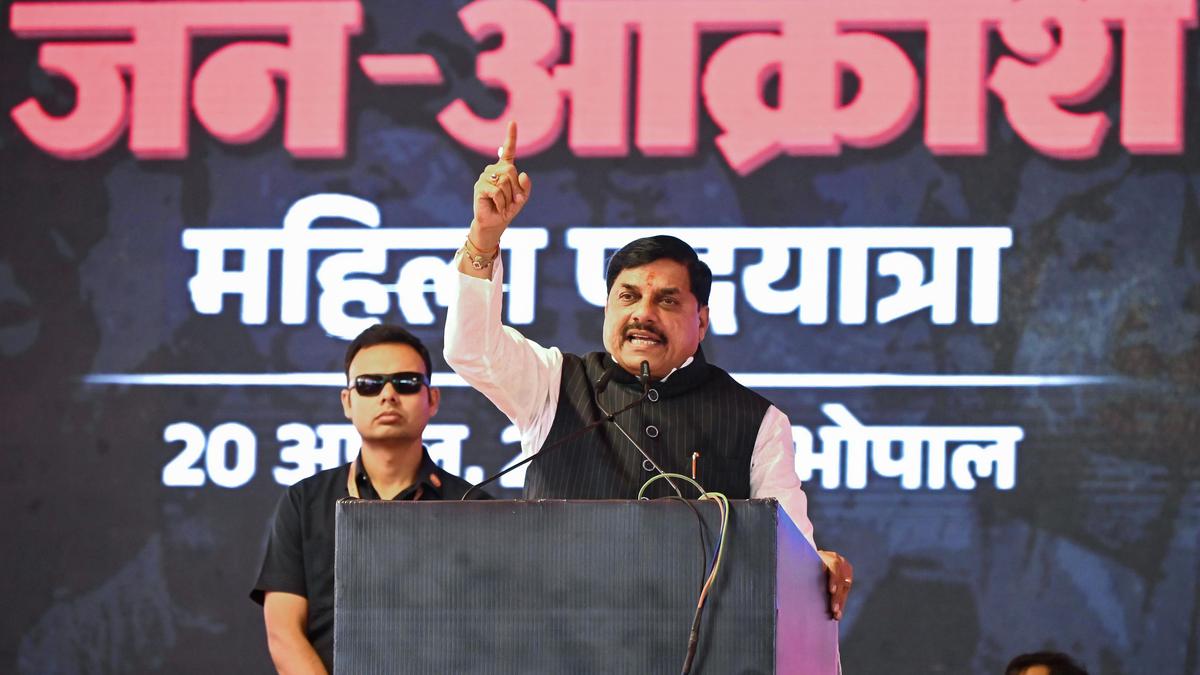
BJP Congress Clash Over MP Bill Defeat
The BJP's defeat of the women's quota amendment sparks a political narrative war with Congress, impacting future elections.
India
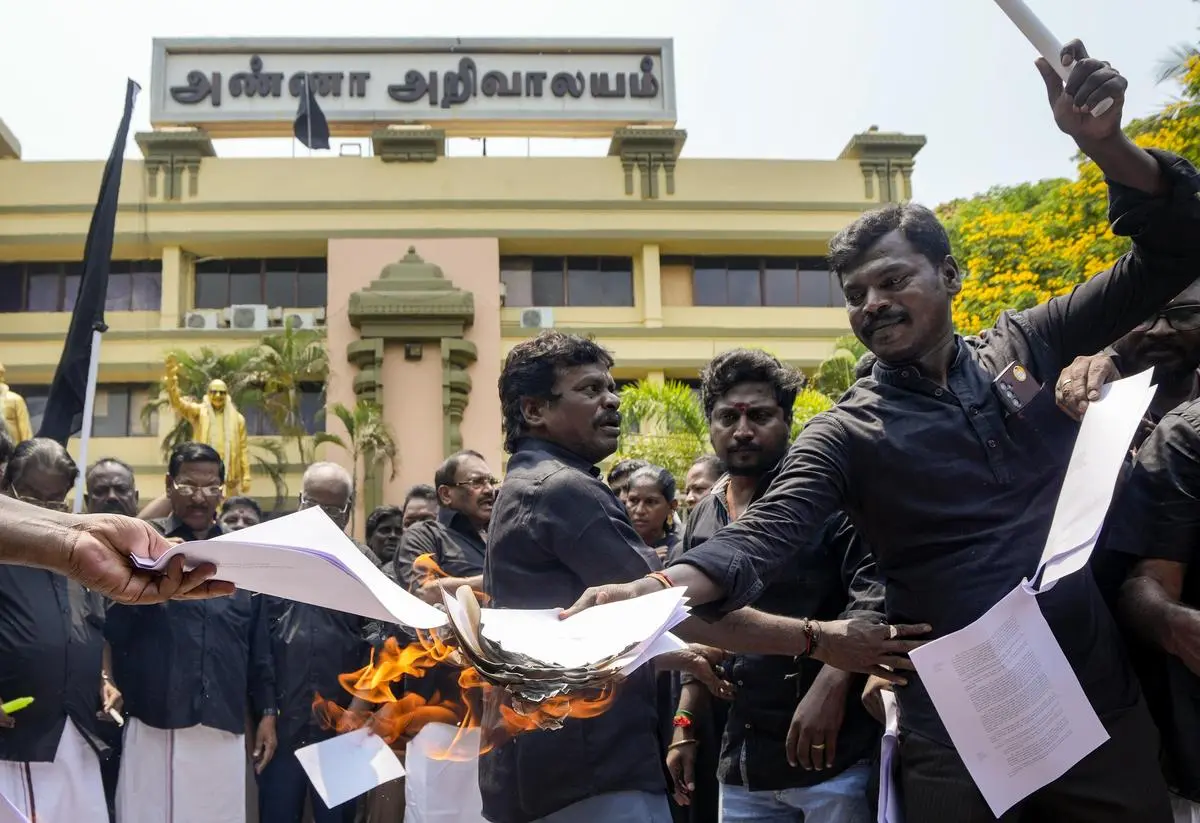
Women’s Reservation Bill 2026
The Constitution (131st Amendment) Bill, 2026 was defeated in Lok Sabha, revealing deeper political conflicts over women's reservation and delimitation.
India
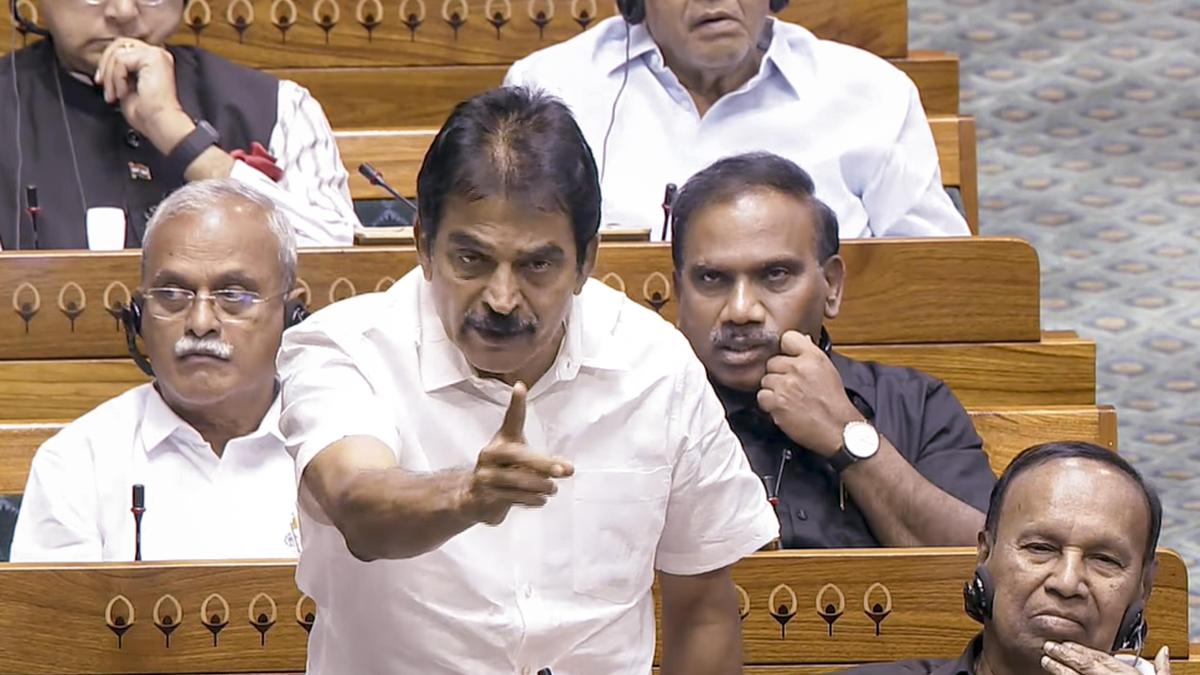
BJP's Delimitation Strategy
Congress leader K.C. Venugopal claims the BJP uses women's reservation to advance delimitation, raising fears over electoral fairness ahead of the 2029 polls.

Conflict & Security
Drone Warfare Killing Aid Workers at Unprec
Over 1,000 humanitarian workers killed in three years as cheap armed drones collapse legal protections. Gaza, Sudan, Ukraine, and DRC see deliberate targeting of aid convoys and hospitals with zero prosecutions.