PCC Terror Label Turns Brazil's Banks Into
US sanctions target Brazilian banks via PCC designation
Model Diplomat9 min readAmericas
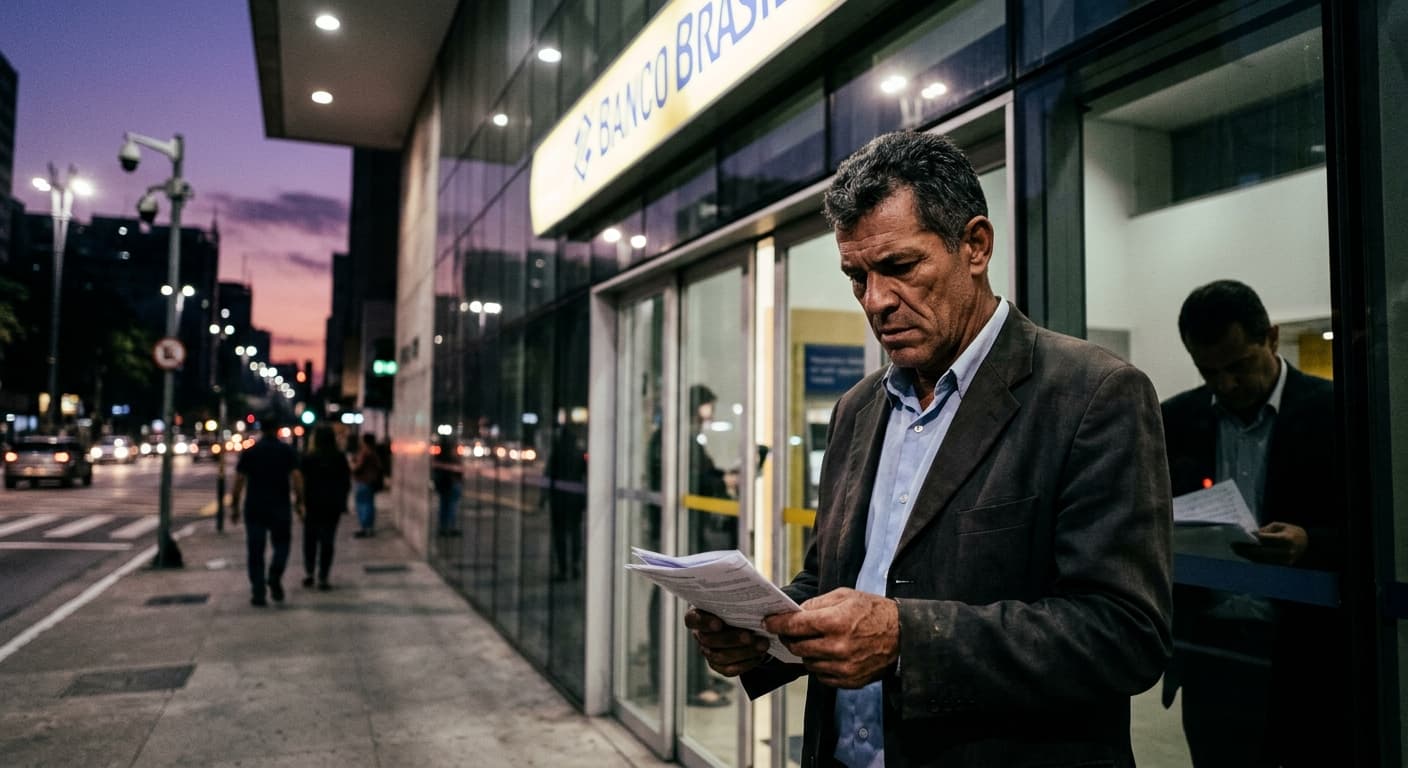
PCC Terror Label Turns Brazil's Banks Into Sanctions Targets
The July 1, 2026 OFAC action against PCC launderers is the first test of a Foreign Terrorist Organization designation that now exposes every Brazilian bank touching PIX to US secondary sanctions.
The US Treasury's July 1 designation of six PCC-linked money launderers looks like a routine narcotics action, but it is the opening move of a much larger play: Washington is using the May 2026 Foreign Terrorist Organization label on Brazil's two largest crime factions to install a compliance perimeter around the entire Brazilian financial system. The dollar amounts are small — roughly $30 million in alleged laundering routed between Florida and São Paulo. The legal architecture is not. Under 18 U.S.C. § 2339B, any bank, fintech, or payment processor that "knowingly" moves value for the Primeiro Comando da Capital now faces criminal liability and loss of US correspondent-banking access. That threat, not the individual designations, is what the Steptoe Sanctions Update describes as the "heightened US focus" reshaping Brazilian sanctions risk.
What OFAC actually did on July 1
The Treasury's Office of Foreign Assets Control named two Brazilian nationals — Victor Henrique de Oliveira Shimada, alias "Japa," and his associate Stella Stefanie Nunes Henrique de Oliveira, alias "Lara Croft" — together with three São Paulo companies (Victory Trading, Pixwave Soluções de Pagamentos, and Wave Construções Inteligentes) and one Portuguese transport firm owned by Shimada near Lisbon. According to the Steptoe Sanctions Update, Shimada and his associate allegedly laundered more than $30 million in illicit proceeds, some of it moved between crypto wallets in Florida and São Paulo. Victory Trading had already surfaced in a July 2025 Brazilian police investigation into a money-laundering network tied to São Paulo football club Corinthians, one of whose agents allegedly worked for the PCC.
The technical basis of the July 1 action is Executive Order 14059, the December 2021 counter-narcotics authority. That was also the vehicle used for Treasury's original PCC designation on December 15, 2021 and its March 2024 follow-up against PCC operative Diego Macedo Gonçalves do Carmo, whom a São Paulo court held responsible for laundering 1.2 billion reais — roughly $240 million — for the organization. What is new is the overlay: since May 28, 2026, the PCC and its rival-turned-competitor Comando Vermelho (CV) are also Foreign Terrorist Organizations under Section 219 of the Immigration and Nationality Act and Specially Designated Global Terrorists under Executive Order 13224.
BBC News Brasil reports the Federal Register notice was signed by Secretary of State Marco Rubio on June 5, together with a companion order allowing US-jurisdiction assets tied to PCC or CV to be frozen without prior notice.
Why the FTO label changes the legal geometry
An EO 14059 narcotics designation blocks assets and bars US persons from transacting with the named party. An FTO designation does something categorically harder: it converts commercial exposure into potential criminal liability. Under 18 U.S.C. § 2339B, it is a federal crime — punishable by up to 20 years — to knowingly provide "material support or resources" to a designated FTO. Congressional Research Service analysis confirms the statute's
reach into "financial services" and "currency or monetary instruments" and imposes on financial institutions an affirmative duty to report and block FTO-linked assets or face civil penalties of the greater of $50,000 or twice the value involved.
That is a categorical shift for Brazilian counterparties. A Congressional Research Service backgrounder on the FTO list notes that designation makes it "unlawful for a person in the United States or subject to the jurisdiction of the United States to knowingly provide 'material support or resources' to a designated FTO," subjects members to inadmissibility and removal under Section 212(a)(3)(B) of the INA, and empowers Treasury to compel blocking under 31 C.F.R. Part 597. The Supreme Court in Holder v. Humanitarian Law Project upheld § 2339B in 2010 against First Amendment challenge, and held that even "financial services" fall within its reach. The FTO regime, in other words, was built for jihadist financing networks — and it is now pointed at counterparties inside the tenth-largest economy in the world.
The real target: PIX and Brazil's payment sovereignty
Buried in the Peterson Institute analysis is the second-order play. Brazil's central-bank-operated instant-payment rail PIX handled $6.7 trillion in transaction volume in 2025, per Atlantic Council estimates, and the US Trade Representative opened a Section 301 investigation into PIX just four days before the FTO designation took effect on June 5.
PIIE's Monica de Bolle writes that the two moves are best read together:
"Processing payments, and thereby PIX, is squarely within the statute's reach. And with the PIX owned, operated, and regulated by the Central Bank of Brazil, the FTO designation and 'material support' threat now hangs over the entire Brazilian financial system."
Brazil's own 2025 domestic financial investigation, which uncovered PCC laundering through fintechs plugged into PIX, gave Washington the predicate it needed. The July 1 designation of Pixwave Soluções de Pagamentos — a payments processor whose very name evokes the national rail — is not accidental. It puts every PIX participant on notice that KYC gaps on downstream fintechs are now a counter-terror-finance problem, not a supervisory one. PIIE's analysis catalogues the compliance asks the FTO frame now supports: foreign-provider access to PIX, separation of the Central Bank's ownership from its regulation of the system, tougher KYC on fintech participants, and expanded information-sharing with US authorities. Those are the same asks USTR made under Section 301 — but they are considerably harder for Brasília to refuse when they arrive dressed as anti-money-laundering and counter-terrorism-financing compliance rather than as market access for Visa and Apple.
The Brazilian legal problem the US ignored
Brazil's Antiterrorism Law (Lei 13.260/2016) defines terrorism by reference to political, ideological, religious, or discriminatory motivation — a threshold the Supreme Federal Tribunal has consistently held that criminal factions do not meet. BBC News Brasil reported that Itamaraty spent the months before the designation trying to convince Washington that the PCC should remain classed as a transnational criminal organization, not a terrorist group, precisely because Brazilian jurisprudence would not follow. The State Department went ahead anyway. Its
own designation notice, signed by Rubio, was framed to make Brazilian refusal politically costly:
"CV and the PCC are two of the most violent criminal organizations in Brazil. Together, they command thousands of members and have orchestrated brutal attacks against Brazilian police, public officials, and civilians. Their influence and illicit networks extend far beyond Brazil's borders, throughout our region and into our own country."
The consequence is a formal legal asymmetry with operational teeth. Foreign policy adviser Celso Amorim warned publicly that any "pretext for intervention" would be "unacceptable," per Al Jazeera. São Paulo state prosecutor Lincoln Gakiya, who has investigated the PCC for two decades in the Gaeco organized-crime unit, told
BBC News Brasil that the designation risks migrating US cooperation from the FBI and DEA to the CIA — converting an open law-enforcement channel into a classified intelligence one and, in his view, "only hurting" domestic investigations because "when the State Department classifies these organizations as terrorists, the issue is treated as one of defense and no longer of police order."
The Mexican precedent is the one to watch. After Trump designated Mexican cartels as FTOs in February 2025 — Rubio's press statement named eight groups including Sinaloa and CJNG — President Claudia Sheinbaum acceded to a series of US demands on extradition and border enforcement, per
BBC News Brasil. Brasília is being offered the same choice with less time to answer it.
Who benefits, who pays
The political scoreboard is legible. Flávio Bolsonaro, running against Lula in October's presidential election, extracted a concrete US policy win within 48 hours of meeting Trump at the White House on May 27, per BBC News Brasil. Steptoe's analysts note that Flávio's poll numbers, once level with Lula, had dipped since March 2026 due to his implication in the unfolding Banco Master Ponzi scandal — specifically, an attempted fundraise from former bank head Daniel Vorcaro, who has an alleged history of bribing Jair Bolsonaro's chief of staff. The FTO designation supplied a law-and-order narrative on demand. So far, per Steptoe, the effect on polling has been "negligible," with Lula maintaining a roughly 10-point run-off lead — but Washington's strategic bet, in Steptoe's reading, is that a Bolsonaro presidency "could open the door to closer law enforcement or joint military action against Latin American criminal groups" and consolidate a regional right-wing bloc that would tilt commercial and critical-minerals flows toward the US at China's expense.
The losers, in the short run, are Brazilian financial institutions. Ricardo Sennes and Monica de Bolle both note in PIIE's analysis that "any financial institution, whether Brazilian or from a third country, that the Treasury's Office of Foreign Assets Control determines has knowingly facilitated transactions for a designated entity faces secondary sanctions and the loss of US correspondent-banking access." As the
CEBRI think tank observed in its June 2026 sanctions review, Brazilian firms already treat US sanctions regimes as binding "even when they have no direct presence in the United States" because dollar clearing runs through New York correspondents. Overcompliance — dropping suspect fintech counterparties wholesale — is the rational response, and it will show up as tightened credit conditions for the São Paulo fintech sector before it shows up as any observable enforcement action.
A less obvious loser is US counter-narcotics itself. Northeastern University's Nikos Passas warned in BBC News Brasil that the FTO label creates "additional incentives" for the PCC "to avoid US jurisdiction, avoid banks operating in US dollars, or avoid the US dollar altogether." The PCC's operational core is already largely in Europe and West Africa, per
Brookings analysis, which places some 1,000 PCC affiliates in Portugal alone and identifies the group as a key intermediary between Bolivian-Peruvian-Paraguayan cocaine producers and Italy's 'Ndrangheta. The July 1 sanction of Shimada's Portuguese transport firm is a first attempt to reach that European node, but it also confirms the escape route: the more the compliance perimeter tightens on dollar rails, the more the PCC's incentives point toward euros, crypto, and West African correspondent banks that Washington cannot reach.
What to watch next
- July 15, 2026 — the PIIE-flagged decision point for USTR's Section 301 Brazil track. If the US-Brazil working group under USTR Jamieson Greer and Brazilian Commerce Minister Márcio Elias Rosa has not resolved PIX access questions, Section 301 tariffs and FTO compliance demands will begin to harden into a single package.
- Next OFAC tranche —
Valor International reported on July 3 that Treasury is expected to add further PCC- and CV-linked individuals and entities to the SDN list, with no announced timetable. Watch for names in the Portuguese and West African financial systems.
- October 4, 2026 — first round of the Brazilian presidential election. The FTO designation's political payoff to Flávio Bolsonaro is the variable Washington actually cares about; Lula's polling lead has held so far, but a run-off in late October could reset the entire compliance calculus.
- Brazilian Chamber vote — the Foreign Relations and National Defense Committee has approved a text amending Brazil's Terrorism and Criminal Organizations laws to classify the PCC, CV, and 11 other Latin American groups as terrorists, per
BBC News Brasil. Passage would resolve the legal asymmetry — but also expand Brazil's own exposure to international sanctions.
The Bottom Line
The July 1 sanctions are small on their face and enormous by design: they are Washington's first live-fire test of whether a Foreign Terrorist Organization label can be used to install American counter-terror-finance jurisdiction over the payment system of a G20 democracy. The compliance perimeter now runs through PIX, and the price of refusal — loss of dollar clearing — is one Brazilian banks will pay before Brasília is asked to decide. If the Mexican precedent holds, that decision arrives in months, not years, and it arrives regardless of who wins in October.
Discover more

Economics
US Sanctions Iran's Nobitex Crypto Exchange
US Treasury sanctions Nobitex, Iran's largest crypto exchange, for processing billions in stablecoins for the central bank and IRGC, extending secondary sanctions risk to foreign platforms.

Economics
Russia's Crypto Law: Sanctions-Evasion by Law
Russia's State Duma passes a comprehensive crypto law legalizing digital currency for all foreign trade settlements, transforming sanctions-evasion workarounds into state-backed financial infrastructure.
Economics
1260H List: Pentagon's Chinese Military Ban
The US DoD's 1260H list of Chinese military companies triggers a direct procurement ban in June 2026 and an indirect ban in 2027, while China retaliates with export controls and anti-sanctions decrees, creating a compliance dilemma for defense contractors.
Global
Turkey's S-400 gambit to rejoin the F-35
Turkey proposes transferring its Russian S-400 to the UAE, aiming to remove the main obstacle to its return to the F-35 program amid a Gulf interceptor shortage.