Owaisi Critiques Modi on Delimitation Bill
Owaisi critiques Modi's Delimitation Bill and its implications.
Model Diplomat7 min readIndia
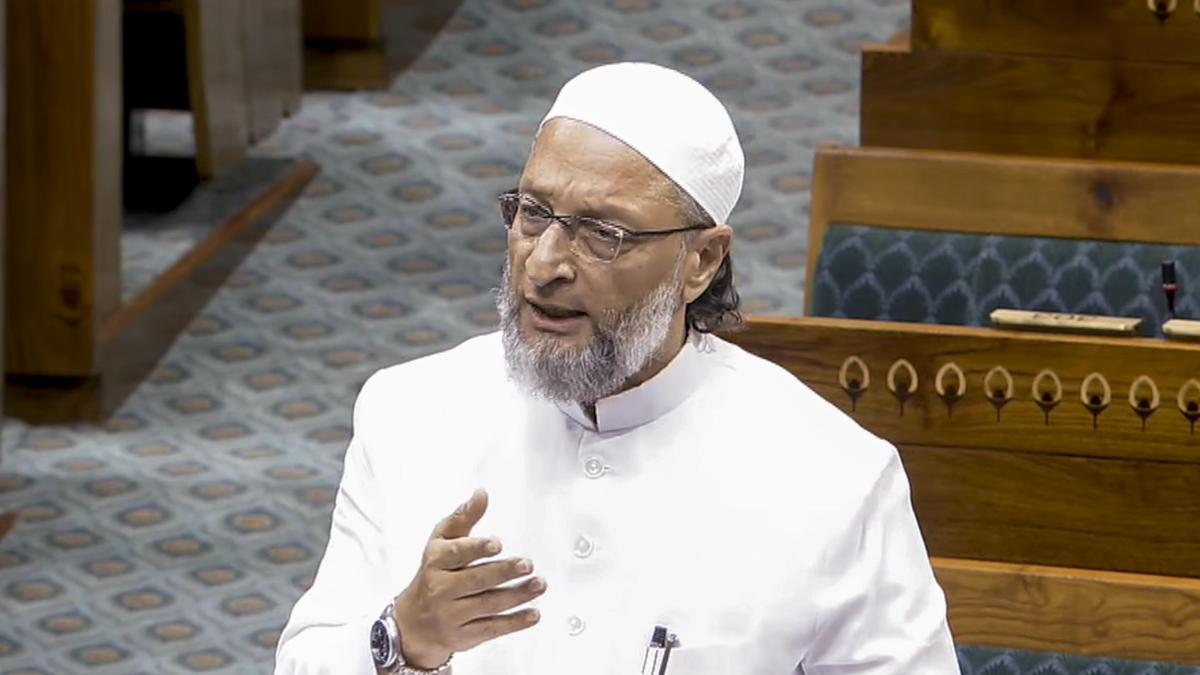
Owaisi vs Modi on Delimitation: Why the 131st Amendment Really Failed
Asaduddin Owaisi's critique of the Modi government's Delimitation Bill 2026 exposes how the failed 131st Amendment reshaped India's federal fight — and what comes next.
Asaduddin Owaisi's argument against Prime Minister Narendra Modi's Delimitation Bill is not, in the end, about seats — it is about who gets to redraw them, and when. On April 16, 2026, the AIMIM chief rose in the Lok Sabha to oppose the Constitution (131st Amendment) Bill, 2026, the Delimitation Bill, 2026, and the Union Territories Laws (Amendment) Bill, 2026, arguing that the package would strip the Constitution of its automatic link between the decennial census and reapportionment and hand that decision to a commission whose composition Parliament could later tweak by simple majority. That is the fight worth watching: not north versus south, but the quiet migration of a constitutional guardrail into ordinary statute — a shift so consequential that, when the amendment fell 298–230 the next day, it became the first constitutional amendment defeated on Modi's watch.
What Owaisi actually said
The Hyderabad MP's floor speech, reported by The Indian Express, made three specific claims. First, that removing the delimitation freeze "denies states with lower populations their fair share." Second, that the government violated procedure by tabling a constitutional amendment without the mandatory seven days' notice. Third — the one the wire copy under-covered — that the bill re-engineered who decides future delimitations, not just what this one looks like.
Owaisi's own amendment list, published two days later, went beyond opposition. According to a summary carried by The News Mill, he moved for an independent Delimitation Commission insulated from the executive, statutory anti-gerrymandering safeguards, a reservation for Other Backward Classes proportionate to their population, and a further 25-year freeze on inter-state seat redistribution. He also demanded, per
The Siasat Daily, that the exercise wait for the 2027 caste-enumerated census rather than run off 2011 data.
The government rejected every one of them.
The constitutional sleight-of-hand
The technical heart of Owaisi's objection is one Milan Vaishnav flagged in Carnegie's Grand Tamasha podcast: the 131st Amendment would have deleted the constitutional requirement that seats be reapportioned "on the basis of the last preceding census." In its place, the companion Delimitation Bill — an ordinary statute — would empower a commission to pick which census to use. Because ordinary bills need only a simple majority, the choice of census would become a political decision, not a constitutional one.
That distinction matters. As Carnegie's post-vote analysis, Delimitation After Defeat, explained, the 131st Amendment would also have severed the automatic link between Articles 81, 82, and 170 and the decennial census — precisely the guardrail southern chief ministers have relied on since 1976. Arghya Sengupta of the Vidhi Centre for Legal Policy told the
BBC the government's 850-seat cap had "no clear proportional formula" and would create a "mismatch: fast-growing states could gain more MPs without a corresponding rise in MLAs." Owaisi's speech turned that technical critique into a political charge: federalism was being redesigned without a federal negotiation.
The number that scares the south
The stakes are legible in the seat math. A widely cited Carnegie study by Milan Vaishnav and Jamie Hintson projected that a strict population-based redraw would hand Bihar and Uttar Pradesh a combined 21 additional seats while Tamil Nadu and Kerala together lost 16. Takshashila Institution's 2026 model, laid out in
its April 18 brief, goes further: in an 848-seat house apportioned by 2026 population, Uttar Pradesh alone would command roughly 143 seats — almost equal to the five southern states combined.
Home Minister Amit Shah pushed back hard. In his winding-up reply to the House, carried by the Press Information Bureau, Shah said a uniform 50% expansion would take the southern states from 129 to 195 seats and keep their share "almost the same at around 24 per cent." He also insisted, per a separate
PIB release, that the government had "not made any changes to the Delimitation Commission Act… down to the full stops and commas." Owaisi's rejoinder, echoed by DMK and Congress benches, was that a share held constant in 2026 still locks in the south's 1971 disadvantage — and that the 50% figure appears nowhere in the draft statute.
Why the amendment actually fell
The wire-copy narrative — women's reservation killed by an unruly opposition — obscures the arithmetic. The NUS Institute of South Asian Studies noted that the NDA holds 293 Lok Sabha seats against the 362 needed for a two-thirds majority. Modi was banking on regional parties — the YSRCP, the BJD, and quiet defections from the DMK's allies — to bridge the gap. Owaisi's speech, and the coordinated southern-bloc protest around it (Tamil Nadu Chief Minister M. K. Stalin burned a copy of the bill and led MPs into the chamber in black,
Al Jazeera reported), turned wavering regionals into hard "no" votes.
The Press Information Bureau's own Budget Session summary records the outcome in dry procedural language: "As the Constitution (One Hundred and Thirty-First Amendment) Bill, 2026 could not have the required majority as per Article 368(2) of the Constitution of India on its motion for consideration, no further action was taken. Further, the two dependent Bills … were not proceeded further." Translation: because the 131st fell, the Delimitation Bill and the UT Bill lapsed automatically — and women's reservation, statutorily tethered to a completed census and a fresh delimitation, cannot take effect for 2029 unless the government returns with a new package.
The angle nobody is writing: Owaisi's OBC bet
The under-reported move is Owaisi's demand for an OBC quota within the delimitation. Muslim MPs in the Lok Sabha have collapsed to 24 out of 543 — the lowest since independence, according to a post-2024 Al Jazeera analysis. AIMIM has no realistic path to grow through Muslim-identity politics alone; the "secular" opposition has visibly narrowed its Muslim ticket count, and the BJP holds the north.
By framing his amendments around OBC representation, Owaisi is positioning AIMIM inside the caste-census coalition that Rahul Gandhi's Congress has spent two years building. That is why Owaisi's argument, per The Siasat Daily, was that the bill sought "to rule the South and erase OBC representation" — a formulation that fuses the south's federal grievance with the OBC bloc's numerical grievance. If the government revives delimitation without a caste-census input, expect AIMIM to file the challenge Congress and the DMK will need but cannot themselves author without alienating upper-caste voters.
Federalism, not gender
The government's defence rests on a moral frame: opposition parties killed women's reservation. Modi's April 18 televised address, as summarised by ISAS, accused the opposition of "foeticide" for blocking the bill. That framing is now the campaign line in Tamil Nadu and West Bengal.
But the linkage is the government's own doing. As Carnegie's Rajagopalan noted, the 2023 Women's Reservation Act itself conditioned implementation on a fresh census and a subsequent delimitation. Modi's team could have delinked the two in 2026; instead it wrote a bill that expanded the Lok Sabha to 850, changed the constitutional trigger for future delimitations, and packaged the whole thing as a gender reform. Owaisi's line in the House — captured in his
interview with The Hindu — was that "this is not about women's reservation." The vote count suggests he read the room correctly.
The scholarly ecosystem broadly agrees. A recent study in the International Journal of Research and Innovation in Social Science projected that unmitigated population-based delimitation would give northern states 43 additional seats while southern states lost 24, and recommended a "digressive proportionality" model similar to the European Parliament's — precisely the compromise the 131st Amendment did not offer.
What comes next
Three catalysts will decide whether Owaisi's win in April becomes a durable constraint on the Modi government's second-term legislative arc, or a speed bump before a bigger push in 2027.
- Monsoon session, July–August 2026. Watch whether the government reintroduces a slimmed-down bill that decouples women's reservation from delimitation — the compromise Owaisi, the DMK and the CPI(M) have all signalled they could support. A refusal to decouple is a tell that Modi wants delimitation more than the quota.
- Census enumeration completion, April 2027. Once the current census — first phase launched April 1, 2026, and now including caste enumeration — is complete, the constitutional freeze under the 84th Amendment (2001) formally lifts. That is the earliest possible date at which a legally clean delimitation can proceed.
- Supreme Court challenge. Southern-state governments are preparing a coordinated writ petition anticipating a revived bill. Vidhi's Sengupta has already flagged the "mismatch" between Lok Sabha expansion and static state assembly strengths as a Kesavananda-scale basic-structure question. A hearing before the 2027 census is unlikely; a stay after it is not.
Diplomat View
The received wisdom is that the 131st Amendment failed because Modi lost his 2024 supermajority. That is half the story. It failed because Asaduddin Owaisi and M. K. Stalin, from opposite ends of the opposition, converged on the same technical objection: that severing the constitutional link between census and delimitation transfers a federal-balance decision from the amending power (Article 368) to the ordinary legislature — where the ruling coalition of the day always has a simple majority. That is a base-structure argument in waiting.
Our call: the government will return with a decoupled women's-reservation bill in the 2026 monsoon session and pass it. The delimitation fight will be deferred to a post-census 2027 push, this time with a proportionality floor and — if the political price rises high enough — a Rajya Sabha rebalancing to compensate the south. What would falsify this? A revived April-style omnibus in July with the 850-seat cap intact. That would signal Modi values the redraw over the reform and would guarantee a second, sharper defeat.
The Bottom Line
The bottom line: Owaisi's critique of Modi on the Delimitation Bill was not really about southern seats — it was about who controls the constitutional trigger for redrawing them, and the answer, for now, is not the executive. The 298–230 vote of April 17, 2026 has frozen India's political map in place until at least the 2027 census, and any future push will have to buy off the south with a fiscal or Rajya Sabha compromise the BJP has so far refused to concede.
Discover more
India
Owaisi Pushes for Muslim Political Autonomy
After BJP's victory in Bengal, Owaisi calls for Muslims to create their own political leadership, challenging existing parties.

Economics
Fed's Amex AML order puts correspondent banking on notice
Federal Reserve's Amex AML order requires board-level controls and a 90-day plan; OCC fined the bank $350 million over enterprise-wide deficiencies.
Conflict & Security
Guatemala: El Niño 2026–27 becomes regional security test
UNICEF: 25.8M children face El Niño risks in Latin America; Guatemala maps 188 municipalities for drought and food insecurity amid regional security test.

Economics
Fed's stress-test overhaul is a capital-smoothing exercise
Federal Reserve finalized stress-test overhaul: two-year averaging for bank capital buffers and public input, expected to halve volatility.