OpenAI's GPT-5.6 Launch and US AI Control
OpenAI releases GPT-5.6 under US government scrutiny.
Model Diplomat9 min readNorth America
OpenAI's GPT-5.6 Launch Cements a De Facto US Frontier-AI Preclearance Regime
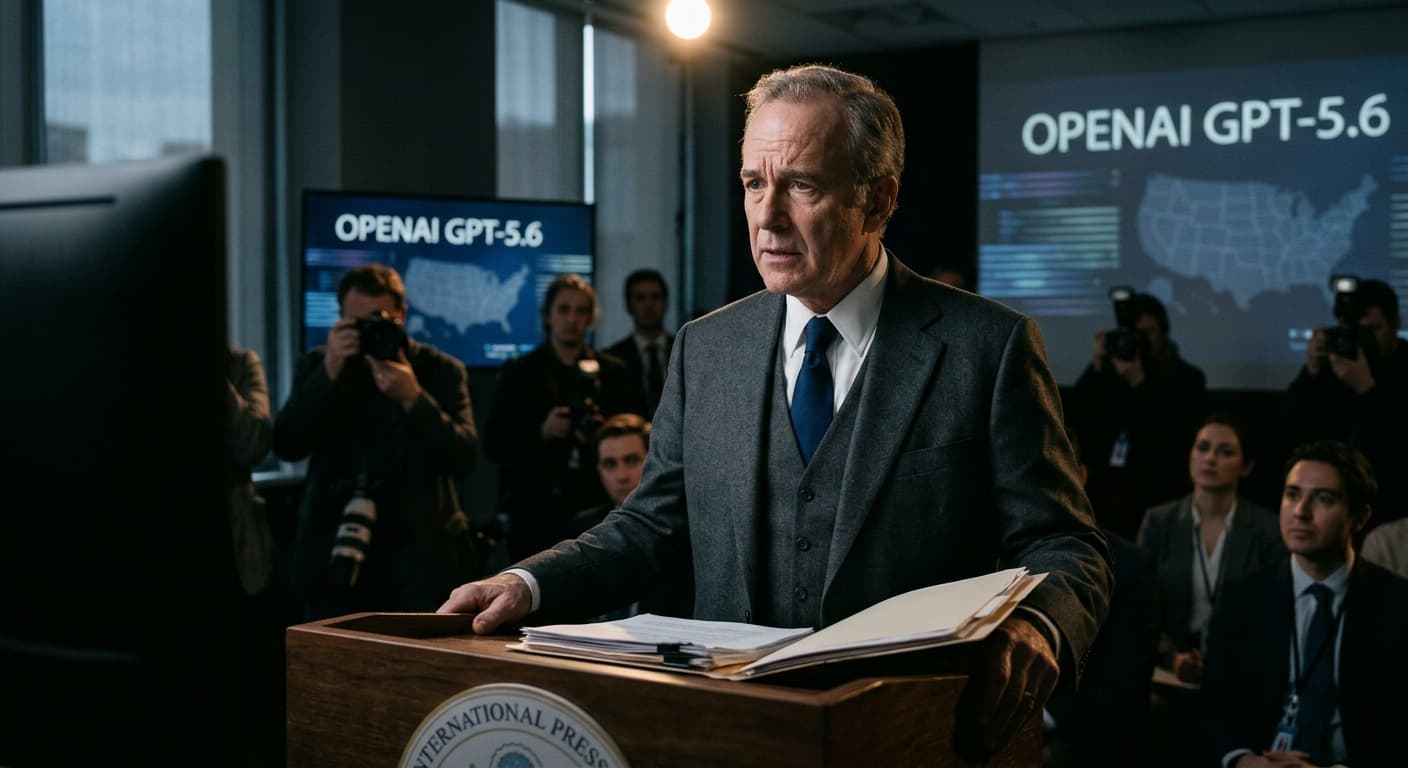
OpenAI ships GPT-5.6 Sol, Terra and Luna on July 9, 2026 after a White House-brokered pause — the first frontier model to release under Washington's new "voluntary" review.
OpenAI will publicly release its GPT-5.6 family on July 9, 2026, roughly three weeks after Washington quietly forced the company to preview the model to a US-vetted cohort and delay a broader rollout — the second frontier system in a month to move only with the executive branch's blessing, and the clearest sign yet that a "voluntary" June 2 executive order has hardened into de facto US preclearance over the world's most capable AI. The rollout marks the arrival of an informal frontier-model export regime that Congress never legislated, the Commerce Department has no clean statutory basis to enforce, and every major US lab has now accepted anyway.
The immediate story, per Channel News Asia, is that OpenAI's flagship Sol tier, mid-range Terra and low-cost Luna will launch globally after "technical testing and meetings between the company and government officials." A White House official told AFP the release was "not an approval" — the models were submitted for scrutiny "on a voluntary basis." Nobody in the industry is treating that framing as operative. The
Financial Times reported on June 26 that OpenAI had already released GPT-5.6 "to select users vetted by US government," a phrase that captures the operative reality more accurately than the White House readout.
The pattern: Mythos, then GPT-5.6
The template was set in June. On June 12, 2026, the Department of Commerce sent Anthropic a letter — never published — requiring an export licence to allow any foreign national, including the company's own non-US employees, to access its Mythos 5 and Fable 5 models. Anthropic disabled the models globally within hours. According to a CSIS legal analysis, the letter invoked the Export Control Reform Act's emerging-technology authority "which has never been used before as the basis for issuing a control" and cited a section of the regulations that Commerce had previously interpreted to exclude remote model access from export jurisdiction.
Access was restored on July 1, 2026 only after Commerce Secretary Howard Lutnick sent Anthropic a second letter — this one leaked — conditioning the release on the company agreeing to "proactively detect and address security risks," share standards work with the government, and report "malicious activity," as Al Jazeera reported. The Peterson Institute's
Martin Chorzempa noted that OpenAI "has reportedly agreed to give the US government approval rights over customers for its latest model as well" — a private concession that goes well beyond the executive order's public text. The
Economist wrote on June 30 that the administration "now controls who gets access to the best models" and dryly compared the voluntary framework to tipping and PTA membership — things "billed as voluntary but turn out not to be."
Why the government cares: cyber capability, not chatbots
The trigger is not chatbot hallucination. It is autonomous offensive cyber. The UK AI Security Institute, in a June 2026 evaluation, reported that GPT-5.5 was only the second model — after Anthropic's Mythos Preview — to complete "The Last Ones," a 32-step corporate network attack simulation that human experts need roughly 20 hours to finish end-to-end. AISI's
separate research found that the length of cyber tasks frontier models can complete autonomously has been doubling every 4.7 months since late 2024, an acceleration from an earlier eight-month estimate. Mythos Preview cracked a second, previously unsolved industrial-control range in 3 of 10 attempts.
The threat is no longer hypothetical. A Congressional Research Service brief documents that in September 2025 Anthropic disrupted a Chinese state-sponsored operation labelled GTG-1002 that "automated 80%-90% of a large-scale cyber espionage campaign targeting around 30 organizations worldwide" using Claude — the first documented AI-orchestrated cyberattack. Testimony submitted to the
House Homeland Security Committee on June 4, 2026 by Chris Meserole added that "threat actors linked to China, Iran, Russia, and North Korea have used advanced agents to carry out operations across the cyber attack lifecycle," including the first known malware to use "Just-In-Time" AI, calling general-purpose models to generate malicious functions on demand.
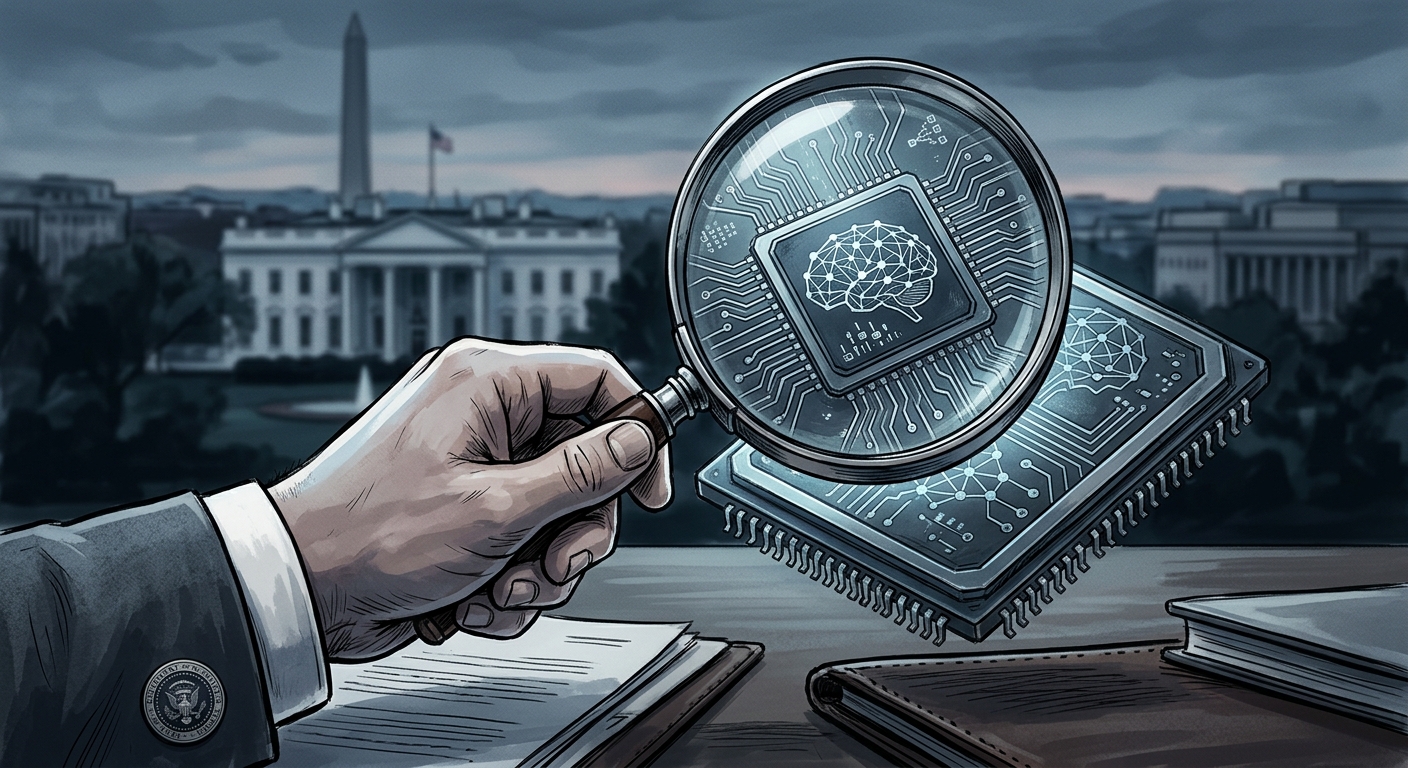
The UK National Cyber Security Centre has warned that the cost, speed and scale of cyber operations are being reshaped for both attackers and defenders, and that safeguards built into responsible commercial models "can often be bypassed" — and in open-weight releases can be stripped out entirely. That is the operational logic behind Section 3 of the June 2 executive order, which directs the NSA to build a classified benchmarking process to designate "covered frontier models" and gives Washington up to 30 days of pre-release access. The order's Section 3(c) explicitly disclaims any "mandatory governmental licensing, preclearance, or permitting requirement." As a matter of executed practice, GPT-5.6's five-week gestation makes that disclaimer a fig leaf.
The legal architecture is thinner than it looks
The Trump administration killed the Biden AI Diffusion Rule in May 2025 without replacement. The Government Accountability Office, in decision B-337935, ruled that Commerce's non-enforcement notice itself constituted a rule under the Administrative Procedure Act and had to be submitted to Congress under the Congressional Review Act — a rare finding that Commerce quietly walked around by leaving the rule technically on the books while directing its staff not to enforce it. The
United States Studies Centre has characterised the resulting environment as "a more discretionary, less-comprehensive model of technology governance" in which countries now compete for AI access through "ongoing political, legal and cybersecurity alignment with the new US administration's objectives."
That legal limbo is the space the June 12 Anthropic letter tried to exploit, and it is why the Peterson Institute analysis argues the Commerce Department's jurisdiction over cloud-delivered model access is genuinely contested — Congress has considered but not passed a bill granting the authority. What Washington has built instead is a leverage regime: any lab that wants a Defense Department contract, wants export-control certainty for its non-US engineers, or wants to avoid a Mythos-style overnight shutdown must cooperate.
That leverage is amplified by NSPM-11, signed June 5, 2026, which orders the Pentagon and intelligence community to onboard the "most advanced AI models from multiple vendors" within 120 days, and — critically — requires agencies to terminate contracts with companies that limit government use. As the
Council on Foreign Relations noted, the "no-disable clause" was a direct response to the Pentagon-Anthropic standoff earlier this year, in which the Defense Department
labelled Anthropic a supply-chain risk after the company refused to lift restrictions on domestic surveillance and autonomous weapons use.
The executive order requires the government to develop, per its text, "a classified benchmarking process to assess the advanced cyber capabilities of AI models" to be designated by the NSA in consultation with the National Cyber Director. As of July 9 that benchmark is not public, and cannot be, which means the industry is operating under a threshold nobody outside a small classified working group can see. The Atlantic Council observed that the 30-day pre-release window "delegates enormous discretion" to the NSA, CISA and Treasury to define terms like "covered frontier model" through a classified process — with limited independent verification available to allies or state and local partners.
Who benefits, who loses
OpenAI is the immediate commercial winner. CNA notes that Terra will be priced at half the cost of GPT-5.5, which — timed with confidential IPO filings by both OpenAI and Anthropic at valuations approaching $1 trillion — is a direct assault on Anthropic's mid-tier pricing at the very moment Anthropic's foreign customer base is still rebuilding trust after the June shutdown. Anthropic remains constrained: Mythos 5 has been released only to American institutions, per the Peterson Institute, which argues the ad hoc pattern "will further damage the reputation of the United States and its firms as a supplier of technology."
Allies are the quiet losers. The United States Studies Centre notes Australia already faced a two-month delay to access Mythos Preview, and that "the White House is also now controlling access to OpenAI's latest GPT-5.6 model, starting with a small number of approved US organisations." The
Royal United Services Institute has warned that the pattern will "fuel the feeling of Europe being 'left out' and overly reliant on the ebbs and flows of companies headquartered in the US being played by Washington politics," and reports that a G7-adjacent meeting between Emmanuel Macron, Dario Amodei and other AI executives failed to secure any commitments on export-control transparency.
China is the structural beneficiary. The Peterson Institute argues bluntly that "the main risk for the rest of the world" is that Chinese labs, seeing US retrenchment, exploit the opening to embed their models in third-country infrastructure. That threat is already visible: the Center for a New American Security reports that Chinese firms including DeepSeek, Moonshot and MiniMax have generated tens of millions of prompt exchanges against Claude in what Anthropic calls the largest "adversarial distillation" campaign yet, with an April 23, 2026 White House memo (NSTM-4) formally identifying "industrial-scale campaigns to distill U.S. frontier AI systems."
The historical parallel is uncomfortable. The 1990s Wassenaar-era controls on strong cryptography — export-limited until they leaked worldwide anyway — offer the template most experts cite privately. The CSIS assessment concludes the June 2 order is "an expansion of existing industry practice to a broader range of federal agencies, rather than an attempt to proactively shape industry behavior" — which is the polite way of saying the regime is downstream of what OpenAI, Anthropic, xAI and Google DeepMind were already doing voluntarily with Commerce's Center on AI Standards and Innovation. The question is what happens when that alignment breaks.
What to watch next
- 60-day EO deadline (early August 2026): Section 3 of EO 14409 requires the Treasury, Department of War (NSA) and DHS (CISA) to design the voluntary framework and classified benchmark. The definition of "covered frontier model" is the load-bearing decision; too narrow and Mythos-class systems ship uncontrolled, too broad and the review process seizes.
- NSPM-11 90-day roadmap (early September 2026): The White House Office of Science and Technology Policy and OMB must deliver a national-security AI computing roadmap. This will signal whether the administration is building a genuine parallel classified AI stack or merely rebranding commercial deployments.
- Deterring American AI Model Theft Act (H.R. 8283): Passed the House Foreign Affairs Committee unanimously on April 22, 2026. Full House floor action is the first real congressional test of whether the ad hoc regime gets statutory backing.
- FY2027 NDAA cycle: Section 1535 of the FY2026 NDAA created the AI Futures Steering Committee with a January 31, 2027 report deadline. Congress will use that as its hook to write the licensing regime the executive order pointedly refused to establish.
Diplomat View
The GPT-5.6 launch is not a story about a chatbot upgrade. It is the moment US frontier-AI governance transitioned from voluntary self-regulation to negotiated preclearance without any statute authorising the change. The regime is unstable for three reasons: the Commerce Department's export-control jurisdiction over cloud-delivered model access is legally contested; the classified "covered frontier model" threshold is invisible to the very allies expected to align with it; and the doubling curve on autonomous cyber capability, at 4.7 months per AISI, is faster than any conceivable rulemaking cycle. Expect the next Mythos-style shutdown within six months — probably around a biosecurity or agentic-cyber threshold rather than the current cyber-vulnerability one. Our forecast would revise if Congress enacts a statutory licensing regime this fall (unlikely, but H.R. 8283 is the marker) or if a single lab breaks ranks and refuses pre-release access, forcing Commerce to test its authority in federal court. Until then, the White House holds the veto, and every frontier lab knows it.
The Bottom Line
Washington now controls the release calendar of the world's most capable AI systems through a "voluntary" process none of the labs feels free to refuse. GPT-5.6's July 9 launch, cleared only after preview access to US-vetted partners, confirms that the June 2 executive order's non-binding language is operationally binding — and that the real US frontier-AI regime is being written not in statute but in Commerce Department letters that never see daylight.
Discover more

US Politics
SNAP Food Assistance Faces Legal Challenges
In 2026, SNAP faces stricter eligibility rules and mounting legal challenges, threatening food assistance for the millions of Americans who rely on the program.

India
BJP's Misunderstanding of Women's Quota Needs
The BJP's linking of the Women Reservation Bill to delimitation risks delaying women's empowerment in India, misreading the aspirations of female voters.
India
Congress Accuses Modi of Stalling Women's Law
Congress accuses Modi of stalling women's reservation law by linking it to delimitation, revealing a deeper electoral strategy.

Conflict & Security
Drone Warfare Killing Aid Workers at Unprec
Over 1,000 humanitarian workers killed in three years as cheap armed drones collapse legal protections. Gaza, Sudan, Ukraine, and DRC see deliberate targeting of aid convoys and hospitals with zero prosecutions.