OPEC+ Hike Amid Post-Iran-War Shifts
OPEC+ raises output quotas as Gulf oil politics shift.
Model Diplomat7 min readMiddle East
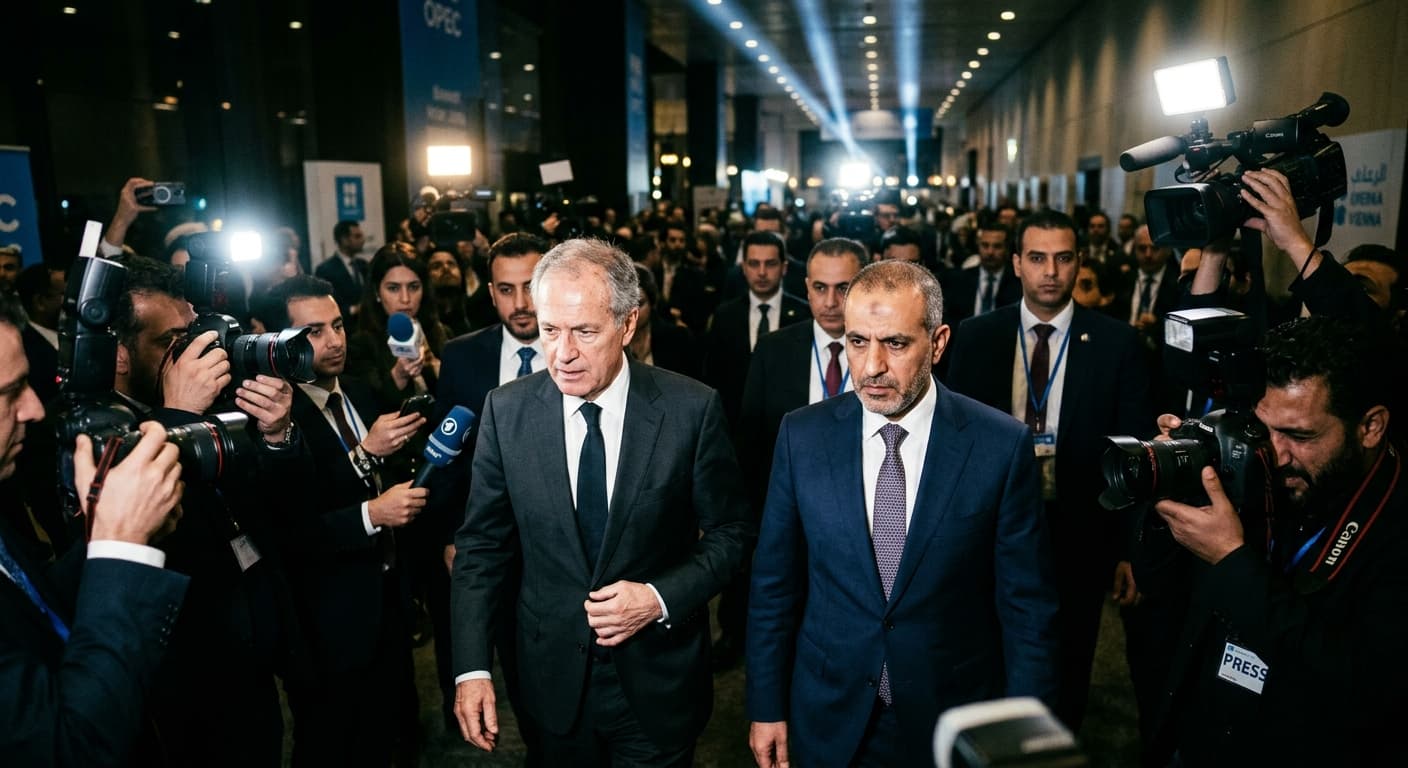
OPEC+ Fifth Hike Papers Over a Post-Iran-War Power Shift
OPEC+ approved a fifth straight monthly output rise on July 5, 2026 — but with Hormuz half-open, the UAE gone, and Brent at $72, the cartel is losing pricing power to events.
OPEC+'s decision on July 5, 2026 to add another 188,000 barrels per day to August quotas is being sold as market management. It is not. It is a cartel projecting normalcy while three shocks have quietly rewritten Gulf oil politics: the US-Israel war on Iran, the United Arab Emirates' departure from OPEC on May 1, and a Strait of Hormuz that has reopened just enough to flood the market with pent-up barrels. The quota hike is symbolic. The real story is that Saudi Arabia is now managing a smaller club, against a wounded Iran, without its second-largest swing producer, into a market the IEA still expects to be structurally oversupplied through 2027.
According to Al Jazeera, the seven remaining voluntary-cut participants — Saudi Arabia, Russia, Iraq, Kuwait, Kazakhstan, Algeria and Oman — held a virtual meeting Sunday and reaffirmed "the importance of adopting a cautious approach and retaining full flexibility to increase, pause or reverse the phase out of the voluntary production adjustments." The group will reconvene on August 2. The language is unchanged from May. The strategic ground under it is not.
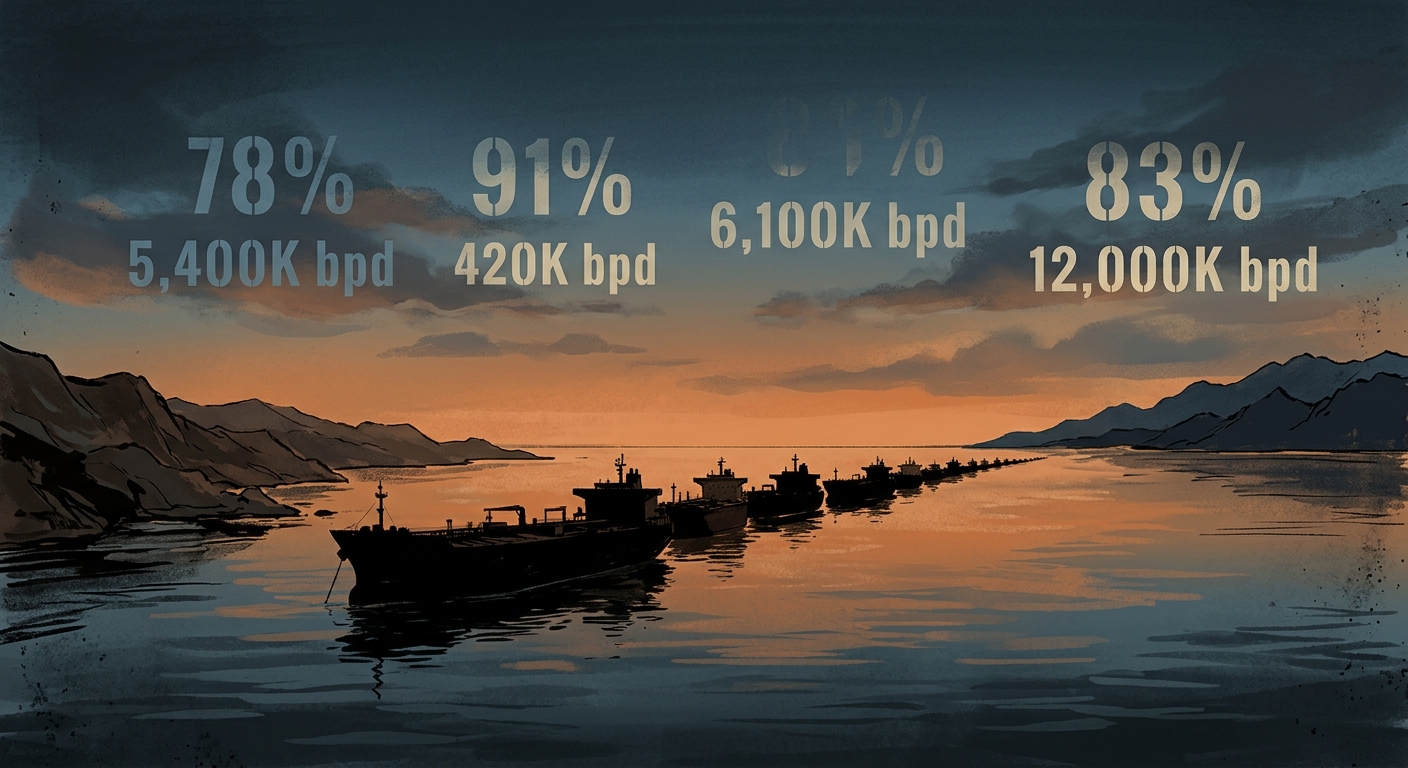
The quota is a fiction. The politics behind it is not.
Look at the raw numbers. Total OPEC+ production fell from 42.77 million barrels per day in February to 33.13 million bpd in May, per OPEC's own figures cited by Al Jazeera. Saudi Arabia's official quota for June rose to 10.291 million bpd — while the kingdom actually produced 7.76 million bpd in March, according to the same reporting. The five hikes since March have added roughly 940,000 bpd on paper against a real-world shortfall the
International Energy Agency described to Brookings as "the largest supply disruption in the history of the global oil market" — more than 14 million bpd at the peak.
IG market analyst Fabien Yip told Al Jazeera the exercise is a "paper formality." Sparta Commodities' Neil Crosby went further: the quotas are "essentially meaningless" in the short term. Both are right on the mechanics — and both are underweighting why OPEC+ keeps voting anyway. The monthly hikes are a signal to buyers, to Washington, and to the UAE that the group intends to reclaim market share the moment the strait normalises. Every 188,000-bpd increment is a claim on post-war demand.
What the war actually did to the cartel
The February 28 US-Israel strikes on Iran did more than close a waterway. They accelerated a trend that had been building since 2023: the erosion of OPEC's ability to set price through discipline.
Iran, which had been exempt from quotas since 2016, is now selling again under a 60-day US Treasury general licence issued June 22 that, per Al Jazeera, "authoris[es] the production, delivery and sale of Iranian oil." Analysts cited by Al Jazeera estimate Tehran has pushed close to 50 million barrels to market since the naval blockade lifted. That is a member of OPEC re-entering the export market outside any quota framework, at a moment when the cartel's tightest producers are being asked to leave barrels in the ground.
The UAE's exit on May 1 was the harder blow. Rystad Energy's Jorge Leon, quoted in Al Jazeera's coverage, put it plainly: "Losing a member with 4.8 million barrels per day of capacity, and the ambition to produce more, takes a real tool out of the group's hands." Abu Dhabi's ADNOC announced $55 billion in growth projects for 2026–2028 within days of the decision, per the
BBC. The Atlantic Council's
Jonathan Panikoff argued the move reflects a UAE calculus that its "national interests have diverged" from Saudi Arabia's — a bilateral rift sharpened by their opposing positions in Yemen and Sudan through late 2025.
The Middle East Institute's Karen Young notes the group is now conducting third-party assessments of each member's production capacity to inform 2027 quotas — a process explicitly aimed at preventing a repeat of the UAE's grievance. It will not be finished before the market decides who has leverage.
The Saudi problem: heavy lifting on a shrinking market
Riyadh is now doing, per Leon, "more of the heavy lifting on price stability." That is a polite way of saying Saudi Arabia is defending a price floor while everyone else free-rides.
The economics are ugly. Brent hit $126 in April; it settled at $72 on Monday, roughly where it stood the day before the war, per Al Jazeera. Saudi Arabia's
fiscal breakeven, calculated by the IMF at around $96 per barrel to fund Vision 2030 investments, is far above where the strip is trading. Meanwhile, the IEA — as summarised by the
Observer Research Foundation — forecasts a 2026 surplus of up to 4 million bpd once Hormuz normalises, with some banks projecting Brent into the $50s.
The cartel's dilemma is that both available paths are punishing. Enforce discipline and lose more market share to Emirati barrels, US shale, Guyana and Brazil. Open the taps and blow through Riyadh's own budget assumptions. The July 5 decision splits the difference — a hike small enough to be reversible, large enough to keep pressure on the UAE not to over-produce into a soft market.
Congress is watching. A Congressional Research Service report on the Iran conflict and Hormuz notes that roughly 27% of the world's maritime crude trade transits the strait, and warns that even a partial closure regime — such as the "toll" system Iran has begun asserting through its new Persian Gulf Strait Authority — carries lasting price and inflation implications. Brookings'
Bruce Jones argues Iran emerged from the war "in a stronger position than before," having established a legal claim on the strait and secured sanctions relief under the June 17 memorandum. If that holds, OPEC's dominant producer is now managing supply against a rival member Tehran that controls the chokepoint.
Who wins from the fifth hike
The quiet beneficiary is not any OPEC+ member. It is the buyer side, and specifically China. Beijing drew down commercial stocks during the war rather than its 1.4-billion-barrel strategic reserve, per Brookings, and now — with Hormuz half-open and Iran discounting heavily — it can refill both at post-war prices. The Valdai Club's July 6 discussion framed China as one of the market's "three whales," with demonstrated ability to reduce imports without disruption. That is a structural repricing of Gulf leverage.
Qatar and US LNG exporters also gain, per University of Lancashire's Mohamed Elheddad quoted in Al Jazeera: "The US strengthens its position as a swing LNG supplier. Qatar consolidates its role as a reliable long-term contract partner." Both sit outside OPEC's decision-making. Both took market share during the closure that they will not easily surrender.
Who loses: Iraq, Algeria and Oman — the cartel's less flexible producers, who have been assigned quota rises they cannot physically deliver in the short run and will be pressured to defend once they can. And Russia, whose oil sector is dealing with its own crisis, per the Middle East Institute, and which needs revenue but cannot compensate for Gulf shortfalls.
Diplomat View
The fifth consecutive hike is not a supply decision. It is Riyadh's attempt to hold together a cartel whose two most consequential swing barrels — the UAE's spare capacity and Iran's sanctioned exports — now sit outside its discipline. The forecast: OPEC+ will manage a controlled unwind through year-end while Hormuz traffic slowly normalises, but the group's price floor will crack if either (a) Iran's US general licence is extended past its August 21 expiry without new quotas on Tehran, or (b) ADNOC accelerates its 5 million bpd target ahead of 2027. Under either condition, Saudi Arabia faces a choice it has avoided since 2020: cut alone, or start a price war it cannot obviously win. Revise this call if Riyadh signals a deeper cut at the August 2 meeting — that would mean the kingdom has concluded the market-share strategy is already lost.
What to watch
- August 2, 2026 — Next OPEC+ meeting to set September quotas. A pause or reversal would signal Riyadh sees the glut arriving faster than expected.
- August 21, 2026 — Expiry of the US Treasury 60-day general licence on Iranian oil exports. Renewal terms will determine whether Tehran is inside or outside any future quota framework.
- End of 2026 — Completion of OPEC+'s third-party capacity assessments feeding into the 2027 quota reset. This is the process that either restores group cohesion or triggers the next exit.
Full context on regional energy diplomacy at Global Politics.
The Bottom Line
OPEC+'s fifth straight hike is a signal, not a supply move — a cartel led by Saudi Arabia telegraphing it will reclaim market share the instant Hormuz normalises, even as the UAE's exit and Iran's return outside any quota have already gutted its pricing power. The real question is no longer what OPEC+ produces in August. It is whether Riyadh can hold the group together at $72 Brent when the buyers who benefit most — China, and US LNG shippers — sit outside the room.
Discover more

US Politics
SNAP Food Assistance Faces Legal Challenges
In 2026, SNAP faces stricter eligibility rules and mounting legal challenges, threatening food assistance for the millions of Americans who rely on the program.
India
Romanian Coalition Party Demands PM Resign
Romania's Social Democrats withdrew from coalition, joining far-right AUR to topple PM Bolojan, risking €10 billion in EU funds by August 2026.

US Politics
House Ethics Committee Pushes Sexual Miscond.
The House Ethics Committee has shifted responsibility for sexual harassment settlement records to the Office of Congressional Workplace Rights, complicating disclosure efforts.

Economics
Fed's Amex AML order puts correspondent banking on notice
Federal Reserve's Amex AML order requires board-level controls and a 90-day plan; OCC fined the bank $350 million over enterprise-wide deficiencies.