Omar Abdullah Forces Kashmir Statehood Fight to Delhi’s Gates
Jammu and Kashmir Chief Minister Omar Abdullah launches a high-stakes protest in New Delhi, signaling an end to his cooperative strategy with the center.
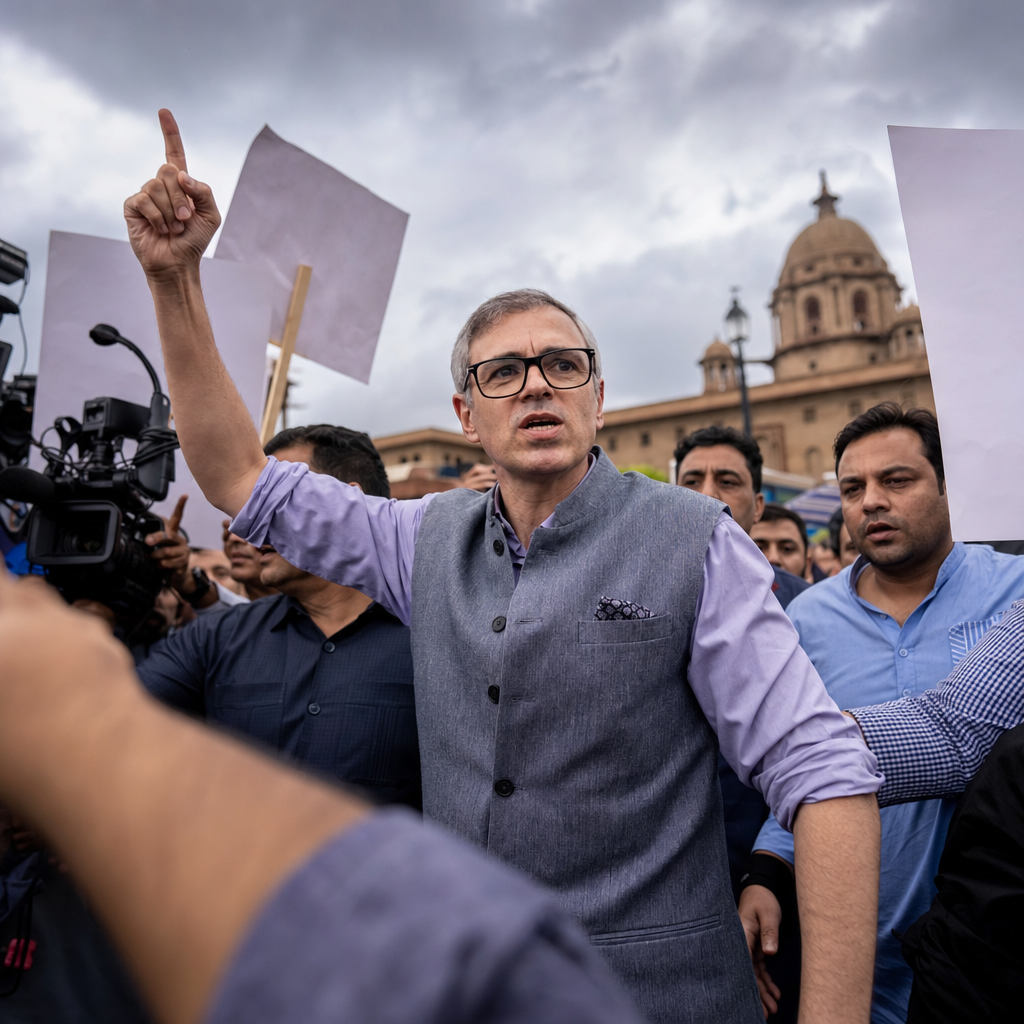
The decision by Jammu and Kashmir Chief Minister Omar Abdullah to lead a high-profile protest in New Delhi on the first day of Parliament’s Monsoon Session represents a u-turn from his previous strategy of quiet cooperation with the central government. According to a report by  NDTV, the move signals a pressing of the "reset button" by Abdullah as discontent grows within his National Conference (NC) party over New Delhi's continued refusal to restore J&K’s provincial sovereignty.
The Battle Over a Castrated Assembly
For Abdullah, the political stakes of maintaining a cooperative posture have become unacceptably high because the current Union Territory framework leaves the local government virtually powerless. Since the historic dismantling of the region’s special status under Article 370 in August 2019, the territory has been run by a federally appointed administrator, as detailed by the  BBC. Even after the 2024 assembly elections returned a local legislature, the power elite in Srinagar has found itself severely constrained. Abdullah himself previously warned that under the current administrative structure, the regional Chief Minister has to "beg" the Delhi-appointed Lieutenant Governor for even minor bureaucratic appointments, according to
  Al Jazeera.
The primary beneficiary of this escalating confrontation is the ruling National Conference. By staging an aggressive protest at the gates of Indian democracy, Abdullah seeks to neutralize local critics who accuse him of selling out to New Delhi. In the 2024 parliamentary elections, the regional establishment suffered severe setbacks from independent forces, including the victory of jailed candidate Engineer Rashid, as reported by Al Jazeera. To survive politically at home, the NC must project itself as the primary defender of J&K's identity, especially as part of the broader constitutional landscape of  India.
The Central Calculus
Conversely, the loser in this public standoff is the BJP-led central government, which has long tried to project an image of absolute normalcy and successful integration in Kashmir. While Home Minister Amit Shah previously promised that J&K would eventually see its statehood restored, the federal government has deliberately avoided establishing a binding timeline for this transition to retain its security and administrative grip. Abdullah’s public agitation on the opening day of the Monsoon Session forces the statehood question back onto the national and global politics agenda, complicating Delhi's narrative of a fully pacified region.
What to watch next is the central government’s response on the floor of the Parliament during the opening week of the Monsoon Session. If the Home Ministry refuses to offer a concrete legislative roadmap for full statehood, Abdullah will be forced to escalate regional non-cooperation back home, bringing Srinagar and New Delhi into a direct institutional collision.