Oil's safety net is gone as Iran war restarts
Global oil reserves halved as Hormuz re-closes
Model Diplomat6 min readMiddle East
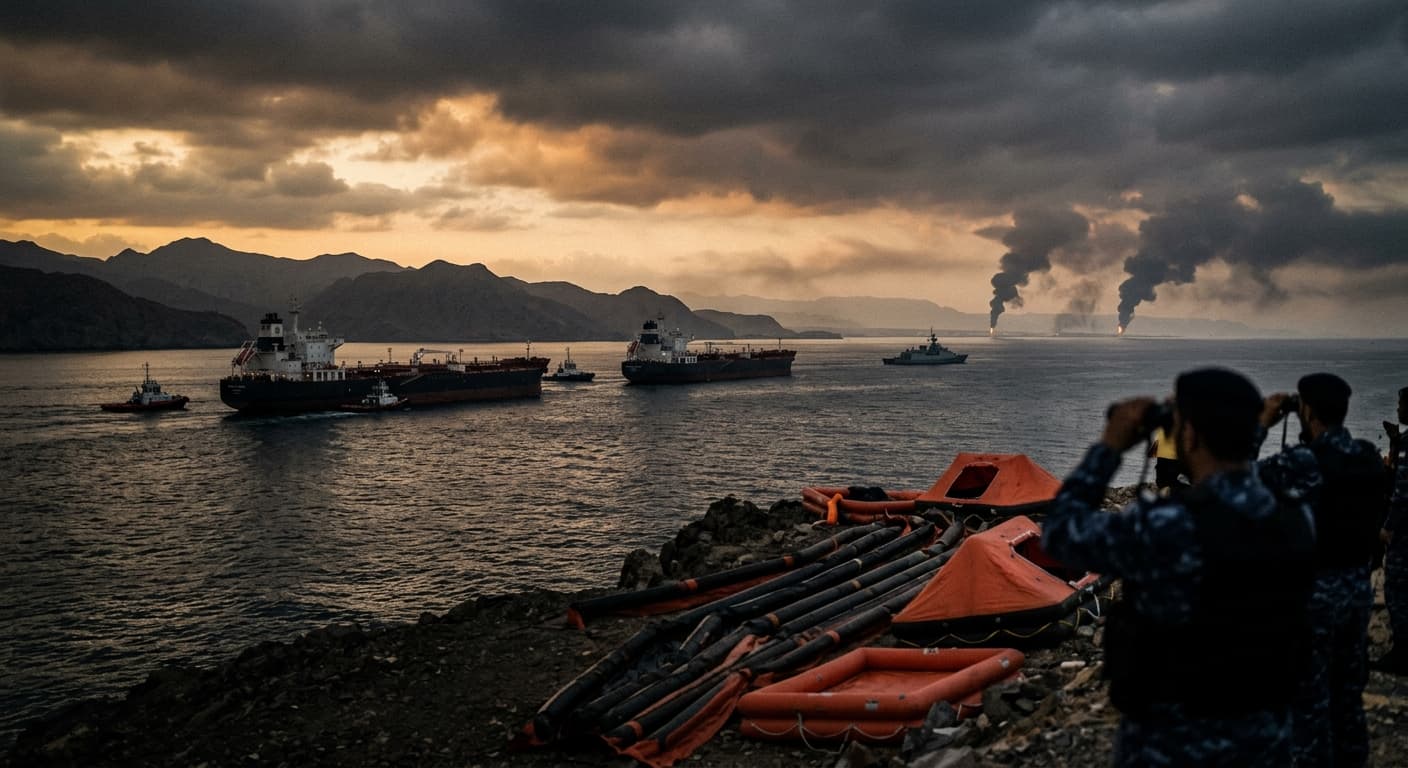
Oil's safety net is gone — just as the Iran war restarts
IMF says global reserves absorbed the biggest oil shock in 50 years, but the cushion is now half gone and the Strait of Hormuz is closing again.
The global economy dodged the worst oil shock in five decades by burning through its emergency reserves — and on July 15, 2026, the IMF declared that cushion effectively spent ABC News. That warning landed the same week the US-Iran ceasefire frayed, Hormuz traffic collapsed to roughly 11 vessels a day, and Brent climbed back above $84
BBC. The thesis: the world bought itself a few months of price stability by drawing down roughly half its oil inventories, and it has just reopened the conflict with no buffer left to absorb a second hit.
How the cushion was spent
Before the US and Israel struck Iran on February 28, 2026, global oil supply ran about 2 million barrels per day above demand. Roughly 20 percent of the world's crude transited the Strait of Hormuz. When Iran shuttered the waterway, the market lost access to a conduit carrying 20–21 million barrels daily IMF.
The IMF estimates a market deficit of about 4 million barrels per day between March and May was "met almost entirely by drawing down global stocks" ABC News. By end-May, inventories had fallen to roughly 1.2 billion barrels — half their pre-war level.
"That cushion, however, has been spent. If the disruption were to persist at current rates, that lower bound would be reached by early 2027. Well before that point, prices would likely move sharply higher, as the market would effectively be operating without a safety net."
Three factors blunted the shock: softer Asian demand as prices bit, roughly 2 million barrels per day of extra output from the US, Venezuela, Guyana and Russia, and the stock drawdown itself. Together they kept Brent from repeating its April peak above $126 Financial Times.
The ceasefire that wasn't
The June 17 memorandum of understanding between Washington and Tehran briefly looked like a clean exit. The US lifted its naval blockade of Iranian ports and issued a temporary license allowing Iranian oil sales in dollars; Iran reopened Hormuz. Brent settled back near pre-war levels and the market priced in "a best-case outcome," as Systra Energy's Yip told Al Jazeera Al Jazeera.
That arrangement lasted roughly four weeks. By July 12, Iran had attacked five Gulf states and declared the strait closed "until further notice"; US Central Command resumed strikes "to degrade Iran's ability to threaten commercial shipping" BBC. President Donald Trump reimposed the port blockade on July 14 and announced — then walked back — a 20 percent transit fee on all Hormuz cargo, declaring the US the "guardian" of the waterway
BBC.
Traffic tells the story. Before the war, about 130 vessels transited daily. On July 16, preliminary data from maritime intelligence firm Kpler showed just 11 crossings BBC. Brent rose more than 10 percent following the most recent closure and now trades around $84.72, up 23 percent on the year
Financial Times.
Why this time is different
The first Hormuz closure hit a market with ample stocks. The second hits a market with roughly half of them — and no coordinated release mechanism left to lean on.
The US Strategic Petroleum Reserve fell to 319.5 million barrels by early July, its lowest level since 1983, after drawdowns that began in March Al Jazeera. Capacity is 713.5 million barrels. A Congressional Research Service report notes that IEA government-controlled stocks were about 1.2 billion barrels at end-2025, with obligated industry stocks of roughly 600 million barrels; maximum drawdown could hit 25 million barrels per day for two months before declining sharply, with exhaustion possible within roughly six months
Congress.gov.
The IMF's April regional outlook had flagged this fragility explicitly, noting that "strategic and commercial stocks in importing economies could cover global supply shortfalls for roughly 40–45 days" at current disruption magnitudes — and that logistical constraints would slow even that IMF.
The July 8 WEO Update assumed Hormuz would begin reopening by mid-July and normalize by March 2027, with oil averaging $89 a barrel in 2026 IMF. That assumption now looks broken. Deputy Director Petya Koeva Brooks warned that "a renewed escalation in the conflict could reignite commodity price volatility, tighten financial conditions, strain policy buffers, and worsen food insecurity in low-income countries"
IMF.
The price paths diverge
Analysts are split on how high crude goes — and the spread itself signals how thin the market is.
Commonwealth Bank's Vivek Dhar warned Brent could reach $150 a barrel within roughly 10 weeks if Hormuz stays shut, the price needed to crush Asian demand enough to match reduced supply ABC News. TD Securities' Bart Melek told Al Jazeera a move to $100 "is quite possible, should it become apparent that physical shortage risks are real"
Al Jazeera.
Rabobank has held its forecast at $80 average for July–September and $78 for year-end, arguing the "geopolitical complacency" the reserves created is "not sustainable over the longer term" but not yet broken ABC News. Capital Economics' Kieran Tompkins noted investors are "swiftly pricing in the potential for further disruptions" and that inventories are "much closer to a 'tipping point' compared to a few months ago"
ABC News.
The disagreement is not about direction. It's about speed. Sparta Commodities' June Goh told Al Jazeera that "crude oil is fast losing its strategic petroleum reserve buffer, and a violent repricing up cannot be discounted until the market sees toned-down rhetoric from both parties" Al Jazeera.
The uneven damage
The IMF has been clear that the shock falls hardest where buffers are thinnest. Oil-exporting Gulf states directly hit by the war face steep downgrades — five of eight are projected to contract in 2026, including Bahrain, Iran, Iraq, Kuwait and Qatar IMF. Qatar faces the steepest revision globally, nearly 15 points from October, reflecting damage to its Ras Laffan LNG complex.
Asian emerging markets saw retail gasoline prices rise 40 percent since the war began, compounded by currency depreciation and capital outflows IMF. In Africa, countries combining heavy energy-import reliance with limited policy space — Ethiopia, Malawi, Zambia, Lesotho, Rwanda, Tanzania — face fuel shortages and price spikes of around 50 percent
IMF.
The second-order risk: a reserve drawdown that took five months to build down to half cannot be rebuilt quickly. The IMF notes that "rebuilding stocks will keep the market tight even as supply recovers" ABC News. Even a durable ceasefire would leave prices elevated through 2027 as countries race to refill what they spent.
What to watch
- Late July 2026 — Whether the US-Iran ceasefire talks resume or Trump follows through on his threat to strike Iran's "bridges and power plants" next week
BBC.
- Q3 2026 oil futures curve — Brent September contracts trading around $85; a move through $95 would signal the market pricing out a near-term Hormuz reopening
Al Jazeera.
- IEA coordinated stock release decision — The agency has been evaluating a possible release since March; a second coordinated drawdown would be the clearest signal that the first cushion is truly exhausted
Congress.gov.
Diplomat View
The decisive variable is no longer whether the war restarts — it has. It is whether anyone has the reserves to absorb it. The IMF's July 15 finding that the global oil buffer is "spent" removes the single mechanism that kept Brent from breaking $130 in the spring. With the SPR at a 43-year low, IEA coordinated stocks at roughly 1.2 billion barrels, and Hormuz traffic at single digits, the market is structurally short of shock absorbers.
The call: Brent is more likely than not to test $100 in the next four weeks if the strait stays effectively closed, and the IMF's adverse scenario — oil averaging $110 in 2026, global growth falling to 2.6 percent — moves from tail risk to base case IMF. The forecast reverses if two conditions hold simultaneously: a verifiable ceasefire with an enforcement mechanism, and a coordinated IEA release large enough to cover the 4 million barrels per day deficit for 60–90 days. Neither is currently on the table.
The longer-term consequence is underappreciated. Rebuilding reserves will compete with normal demand for the same barrels, keeping prices structurally higher even after peace. The world spent its insurance policy in five months — and is now fighting the same war uninsured.
Discover more
Global Politics
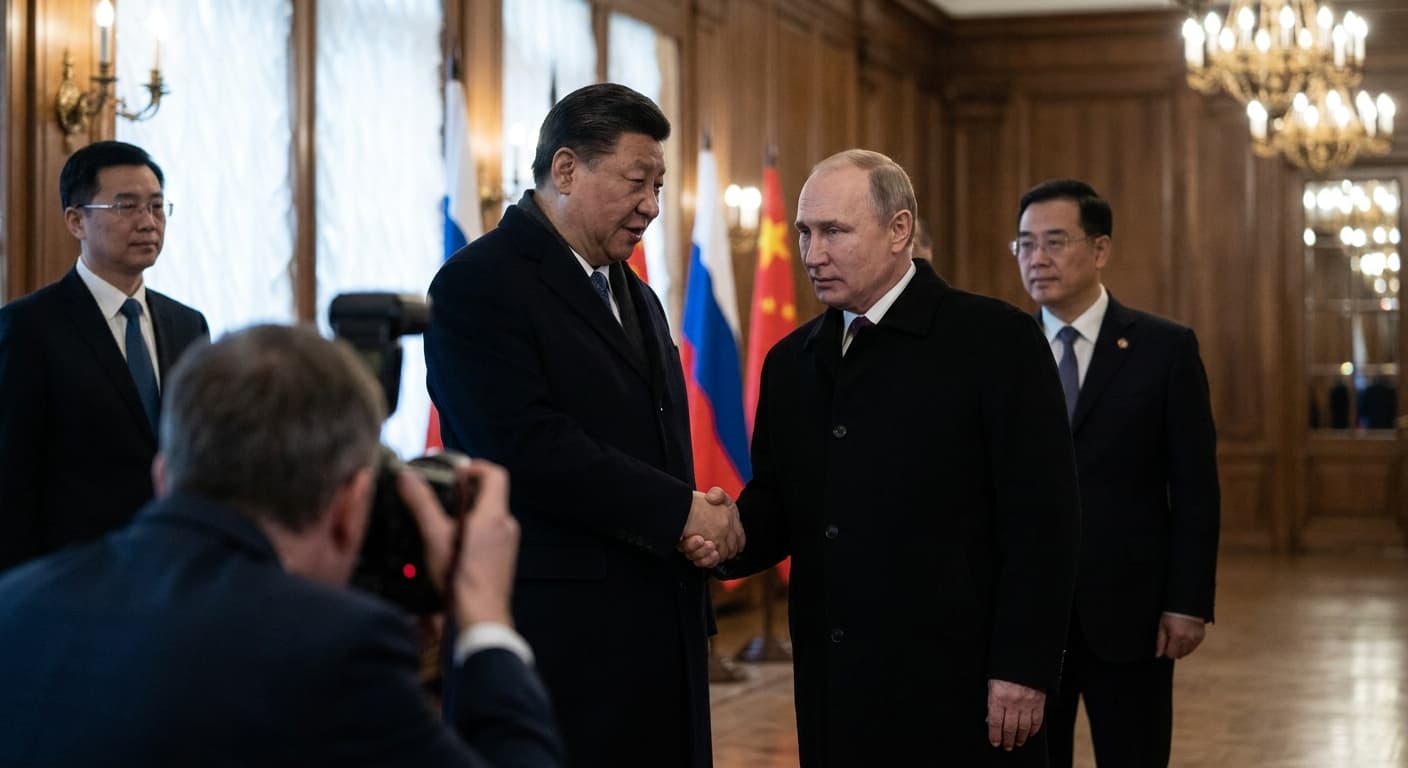
Xi Jinping Calls China-Russia Ties 'Precious'
Xi Jinping's description of China-Russia ties as 'precious' reflects a strategic imbalance, with Beijing dictating terms in the partnership.

India
Delhi CM Rekha Gupta Blasts Opposition's Delm
Delhi CM Rekha Gupta's remarks on women's quota defeat reveal BJP's strategy for the 2029 Lok Sabha elections, focusing on delimitation.
India
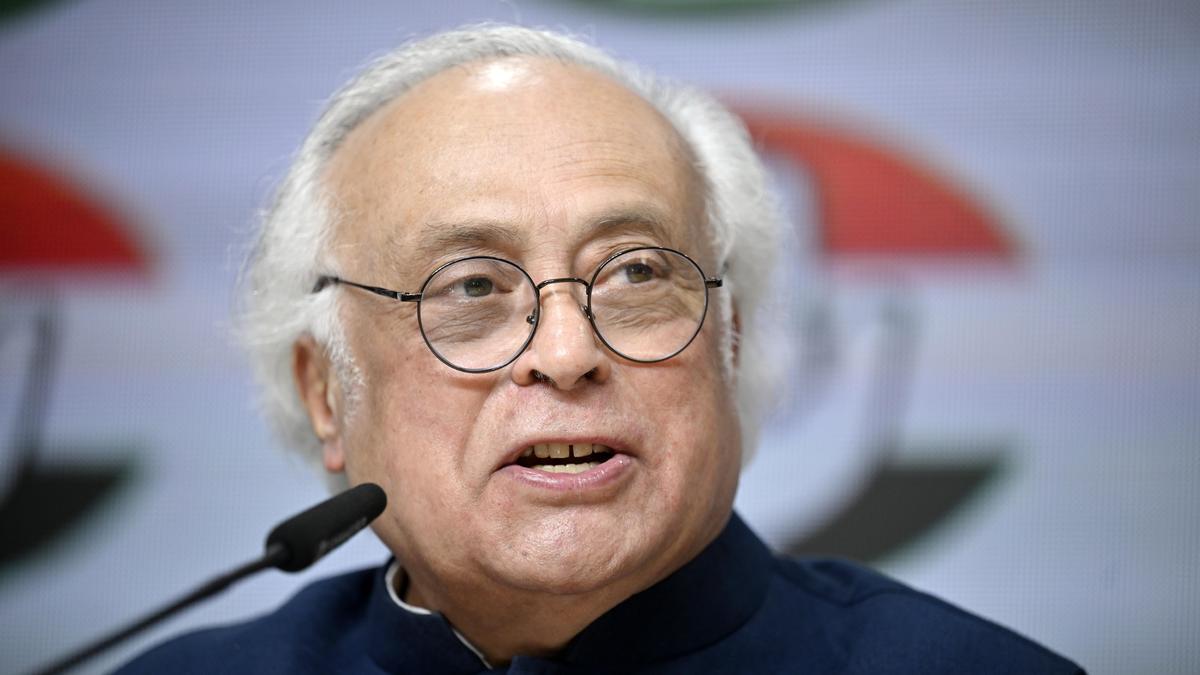
Congress Accuses Modi of Stalling Women's Law
Congress accuses Modi of stalling women's reservation law by linking it to delimitation, revealing a deeper electoral strategy.

Economics
Fed's Amex AML order puts correspondent banking on notice
Federal Reserve's Amex AML order requires board-level controls and a 90-day plan; OCC fined the bank $350 million over enterprise-wide deficiencies.