Nigeria's 2026 Foreign Policy Bets on Autonom
Nigeria's foreign policy focuses on strategic autonomy and regional stability.
Model Diplomat3 min readafrica

Nigeria's 2026 Foreign Policy Bets on Strategic Autonomy in a Fractured World
Foreign Minister Yusuf Tuggar laid out three pillars — strategic autonomy, regional stability, and responsible global partnership — but the real story is how Abuja is converting great-power competition into leverage.
Foreign Affairs Minister Yusuf Tuggar used Tuesday's New Year Reception for ambassadors and heads of mission in Abuja to announce Nigeria's foreign policy framework for 2026, anchoring it on three pillars: strategic autonomy, regional stability, and responsible global partnership. Speaking before the diplomatic corps, Tuggar framed the approach as a response to an "increasingly fragmented geopolitical landscape" and declared that Nigeria would navigate it "through cooperation rather than confrontation." Punch
The announcement was not merely ceremonial. Tuggar simultaneously introduced a procedural reform allowing ambassadors-designate to commence duties immediately after presenting copies of their Letters of Credence to the Chief of Protocol — no longer requiring a formal presidential audience before beginning work. It is a small, practical signal that Abuja intends to accelerate the tempo of its diplomatic machinery. Independent NG
The strategic autonomy playbook is already live
The first pillar — strategic autonomy — is not a slogan waiting for implementation. It has been road-tested. Earlier this month, Tuggar publicly refused US demands that Nigeria accept Venezuelan deportees, telling the BBC: "We already have over 230 million people. It will be difficult for a country like Nigeria to accept Venezuelan prisoners into Nigeria. We have enough problems of our own." BBC Yet simultaneously, Abuja has deepened security cooperation with Washington — including a joint working group on violence against vulnerable groups convened in January and ongoing military coordination against armed groups in the north.
Al Jazeera
This two-track approach — rejecting impositions while accepting operational collaboration — is the clearest demonstration of strategic autonomy in practice. As Tuggar explained at a Council on Foreign Relations event, Nigeria's constitutional foreign policy doctrine has always been non-aligned, but the current moment demands a more deliberate framing: "We deal with all countries. We're friendly towards all." CFR Nigeria became a BRICS partner country in January, while simultaneously maintaining its security architecture with Western powers. The balancing act is intentional.
Regional stability means confronting the Sahel fracture
The second pillar reflects the most urgent security challenge. The withdrawal of Burkina Faso, Mali, and Niger from ECOWAS in early 2025 — and their subsequent formation of the Alliance of Sahel States — has shattered the regional security architecture. Tuggar called for "a recalibration of security frameworks," specifically highlighting the Multinational Joint Task Force (MNJTF) as the vehicle for renewed counter-terrorism cooperation. Worldstage News
The minister also reaffirmed Nigeria's leadership of the Regional Partnership for Democracy, a UNDP-backed initiative aimed at shoring up democratic institutions across West Africa. The language was carefully chosen: "democratic resilience must be proactive, not confrontational" — a nod to the reality that Abuja must manage security coordination with junta-led neighbors without legitimizing their unconstitutional seizures of power.
At a Chatham House panel in March, Tuggar and Ghanaian Foreign Minister Samuel Ablakwa jointly called for "local security solutions," signaling that the regional heavyweights intend to lead rather than wait for external frameworks. Chatham House
What to watch next
The 2030 UN Security Council bid. Tuggar explicitly sought diplomatic support for Nigeria's candidacy for a non-permanent seat, alongside bids for the Human Rights Council, the CEDAW committee, and the World Heritage Committee. These are not vanity plays — they are the institutional scaffolding of Nigeria's claim to global governance influence. Success will depend on whether Abuja can convert its balancing act between great powers into votes.
The election calendar. With INEC publishing the official electoral timetable, Nigeria enters a pre-election phase. Tuggar solicited international cooperation on electoral observation and capacity-building — a quiet acknowledgment that domestic credibility underpins foreign policy ambition.
The procedural signal. The Letters of Credence reform is minor in substance but symbolically significant. A Nigerian government that talks of strategic autonomy is also signaling it can streamline its own house. Whether the rest of the 2026 roadmap matches that efficiency remains the open question.
Discover more
India
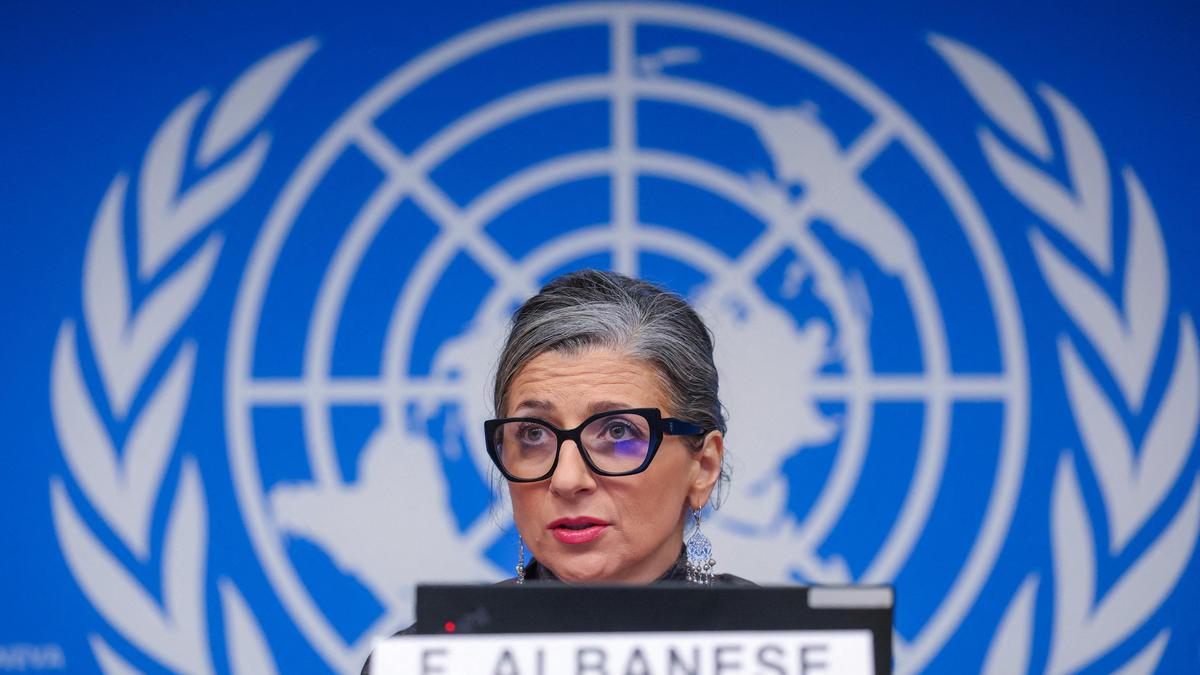
UN Expert Albanese: India Violates Law
UN Rapporteur Francesca Albanese accuses India of breaching international law, spotlighting human rights concerns in Kashmir and prompting diplomatic pushback.
India
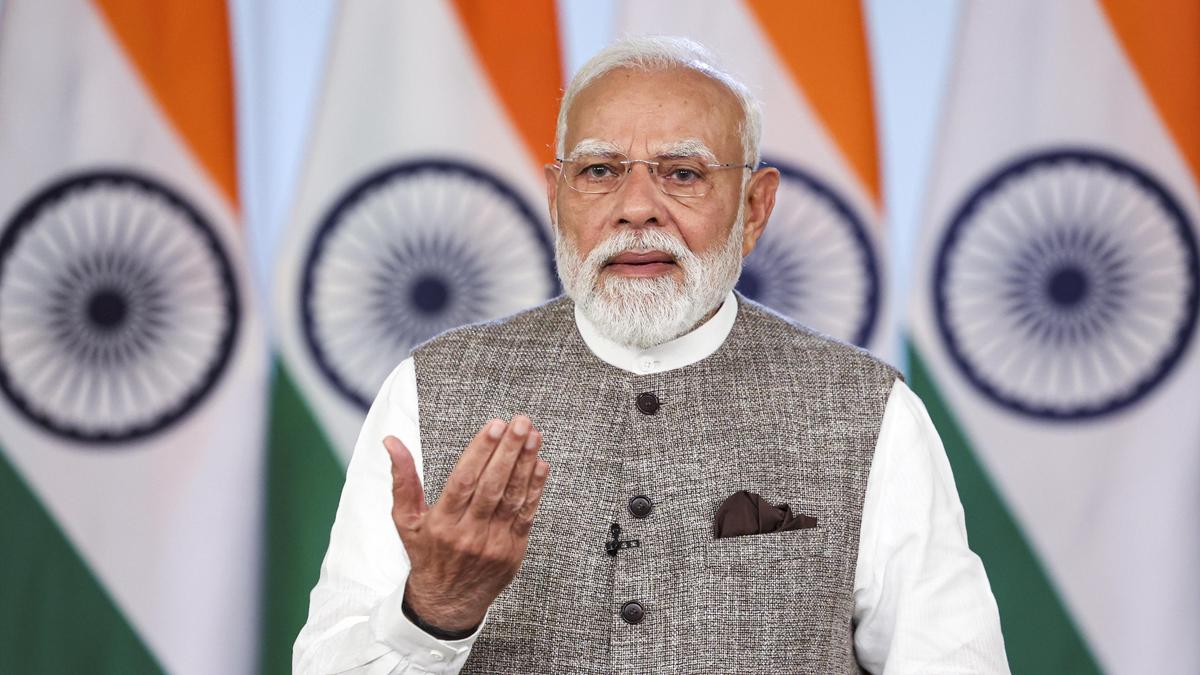
700 Activists Accuse PM Modi of MCC Breach
Over 700 activists allege PM Modi breached election code with a televised address attacking opposition parties just before state elections.

India
BJP's Misunderstanding of Women's Quota Needs
The BJP's linking of the Women Reservation Bill to delimitation risks delaying women's empowerment in India, misreading the aspirations of female voters.

Conflict & Security
Drone Warfare Killing Aid Workers at Unprec
Over 1,000 humanitarian workers killed in three years as cheap armed drones collapse legal protections. Gaza, Sudan, Ukraine, and DRC see deliberate targeting of aid convoys and hospitals with zero prosecutions.