Netanyahu's Iran Policies Shift U.S. Support
How Trump's Iran deal reshapes U.S.-Israel relations.
Model Diplomat8 min readUnited States
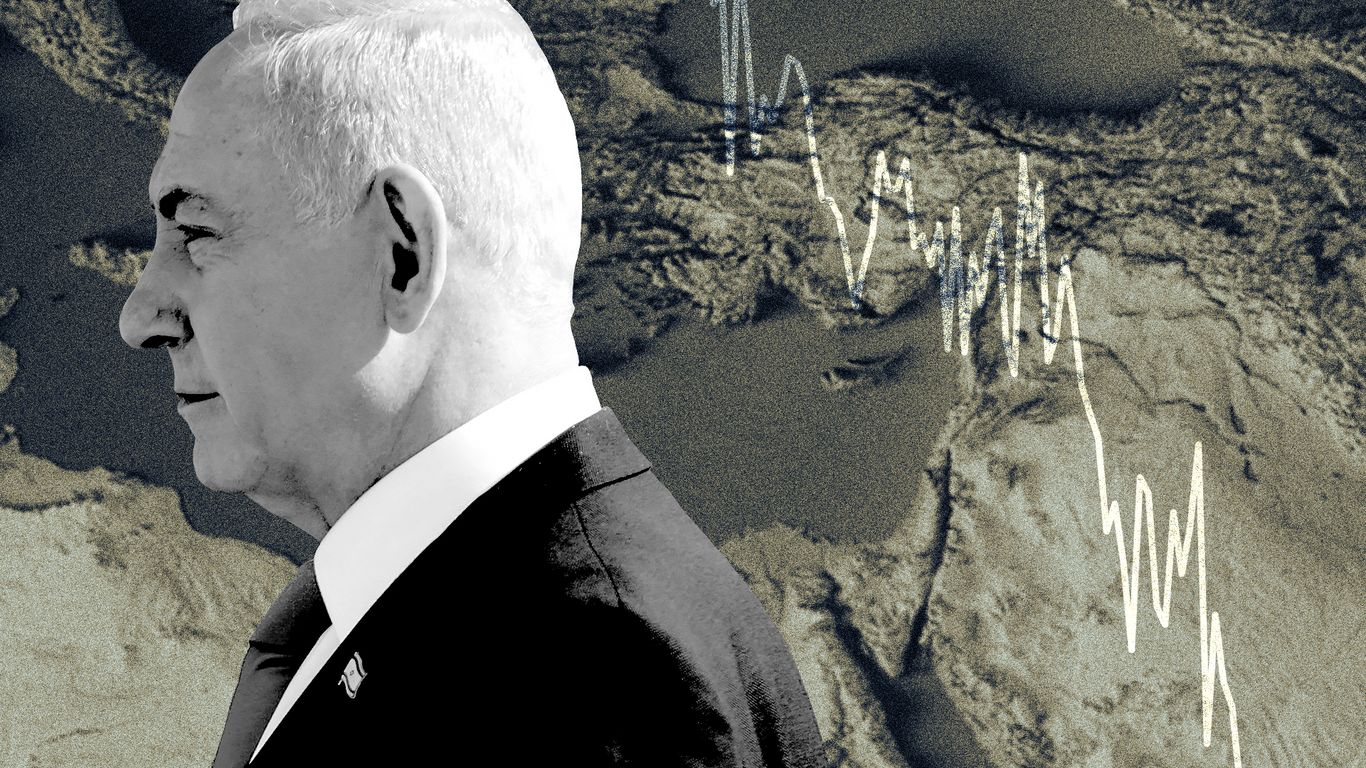
Netanyahu's Iran Gamble Redraws the U.S.–Israel Bargain
How Trump's 2026 Iran deal, signed over Netanyahu's objections, ended the era of automatic American backing — and what Israel's October election will decide next.
The single most important fact about the U.S.–Israel relationship in July 2026 is this: on June 17, at the Palace of Versailles, Donald Trump signed a Memorandum of Understanding with Iranian President Masoud Pezeshkian that Benjamin Netanyahu spent his career trying to prevent — and the White House marketed the deal as "America First in action" without Israel in the room. The thesis of this story is narrower than the "rift" headlines suggest: Netanyahu's decision to press an open-ended war in Iran and Lebanon has not cost Israel American arms, but it has broken the political monopoly Israeli hawks held over Iran policy in Washington — and the price is a U.S. president who will now overrule Jerusalem in public, backed by a domestic opinion base that has shifted decisively against Israel's government.
What Trump signed — and what it takes away from Netanyahu
The Versailles MoU is a thin, 60-day framework, but its first operative clause is the one that matters in Jerusalem. Per the BBC, the document declares the "immediate and permanent termination of military operations on all fronts, including in Lebanon," reopens the Strait of Hormuz to free navigation, and terminates "all types of sanctions" on Iran, with a $300 billion reconstruction plan attached. The White House's own
readout frames the deal as the product of Operations Midnight Hammer and Epic Fury — the joint February 28 strikes that killed Ayatollah Ali Khamenei — but claims exclusively American credit and lists mediators (Pakistan, Qatar, Switzerland) that pointedly do not include Israel.
The Congressional Research Service is blunter than the administration. Its updated primer on U.S.–Israel relations notes that "neither Iran's missiles nor its backing for regional allies was mentioned in the U.S.–Iran memorandum of understanding," and that ongoing talks "do not directly include Israel." Netanyahu's twin Israeli demands — that any deal cover Iran's ballistic program and its proxy network — were traded away, according to the CRS, for a nuclear-only 60-day negotiating window. An unnamed former senior Israeli official quoted in the same report calls the outcome a "strategic disaster."
That is the structural loss. Regime change, which Trump and Netanyahu both privately entertained at the outset per Awani International's Reuters wire, is off the table. The Iranian government remains intact under a new, more hardline supreme leader. And under the MoU's Lebanon clause, any Israeli strike on Hezbollah now carries the risk of Iranian retaliation without guaranteed U.S. air cover.
The public break: "You'll be on your own"
The rupture became visible on June 7, when an Israeli strike on Beirut's southern suburbs — two hours before the MoU signing, according to Trump's own G7 remarks — drew an Iranian ballistic missile volley on northern Israel. Trump called Netanyahu that night and, according to Al Jazeera, told him: "Bibi, you better be careful, or you will be on your own very soon." Axios subsequently reported Trump had called the Israeli leader "fucking crazy" on a separate call, a characterization the
BBC confirmed with senior administration sources.
Trump has since said in the Financial Times, via Al Jazeera's translation of the interview, that Netanyahu "will have no choice" but to accept the deal:
"I call the shots. I call all the shots. He doesn't call the shots."
That is not the language of an alliance among equals. As Danny Citrinowicz of Israel's Institute for National Security Studies wrote in Israel Hayom — quoted by the BBC — the Congress-and-public-opinion end-run that worked for Netanyahu against Obama in 2015 no longer exists. The Republican coalition Netanyahu counted on is fragmenting under him.
The domestic collapse of pro-Israel consensus
The numbers explain why Trump can afford to talk to Netanyahu this way. A Pew Research Center survey conducted March 24–30, 2026 and summarized by Israel's own INSS found 53% of Americans hold an unfavorable view of Israel, up from 42% in 2022 — with the "very unfavorable" share doubling to 19%. An April Pew release cited by
AEI put the unfavorable figure at 60% overall and, critically, 57% among Republicans aged 18–49. Only 32% of Americans say they trust Netanyahu to do the right thing in world affairs.
The New York Times/Siena poll published on May 20, 2026 and covered by Al Jazeera found 95% of Democratic voters oppose the U.S.–Israel war on Iran and nearly three-quarters oppose military aid to Israel — up from 45% three years ago. A
Brookings synthesis of Chicago Council on Global Affairs, Pew and YouGov data shows Democratic support for Israel's actions has collapsed from 36% at the start of the Gaza war to 8% today; among independents, from 47% to 25%.
The right side of the ledger is more interesting. NBC News polling cited by the BBC shows 54% of Americans disapprove of Trump's Iran handling, and while nine in ten self-identified "MAGA" Republicans back the war, more than a third of non-MAGA Republicans oppose it. Tucker Carlson, Marjorie Taylor Greene, Megyn Kelly and Joe Rogan spent April accusing Trump of fighting "Israel's war," according to
NPR, with Carlson explicitly building what one analyst called a "stabbed-in-the-back narrative about the U.S. and Israel" for a 2028 run.
This is the domestic power fact Netanyahu underestimated. Trump did not shift on Israel because he found new principles. He shifted because his own base — the isolationist, anti-Israel-first wing represented by Vance, Carlson and Greene — made continued lockstep with Netanyahu politically expensive in a midterm year.
The Diaspora hawk's warning: this is structural, not personal
The most consequential analysis of the shift comes not from critics of Israel but from its friends. The Begin-Sadat Center's BESA analysis — authored by Col. (res.) Shay Shabtai and Prof. Eitan Shamir — argues that the manner of the MoU's signing "eroded the fundamental asymmetric advantage the US held over Iran," making a further military round in 2027 "a highly probable outcome." But it goes further: "Donald Trump will in all probability be Israel's last unequivocally supportive president."
That is the pro-Netanyahu right, in an Israeli think tank, publicly writing off the future of American support. Chatham House's Yossi Mekelberg reaches the same conclusion from the opposite political direction: "Israel will find itself with fewer international and regional partners than ever, and with deteriorating support in the US." Vice President JD Vance, in remarks reported by both Chatham House and
Al Jazeera, has told Israeli interlocutors that Trump is Israel's "last powerful ally" — a line that Jerusalem's security establishment now quotes back to itself.
What Congress is — and isn't — doing
The legislative floor beneath U.S.–Israel ties has not moved, yet. The 2016 ten-year MoU, per CRS, still commits $3.3 billion annually in Foreign Military Financing plus $500 million in joint missile-defense funding through FY2028. Congress passed roughly $12.5 billion in additional supplemental assistance in 2024, and the Senate in May 2025 voted 83–15 and 82–15 to kill Bernie Sanders' resolutions of disapproval on Israeli arms sales.
But the Democratic base has moved past its leadership. Rep. Rashida Tlaib's H.R. 3565 — which would prohibit the transfer of specified defense articles to Israel — has stalled but now attracts co-sponsors who would not have signed in 2024. And
H.R. 7645, the Ceasefire Compliance Act of 2026, conditions future aid on Israeli humanitarian compliance in Gaza. Neither will pass a Republican Congress. Both establish the political floor for a Democratic successor to Trump.
The Israeli political mathematics
Netanyahu's calculation, per Chatham House, was that a decisive Iran war would deliver him a Likud victory in the October election he must call by month's end. The
Economist's poll tracker shows the opposite: Likud remains the largest party, but the current coalition trails well below the 61 seats needed to govern. INSS's
May 2026 national security survey puts trust in Netanyahu at 33% — 65% express low trust. A
BBC analysis of Ma'ariv polling found 49% of Israelis believe Netanyahu is prolonging the war for his own political survival.
The Atlantic Council's Daniel Shapiro reads the arithmetic as a blocking coalition: Netanyahu may not be able to form a government, but the opposition may not be able to either, forcing repeat elections or a "unity" cabinet designed to keep Ben-Gvir and Smotrich out. In that scenario, Trump's endorsement — which he told reporters was only "likely," pending "who else is running" — becomes decisive.
Forward look: what would revise the forecast
- August 16, 2026 — the notional end of the 60-day MoU nuclear negotiation window. Extension is likely; collapse would return the region to open war and, per BESA, reset U.S.–Israel dynamics.
- October 31, 2026 — statutory deadline for Israeli elections. A Netanyahu loss removes the personality-driven variable; a coalition-blocking result freezes Israeli policy through the U.S. midterms.
- November 3, 2026 — U.S. midterms. If Republicans lose the House, expect H.R. 3565-style aid conditions to reach a floor vote by early 2027.
Diplomat View
The consensus reading — that Trump and Netanyahu are having a personal spat that will pass, "as in the best of families," in Netanyahu's own phrase — is wrong in one specific way. What has changed is not the temperature but the structure. For thirty years, Israeli prime ministers could bypass an unfriendly White House by mobilizing Congress and U.S. public opinion. Both instruments are now degraded: 60% of Americans view Israel unfavorably, a plurality of young Republicans included, and the MAGA base's anti-interventionist wing has learned it can extract concessions from Trump on this file specifically. The forecast: Netanyahu will finish the current term with the Lebanon front constrained, no third Iran round in 2026, and a diminished bargaining position on Gaza and West Bank annexation. The forecast revises if (a) Iran walks from the nuclear talks before the 60-day window closes, restoring a war-time premium on U.S.–Israel military coordination, or (b) a post-Netanyahu Israeli government trades operational restraint for a formal Saudi normalization package Trump can brand as his. Absent those, the "unequivocal support" era ended on June 17 at Versailles — and everyone in the room, including Netanyahu, knows it.
The Bottom Line
Netanyahu bet his career on a joint U.S.–Israeli war against Iran and lost the bet in reverse: he got the war, but Trump kept the peace deal, cut Israel out of it, and made public rebuke of Jerusalem a domestic political asset. The shift matters not because Washington is dropping Israel — it isn't — but because the automatic-veto power Israeli prime ministers held over U.S. Middle East policy has quietly expired, and the October election will decide whether Israel's next government adjusts to that reality or continues to test a red line that no longer exists.
Discover more
Global Politics
Iran Demands US Enforce Ceasefire
Iran insists the United States must enforce a ceasefire in Lebanon to uphold the memorandum of understanding, raising pressure on Washington and Netanyahu.

Conflict & Security
Israel Targets Hamas’s New War Chief
Israel's strike on Hamas's newly named war chief signals sustained military pressure on the group as ceasefire talks remain stalled across the Middle East.

Conflict & Security
Netanyahu Bets Force Will Reset Lebanon Talks
Netanyahu escalates military action in Lebanon, betting force against Hezbollah will reset diplomatic negotiations and reshape US-backed talks on his terms.
Global Politics
Netanyahu’s Coalition Breaks on Draft Fight
Netanyahu's coalition is fracturing over ultra-Orthodox draft exemptions, putting his government at risk and reshaping what matters next in Israeli politics.