Netanyahu Blocks Israeli Pullback Amid Deal
Israel's occupation of Lebanon continues as nuclear talks progress.
Model Diplomat3 min readMiddle East
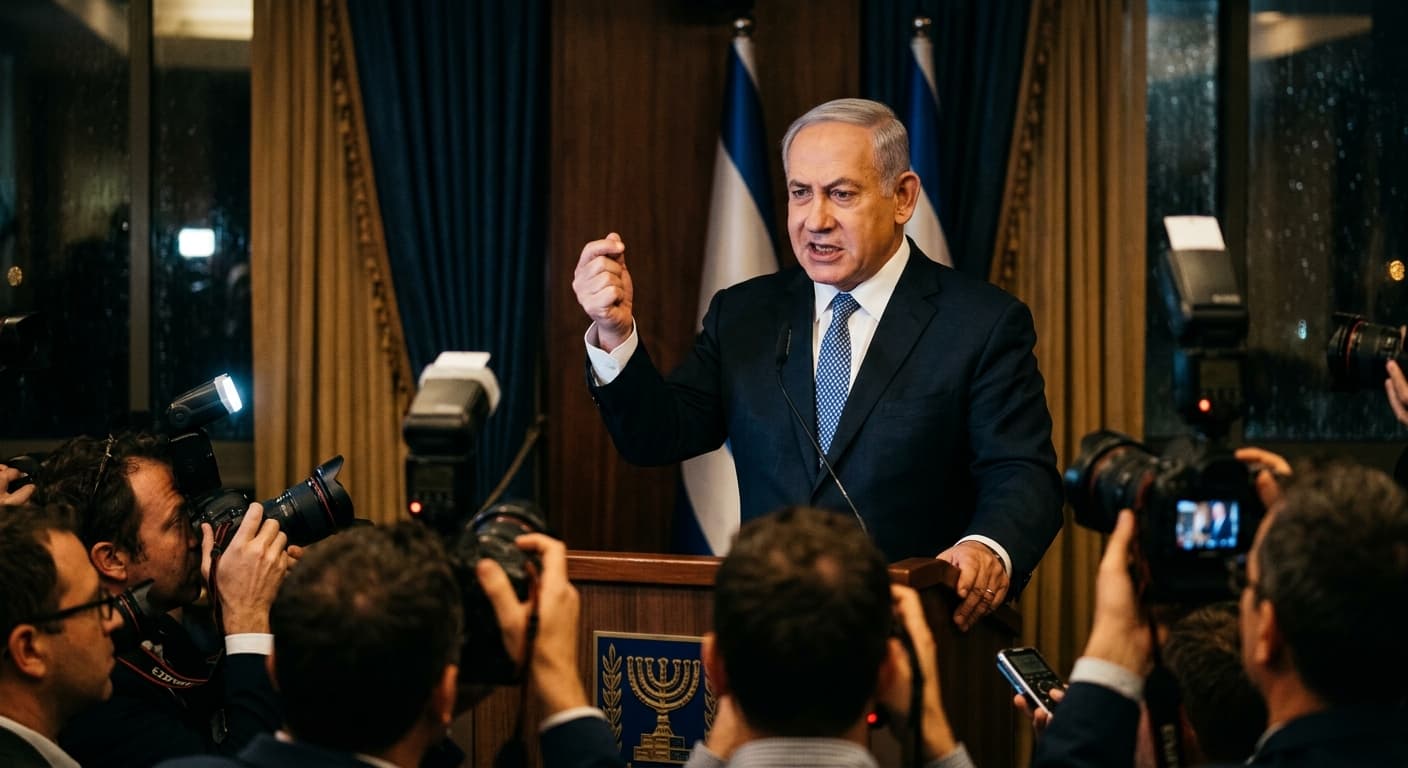
Netanyahu Blocks Israeli Pullback as Nuclear Deal Advances
Israel occupies one-fifth of Lebanon on day 119, while IAEA chief Grossi says inspectors will return to Iran—two fronts, two incompatible timelines.
On June 26, Netanyahu made clear his occupation of Lebanon is not conditional on the US-Iran deal closing. As IAEA chief Rafael Grossi announced inspectors would soon return to Iran, the Israeli Prime Minister declared the military will hold occupied territory "as long as necessary"—a direct countermand to any ceasefire expecting Israeli withdrawal within weeks. The statements expose the gap between what diplomats in Washington and Switzerland are promising and what Israel's government will actually do on the ground.
The Numbers Don't Align
Al Jazeera reported that Israel currently occupies about one-fifth of Lebanon. Israeli and Lebanese delegations are holding what
US Secretary of State Marco Rubio calls "very close" talks toward a "commitment of intent" to end the occupation—language suggesting months of negotiation ahead. Yet on the same day these talks were wrapping in Washington, Netanyahu told combat officers at a graduation that forces would not withdraw.
Israeli Defence Minister Israel Katz went further, ruling out withdrawal even if Washington demanded it, saying Israeli forces would remain in what he called "security zones" in Lebanon, Syria, and Gaza "without setting a time limit."
The underlying leverage is straightforward: territorial control buys time in negotiations. According to analysis at the scene, Israeli forces are holding areas they never fully captured during ground combat and using artillery and drone strikes to prevent Lebanese movement into them. A senior Lebanese military official told Reuters that recent developments showed the "opposite of a pullback." Meanwhile, the fighting continues:
Two people were killed in an Israeli raid on Mayfadoun on June 26, with another wounded, as Israel pounded southern Lebanese towns.
The Nuclear Question: Who Moves First?
On the Iran side, Grossi said at a news conference in Japan that "there is an agreement" and "to comply with that agreement, the IAEA will have to have access and inspect," adding "we hope to be there soon." But Tehran hedged:
Iranian Deputy Foreign Minister Kazem Gharibabadi posted on X that access to bombed nuclear sites would "solely be examined and resolved within the framework of a final agreement" with Washington and only after the US lifted sanctions. The interim memorandum of understanding signed last week commits both sides to a final deal within 60 days, but neither side is moving first.
The UK's BBC reported that the MoU "says explicitly that the dilution of Iran's highly enriched uranium would be carried out under IAEA supervision," but Iran's suspension of IAEA cooperation—imposed last year after Israeli and US strikes on Iranian nuclear sites—remains unresolved. Grossi said inspections could happen "the day after tomorrow, or in one week, or in 10 days," but dates remain unset.
What to Watch
The ceasefire in Lebanon is fraying. Rubio will travel back to Switzerland around June 29–30 for resumed technical talks. If Netanyahu holds territorial gains past that deadline and Iran continues blocking inspectors, both the nuclear negotiation and the Lebanon settlement will slip backward, and the 60-day window will narrow. Netanyahu's public defiance today suggests he is betting that once the initial US-Iran momentum slows—and Hormuz tolls, sanctions mechanics, and frozen assets start dominating—Israel's occupation becomes a lower priority for Washington. Watch whether the next Israeli-Lebanese talks, scheduled for Friday, produce a binding framework or more empty timelines.
Discover more

US Politics
Senate Repeals Minnesota Mining Ban for Twin
The Senate's repeal of a 20-year mining moratorium in Minnesota allows Twin Metals to proceed, raising concerns over environmental impacts and foreign ownership.

India
Vijay's Political Rise vs Silent Tamil Nadu
Actor Vijay's popularity surges across Tamil Nadu even as campus student politics fades, raising fresh questions about youth engagement and future power.
Global Politics
Xi Jinping Calls China-Russia Ties 'Precious'
Xi Jinping's description of China-Russia ties as 'precious' reflects a strategic imbalance, with Beijing dictating terms in the partnership.

Conflict & Security
Drone Warfare Killing Aid Workers at Unprec
Over 1,000 humanitarian workers killed in three years as cheap armed drones collapse legal protections. Gaza, Sudan, Ukraine, and DRC see deliberate targeting of aid convoys and hospitals with zero prosecutions.