Niger's Uranium Trap: US Diplomatic Opening
US leverage in Niger's uranium crisis offers a path for reengagement.
Model Diplomat3 min readafrica
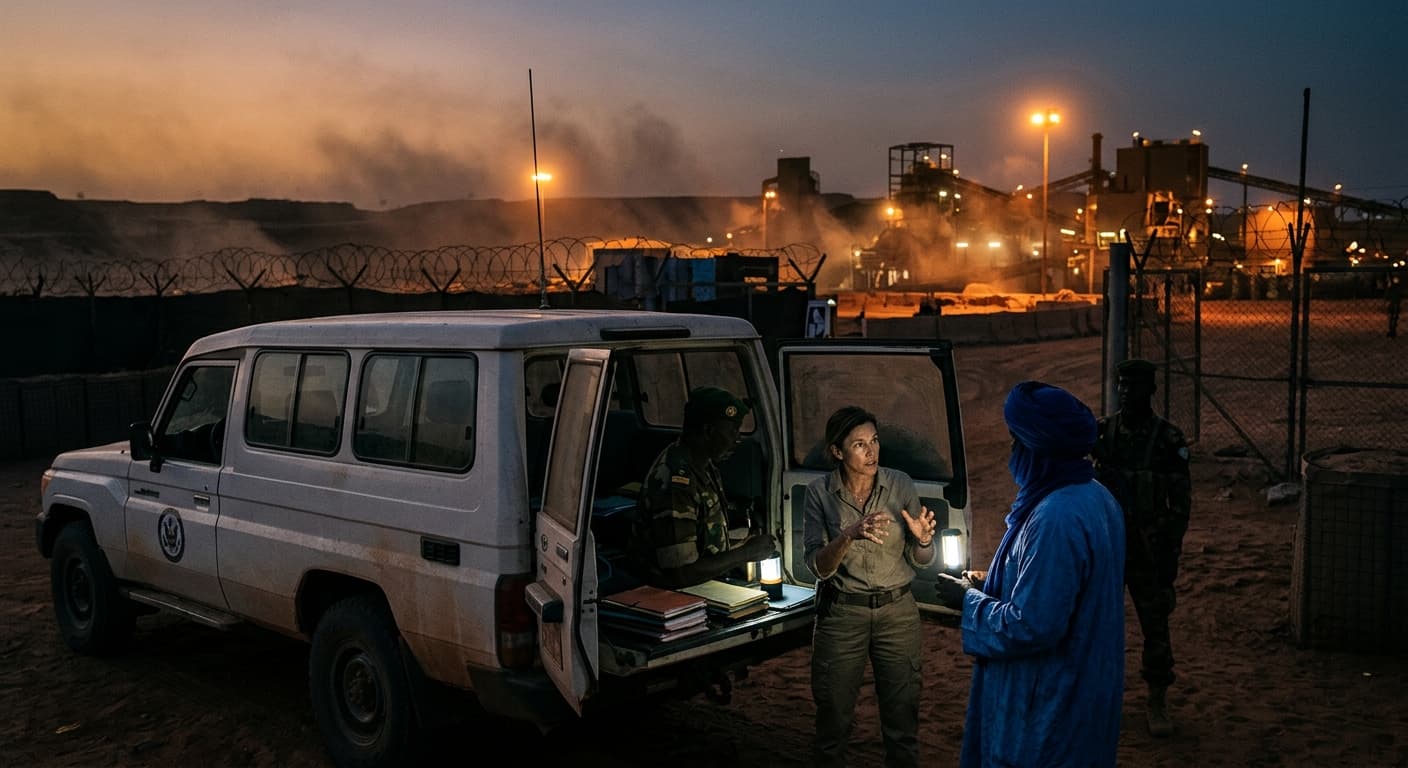
Niger's Uranium Trap Is Washington's Opening
One thousand tons of stranded yellowcake gives the US leverage Niamey desperately needs—and a path back into the Sahel's counterterrorism architecture.
The junta in Niger seized a uranium stockpile to prove its sovereignty. Seven months later, it cannot sell it, cannot move it, and cannot return it without destroying its own political legitimacy. The Atlantic Council now argues this impasse is the most viable diplomatic opening the United States has had since being expelled from the country in 2024.
Atlantic Council
The argument is coldly pragmatic. Washington should offer quiet mediation between Niamey and France's Orano, providing the face-saving cover General Abdourahamane Tchiani needs to offload approximately 1,000 tons of yellowcake currently immobilized at Niamey's international airport—and, in return, reestablish the counterterrorism partnership that once stationed 1,100 US personnel at the $110 million Air Base 201 in Agadez.
The asset has become a radioactive liability for the junta. After nationalizing the Somair mine in June 2025, Niamey transported the stockpile to the capital with plans to sell it through Lomé port in Togo. That plan collapsed within days of the failed December 7, 2025 coup in Benin. Togolese President Faure Gnassingbé visited Niamey on December 9–10 and the shipment was frozen—reportedly after French pressure on Lomé. WE News English
The exits have only narrowed since. An ICSID arbitration tribunal ruled in September 2025 that Niger cannot sell, transfer, or facilitate transfer of the uranium. Orano filed a criminal complaint in France for "organized theft for the purpose of serving the interests of a foreign power"—making any third-country facilitator legally liable. The Iran option, once considered the most realistic buyer with Russian backing, was buried by the February 28 US-Israeli strikes on Tehran. Wildcats & Black Sheep
Then came the January 29 Islamic State attack near the storage site, repelled with direct assistance from Russia's Africa Corps. The message to Niamey was unmistakable: the uranium is a target, and the Russians—notably present at Military Base 101 where the stockpile sits—are the only ones guarding it. Al Jazeera
Who Holds the Cards
Tchiani holds the physical uranium but no viable exit. His legitimacy rests on anti-French resource nationalism; a public capitulation to Orano would gut his narrative. Yet by February 2026 he was already signaling willingness to return the material—if someone else handled the choreography.
France and Orano hold the legal lock. The ICSID ruling and French criminal investigation mean any buyer or transit country faces litigation risk. Paris can afford to wait. Niamey cannot.
The United States holds the mediating position neither party can publicly request. The Trump administration has already signaled a policy shift toward engaging the three Sahelian juntas, with the State Department announcing a "new course" that moves "past policy missteps." BBC Unlike Paris, Washington carries no colonial baggage in Nigerien domestic politics. Unlike Moscow, it offers something beyond mercenary protection—access to intelligence, surveillance, and the possibility of renewed counterterrorism cooperation that the Africa Corps has proven structurally incapable of providing.
Foreign Affairs
The Regional Equation
The failed Benin coup reinforced Niamey's isolation. A successful putsch in Cotonou would have likely aligned Benin with the Alliance of Sahel States, reopening Niger's southern trade corridor. Instead, the border remains sealed, Nigeria stands firmly opposed, and the uranium has no land route to any port. A Nigerien delegation did attend Benin's May 24 presidential inauguration, fueling speculation of a thaw, but the border remains closed and the yellowcake remains stranded.
Moscow's value proposition is also eroding. The Africa Corps—over 80% former Wagner fighters—has institutionalized the same brutal, low-capacity model that failed in Mali and Burkina Faso. The joint 5,000-strong AES counterterrorism battalion remains unsupported. Russia cannot resolve the uranium standoff; it cannot even properly guard the stockpile without drawing fire to it.
What to Watch
The decision point is whether Washington moves before Tchiani finds a face-saving alternative. The junta created TSUMCO SA in May 2026 to take over all Somair assets—an escalation that signals Niamey still prefers shows of force over quiet negotiation. If the US hesitates, Tchiani may double down on the expropriation path, deepening legal entanglements and foreclosing the mediation opening. A quiet American offer to broker a deal framed as US-supported rather than French-imposed is the high-upside, low-visibility move. The question is whether anyone in Washington is watching closely enough to make it.
Discover more
US Politics
House Ethics Committee Pushes Sexual Miscond.
The House Ethics Committee has shifted responsibility for sexual harassment settlement records to the Office of Congressional Workplace Rights, complicating disclosure efforts.

India
BJP's Misunderstanding of Women's Quota Needs
The BJP's linking of the Women Reservation Bill to delimitation risks delaying women's empowerment in India, misreading the aspirations of female voters.
India
700 Activists Accuse PM Modi of MCC Breach
Over 700 activists allege PM Modi breached election code with a televised address attacking opposition parties just before state elections.

Conflict & Security
Drone Warfare Killing Aid Workers at Unprec
Over 1,000 humanitarian workers killed in three years as cheap armed drones collapse legal protections. Gaza, Sudan, Ukraine, and DRC see deliberate targeting of aid convoys and hospitals with zero prosecutions.