NATO's £37bn Missile Bet Against Washington
A strategic move for European defense independence
Model Diplomat8 min readEurope
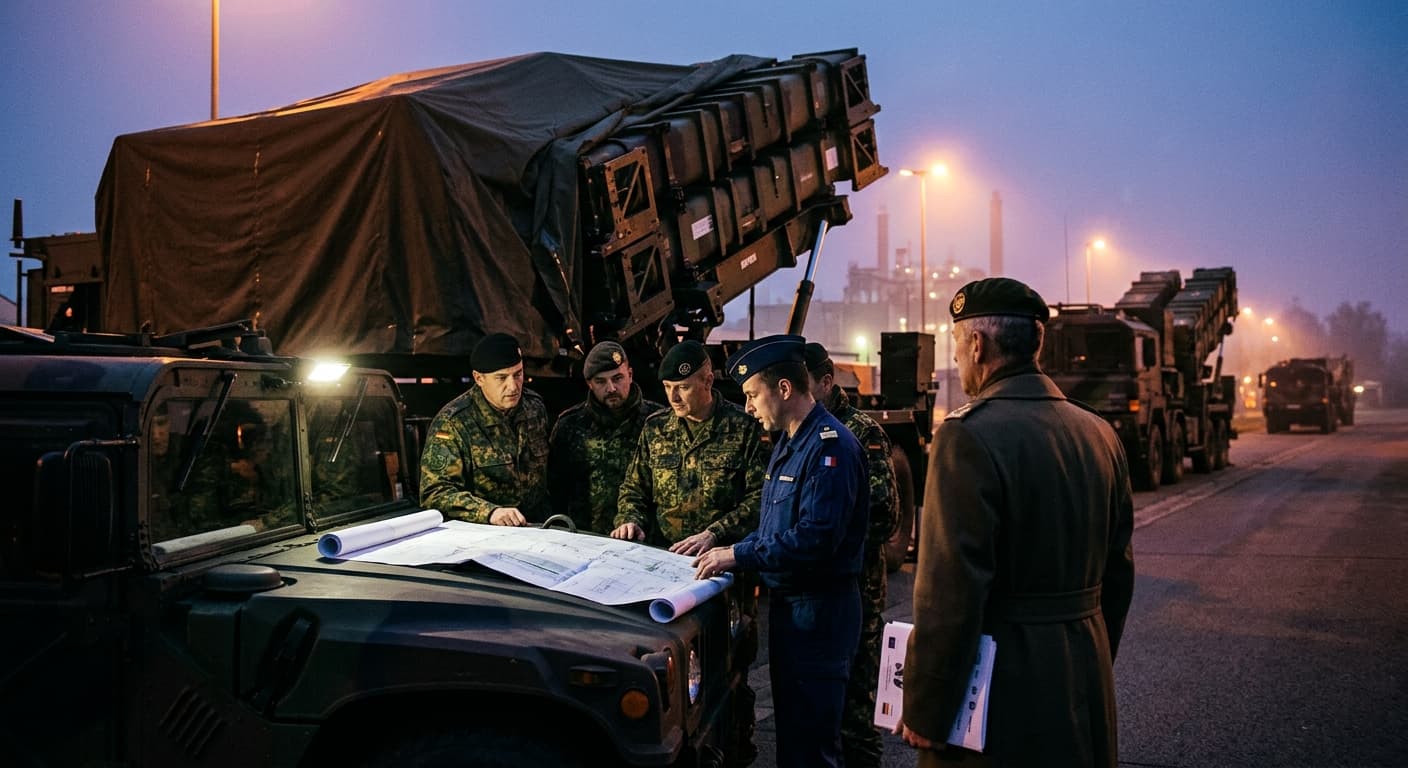
NATO's £37bn missile bet is a hedge against Washington, not just Moscow
Twelve NATO allies pledged £37bn on July 8, 2026 for a UK-led long-range missile — the alliance's clearest move yet to build a European deep-strike capability independent of the United States.
The Deep Precision Strike project — £37 billion ($50 billion) over ten years, 12 European allies, a 2,000-kilometre-class conventional missile due in the 2030s — was unveiled by Keir Starmer at the NATO summit in Ankara on July 8, 2026 and framed as a deterrent to Russia. It is that. But the load-bearing rationale sits elsewhere: it is Europe's first credible, funded plan to replace a category of long-range strike that Washington has quietly stopped providing. The Pentagon has cancelled the deployment of its long-range fires battalion to Germany, opened a six-month review of US forces in Europe, and set 9,000-plus troops on the way home. The £37bn is the price of not being left short.
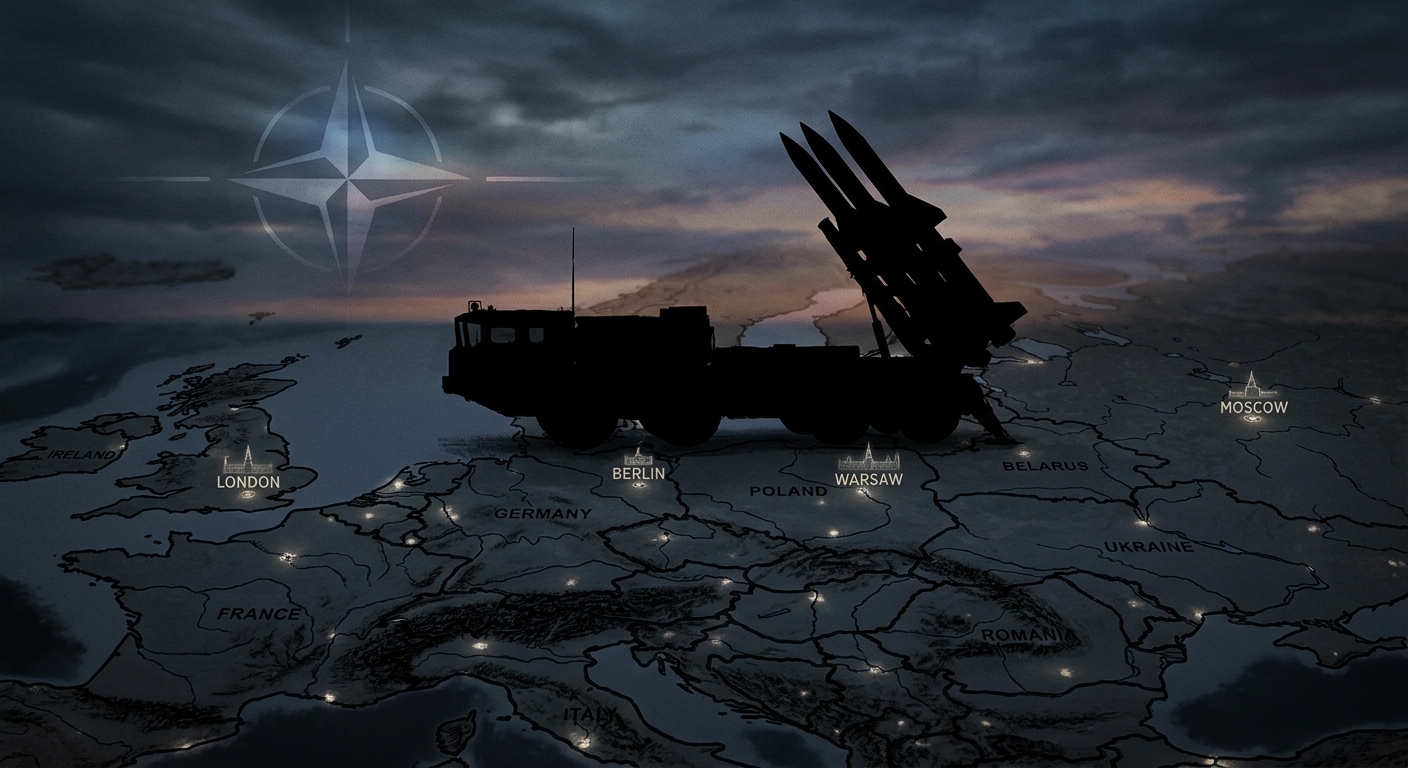
What was actually announced
The headline number was confirmed by the BBC's Nato allies announce £37bn for new missile project: twelve nations, led by the UK, committing to a decade of joint procurement on a missile intended to strike targets up to 1,250 miles (roughly 2,000 km) away. Foreign Secretary Yvette Cooper described the aim as hitting "high value military targets and the logistical engines that drive armies." Number 10 explicitly invoked Ukraine's use of long-range munitions to "degrade enemy forces far behind the frontline" as proof of concept.
Deep Precision Strike is not a new idea being freshly funded. It is the industrial payoff of a two-year process. In a communiqué released on 18 June 2026 by the UK Ministry of Defence, the six original signatories — France, Germany, Italy, Poland, Sweden and the UK — agreed to transition the European Long-Range Strike Approach into standalone Implementation Groups, covering eight capability clusters from air-launched cruise missiles to a common Euro Multi Missile Launcher. Ankara is where the money and the wider partner list arrived.
The underlying UK-Germany track is the most concrete piece. In a 16 March 2026 statement, the UK Ministry of Defence confirmed that Deep Precision Strike missiles will exceed 2,000 kilometres, enter service in the 2030s, begin as ground-launched and later expand to air and naval variants. A parallel February 2026 press release put UK spending on long-range and hypersonic weapons at over
£400 million this financial year, including the UK-France-Italy "Stratus" missile that will replace Storm Shadow. Read together, the announcements describe a family of systems, not a single weapon.
The real reason it matters: the American exit
The programme's strategic logic only makes sense against the pace of US disengagement. In its briefing paper for members ahead of Ankara, the Congressional Research Service noted that since October 2025 the Trump administration has announced plans to withdraw at least 9,000 — and possibly up to 13,000 — US troops from Europe, and cancelled a long-range fires battalion earmarked for Germany. Defense Secretary Pete Hegseth opened a six-month review of US force posture in Europe on 18 June 2026.
The Council on Foreign Relations put the point more bluntly. In an analysis published on the eve of the summit, CFR's Liana Fix argued that Europeans should abandon hope of a mutually managed transition and instead build capabilities for a "European way of war" designed to deter Russia rather than mirror the United States. Deep Precision Strike is the first big-ticket item of that new posture. It is designed to plug the specific gap left by the withdrawn Multi-Domain Task Force — Tomahawk and SM-6 systems that Estonia's International Centre for Defence and Security called
the only land-launched long-range standoff capability in NATO Europe today.
That gap is the whole story. Ifri, the French Institute of International Relations, has documented how European deep-strike inventories were run down after the Cold War to the point where the French Army cannot currently fire beyond about 80 kilometres from the ground. The £37bn is not a luxury — it is Europe buying itself back a capability class it stopped fielding.
The Kremlin's calculation
Moscow's response is where the second-order effects get interesting. When the US and Germany first announced a rotational Tomahawk deployment in July 2024, Deputy Foreign Minister Sergei Ryabkov promised a "military response to the new threat" and Dmitry Peskov warned that European capitals could become targets. Warsaw's Centre for Eastern Studies (OSW) noted in its own July 2024 analysis that Russia would likely respond by
publicly deploying intermediate-range systems in its western military districts and using the fissure between US and European positions to peel Europeans off. Two years on, both predictions are broadly correct.
But the arithmetic has moved. Russia already deploys the 9M729 Iskander-M cruise missile (about 2,500 km range) and the 3M22 Zircon hypersonic (up to 1,000 km) — systems that were the reason the Intermediate-Range Nuclear Forces Treaty collapsed in 2019. As the IISS argued in its November 2025 paper Deep Precision Strike: Europe's Quest for Long-range Missile Capabilities, the six ELSA partners are now converging on 1,000–2,000+ km ground- and sea-launched cruise and ballistic options — the exact class Moscow deploys and the exact class Europe currently lacks. The Kremlin's response to Ankara will not be about new categories of threat. It will be about signalling: expect a demonstration launch, a fresh Belarus deployment, and Peskov targeting the specific EU capitals hosting programme leads.
The harder question — one the IISS paper flagged and no allied government has answered — is whether the Missile Technology Control Regime, which restricts transfers of systems above 300 km and 500 kg, will bend to accommodate intra-European joint development. Without a workaround, ELSA nations risk a legal thicket around their own missile.
Who wins the industrial prize
The £37bn is also a corporate story with clear beneficiaries. MBDA, the Franco-British-Italian missile house, gets the Storm Shadow successor programme — 1,300 UK jobs, mostly in Stevenage — under the UK-France "Entente Industrielle" that Starmer and Macron signed on 10 July 2025 as a refresh of the Lancaster House treaty. Germany's Rheinmetall and MBDA Deutschland are positioned for the 2,000 km+ ground-launched system. France's naval MdCN cruise missile becomes the baseline for a landward variant. Sweden's Saab wins a parallel bonanza: the BBC's Frank Gardner reported from Ankara that
NATO's ageing AWACS fleet is to be replaced by Saab's GlobEye, and Airbus takes a new transport-aircraft contract.
Lockheed Martin, Raytheon and Northrop Grumman are conspicuously absent from the lead-nation column. That is the point. The German Marshall Fund's Ozgur Unluhisarcikli told Al Jazeera that this summit's substance is "how to translate spending to capabilities" — and the capabilities being translated flow through European industrial primes. NATO's own summit page confirms that
European allies and Canada increased core defence investment by $139 billion in nominal terms in 2025 alone; much of the marginal dollar is going through European supply chains for the first time in a generation.
The Ukraine bind
Volodymyr Zelensky arrived in Ankara asking for interceptors, not ten-year missile programmes. In a speech on 7 July, the Ukrainian president warned NATO that Europe "cannot wait until 2030 or beyond" and needs affordable, mass-produced anti-ballistic systems "as soon as possible." Ballistic missiles hit Kyiv twice in a week, killing more than 50 civilians.
Zelensky's problem is that Deep Precision Strike, by design, consumes the exact fiscal envelope that would otherwise flow into Patriot production and interceptor stocks. The IISS is explicit: DPS and NATO's Integrated Air and Missile Defence "compete for the same budgets." Choosing offence over defence is a defensible bet — long-range strike is what actually degrades a Russian salvo at source — but it is a bet, and Kyiv is the counterparty exposed to the losing side of it in the near term.
The Starmer subtext
The UK's political staging deserves noting. This is Starmer's final NATO summit as prime minister, and Downing Street has front-loaded the announcement to bank a legacy item before a domestic reshuffle. The British Defence Investment Plan he brings to Ankara is, per BBC security correspondent Frank Gardner, "billions of pounds short" of the requirements in last year's Strategic Defence Review. Positioning Britain as convener of a £37bn missile coalition solves the optics problem without solving the arithmetic one — the UK still has no plan on the table to hit NATO's 3.5% core-defence target by 2035.
Diplomat View
Deep Precision Strike is best read as European strategic infrastructure being built under duress. The £37bn is not enough to deter Russia on its own — one 2,000 km-class missile family fielded in the 2030s does not reshape the balance while Iskander brigades exist today. But the money buys three things that matter more than the weapon: an industrial base capable of surge production, a procurement architecture that no longer routes through Washington, and a political precedent that Europeans can act at scale without an American in the lead nation column.
The forecast: expect Deep Precision Strike to survive the next US election cycle regardless of who wins, because its logic — European sovereignty in a specific weapons class — is now embedded in the German and French industrial base. It fails only if Berlin backs out under fiscal pressure or if MTCR restrictions cannot be finessed. Watch those two variables. The Russia response is priced in.
What would change the call. If Germany's post-Merz coalition reallocates DPS funds to short-range air defence, or if the Netherlands and Greece publicly walk from the 12-country group by Q4 2026, the programme's credibility drops fast.
What to watch
- September 2026: Hegseth's six-month US force-posture review reports. The scale of further withdrawals will determine how urgent European backfill capacity becomes.
- October 2026: Bundestag vote on the 2027 German defence budget — the first real fiscal test of the Trinity House commitments.
- 2029: NATO's scheduled review of the 5%-of-GDP trajectory agreed at The Hague; the point at which Deep Precision Strike moves from programme to procurement, or slips.
The Bottom Line
The bottom line: NATO's £37bn missile pledge is not primarily about deterring Russia — Moscow already knows the systems are a decade away. It is about Europe buying insurance against Washington, financing the industrial base and procurement muscle it will need when the American security guarantee is thinner. If the programme survives Berlin's next budget cycle and the MTCR trap, Ankara will be remembered as the moment the alliance's centre of gravity in long-range strike quietly moved to London, Paris and Berlin.
Discover more

India
Congress Accuses Modi of Stalling Women's Law
Congress accuses Modi of stalling women's reservation law by linking it to delimitation, revealing a deeper electoral strategy.

US Politics
House Ethics Committee Pushes Sexual Miscond.
The House Ethics Committee has shifted responsibility for sexual harassment settlement records to the Office of Congressional Workplace Rights, complicating disclosure efforts.

India
BJP's Misunderstanding of Women's Quota Needs
The BJP's linking of the Women Reservation Bill to delimitation risks delaying women's empowerment in India, misreading the aspirations of female voters.

Conflict & Security
Drone Warfare Killing Aid Workers at Unprec
Over 1,000 humanitarian workers killed in three years as cheap armed drones collapse legal protections. Gaza, Sudan, Ukraine, and DRC see deliberate targeting of aid convoys and hospitals with zero prosecutions.