Narges Mohammadi's Bail: Iran's Control Expos
Iran's control remains despite Mohammadi's temporary release.
Model Diplomat2 min readMiddle East

Narges Mohammadi’s Bail Release Exposes Iran’s Leverage
Tehran eased pressure as Mohammadi’s health worsened, but kept the sentence intact—showing how medicine, not mercy, sets the terms.
Iran’s authorities have not conceded on Narges Mohammadi; they have simply moved her out of immediate danger. Mohammadi was released on bail and transferred from Zanjan to a Tehran hospital after ten days in hospital care and warnings from supporters that she could die in custody, according to her foundation and France 24. Her lawyer, Mostafa Nili, said on X that the transfer followed an order suspending execution of her sentence for medical reasons, while her foundation said she needs specialist treatment and should not return to prison,
Le Devoir reported from Associated Press.
Tehran keeps the bigger lever
This is the key power dynamic: Iran still controls the terms. Mohammadi’s release is conditional, temporary, and tied to a “heavy bail” suspension rather than exoneration or pardon, according to her foundation as carried by Reuters and
France 24. That matters because it lets Tehran claim humanitarian restraint while preserving the threat of return to prison — and, with it, the pressure that has defined Mohammadi’s case for years.
For the Islamic Republic, this is damage control. A dead Nobel laureate in prison would have been a propaganda disaster; a medically supervised transfer gives the authorities room to argue they acted responsibly without loosening their grip. For Mohammadi’s camp, the fight has shifted from release to permanence: her husband Taghi Rahmani, speaking from Paris, said a temporary transfer is not enough, and that she must never go back to the conditions that damaged her health, Reuters reported.
What Mohammadi’s case tells us about Iran
Mohammadi’s health has become a political constraint on the state. Supporters said she suffered two suspected heart attacks in custody, lost 20 kilograms, and was “unrecognisable” after her latest arrest, Reuters and
France 24 said. That gives her supporters an unusually effective pressure point: the regime’s treatment of a Nobel laureate is visible, documentable, and hard to defend.
It also shows why external pressure still matters. The Nobel Committee had already urged Iran to free her in February after her new sentence, and that international scrutiny likely helped raise the cost of keeping her in prison as her condition deteriorated, Reuters reported earlier this year. On
Global Politics, the broader pattern is familiar: authoritarian systems sometimes relieve pressure at the margin, but they rarely surrender the underlying coercive tool.
What to watch next
The next decision point is simple: whether Tehran lets Mohammadi stay under independent medical care in Tehran, or moves to reimpose prison conditions once the acute health crisis passes. Watch for any court filing that converts the suspension into a longer-term release, and for any statement from Mohammadi’s foundation or lawyer on whether the bail terms are being enforced. If she is sent back to Zanjan, the humanitarian pause will be exposed as exactly that — a pause, not a concession.
Discover more

Global
Qatari Tanker Strike Exposes Hormuz Tensions
A Qatari tanker was struck off Oman, revealing the fragility of the Hormuz ceasefire and Iran's influence over maritime security.
Global
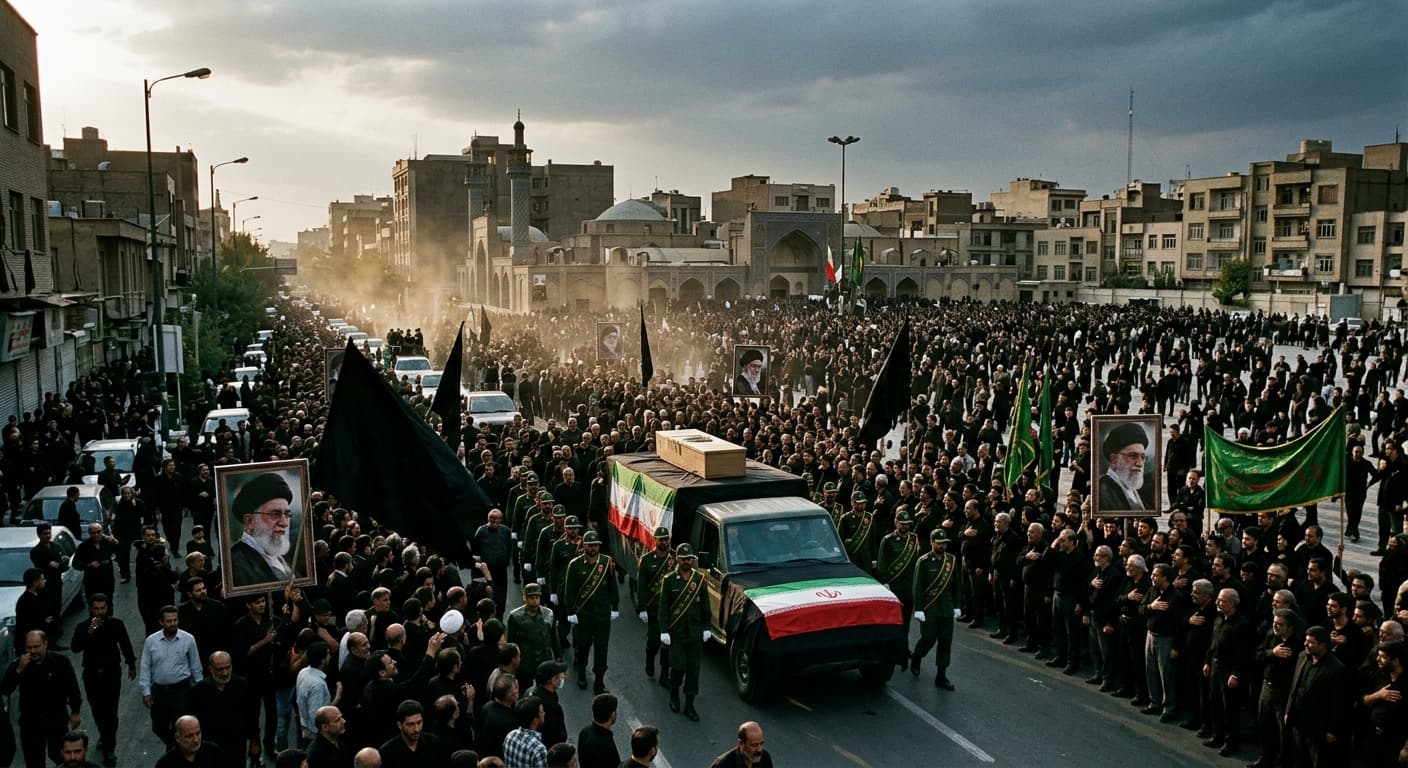
Khamenei's Funeral Signals Iran's Decline
The funeral of Ayatollah Khamenei highlights Iran's diminished influence in the Gulf, with regional powers now dictating terms.

Global
Iran's Hormuz Missile Strikes: A Toll Booth
Iran's missile attack on a Qatari-linked tanker highlights Tehran's strategy to control the Strait of Hormuz, impacting Gulf states and maritime law.

Tech Policy
Iran's Cavern Manticore Targets Israel's IT
Cavern Manticore, an Iran-linked hacking group, targets Israeli IT vendors, prompting a shift in Israel's cybersecurity policy and legislative efforts.