Nabatieh Ceasefire Unravels Amid Attacks
Medical crisis in southern Lebanon escalates as truce collapses
Model Diplomat3 min readMiddle East
Nabatieh Ceasefire Unravels as Israeli Attacks Resume
Medical crisis in southern Lebanon intensifies as 24-hour truce collapses, threatening US-Iran peace negotiations
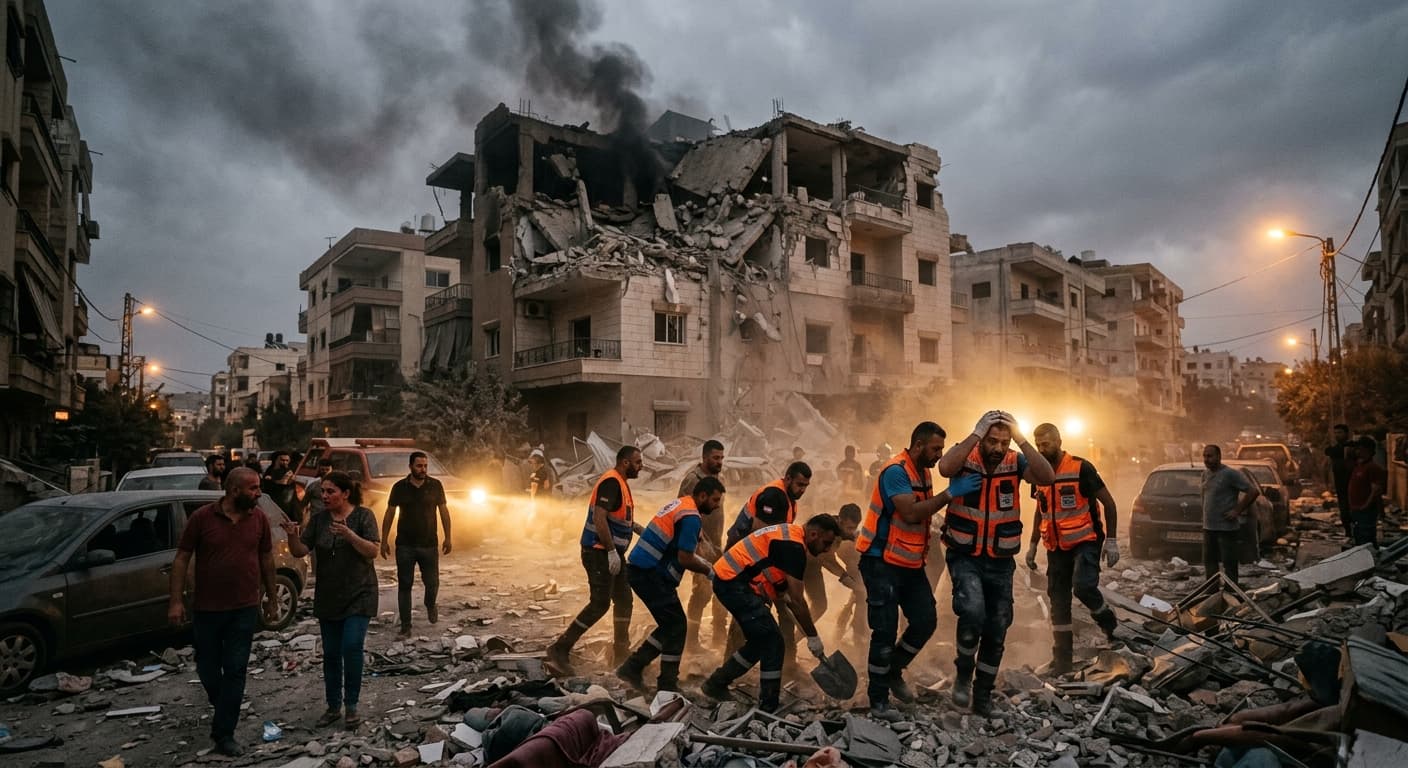
Doctors Without Borders has declared southern Lebanon a "death trap", with MSF emergency coordinator Pierre Boulet-Desbareau reporting that casualties are arriving with "severe head injuries, heavy bleeding, shrapnel injuries and in need of amputations." The assessment came as Israeli forces resumed airstrikes on the Nabatieh district—just hours after a fragile 24-hour ceasefire between Israel and Iran-backed Hezbollah took effect on Friday afternoon.
The renewed attacks killed at least 16 people in the Nabatieh region on Saturday, according to Lebanese civil defence, with 12 others wounded. In Harouf, nine died; in Haboush, seven; in al-Duweir, six including a child, the
BBC reported. The toll came as Israeli warplanes and drones carried out overnight strikes across residential areas, destroying homes and blocking rescue teams from reaching trapped civilians under heavy shelling.
MSF teams documented the tactical trap: first responders and paramedics are being wounded in rescue missions, while the ongoing bombardment makes evacuation itself lethal. France24 noted that Nabatieh saw "columns of smoke" as drones circled overhead despite the announced truce. The ceasefire, brokered by the United States with Iranian mediation, nominally started at 4 p.m. (1300 UTC) Friday. Israel claimed Hezbollah fired over 50 projectiles overnight and said it was striking Hezbollah targets in response.
Ceasefire Collapses Within Hours
The breakdown within hours of the announcement reveals how fragile the agreement is and how little institutional leverage either party has to enforce it. Israel's far-right National Security Minister Itamar Ben-Gvir told media "all of Lebanon must burn" following the deaths of four Israeli soldiers in a Hezbollah ambush near Kfar Tebnit on Friday. Prime Minister Benjamin Netanyahu explicitly
instructed the IDF to "strike Hezbollah with full force," signalling permission to override the ceasefire.
Hezbollah, for its part, reasserted its right to respond to Israeli operations as long as Israeli forces occupy southern Lebanon. The group's parliamentary representative Ali Fayyad stated that "a ceasefire while the enemy continues its targeting and assassinations is meaningless," signalling the group views the truce as irrelevant unless tied to Israeli withdrawal.
The Diplomatic Endgame
The collapse of the Lebanon ceasefire strikes at the core of the broader US-Iran peace deal signed June 19—the first point of which explicitly mandates an "immediate and permanent termination of military operations on all fronts, including in Lebanon." Iran views the Lebanon ceasefire as make-or-break for the entire diplomatic process. Iranian Foreign Minister Abbas Araghchi was scheduled to travel to Switzerland on Saturday for follow-up negotiations with US envoys Steve Witkoff and Jared Kushner, but his arrival was contingent on seeing the ceasefire hold, according to sources cited by
Al Jazeera.
France24 reported that Ben-Gvir's statement and the scale of renewed attacks have complicated negotiations. The US State Department confirmed that Israel-Lebanon bilateral talks are scheduled for June 23–25 in Washington, but those discussions exclude Hezbollah and have made little progress on the key question: Israeli withdrawal from southern Lebanon.
What to Watch
The deciding factor is whether Iran interprets the resumed Israeli strikes as a breach of the 60-day memorandum of understanding signed Thursday. Iran already warned that continued Israeli operations would constitute a "violation" of the deal. If Araghchi does not travel to Switzerland on schedule, or if he arrives but signals Iranian walkback from the process, the entire US-Iran peace framework collapses. Watch June 23 for signs of Iranian disengagement and the next round of Israel-Lebanon direct talks for evidence of whether Washington can force Netanyahu toward a withdrawal timeline.
Discover more

Global Politics
US Seizes Iranian Ship, Tensions Surge
The US seizure of the Iranian ship Touska highlights a shift in control over the Strait of Hormuz, favoring Iran's strategic position.

International Relations
Pakistan's Key Role in US-Israel-Iran Meddle
Pakistan is seeking to mediate the US-Israel-Iran conflict, balancing high-stakes diplomacy against severe economic pressures and steep regional challenges.
Global Politics
Trump's Conflicting Messages on Iran War
Trump's mixed messages on Iran reflect a strategy of audience management, benefiting Tehran amid a complex geopolitical landscape.

Conflict & Security
Drone Warfare Killing Aid Workers at Unprec
Over 1,000 humanitarian workers killed in three years as cheap armed drones collapse legal protections. Gaza, Sudan, Ukraine, and DRC see deliberate targeting of aid convoys and hospitals with zero prosecutions.