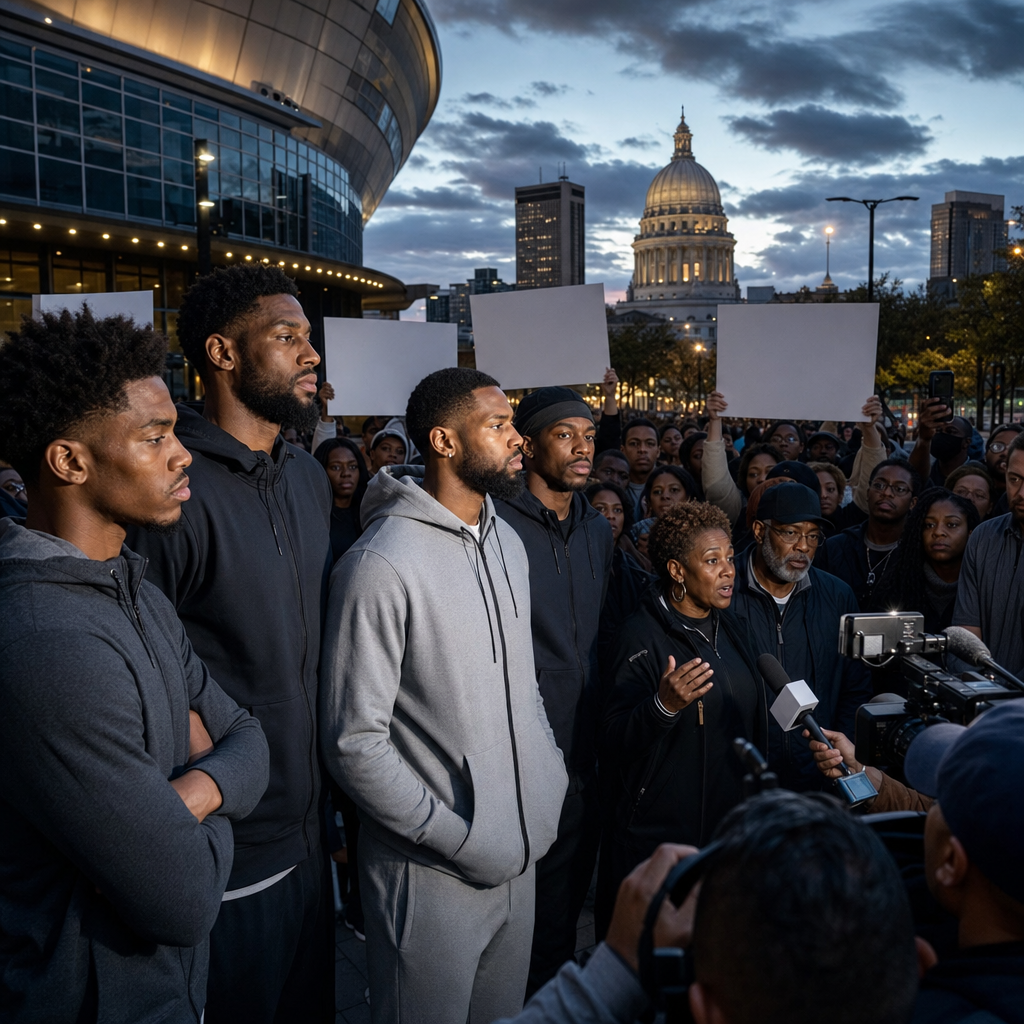
NAACP Boycott Call Tests Black Athlete Power
[The NAACP is turning recruiting, endorsements and stadium revenue into political leverage — and forcing schools in the South to choose between Black talent and Black voting power.]
The NAACP is asking Black athletes, recruits, fans and alumni to withhold money and commitments from public universities in eight Southern states after a wave of redistricting moves it says are designed to dilute Black voting strength, according to  The New York Times and
  The Washington Post. The group’s message is blunt: if state governments are moving to erase Black political representation, then Black athletes should stop underwriting the schools those states use as civic and financial showcases.
The leverage runs through college football
This is not a symbolic protest. The NAACP is targeting the money trail that runs from elite Black athletic labor to public universities and state prestige. The Times reported that the campaign covers Tennessee, Alabama, Florida, Mississippi, Louisiana, South Carolina, Georgia and Texas, including flagship programs whose athletic departments generate more than $100 million a year. It also urged current athletes to consider transferring, recruits to hold their commitments, and fans to stop buying tickets and apparel, redirecting support toward HBCUs instead. NYT
That is the power dynamic. Southern states depend on Black athletes to fill stadiums, drive TV value and sustain brand value. The NAACP is trying to convert that dependence into political pressure. It is also trying to make the contradiction harder to ignore: states that seek to shrink Black voting power still rely on Black players to keep their athletic empires profitable. The Washington Post
Why this lands now
The campaign is tied to the Supreme Court’s recent weakening of the Voting Rights Act, after which several Republican-led states moved quickly to redraw congressional maps. The Times reported that Tennessee, Texas and Florida have already passed new maps that dilute majority-Black districts, while Louisiana, South Carolina and Alabama are moving toward new lines before the November midterms. Mississippi and Georgia are also weighing changes for 2028. NYT
That matters because the boycott is aimed not at abstract institutions but at the decision-makers who can feel it. Athletic departments are public-facing, politically sensitive and heavily dependent on donor confidence. A recruiting chill, or even a high-profile refusal by a star player, would hit the schools long before it meaningfully shifts a legislature’s map-drawing calculus. That is why the NAACP is not waiting for courts or Congress. It is trying to raise the cost of silence inside the one arena where those schools cannot easily hide: college sports.
What to watch next
The key question is whether this becomes a recruiting story or a political slogan. If a handful of top Black football or basketball prospects publicly pivot away from SEC and ACC schools, the boycott gets real fast. If they do not, the campaign still may succeed in changing the terms of debate around  Global Politics and race, power and revenue in college sports.
Watch the next recruiting announcements, donor responses and any state-map deadlines before the November midterms. If schools in Alabama, Florida or Texas start talking about “community engagement” or “inclusion” in response, that will be the first sign the NAACP has found the pressure point it wanted.