Modi's Women's Reservation Bill Speech
Analyzing Modi's speech on women's reservation and its implications
Model Diplomat7 min readIndia
Modi's Women's Reservation Bill Speech: The Real Target Was the South
Modi's April 18, 2026 address turned a failed 33% women's quota into a 2029 delimitation weapon aimed at southern states — and a Bihar-style campaign playbook.
Prime Minister Narendra Modi's April 18, 2026 televised apology "to all the mothers and sisters" of India was not really about women's reservation. It was about the 26 Lok Sabha seats that would move from the south to the north under the delimitation formula buried inside the same defeated bill — and about giving the BJP a grievance to run on in the West Bengal, Tamil Nadu and Kerala assembly elections later this year. The 33% women's quota, passed in 2023, remains law. What died in the Lok Sabha on April 17 was the government's attempt to redraw the electoral map under a gender-equity flag, and Modi's speech was the opening shot of a two-year campaign to punish the parties that saw through it.
What actually happened on the floor
The Constitution (131st Amendment) Bill, 2026 fell in the Lok Sabha on Friday, April 17, on a division of 298–230 — 54 votes short of the 352-vote, two-thirds threshold that a constitutional amendment requires, according to BBC News Hindi. The NDA holds 293 seats in the lower house;
Al Jazeera noted before the vote that a two-thirds majority required 360, and that the government was banking on defections from Congress, DMK, TMC and the Samajwadi Party. None came.
The bill did three things at once. It raised the constitutional ceiling on Lok Sabha strength from 550 to 850 seats — 815 from states, 35 from union territories — and tied the roll-out of the 2023 women's reservation to a delimitation exercise anchored to the 2011 census, with a rotation of reserved constituencies every 15 years. A companion Delimitation Bill, 2026 empowered a commission to redraw boundaries on the "latest published census," which in practice meant 2011 data, not the census now being enumerated.
Congress leader Rahul Gandhi, cited by BBC News Hindi, framed the vote as a defence of the Constitution: "This is not a women's bill. It is an attempt to change India's electoral map." Tamil Nadu Chief Minister M.K. Stalin,
reported by Al Jazeera, burned a copy of the delimitation bill and led a black-flag protest in Chennai before the division.
The speech — verbatim, and what it signals
Modi's Saturday address, published on his official website, does two things ostentatiously and one thing quietly. It apologises. It accuses. It threatens.
"This honest effort has been subjected to foeticide in Parliament by Congress and its allies, foeticide. Congress, TMC, Samajwadi Party, DMK — these parties are guilty of this foeticide. They are criminals against the Constitution of the country, they are criminals against the women power of the country." — Prime Minister Narendra Modi, address to the nation,
April 18, 2026
The apology is the surface. The load-bearing sentence — the one to read twice — is Modi's claim that the amendment "was an effort to equally increase the strength of every state, North, South, East, West… to give more strength to the voice of every state in Parliament." That is a direct pre-buttal of the southern-states argument that pro-rata delimitation would strip them of seats. It is also the line the BJP will now repeat, unchallenged, in every state campaign until 2029.
The "punishment" line — that opposition parties "will not escape" the consequences of opposing women — is the other tell. Sharad Gupta, a senior journalist quoted by BBC News Hindi, argued the government knew it lacked the two-thirds numbers before it tabled the bill and did so anyway to build a campaign narrative for West Bengal, where women voters have been the TMC's firewall. The bill's defeat was a feature, not a bug.
The number that reframes the fight
The reason Rahul Gandhi and Stalin refused to give Modi the two-thirds — even at the price of being painted as anti-women — is contained in one table.
A May 2026 analysis by Milan Vaishnav and colleagues at the Carnegie Endowment for International Peace calculated that a Webster-method reapportionment based on 2011 census figures would move roughly 26 seats between states. Bihar, Uttar Pradesh and Rajasthan would gain 19; Kerala, Tamil Nadu and Andhra Pradesh would lose 15. Use the government's own 2026 population projections and the picture worsens: the five southern states lose a collective 27 seats under population-based reallocation.
The Delhi-based Takshashila Institution reached the same conclusion by a different route, noting that one MP in Bihar represents about 3.1 million citizens while an MP in Kerala represents 1.75 million — a distortion the Takshashila analysis calls a "one person, one vote" violation that any reapportionment will have to fix. The Observer Research Foundation put the malapportionment bluntly in a
pre-vote note: each Uttar Pradesh MP represents 18.3 lakh voters versus 13.1 lakh in Kerala. Formal vote equality argues for the northern gain. Federalism argues against it.
The BJP's answer, delivered on the floor by K. Laxman and repeated by Modi, is that a uniform 50% seat expansion across all states would keep everyone whole. But the BBC's legal analysis, citing the Vidhi Centre for Legal Policy's Arghya Sengupta, found that the 850-seat ceiling does not correspond to any proportional formula in the 1971 or 2011 census — meaning fast-growing northern states could still gain disproportionate weight. That gap between the government's promise and the bill's text is why the southern parties voted no.

What Modi is actually selling — the Bihar template
To understand the speech, look at Bihar in November 2025. The NDA swept the state on the back of a record 71.6% female voter turnout, according to the BBC, after a cash-transfer scheme distributed roughly $880 million to 7.5 million women in the two months before the vote,
Al Jazeera reported. Emkay Global's post-election note, cited by the
BBC, warned the same "freebie wave" will now roll into Tamil Nadu, Kerala and West Bengal.
The women's reservation bill is the ideological complement to the cash transfer. One offers rupees; the other offers representation. Together they let the BJP contest state elections on a "who is really for women?" frame — with a floor-vote receipt to prove opposition parties said no. Journalist Adesh Rawal, quoted by the BBC, was blunt: the bill's real target was Bengal, where the BJP believes women voters are the TMC's most portable asset.
The politics inside the bill also cuts against the opposition's own base. The Nari Shakti Vandan Adhiniyam of 2023, when passed, was praised by Carnegie as a "landmark" that could lift women's Lok Sabha share from 15.2% toward global norms — but it excluded an OBC sub-quota that Congress, RJD and SP had demanded since 1996. Samajwadi Party MP Akhilesh Yadav revived that fight this month, asking on the floor whether Muslim women would be included. Rejecting that demand and yoking implementation to a controversial delimitation gave the opposition two reasons to sink the amendment. Modi's speech converts both refusals into "sin."
The primary document, and what it does not say
The text of Modi's address never explains why the government did not simply implement the existing 2023 law with the current 543 seats — which even Rahul Gandhi has offered to pass "100 percent" on a single day, per
BBC News Hindi. The reason is in the 2023 Act's own text: Section 5, inserting Article 334A, states the quota "shall come into effect after an exercise of delimitation is undertaken … after the relevant figures for the first census taken after the commencement" have been published, as
PRS Legislative Research analysis and the
Asia Pacific Foundation of Canada both flagged in 2023. The BJP wrote the delay into the statute in 2023. Now it is blaming the opposition for it.
What to watch next
- West Bengal, Tamil Nadu and Kerala assembly polls (mid-to-late 2026): every BJP rally in these states will replay the April 17 division list. Female turnout differentials are the single most important indicator.
- Census enumeration deadline: the first phase of India's decennial census began April 1, 2026, per
Al Jazeera. Provisional data by late 2027 is the earliest realistic trigger for a fresh delimitation bill.
- Second attempt in Rajya Sabha or a joint session: the government retains the option to re-table the amendment. A softened version — quota implementation with delimitation deferred until post-2029 — would split the DMK from the TMC and could clear two-thirds.
- Supreme Court challenge: any delimitation on 2011 data will draw a "one person, one vote" writ petition. Vidhi Centre for Legal Policy has already flagged the constitutional infirmity.
Diplomat View
Modi's speech was not a concession — it was a re-framing. By staging a defeat he could plausibly have avoided (a Rajya Sabha–first strategy or a stripped-down amendment would have improved his odds), Modi has extracted maximum political capital from a bill that was always more useful as a grievance than as a statute. The forecast: the BJP wins West Bengal or draws close, gains ground in Tamil Nadu without breaking through, and re-tables a decoupled women's reservation amendment in 2027 that the opposition cannot vote against — leaving delimitation for a post-2029 Modi successor to bank. That call revises if two things happen: female turnout in Bengal fails to swing to the BJP by more than three points versus 2021, or the Supreme Court fast-tracks a case that forces a census-first delimitation. Absent those, the April 18 apology will be remembered as the day the south lost its veto over the map.
The Bottom Line
The bottom line: Modi's April 18 speech was a lost vote deliberately harvested — the 33% women's quota is already law, but tying it to a 2011-census delimitation gave the BJP a wedge to redraw India's electoral map and a script to run against Congress, DMK and TMC in every 2026 state election. The number that decides everything is 26 — the Lok Sabha seats that would move north if the government's formula ever passes.
Discover more
India
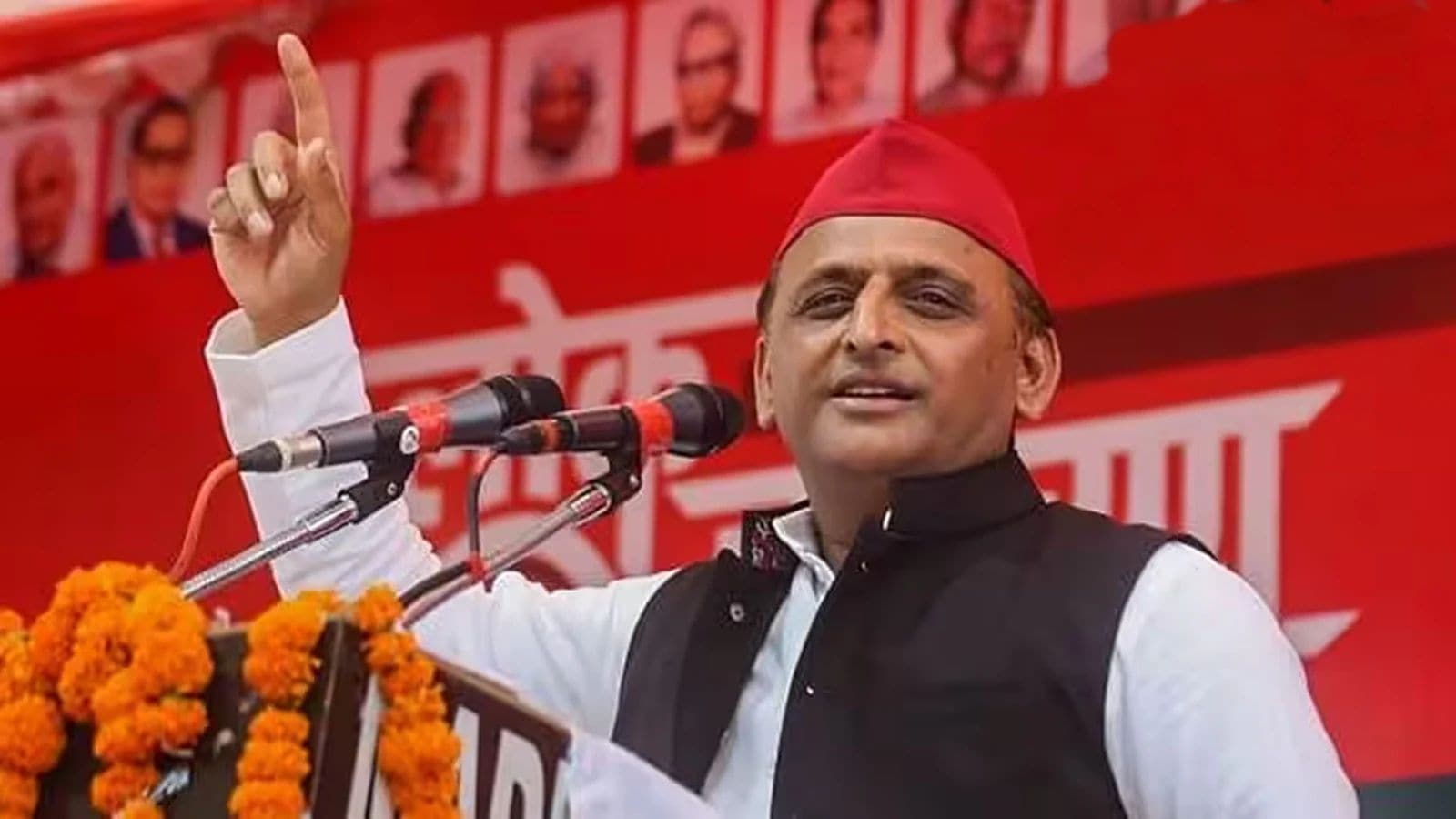
SP's Women Strategy Targets BJP's UP Base
The Samajwadi Party is courting OBC women to weaken the BJP's coalition in Uttar Pradesh, a women-led strategy aimed at cracking the state's electoral base.
India
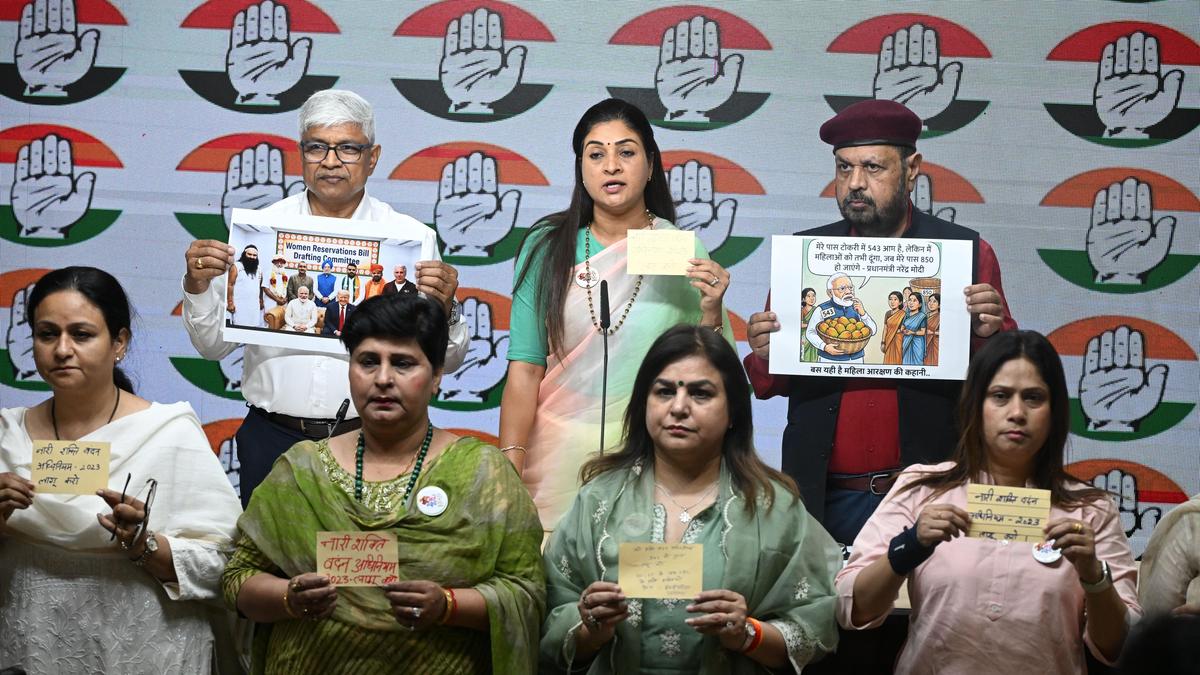
Mahila Congress Postcard Push for Women's Quo
The Mahila Congress launches a postcard campaign to demand immediate implementation of the 33% women's reservation in India's Lok Sabha, targeting PM Modi.
India
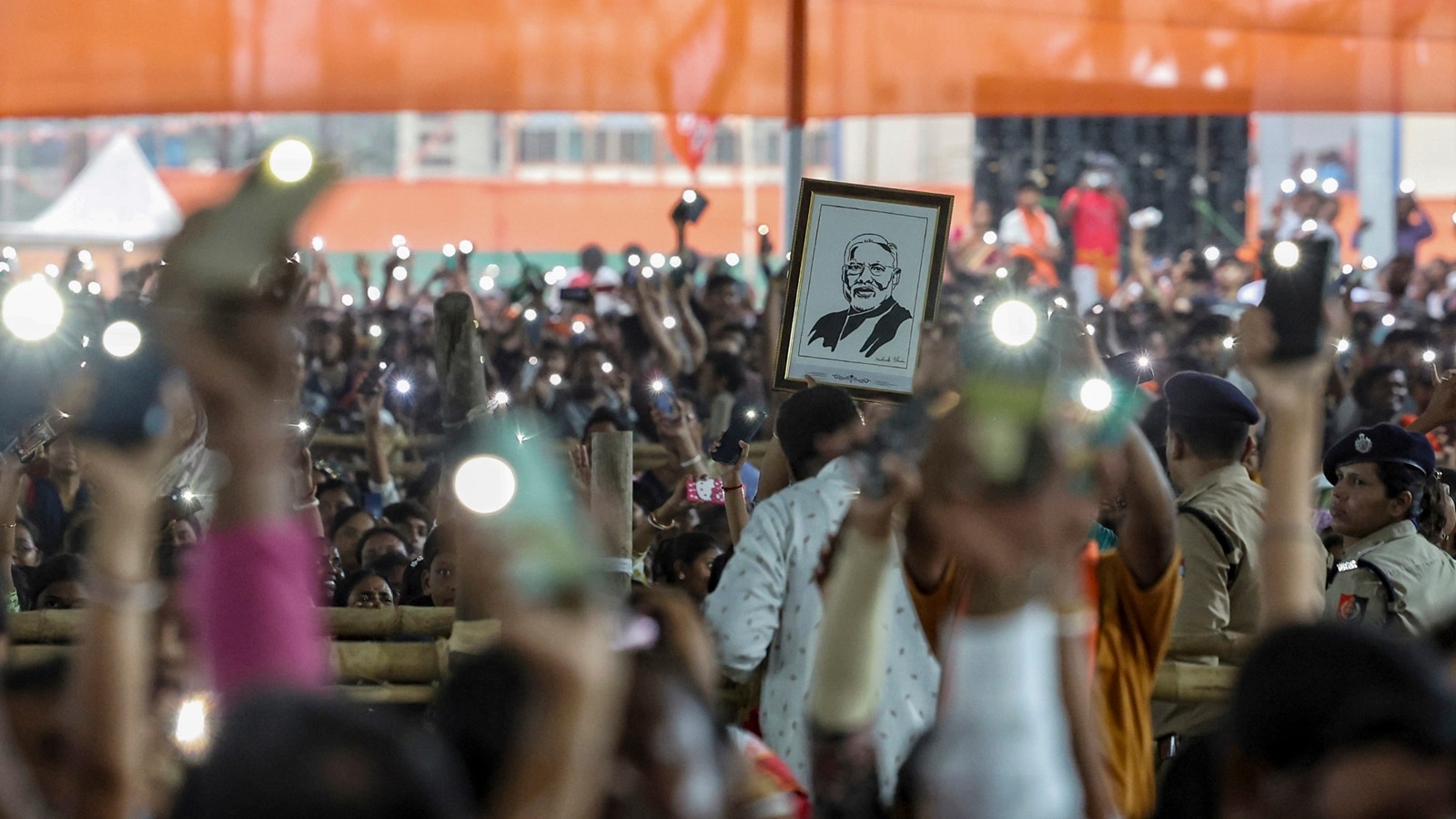
Modi's Women’s Convention in Varanasi
Modi's Varanasi rally frames women's reservation as a national mission, targeting the 2027 Uttar Pradesh elections with a strategic narrative.
India
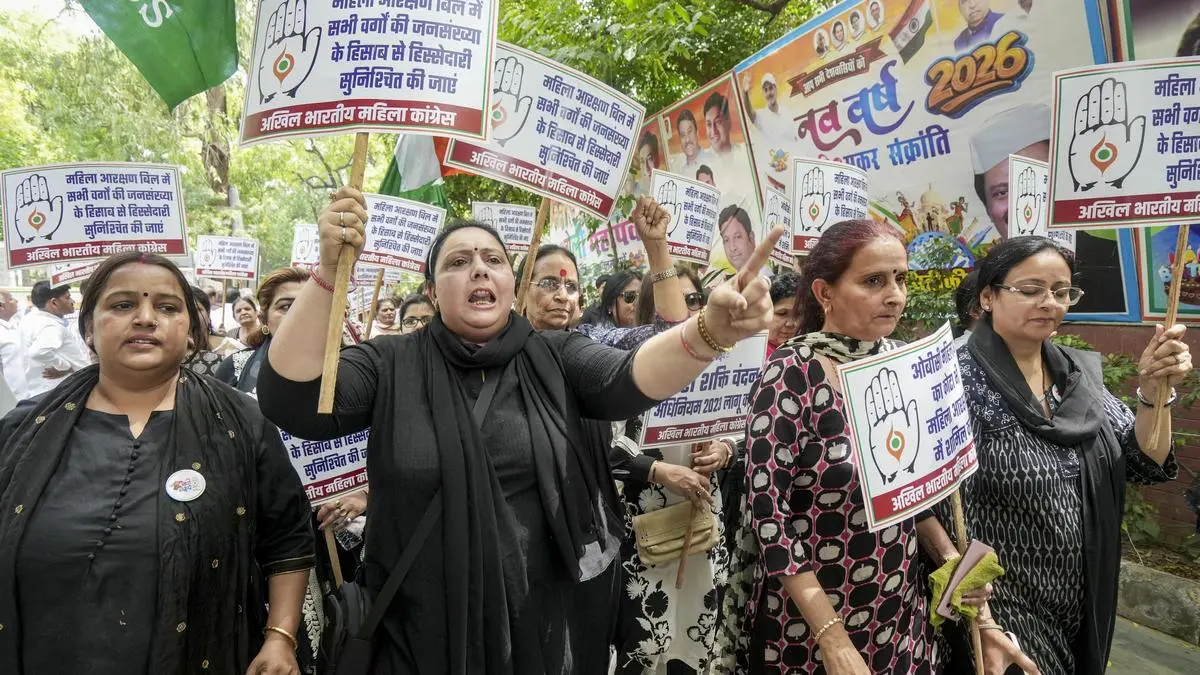
BJP's Misunderstanding of Women's Quota Needs
The BJP's linking of the Women Reservation Bill to delimitation risks delaying women's empowerment in India, misreading the aspirations of female voters.