Modi's Women's Reservation Bill
A historic vote reshapes India's political landscape
Model Diplomat8 min readIndia
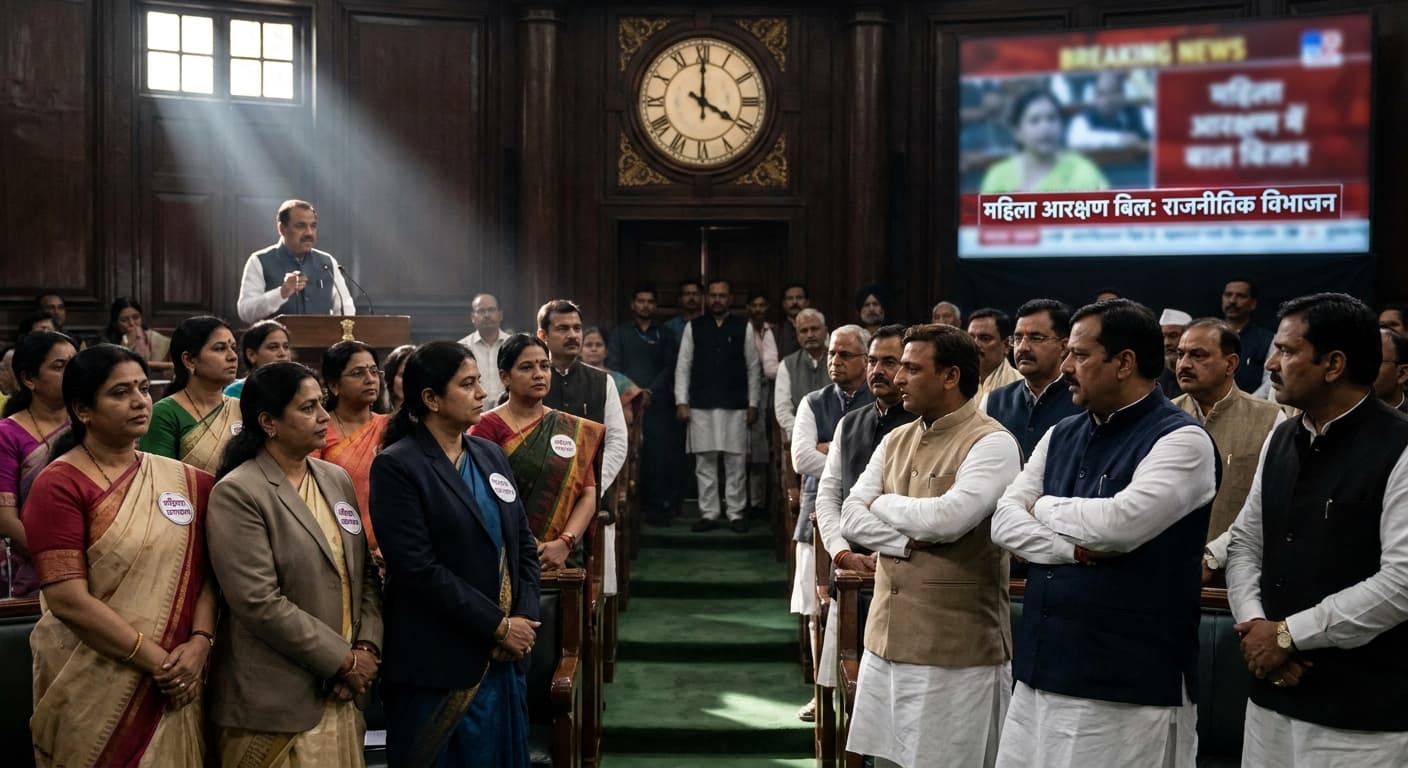
Modi's Women's Reservation Bill: The 298–230 Vote That Rewrote India's Map
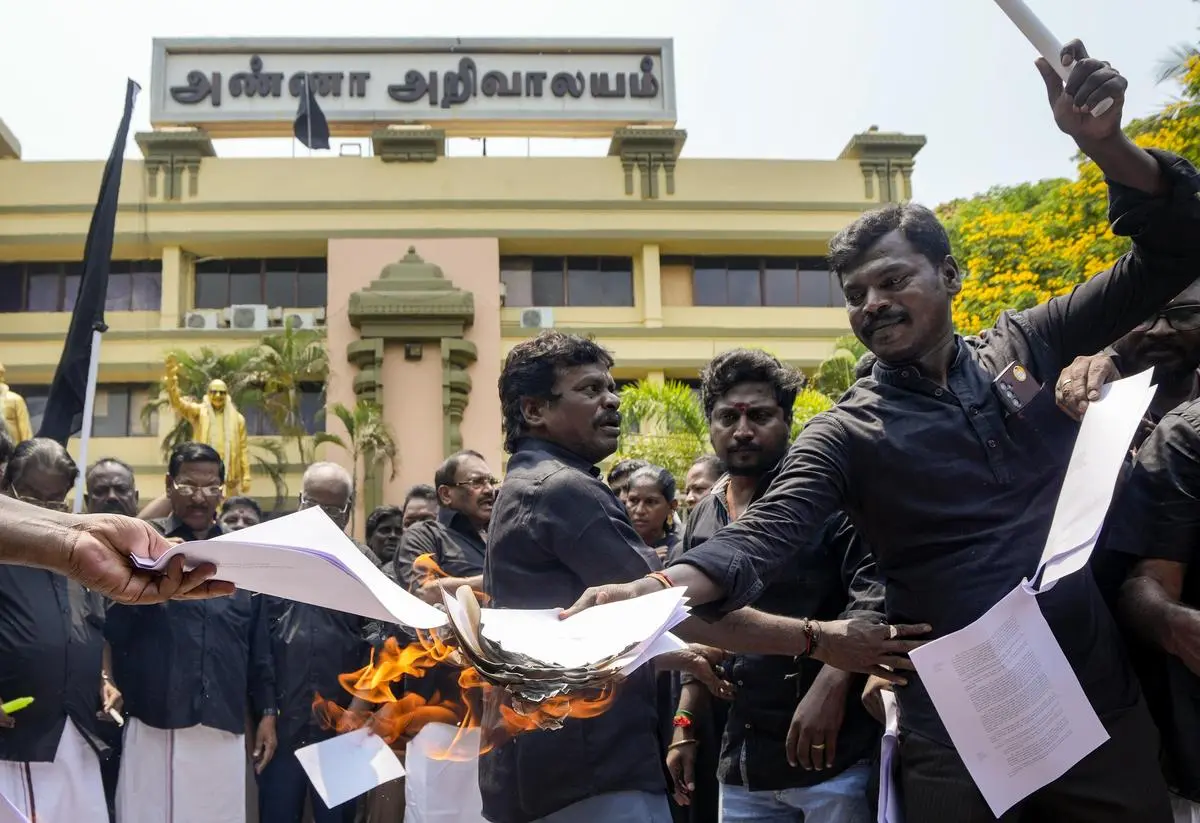
Modi's Women's Reservation Bill was defeated 298–230 in the Lok Sabha on April 17, 2026 — the first constitutional amendment to fail in his 12 years in power. Here is what actually broke, and who won.
The Constitution (131st Amendment) Bill fell 298–230 in the Lok Sabha on April 17, 2026 — the first constitutional amendment defeated under Prime Minister Narendra Modi in a dozen years in office, according to a post-mortem by the NUS Institute of South Asian Studies. The government pitched the vote as an attempt to finally deliver the 33% quota for women in
India's parliament promised in 2023. It was also something else: the vehicle to redraw every constituency in the country, expand the Lok Sabha from 543 to 850 seats, and reset the north–south balance of power before the 2029 election. That is why it lost — and why the loss matters more than the quota it was named for. The BJP traded a floor vote for a map.
What the bill actually was
The Women's Reservation Bill of headlines is not a single bill. The underlying quota — the Constitution (One Hundred and Sixth Amendment) Act, marketed as the Nari Shakti Vandan Adhiniyam — has been on the statute book since September 2023, when it cleared the Lok Sabha 454–2, the BBC reported at the time. But that Act built in its own delay: implementation is contingent on a fresh census and a subsequent delimitation of constituencies.
The three-day special session convened on April 16–18, 2026 was meant to operationalise that dormant law. As the Carnegie Endowment's Milan Vaishnav laid out in a May analysis, the government tabled a package of three bills: the Constitution (131st Amendment) Bill, 2026; the Delimitation Bill, 2026; and the Union Territories Laws (Amendment) Bill, 2026. The 131st Amendment would have lifted the constitutional ceiling on the Lok Sabha to 850 seats — with 815 allocated to states and 35 to Union Territories — and shifted the mandate for future delimitation from the constitutional text to ordinary parliamentary law.
The women's quota was the smallest of the three moving parts, but the political packaging. The reasoning, spelt out by Home Minister Amit Shah on the floor of the house and reproduced verbatim in Press Information Bureau release 2253186, was that the Nari Shakti Vandan Adhiniyam explicitly conditions the one-third reservation on "the delimitation exercise to be carried out after the Census conducted post-2026." No census, no delimitation. No delimitation, no women's quota. That sequencing lock — set by the BJP itself in 2023 — became the leverage point in 2026.
Why it failed
The National Democratic Alliance holds 293 Lok Sabha seats, Al Jazeera noted on the day the bills were tabled — a two-thirds constitutional majority requires roughly 362. On the numbers alone, the government needed opposition votes and did not do the retail work to get them.
Three specific choices cost the government the floor:
- The package deal. By binding women's reservation to a Lok Sabha expansion and a delimitation triggered on the 2011 census, the government forced regional parties from Tamil Nadu, Kerala, Karnataka, Telangana and West Bengal into an existential vote on federal balance rather than a symbolic vote on gender. Congress leader Rahul Gandhi called the proposal "an attempt to seize power through delimitation and gerrymandering" — a line he repeated at every southern rally through polling day. The southern states had earlier demanded a 25-year extension of the seat freeze.
- The absent guarantee. As the
Carnegie analysis documented, ministers repeatedly promised no state would lose its share of seats — but the promise "was never codified in the proposed law." Shah offered, in the final hours of debate, that he could "return in an hour with an amendment" to guarantee proportional treatment. He did not. Arghya Sengupta of the Vidhi Centre for Legal Policy told the
BBC the 850-seat cap had no clear population basis and the bill made no matching provision for state assemblies — meaning state legislatures would remain unreformed while the Lok Sabha expanded by 57%.
- The timing. The special session was convened days before assembly elections in Tamil Nadu and West Bengal — the very states most exposed to a north-tilted delimitation. Rather than test whether the opposition would block a clean women's quota, the government forced a vote on the compound bill during an election campaign. It lost.
The angle nobody is saying out loud
The evidence points to a strategic bet, not a legislative accident. The BJP knew it did not have 362 votes. It called the session anyway.
Look at what followed. On April 18, 2026, Modi addressed the nation and accused the opposition of "foeticide" for killing the bill, per the ISAS-NUS record of the speech. He carried that line into his rallies in Tamil Nadu and West Bengal during the final days of campaigning. Two weeks later, on May 4, 2026, the BJP won West Bengal for the first time in its history — 207 of 294 seats — and Mamata Banerjee's Trinamool Congress was ousted,
BBC News reported. Kerala's Left government fell to Congress. In Tamil Nadu, the DMK collapsed to film star Vijay's TVK, which
took 108 of 234 seats. For the first time in India's history, no state is governed by the Left.
The BJP entered the 2026 state cycle promising women's empowerment and blaming regional parties for blocking it. It emerged with eastern India, a broken Dravidian duopoly, and — critically — the opposition on record having voted against a bill titled Nari Shakti Vandan ("Saluting Women's Power"). Whether the 131st Amendment was ever meant to pass is a question no journalist in the post-vote press conference put to the government.
The tell is in the Nari Shakti Vandan Act itself. When the 2023 law was drafted, the BJP could have implemented the one-third quota inside the existing 543-seat Lok Sabha, effective at the 2024 general election. It chose instead to tie the quota to a future delimitation. That drafting choice — made when Modi's party held its own two-thirds majority — is what created the 2026 leverage point. As the ISAS-NUS analysts put it bluntly, opposition parties "have gone on record saying that they are happy to back the women's reservation bill if the quota is not linked to delimitation." The government has not tested that offer.
The math of representation
The subtext of the whole exercise is that Indian parliament remains stubbornly male. According to a U.S. Congressional Research Service brief on the 2024 election, 14% of the 18th Lok Sabha is women — a slight decline from the 78 elected in 2019. A 2025 study in the International Journal of Research and Innovation in Social Science found
women made up just 9.5% of the 8,360 candidates fielded in 2024.
The party-level data is where the BJP's argument collapses. According to Al Jazeera's analysis of Election Commission figures, women were 12.5% of BJP MPs after 2024 and 13.1% of Congress MPs — while the Trinamool Congress sent 38% women to Delhi. In the West Bengal assembly campaign the BJP won in May 2026, the ISAS-NUS review notes the party fielded 11% women candidates against the TMC's 19%.
That does not make the 131st Amendment insincere. It does make the argument that only the BJP delivers for women harder to sustain on the numbers.
The delimitation trap the government set for itself
Home Minister Shah's PIB briefing on April 17 laid out the government's fallback math: a 50% uniform expansion would take southern states from 129 seats to 195, holding their national share near 24%. That is the "pro-rata" model the BJP has pitched since. It was not in the bill.
Here is where the sequencing bites. The eighth Indian census formally began on April 1, 2026, with population enumeration scheduled for February 2027 and a March 31, 2027 reference date, BBC News reported when the exercise was announced. Data publication will take months more. Shah himself conceded on the floor of the house that "even if delimitation is undertaken then, the process cannot be completed before 2029, as the Delimitation Commission is required to conduct public hearings in every constituency," per the
PIB record.
Translation: the women's quota the 2023 Act promised cannot take effect for the 2029 general election on the existing legal architecture. Absent a new legislative compromise, the earliest Lok Sabha election to which women's reservation applies is 2034. The Takshashila Institution's post-mortem called this the quiet cost of the defeat: two reforms that could have moved separately are now locked to each other and to a census timeline the government itself controls.
What to watch next
- Monsoon session, July–August 2026. The clearest test of intent: does the government reintroduce a delinked women's quota bill — the version the opposition says it will support — or hold the compound package hostage to the census? A delinked bill would sail through both houses in a day.
- February 2027 population enumeration. The moment delimitation math becomes real. Caste enumeration, restored to the census under political pressure, will further complicate seat reservation for SC/ST and OBC women.
- A Delimitation Commission constituted after 2027 census publication. Under the 2023 Act, this is what actually unlocks the women's quota. Any government talk of a 2029 rollout depends on the Commission finishing public hearings in roughly 24 months — historically unprecedented.
- State assembly nominations 2027–28. Whether the BJP applies a voluntary one-third quota to its own candidate lists in Uttar Pradesh, Gujarat and other upcoming state polls. It amended its own party constitution in 2007 to reserve 33% of internal posts for women; it has never applied that ratio to tickets, per
Brookings India research.
Diplomat View
The 131st Amendment's defeat has been read as Modi's first legislative bloody nose. The evidence supports a different reading: the bill was a wedge, not a target. The BJP traded a floor-vote loss for West Bengal and the destruction of the Dravidian duopoly in Tamil Nadu — a swap any strategist in the room would take. The women's quota, meanwhile, has been re-frozen behind a census timeline the government controls and an opposition record it can weaponise through 2029.
The forecast: expect a delinked, pared-down women's reservation bill in the monsoon session or the 2027 budget session — one that passes with cross-party support and takes effect on the existing 543-seat map. That would give Modi a legislative win, defuse the "foeticide" charge, and preserve delimitation as a separate post-census fight. What would falsify this call is the opposite move — the government sitting on the quota through 2027 and running delimitation and reservation as a single package into the 2029 campaign. If that happens, the April 17 vote was not a defeat at all. It was the opening bid.
The Bottom Line
Modi's Women's Reservation Bill did not fail because India rejected gender parity in parliament. It failed because the government bundled a 33% women's quota with a north-tilting redraw of every constituency and a 57% expansion of the Lok Sabha — and dared the south to vote no. The south did. The real question now is not when women get one-third of parliament, but who controls the map they will be elected on.
Discover more

India
Modi's Nari Shakti Gambit
Modi's Varanasi speech redefines women's empowerment as a Nari Shakti gambit, blending appeals for women's votes with the contentious delimitation debate.
India
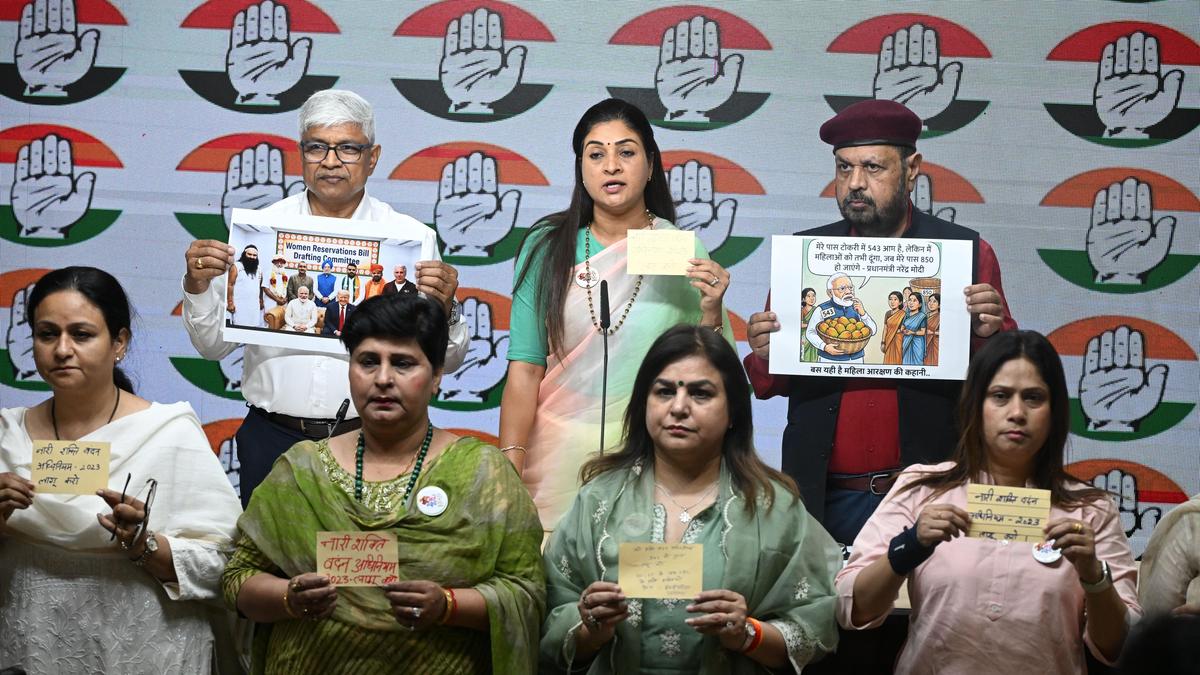
Mahila Congress Postcard Push for Women's Quo
The Mahila Congress launches a postcard campaign to demand immediate implementation of the 33% women's reservation in India's Lok Sabha, targeting PM Modi.
India
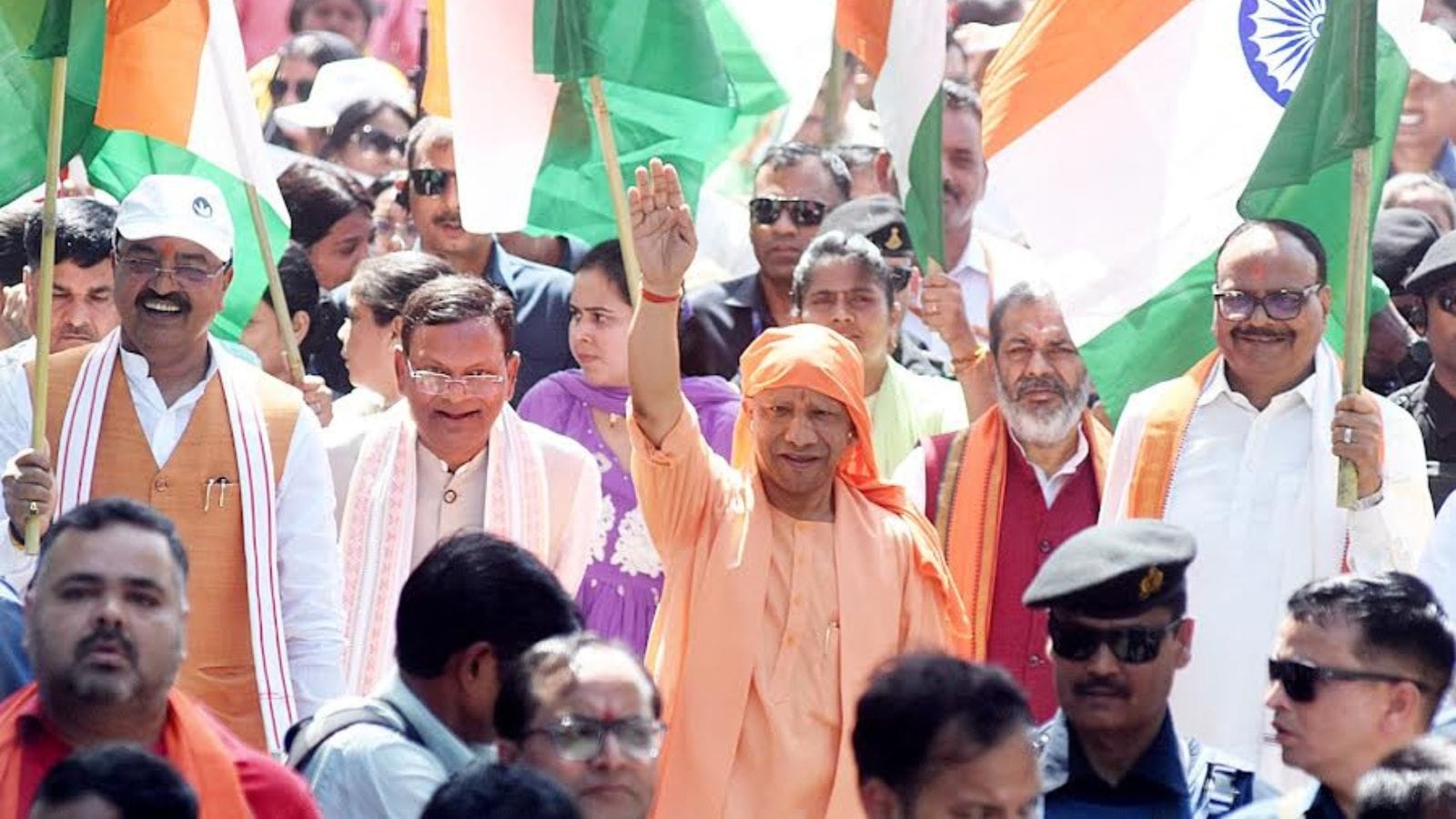
Yogi Adityanath's BJP March on Women's Bill
Yogi Adityanath's padyatra after the women's bill defeat aims to reshape UP's 2027 elections, targeting women's votes against the SP.
India
Women’s Reservation Bill 2026
The Constitution (131st Amendment) Bill, 2026 was defeated in Lok Sabha, revealing deeper political conflicts over women's reservation and delimitation.