Modi's Tamil Nadu Campaign
BJP's push in Tamil Nadu falters against new party leader.
Model Diplomat7 min readTamil Nadu
Modi's Tamil Nadu Campaign: How the BJP's Southern Push Ended in Third Place
Modi spent 2026 chasing Tamil Nadu with the AIADMK, ₹4,400 crore of Madurai projects, and Dravidian imagery. A film star ran off with the state.
Prime Minister Narendra Modi's Tamil Nadu campaign began on 23 January 2026 at Maduranthakam — a blistering attack on the DMK — and ended 102 days later with the BJP's alliance placing second behind a two-year-old party led by a movie star. The lesson of the 2026 verdict is not that the DMK held Tamil Nadu — it did not — but that Modi's decade-long southern project could not clear a bar that a first-time contestant, Joseph Vijay, vaulted on his debut. That reframes what the campaign was actually for, who benefits from its failure, and how the BJP now approaches the 2029 general election with a re-blooded south.
The headline numbers are unambiguous. Vijay's Tamilaga Vettri Kazhagam (TVK) won 108 of 234 seats on a 34.9% vote share on results day, according to BBC News and
BBC Tamil. The BJP-allied AIADMK, led by Edappadi K. Palaniswami, finished second on 73 seats. Chief Minister M.K. Stalin's DMK collapsed to 53 seats and Stalin himself lost Kolathur, his stronghold since 2011, as
Al Jazeera reported. Vijay was sworn in on 17 May at the Jawaharlal Nehru Stadium in Chennai after four meetings with Governor R.V. Arlekar and a coalition of Congress, the two Communist parties, VCK and IUML pushed him past the 118-seat threshold, per
BBC News.
The campaign Modi actually ran
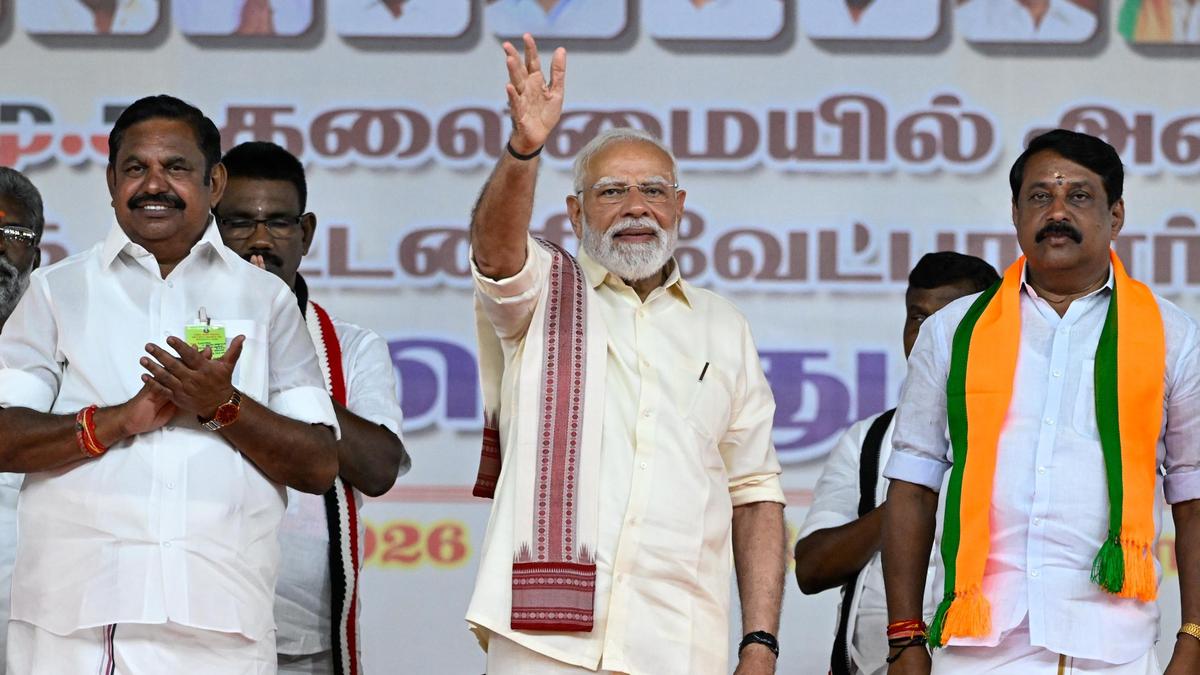
Modi's Tamil Nadu campaign had two registers, and both were on display in the opening rally near Chennai. In front of what The Indian Express described as "a sea of nearly 45,000 chairs," Modi accused the DMK of corruption, "family rule," poor law and order and "insulting" the judiciary — the anti-incumbency track. Standing beside him were Palaniswami and Nainar Nagendran, the new BJP Tamil Nadu president who replaced K. Annamalai after the AIADMK returned to the NDA fold.
The second register was developmental. On 1 March, Modi flew to Madurai to inaugurate infrastructure worth ₹4,400 crore — highway four-laning on the Marakkanam–Puducherry and Paramakudi–Ramanathapuram stretches, eight redeveloped Amrit Bharat stations, and the Chennai Beach–Egmore fourth line. In his own words on the Prime Minister's Office release, Modi pitched a nine-fold rise in Tamil Nadu's railway allocation, from ₹880 crore annually pre-2014 to ₹7,600 crore for 2026–27, framing the state as central to "Viksit Bharat" by 2047. In April he added a cultural layer — the "Vetri Vel" invocation in Madurai and a promise to develop Adichanallur as a world heritage site, per
Zee News — designed to blunt the DMK charge that the BJP was hostile to Tamil identity.
None of it landed. The AIADMK's 33% vote share from 2021 grew by roughly one point on paper; the BJP's own tally on shared tickets was in low single digits. The alliance's arithmetic, as ISAS-NUS had modelled a year earlier, assumed a straight two-front contest. It got a triangle instead.
The disruptor Modi could not price in
Vijay's TVK was formally launched only in 2024. His campaign lasted, in BBC News reporting, less than three weeks of physical rallies — he had paused for over two months after a September 2025 crowd crush at a rally killed 42 people. The party ran mostly first-time candidates. On paper, this was the profile of a spoiler.
In practice, three shifts erased that assumption. Tamil Nadu's youth bulge is the first: voters aged 18–39 make up roughly 42% of the electorate — around 23 million people — and Vijay's 85,000 fan clubs, cultivated over a 30-year film career, converted into what pollster Pradeep Gupta, cited by BBC News, called a digital campaign that "traditional opinion polls and observers missed." The second shift: women broke for TVK across caste lines, cutting into DMK strongholds among Scheduled Castes and OBCs. The third: minority voters — Dalits, Christians, and, in a symbolic result at Madurai Central, Muslims voting for TVK candidate Madhar Badhurudeen — abandoned both Dravidian majors.
The result: in Chennai, where Stalin's DMK had governed uninterrupted, TVK swept most seats. Palanivel Thiagarajan, the DMK's high-profile finance-turned-IT minister, lost Madurai Central. Stalin lost Kolathur. Vijay carried both Perambur and Tiruchirappalli East. Tamil Nadu, as BBC News put it in the counting-day live blog, "will be facing a new political reality for the first time since 1967," when the Dravidian era began.
The BJP's real problem: it lost the argument, not just the seats
The temptation is to read the result as vindication for the BJP — the DMK was defeated, after all, and Stalin humiliated. That reading is wrong. Modi's Tamil Nadu campaign was designed to test a proposition: that with the right regional partner (AIADMK), the right cultural signalling (Tamil pride, temple visits, Katchatheevu revanchism, Vetri Vel), and the right amount of central-government spending, the BJP could finally displace one Dravidian pole and normalise itself in the state. What 2026 established is that when the DMK collapses, its voters do not migrate to the AIADMK, and certainly not to the BJP. They migrate to a new regional force — one that, as BBC News noted, has explicitly cast the BJP as its "ideological adversary."
This is the second-order effect that reframes everything. Modi's own campaign helped make the DMK unelectable — the corruption drumbeat, the crime narrative around women's safety, the Sanatana Dharma controversy from Udhayanidhi Stalin — but the anti-DMK vote had somewhere else to go. As the NUS-ISAS pre-poll analysis had warned, the young Tamil voter is digitally native and not "necessarily rooted in the values of the Dravidian movement" — but nor was that voter open to Hindutva. They wanted a third door. Vijay opened it.
The AIADMK's 73 seats matter for one narrow reason: they preserve the BJP's foothold. Palaniswami is now Leader of the Opposition, and Nainar Nagendran's BJP unit sits inside a functioning alliance rather than the wilderness Annamalai left behind. But the alliance's structural ceiling is now visible. In a state where Stalin's DMK managed roughly 11.2% GDP growth in 2024–25, as BBC News documented, and still lost, the argument that "double-engine" central–state coordination unlocks development has no traction. Tamil Nadu was already delivering. It rejected the incumbent anyway — and rejected the challenger too.
What Vijay's win does to Delhi
The immediate implication is the delimitation fight. Modi's government has already tabled a constitutional amendment redrawing parliamentary constituencies, which Tamil Nadu, Kerala, Karnataka and Telangana have called, in Stalin's words, a "massive historic injustice," per BBC News. Tamil Nadu could see its Lok Sabha seats drop under one scenario, while Uttar Pradesh gains. Stalin was the frontline voice of southern resistance. Vijay now inherits it — and he arrives without any of the DMK's baggage in Delhi. TVK's coalition with Congress, CPI, CPI-M, VCK and IUML replicates, almost exactly, the INDIA bloc's Tamil Nadu configuration for 2029.
The second-order beneficiary of Modi's failed campaign is the national opposition. Omar Abdullah, Chief Minister of Jammu and Kashmir, told Al Jazeera that a TVK win in Tamil Nadu paired with a BJP win in West Bengal amounts to a "political earthquake" whose aftershocks will run to 2029. The BJP genuinely did break through in Bengal on 4 May 2026, taking 207 of 294 seats and unseating Mamata Banerjee. But that success magnifies the Tamil Nadu problem rather than offsetting it. The BJP now governs or shares power in 21 of India's 28 states, according to
Al Jazeera — but the two big southern refusniks, Tamil Nadu and Kerala, both hardened against it in 2026, with Kerala returning a Congress-led government.
There is also a governance angle Modi's team is quietly working. Governor Arlekar's four-day delay in inviting Vijay to form the government — and his post-facto press release stating that "the requisite majority support in the legislative assembly, essential for forming the government, has not been established," per BBC News — telegraphed a familiar pattern: BJP-appointed governors squeezing non-BJP state governments on procedural grounds. Constitutional experts cited by the BBC noted precedent for inviting the single-largest party. That fight — over Article 164, over the discretion of the Rajbhavan — will define centre–state relations in Chennai for the next five years.
What to watch next
Three markers will show whether Modi recalibrates or doubles down.
- The GST Council session and 15th Finance Commission devolution formulae. Vijay's TVK government has inherited the DMK's grievance that Tamil Nadu receives ~29 paise per rupee it contributes. Any punitive tightening — or a demonstrative easing — will signal Delhi's read of the new regime.
- The delimitation amendment vote in Parliament. Modi's NDA lacks a two-thirds majority in either house. Vijay's alignment with the Congress-led opposition puts 39 Lok Sabha seats' worth of political weight behind a southern veto.
- The 2027 AIADMK–BJP separation risk. With Palaniswami as opposition leader and Nagendran's BJP now visibly ceilinged, expect a renewed debate inside the AIADMK about whether the BJP tie-up cost more votes than it delivered. A break before 2029 would leave Modi contesting Tamil Nadu solo — repeating the 2019 experience that produced one seat.
Diplomat View
Modi's Tamil Nadu campaign was the most disciplined southern push the BJP has ever mounted: a coherent alliance, a genuine developmental record, a cultural pitch calibrated to Tamil pride rather than Hindi imposition. It failed anyway, and the failure is not tactical but structural — the state's rejection of Dravidian incumbents did not translate into acceptance of the BJP's frame. The forecast is that Modi will now treat Tamil Nadu as a 2029 defensive theatre, not an offensive one — protecting the AIADMK alliance's 73-seat floor rather than chasing a Vijay-shaped ceiling. The falsifiable condition: if the BJP quietly encourages a floor-crossing operation or a governor-led constitutional crisis against Vijay before the 2027 monsoon session, read that as a signal Delhi has abandoned electoral persuasion in Tamil Nadu and returned to the older playbook. Conversely, if Modi routes a fresh infrastructure package through Chennai in the next Union Budget and lets Vijay claim credit, the BJP has accepted that Tamil Nadu, like Kerala, is now a state to be managed, not conquered. The state everyone thought Modi was campaigning to win in 2026 was, in the end, a state he was campaigning to survive.
Discover more
India
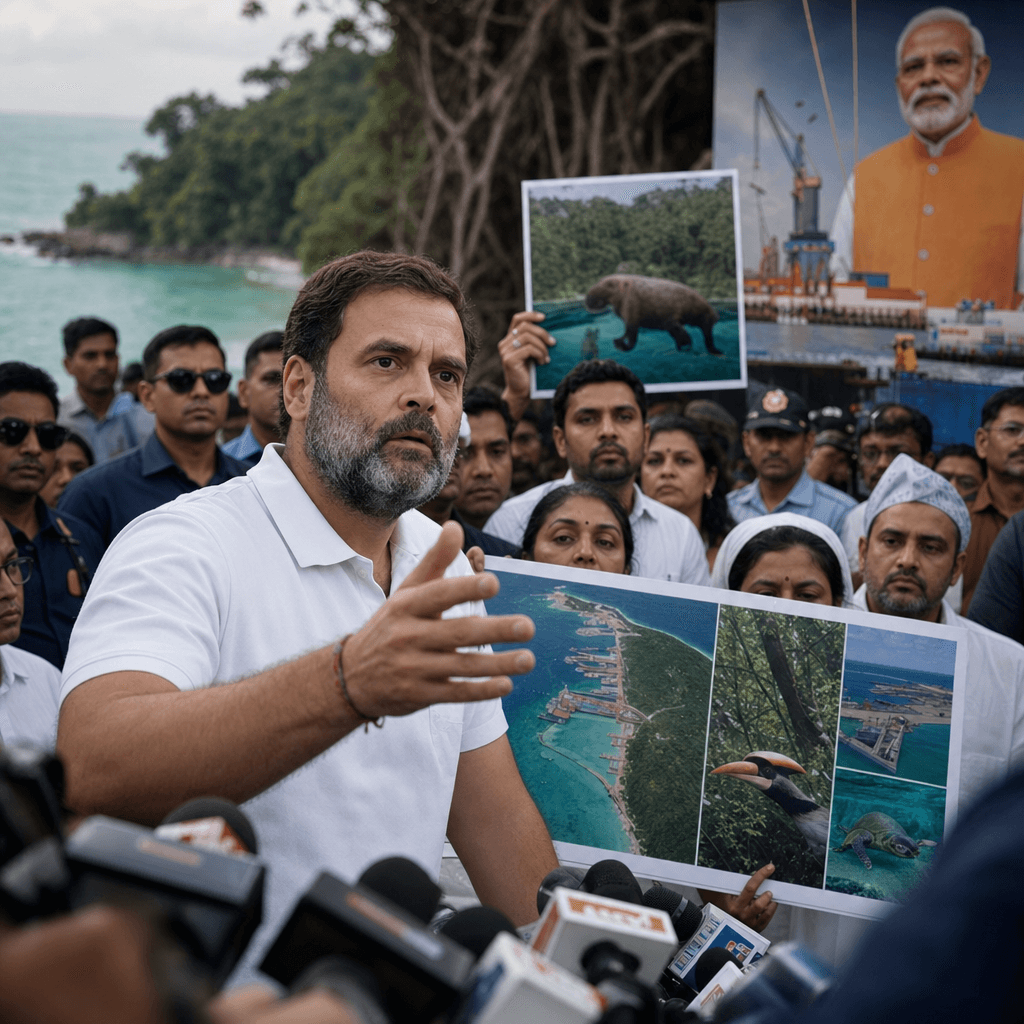
Gandhi Challenges Modi's Nicobar Project
Rahul Gandhi escalates his campaign against the Great Nicobar project, targeting Modi and turning it into a flashpoint in India's environmental politics debate.

India
Modi’s Australia Visit Signals a Quad Reset
Modi's upcoming visit to Australia signals a strategic reset of Quad ties, deepening India-Australia cooperation as the bloc recalibrates against rivals.
India
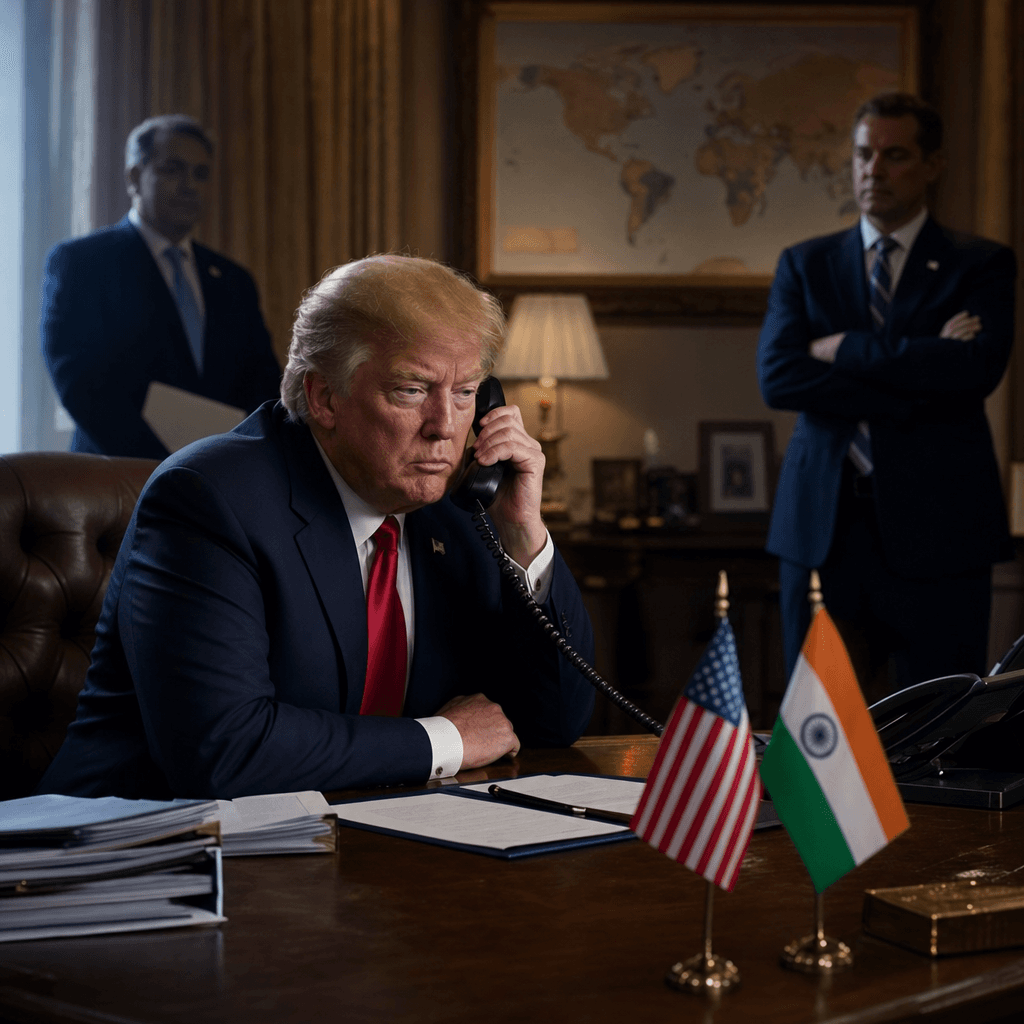
Trump’s Delhi Phone-In Signals Thaw
Trump's phone call to India signals a strategic thaw with Modi's government, hinting at warmer US-India relations even as unresolved trade tensions cloud ties.
India
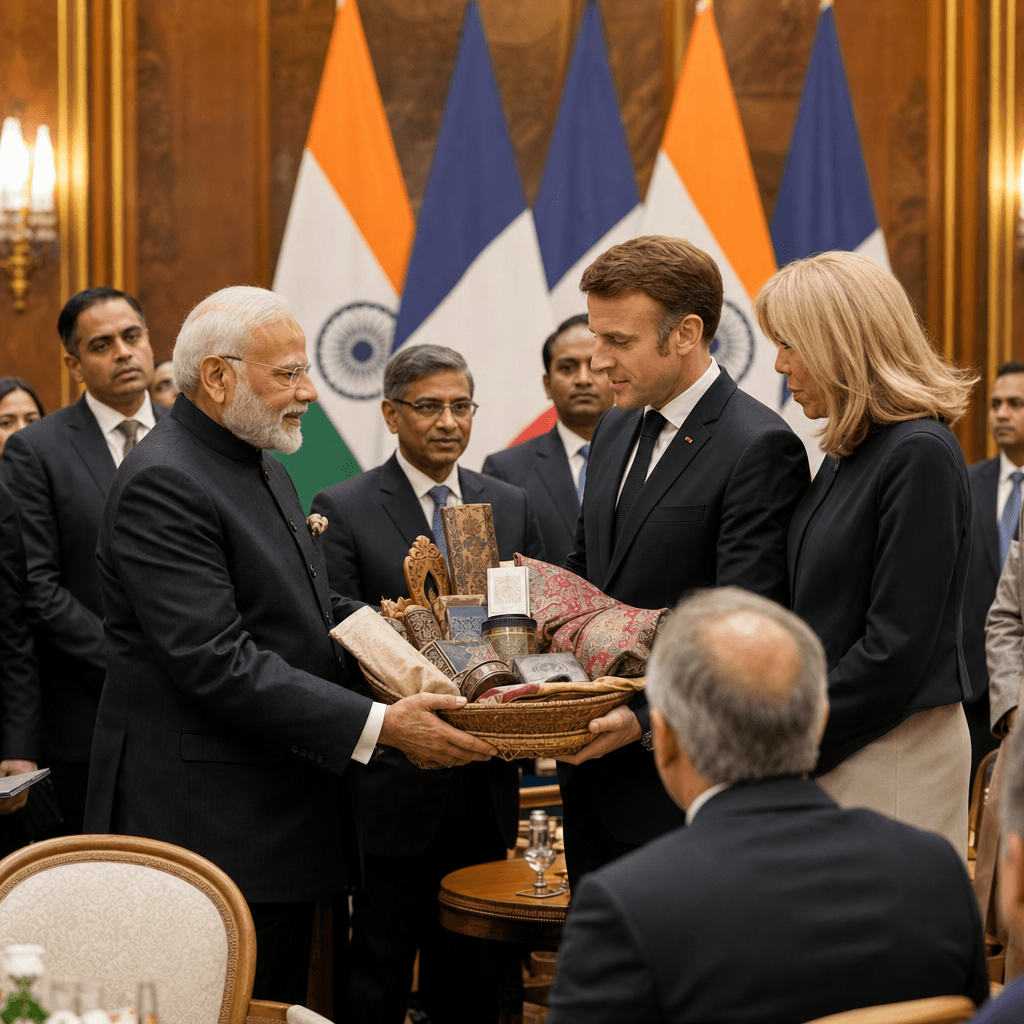
Modi's Gift Diplomacy Boosts India's Global T
Modi's gift diplomacy is turning India's regional brands and cultural heritage into trade leverage, showcasing local craft while courting deeper economic ties.