Modi's Address Faces Opposition Backlash
Modi's speech on women's reservation bill ignites backlash and electoral shifts.
Model Diplomat8 min readIndia
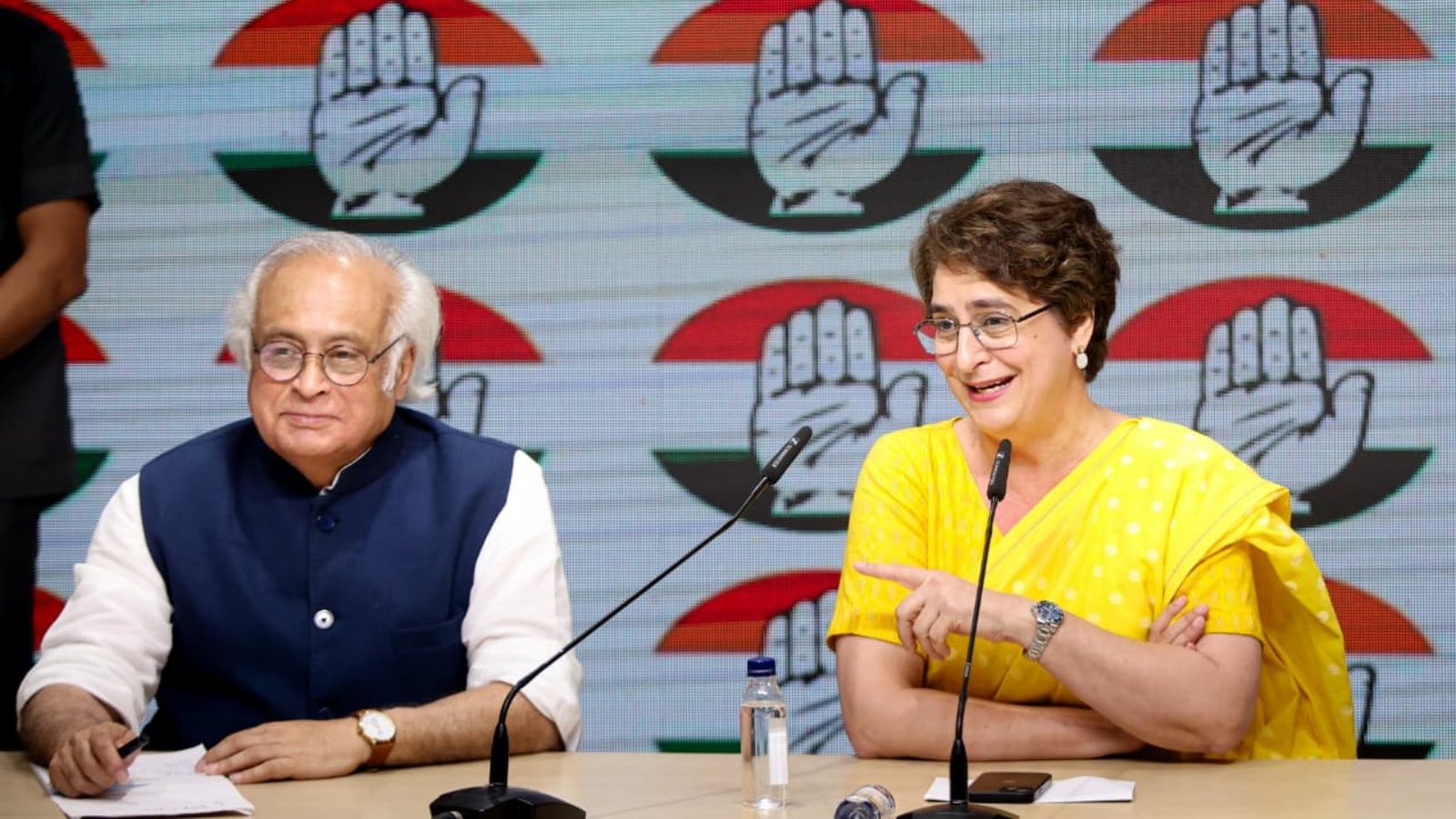
Modi's Address Faces Opposition Backlash After Quota Bill Defeat
Modi's televised address on the failed women's reservation bill has triggered a 700-signatory ECI complaint and — six weeks later — a Bengal victory that vindicates the gamble.
Narendra Modi lost a constitutional vote on April 17, 2026, then went on state television the next night and called the opposition parties that killed it guilty of "foeticide." Two months on, that broadcast has produced a Model Code of Conduct complaint signed by more than 700 citizens, the first sustained opposition unity of his 12-year tenure — and, awkwardly for his critics, a landslide BJP win in West Bengal and the collapse of the DMK in Tamil Nadu. The address that opposition leaders branded a "distress speech" now looks, in hindsight, like the most consequential campaign move of Modi's third term.
What Modi actually said, and why it lit a fuse
The trigger was the Constitution (131st Amendment) Bill, 2026 — the government's plan to activate the 2023 Nari Shakti Vandan Adhiniyam by tying the 33% women's quota to a delimitation exercise that would expand the Lok Sabha from 543 to 850 seats. It fell 298–230 in the Lok Sabha on April 17, well short of the two-thirds majority Article 368 requires, according to the Press Information Bureau. It was the first constitutional amendment defeated on Modi's watch, per the
NUS Institute of South Asian Studies.
The next evening, in a roughly 30-minute broadcast carried by Doordarshan and private channels, Modi apologised to India's women — "I seek forgiveness from all mothers and sisters" — and then turned on the opposition. "The opposition has committed a sin by opposing women's reservation and they will surely be punished for this," he said, as reported by ISAS. He named the Congress, DMK, TMC and Samajwadi Party specifically, according to the account carried by
BBC Hindi.
The Congress response was immediate. Party president Mallikarjun Kharge called it "a distress address rather than a national address," saying "a desperate and frustrated Prime Minister, with nothing meaningful to show for the last 12 years, turned an official address to the nation into a political speech full of mudslinging and outright lies," as Scroll.in reported. Rahul Gandhi, the Leader of the Opposition, told a rally in Tamil Nadu that Modi and Home Minister Amit Shah "lied to the nation" about a bill whose real purpose "was not women's reservation — it was to change India's electoral map," according to
BBC Hindi.
The 700-signatory complaint — and why it matters more than the language
Forty-eight hours after the broadcast, more than 700 citizens — led by right-to-information activist Anjali Bhardwaj — filed a formal complaint with Chief Election Commissioner Gyanesh Kumar. As documented by The Week, the signatories argued that Modi's "use of official government machinery and mass media" for what "amounted to electioneering and partisan" content constituted a "clear and blatant violation" of Clauses 1(a), 1(b) and 4 of Section VII of the Model Code of Conduct.
The Model Code of Conduct — a set of guidelines published by the Election Commission and enforced from the moment poll dates are announced — specifically bars the party in power from using state media for campaign advantage, per the Election Commission of India. The Tamil Nadu and West Bengal assembly polls were, at that moment, days away.
The complaint's real ask is subtler than a rebuke. It demands that, if the address was cleared by the ECI in advance, opposition parties be given equal broadcast time; if it was not, the speech be scrubbed from all government platforms. That is the ECI's live procedural test, and the outcome will set a precedent for how prime ministerial addresses can be used during state polls.
The historical parallel is unflattering for the Commission. When identical complaints were filed against Modi's "infiltrators" rally in Rajasthan in April 2024, the ECI, according to Al Jazeera, took no action against the prime minister directly, instead issuing a mild notice to BJP president J.P. Nadda. Two years and one credibility crisis later, the Commission's authority has eroded further: opposition parties in August 2025 openly floated an impeachment motion against Chief Election Commissioner Gyanesh Kumar over the Bihar voter-roll purge, per the
BBC. CSDS survey data cited in the same report showed sharp declines in public trust in the ECI across six states between 2019 and 2025. A finding against Modi's April 18 broadcast would be, in that context, historic. A finding for him — or silence — would deepen the trust deficit.
The southern federalism problem hiding behind the quota
The reason the bill was defeated, and the reason the address landed so badly, is that neither had much to do with women. The 131st Amendment bundled the quota with delimitation based on the 2011 census, tripling the Lok Sabha's size and — critics argued — shifting parliamentary weight toward the Hindi-belt states that vote BJP.
Tamil Nadu, Kerala, Karnataka, Andhra Pradesh and Telangana produced roughly 30% of national GDP with slower population growth. Under a 2011-census delimitation, they stood to lose relative parliamentary influence, as Al Jazeera reported ahead of the special session. Tamil Nadu's then chief minister M.K. Stalin publicly burned a copy of the bill and called delimitation a "massive historic injustice," per the
BBC. Arghya Sengupta of the Vidhi Centre for Legal Policy told the BBC that the bill's numbers were internally incoherent — 850 seats had no obvious proportional basis in the 1971 or 2011 census counts, and state assemblies were not being expanded to match.
Rahul Gandhi framed the entire package as "an attempt to seize power through delimitation and gerrymandering," according to Al Jazeera. Home Minister Amit Shah's floor concession — a promise of a uniform 50% seat increase per state — was not written into the draft bill, and no southern party moved.
The move that actually worked
Here is the second-order effect the opposition did not price in. Modi's national address was not, primarily, a defence of the failed bill. It was the opening salvo of the West Bengal and Tamil Nadu campaigns.
Three weeks later, on May 4, 2026, the Election Commission's results delivered a verdict that reframes everything. In West Bengal, the BJP won 207 of 294 assembly seats, ending Mamata Banerjee's 15-year rule and completing the party's long march into eastern India, as the BBC reported. It was the BJP's first-ever government in Bengal, and the party's vote share crossed 44%. In Tamil Nadu, film star Joseph Vijay's two-year-old Tamilaga Vettri Kazhagam took 108 of 234 seats and pushed the DMK to 59, with Stalin himself losing his Kolathur seat, per NUS
ISAS analysis. The Congress-led UDF took Kerala, ending the last Left-run state government in India; the BJP retained Assam for a third term, according to the same analysis.
The women's vote moved. The Lokniti-CSDS post-poll surveys the BBC cited showed Banerjee had built a 50% female support base in 2021 that the BJP systematically eroded through 2026 by pairing welfare promises with the "opposition killed women's reservation" narrative Modi launched on April 18. In Tamil Nadu, women and younger voters were the decisive TVK cohorts, per
ISAS — a coalition that, whatever its motivations, ended DMK dominance in the state most vocally opposed to delimitation.
The blunt reading is this: the "distress address" delivered the second-largest electoral prize the BJP has ever won. As NPR put it, the West Bengal outcome is expected to "boost Modi's standing and strengthen his position midway through his third term."
Who benefits, who loses
The named winners are Modi personally, Amit Shah (who ran the Bengal campaign), and the BJP's central organisation, which now governs the eastern seaboard. The losers are Banerjee, Stalin, and — quietly — the constitutional convention that a Prime Ministerial address to the nation is not a party political broadcast. The INDIA bloc, which staged its most disciplined floor operation since 2014 to kill the 131st Amendment, was electorally punished for the discipline.
The women's reservation itself is now indefinitely stranded. The 2023 Nari Shakti Vandan Adhiniyam remains law but cannot activate without delimitation, and the opposition will not accept delimitation based on the 2011 census. The next completed census — launched in April 2026, per Al Jazeera — will take at least a year to conduct and years more to process. Women's representation in the Lok Sabha remains at 14%, per the same source. That is the policy cost of the political win.
The subtler loser is the Election Commission. Whether it rules against Modi or lets the 700-signatory complaint die on the docket, its credibility takes another hit. Former Chief Election Commissioner S.Y. Quraishi wrote in the Indian Express that "the perception of impartiality is as important as its reality" — and neither is holding up.
What to watch next
Three catalysts sit on the near horizon. The ECI has not, as of July 7, 2026, publicly adjudicated the April 20 complaint; any ruling or non-ruling will be the first test of Chief Election Commissioner Gyanesh Kumar's willingness to act on a prime ministerial broadcast. The monsoon session of Parliament — where the Cockroach Janta Party street movement plans to lobby MPs over the CBSE and NEET paper leaks that have dominated news since June, per Al Jazeera — will show whether the INDIA bloc can rebuild floor coordination after Bengal and Tamil Nadu. And the government's next attempt to reintroduce the 131st Amendment, likely paired with fresh census timelines, will reveal whether the BJP now has the arithmetic — or wants to keep the political wound open through 2029.
Diplomat View
The evidence points one way: the "backlash" narrative around Modi's April 18 address has been overtaken by the results. The opposition and 700 signatories are right on the constitutional point — using state television 48 hours after a floor defeat to accuse rival parties of "sin" and "foeticide," days before assembly elections, is a textbook MCC breach. They are wrong on the politics. Modi's calculation — that publicly branding the opposition as saboteurs of women's rights would move female voters in Bengal and split the anti-BJP field in Tamil Nadu — worked. The forecast to watch: if the ECI issues no substantive ruling on the complaint by the end of the 2026 monsoon session, and if the government reintroduces the amendment without census-linked delimitation, then April 18, 2026 becomes the template for how third-term Modi campaigns — an official address as opening bid, a floor defeat as feature not bug. Falsification condition: an ECI censure with teeth, or a coordinated INDIA-bloc counter-broadcast on equal-time grounds. Neither looks likely from where the numbers stand today.
The Bottom Line
Modi lost a constitutional vote and won a subcontinent. The opposition's outrage over the April 18 address is legally sound and politically irrelevant — the same speech that produced a 700-signatory ECI complaint also produced the BJP's historic Bengal breakthrough and the collapse of the DMK. India's women's reservation is now stranded until a delimitation the opposition will not accept, and the Election Commission faces a test of nerve it has repeatedly failed. The address was not a distress signal. It was the opening move of the 2029 campaign.
Discover more
India
Gandhi Challenges Modi's Nicobar Project
Rahul Gandhi escalates his campaign against the Great Nicobar project, targeting Modi and turning it into a flashpoint in India's environmental politics debate.

India
Modi’s Australia Visit Signals a Quad Reset
Modi's upcoming visit to Australia signals a strategic reset of Quad ties, deepening India-Australia cooperation as the bloc recalibrates against rivals.
India
Trump’s Delhi Phone-In Signals Thaw
Trump's phone call to India signals a strategic thaw with Modi's government, hinting at warmer US-India relations even as unresolved trade tensions cloud ties.
India
Modi's Gift Diplomacy Boosts India's Global T
Modi's gift diplomacy is turning India's regional brands and cultural heritage into trade leverage, showcasing local craft while courting deeper economic ties.