Modi's Foeticide Analogy on Women's Bill
A strategic move ahead of state elections in India
Model Diplomat8 min readIndia
Modi's 'Foeticide' Analogy on the Women's Bill Was Never About Women
Modi called the Lok Sabha's 298–230 defeat of the women's quota bill a "foeticide" — a line calibrated for Bengal and Tamil Nadu polls five days later.
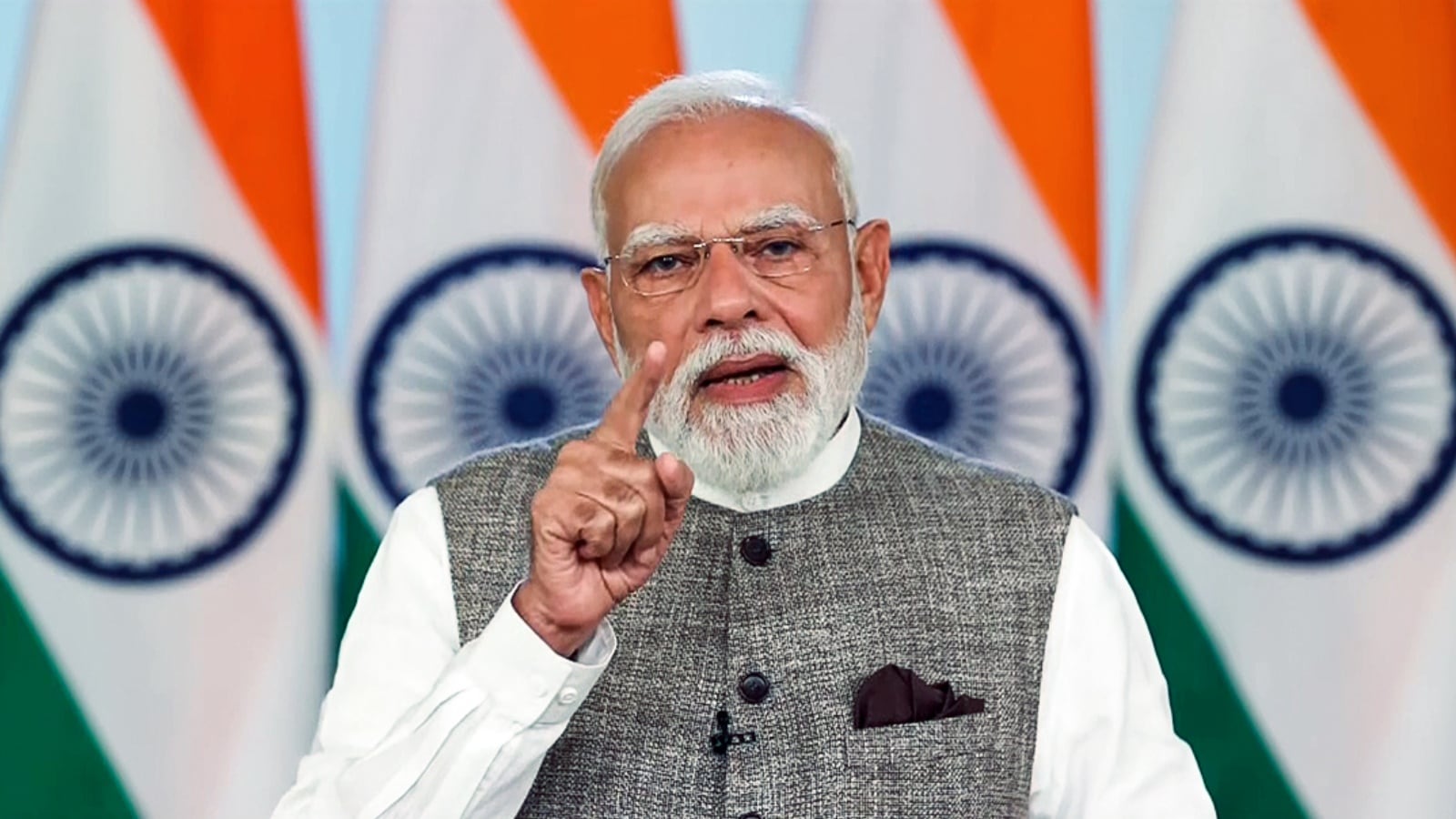
On April 18, 2026, one day after the Constitution (131st Amendment) Bill fell 298–230 in the Lok Sabha, Prime Minister Narendra Modi went on national television and accused the Congress, DMK, Trinamool Congress and Samajwadi Party of committing "foeticide" of women's political rights. The line was not spontaneous grief. It was campaign infrastructure. The bill was designed for a vote his government could not win — 62 short of the 360 needed for a two-thirds majority — days before polling opened in West Bengal and Tamil Nadu, states the Bharatiya Janata Party (BJP) had targeted for a generation. The defeat was more electorally useful to Modi than passage would have been, and the "foeticide" framing was the payload.
That reading is now hard to avoid. On May 4, 2026, results delivered the BJP a first-ever majority in West Bengal and swept the DMK from power in Tamil Nadu, according to Al Jazeera. Modi's rhetorical weapon travelled the last mile of both campaigns.
What actually happened in Parliament
The government convened a three-day special session between April 16 and 18 to move three linked bills: the Constitution (131st Amendment) Bill, 2026; the Delimitation Bill, 2026; and the Union Territories Laws (Amendment) Bill, 2026. Lok Sabha Speaker Om Birla told reporters at the session's close that the three were debated for 21 hours and 27 minutes, with 131 members participating — but that "the Constitution Amendment Bill was not passed by the House", according to the Press Information Bureau.
The package would have raised the Lok Sabha's maximum strength from 550 to 850 seats, allocated up to 815 to states and 35 to Union Territories, and — critically — removed the constitutional requirement to reapportion after every census, according to the Carnegie Endowment for International Peace. It also aimed to operationalise the 2023 Nari Shakti Vandan Adhiniyam — the 33% women's quota already on the books but not yet in force. In effect: a 50% expansion of Parliament, with the new seats functioning as the pool for women's reservation.
The NUS Institute of South Asian Studies notes this was the first constitutional amendment to fail under Modi — a first-of-its-kind defeat in twelve years — and that the entire opposition united against the government for the first time since 2014.
The number the government could count
The arithmetic was never in doubt. The National Democratic Alliance held 293 seats in the Lok Sabha; a two-thirds majority requires 360, Al Jazeera reported at the session's opening. Absent a formal deal with at least two of Congress, DMK, TMC and Samajwadi Party, the bill would fall. No such deal existed — because none was attempted. The ISAS analysis is blunt: the bill was introduced "without any prior consultation with opposition parties or floor management" and days before assembly elections in Tamil Nadu and West Bengal, when a monsoon session would have been the natural vehicle.
Home Minister Amit Shah's concession — that the government was "willing to include provisions related to a proportionate increase in the number of seats in each state by 50 per cent" — came only in his closing speech, minutes before the vote. Carnegie's Milan Vaishnav records Shah quipping he could "in half an hour" write an amendment guaranteeing no state's share would decline. He did not. The bill went to a division without it.
The trigger for the analogy
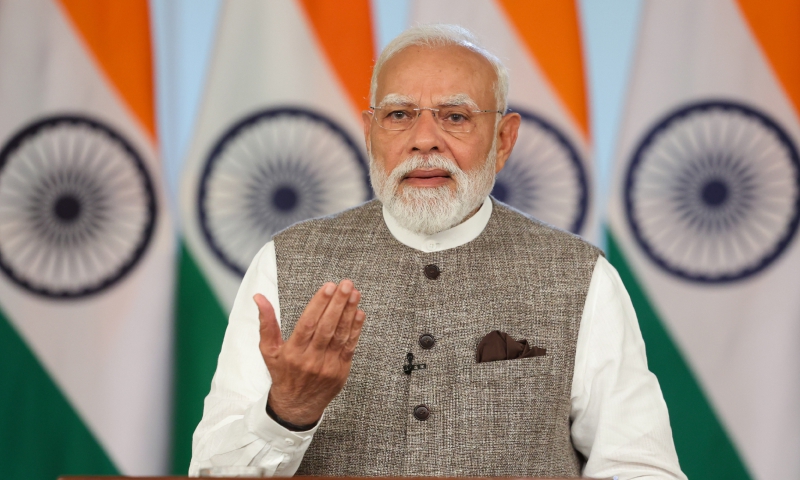
In his April 18 address to the nation, Modi apologised "to all the mothers and sisters of the nation" and said the opposition had committed a "sin" that women voters would "never forgive". According to the Prime Minister's Office readout, he declared: "Women may forget everything else, but they never forget an insult to their pride."
The "foeticide" line was named at The Tribune,
NDTV and
The News Minute within hours. The prime minister named the Congress, DMK, TMC and Samajwadi Party — the four parties whose bases sit in states going to the polls in the immediate cycle or the next.
Why "foeticide" — and why now
The word is not neutral in Indian public life. India banned prenatal sex determination in 1994 under the Pre-Conception and Pre-Natal Diagnostic Techniques Act, and successive governments — including Modi's own Beti Bachao Beti Padhao campaign — have used "female foeticide" as the moral centrepiece of the sex-ratio debate. The Ministry of Statistics and Programme Implementation's most recent
Women and Men in India publication reports the sex ratio at birth rose from 904 in 2017–19 to 917 in 2021–23 — still 83 girls short of parity per thousand boys, an improvement Modi's ministers routinely credit to their enforcement of the Act.
Two things follow. First, the analogy is doing rhetorical work no other Indian political metaphor can: it fuses a bill defeat with the most viscerally condemned category of gendered violence in Hindi-belt political vocabulary. Second, it puts the opposition in the same moral bracket as unregistered ultrasound clinics — a bracket the government has spent a decade building.
The rhetorical choice has critics inside the women's rights community. The Observer Research Foundation has argued that the state's habitual use of "foeticide" rather than "sex-selective abortion" — even on official awareness posters — "veers dangerously close to an anti-abortion position itself". A prime-ministerial speech that treats a parliamentary division as the moral equivalent of killing an unborn girl is not a rhetorical drift; it is a doctrine.
Who benefits, who loses
The bill's defeat produced four outcomes, in this order.
One: the BJP acquired a 30-day campaign line — "they killed women's rights" — that its cadre carried into West Bengal and Tamil Nadu rallies. Senior journalist Sharad Gupta told the BBC the government "brought this bill in the middle of elections because it wanted to secure more women's votes in West Bengal", per BBC Hindi.
Two: the DMK, TMC, Congress and SP inherited the position of defending a defeat their voters do not fully understand. Rahul Gandhi's argument — that the bill was "an attempt to change the country's electoral map, using and hiding behind India's women", quoted in ISAS's summary — is analytically precise and rhetorically weak.
Three: the Modi government preserved the status quo on delimitation, which Carnegie notes cannot proceed until the ongoing 2027 census is completed and its data published. In effect, southern states escape reallocation and the BJP escapes the political blame for it, while still owning the "we tried" line.
Four: results on May 4, 2026 delivered the BJP its first majority in West Bengal — 200 of 294 seats on early trends, per Al Jazeera — and ended the DMK's rule in Tamil Nadu. The BBC's post-poll analysis notes women, once the "backbone" of the TMC's coalition, split evenly this time; the BJP took roughly 42% of women's votes in Bengal against the TMC alliance's 47%, according to
BBC Hindi's post-poll survey summary.
That is not causation. Anti-incumbency, the Special Intensive Revision that disenfranchised nearly nine million Bengal voters, and Hindu consolidation all mattered more. But the "foeticide" line was the campaign's opening chord in a two-state theatre where women voters had become the decisive bloc — a bloc The Economist had, four days before the vote, called the "centre of campaigning".
The primary text
The Prime Minister's Office record of Modi's Lok Sabha speech on April 16 contains a line rarely quoted in the coverage that followed. According to the official PMO transcript:
"Since the discussion on women's reservation began, in every election that followed, those who opposed granting this right to women were never forgiven by the women of the country. They were dealt with harshly."
Read in April, this was a warning to the opposition. Read on May 4, it is a stated theory of the case: that women voters punish the perceived obstructor, that the BJP had structured the special session so that the obstructor would not be the BJP, and that the defeat itself was the ammunition. The analogy that followed on April 18 was the tracer round.
The counter-argument, and where it holds
The opposition's technical case is strong. The 2023 amendment already ties women's reservation to a fresh census and delimitation — a sequencing Carnegie describes as binding "two distinct reforms together". The 131st Amendment would have loosened that link, effectively handing Parliament discretion over which census to use. The Vidhi Centre for Legal Policy's Arghya Sengupta told the BBC that the proposed cap of 850 seats had no clear proportional basis and produced a mismatch: fast-growing states could gain more MPs without a corresponding rise in state legislators. Takshashila Institution's own analysis called the bill's expansion logic
"a soften[ing] of the political problem of apportionment" that would worsen Parliament's institutional effectiveness.
None of that survives a 60-second campaign ad in Bengali or Tamil that says "they killed the women's bill". Modi's team knew this. The DMK and TMC now know it too — one from the opposition benches, the other from Kolkata's exit.
What to watch
- The 2027 census timeline. Delimitation is legally blocked until the results are published, per Carnegie. Any government attempt to reintroduce the 131st Amendment before then would repeat the April 2026 defeat — unless the BJP secures a two-thirds majority in the 2029 Lok Sabha, which is now its stated ambition.
- Bihar assembly election (October–November 2026 window). The next test of whether the "foeticide" frame moves women voters outside Bengal and Tamil Nadu. The Rashtriya Janata Dal is on Modi's April 18 list by omission — a signal the BJP will re-deploy the line there.
- A monsoon session reintroduction. Watch whether the government files a narrower bill decoupling women's reservation from delimitation. If it does, the political premise of the April defeat collapses. If it does not, the analytical conclusion is that passage was never the point.
Diplomat View
The foeticide analogy is not a Modi excess. It is a template. The prime minister has now demonstrated that a bill designed to fail — introduced without floor management, at a moment structurally hostile to bipartisan support, in the fortnight before decisive state polls — can be worth more in defeat than in victory, provided the language of the loss is engineered in advance. That template will be reused. The falsifiable prediction: if the BJP re-tables women's reservation in the 2026 monsoon session as a clean, decoupled bill, this analysis is wrong and the government genuinely wanted the quota. If it does not, and the next reintroduction again yokes reservation to delimitation ahead of a major state cycle — Bihar in late 2026, Uttar Pradesh in 2027 — then April 2026 was the pilot, and the "foeticide" line was the manual. The condition for revision is a monsoon-session bill without the delimitation package. Six months on the clock.
Discover more

India
INDIA Bloc's Delimitation Strategy
The INDIA bloc is using delimitation and women's reservation to challenge the BJP's federalism narrative, setting up a high-stakes fight over representation.
India
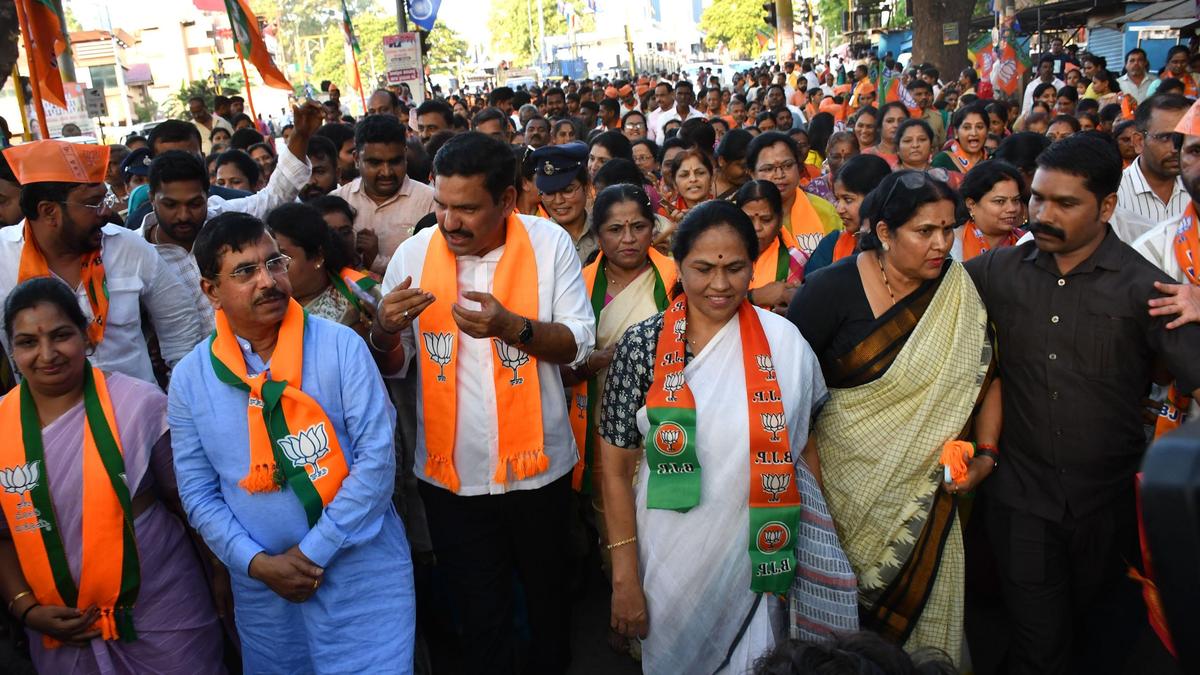
BJP Uses Hubballi Protests for Women's Quota
The BJP is using Hubballi protests to pin blame for delays on women's reservation onto Congress in Karnataka, sharpening its women's quota political offensive.
India
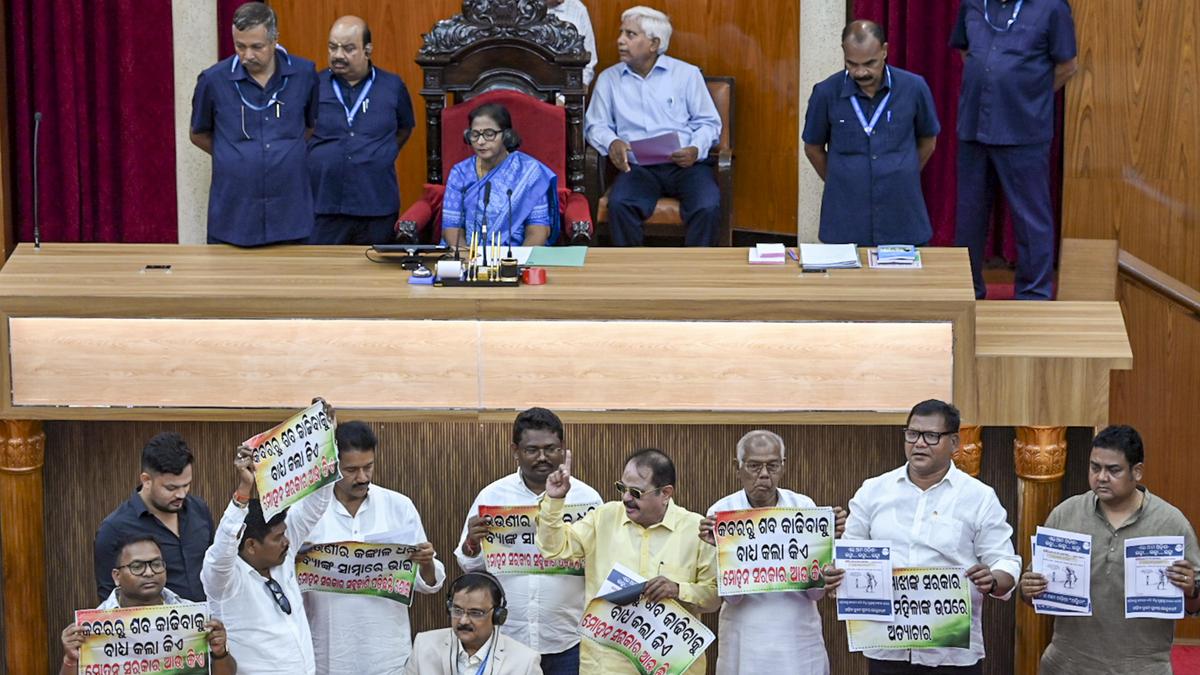
Odisha's Women's Reservation Debate
The fight over women's reservation in Odisha is shaping up as a calculated BJP and BJD strategy aimed squarely at gaining ground before the 2029 elections.
India
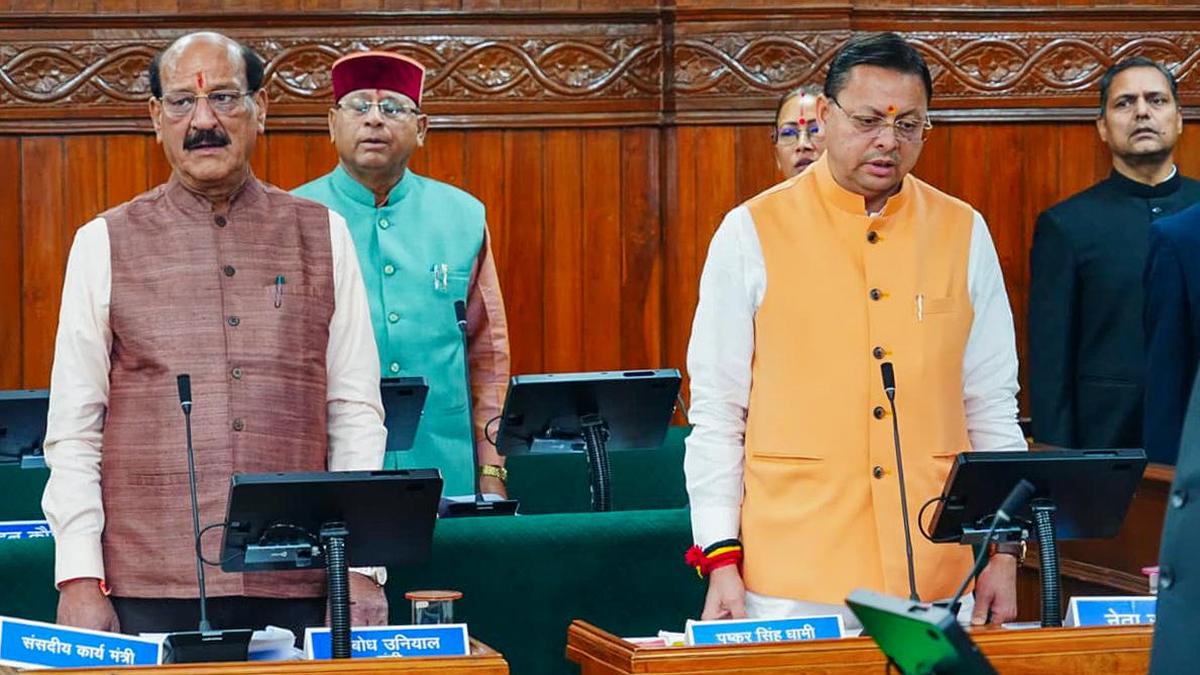
Uttarakhand's Push for Women's Reservation
Uttarakhand CM Dhami's push for women's reservation is a strategic political move that follows national defeat and aims to reclaim momentum for the BJP.