Modi Warns Opposition on Women’s Quota Bill
Voters in Tamil Nadu and West Bengal respond to Modi's warning.
Model Diplomat8 min readIndia
Modi's Women's Quota Warning: Why the 131st Amendment Backfired
After Modi's April warning that opposition MPs would 'pay a price for a long time,' Tamil Nadu and West Bengal voters answered — and the answer was not the one BJP expected.
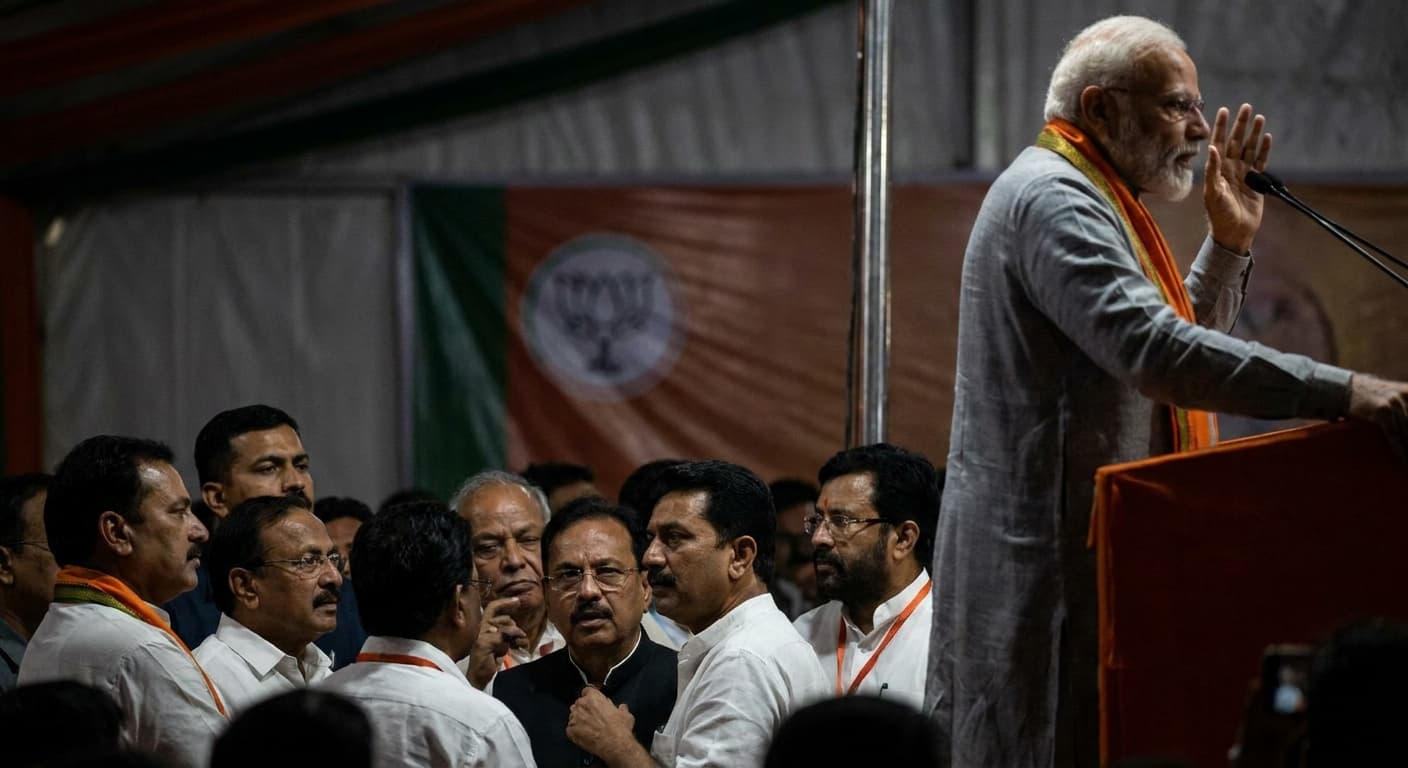
On April 16, 2026, Prime Minister Narendra Modi rose in the Lok Sabha, told the opposition he was "offering you a blank cheque of credit," and warned that "the women of India will not forgive" anyone who blocked the Constitution (131st Amendment) Bill. Twenty-four hours later, 230 MPs voted against it — the first constitutional amendment defeated in his 12-year tenure, and the political price he warned about was paid, in the state elections that followed three weeks later, mostly by his own alliance. The women's quota was the wrapper; the fight was always about redrawing India's political map.
What Modi actually said, and what he actually asked for
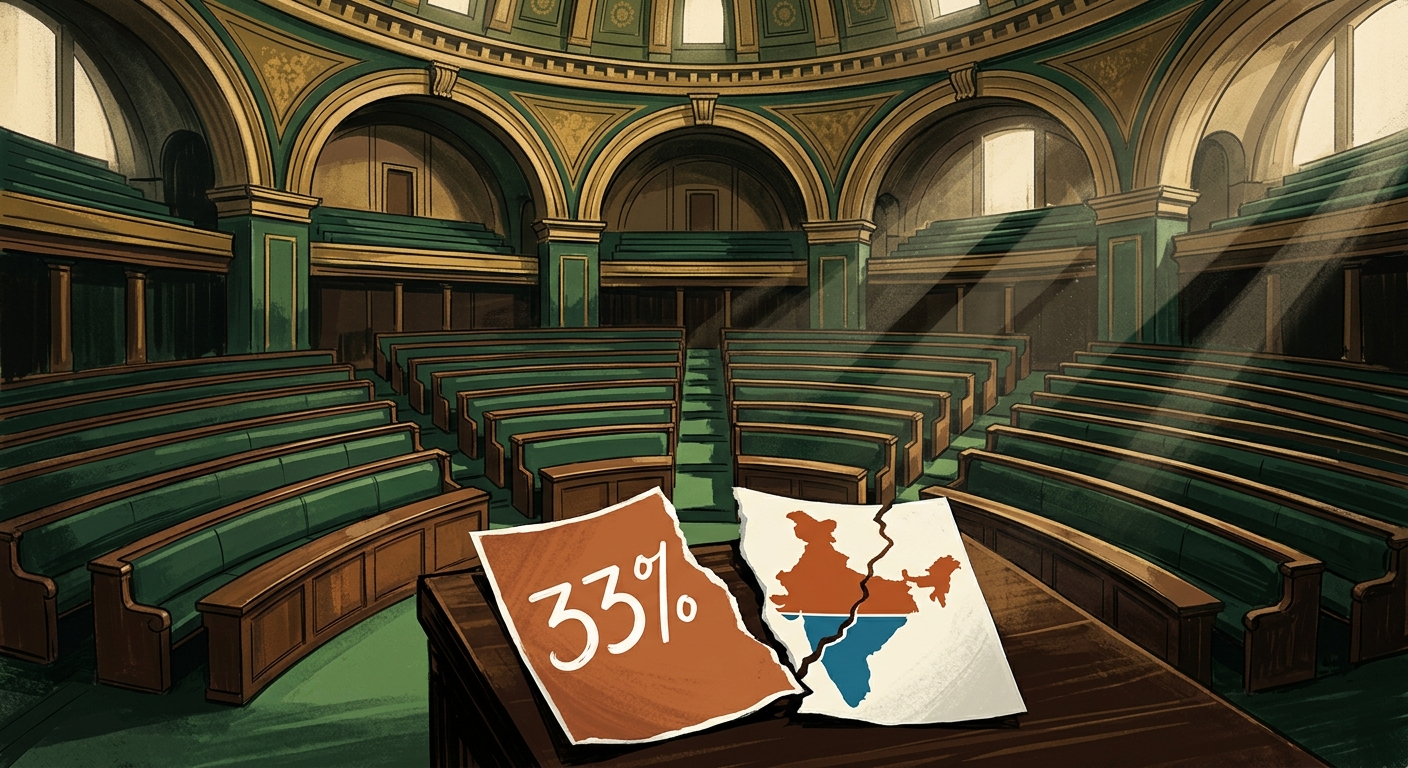
The special session Modi convened from April 16–18, 2026, was pitched as the operational rollout of the Nari Shakti Vandan Adhiniyam — the 106th Constitutional Amendment passed in 2023 reserving one-third of Lok Sabha and state assembly seats for women. In practice, the government tabled three bills at once: the Constitution (131st Amendment) Bill, the Delimitation Bill, and the Union Territories Laws (Amendment) Bill. According to Al Jazeera, the package would have raised the Lok Sabha's ceiling from 543 to 850 seats, based delimitation on the 2011 census, and made women's reservation effective from the 2029 general election.
Modi's rhetoric was uncharacteristically pleading. He told the House the reform would inject "a sensitivity" into Parliament and urged MPs not to give the bills "a political colour," in remarks carried by BBC News. The Indian Express reported his blank-cheque offer and his direct warning that women voters would not forgive obstruction, per
The Indian Express. Home Minister Amit Shah did the arithmetic: under a uniform 50% seat expansion, the southern states' share would move from 23.76% to 23.87%, per the
Press Information Bureau — a change of, effectively, nothing.
The bill failed anyway. On April 17, 298 members voted in favour and 230 against, well short of the 360 votes needed for a two-thirds majority under Article 368(2). The Press Information Bureau recorded the defeat clinically: "no further action was taken" on the two dependent bills.
Why the opposition read the bill as a Trojan horse
The government's problem was that "women's reservation" and "delimitation" are not the same fight, and everyone in the chamber knew it.
The 2023 amendment — passed 454–2 in the Lok Sabha and unanimously in the Rajya Sabha, per BBC News — enjoys near-total political consensus. The delimitation exercise does not. India's parliamentary seat allocation has been frozen since the 1971 census, extended by the 84th Amendment until "the first census taken after 2026," as the
Carnegie Endowment noted in a post-vote analysis. Southern states — Tamil Nadu, Kerala, Karnataka and Telangana — have lower fertility rates and slower population growth than the Hindi belt; a strict population-weighted delimitation would shift dozens of seats northward. One
peer-reviewed projection estimated northern states gaining 43 seats and southern states losing 24 under fresh population data.
Modi's package tried to solve this politically by expanding the House to 850 seats rather than reallocating existing ones — so no state would lose in absolute terms. But the drafters left the guarantee in ministerial speeches, not statutory text. As Arghya Sengupta of the Vidhi Centre for Legal Policy told BBC News, the 850-seat cap "does not appear to be proportionate to population growth" between the 1971 and 2011 censuses, and there was no matching expansion of state assemblies — an asymmetry that would let fast-growing states gain MPs without proportional MLAs.
That drafting gap gave the opposition a clean line of attack. Rahul Gandhi called the package "an attempt to seize power through delimitation and gerrymandering," according to Al Jazeera. Congress MP Gaurav Gogoi accused the government of introducing delimitation "through the backdoor." John Brittas of the CPI(M) told the BBC the opposition would happily reserve 33% of seats "based on the current strength of parliament" — the offer the government refused to accept.
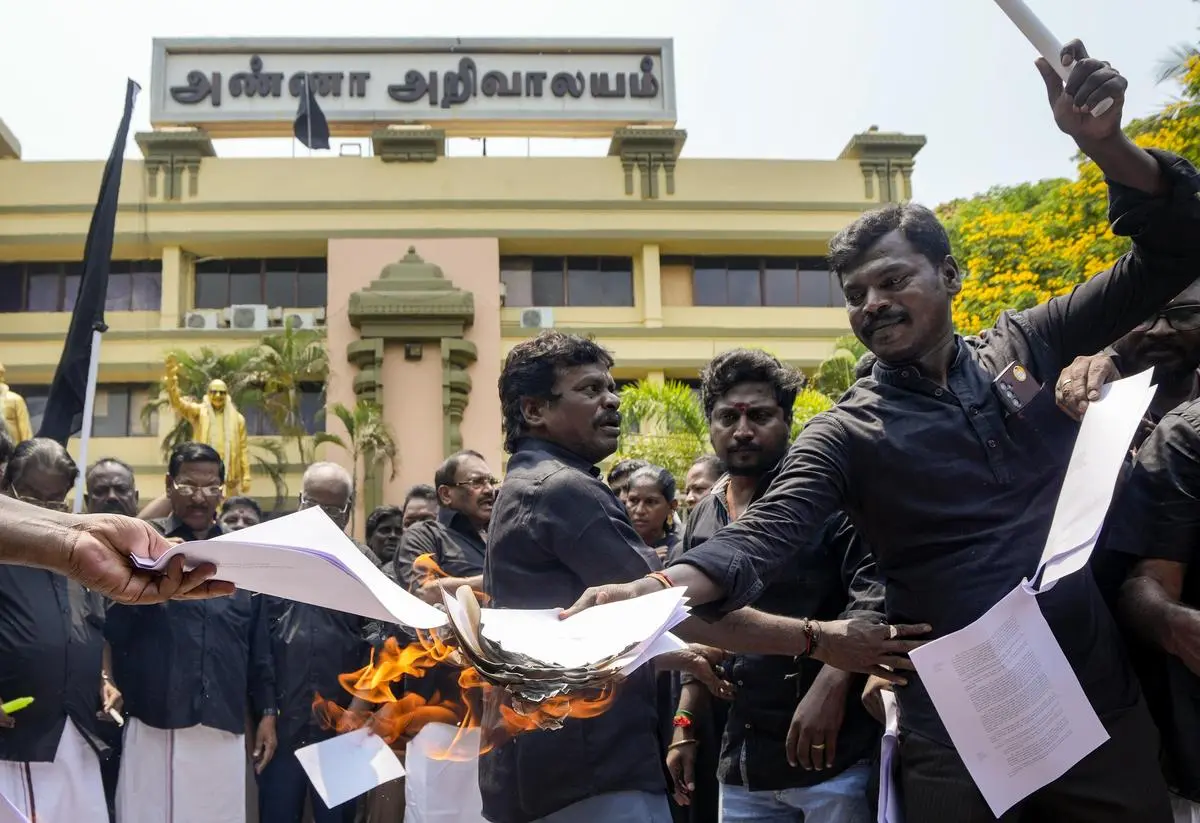
The tell was procedural. Modi called the special session days before assembly elections in Tamil Nadu and West Bengal, without prior consultation or floor management, as the NUS Institute of South Asian Studies documented. Tamil Nadu Chief Minister M.K. Stalin burned a copy of the bill and raised a black flag in Chennai. The 106th Amendment could have been implemented separately — via a caucus-level nomination commitment, a delinked delimitation timeline, or a straight one-line amendment reserving one-third of existing seats. The government chose none of these.
The electoral verdict came fast — and cut both ways
Modi's warning about women voters was falsifiable within three weeks. The results were counterintuitive.
The BJP won West Bengal in a landslide — 207 of 294 seats, ending Mamata Banerjee's 15-year rule, according to BBC News. This was the party's first-ever government in the state and, as the
NUS Institute of South Asian Studies noted, was driven principally by anti-incumbency, corruption scandals and Hindu consolidation — not by the women's quota. In Tamil Nadu, however, the picture inverted. Actor-turned-politician C. Joseph Vijay's two-year-old Tamilaga Vettri Kazhagam won 108 seats and 35% of the vote, dismantling the DMK–AIADMK duopoly, per
BBC News. Chief Minister Stalin lost his own Kolathur seat. The BJP–AIADMK alliance won a single seat.
The lesson is uncomfortable for both sides. Modi's "punishment" narrative worked in Bengal, where the local reasons were domestic and the BJP was the credible opposition. It failed in Tamil Nadu, where a new anti-BJP force displaced the old one — and where Vijay had cast the BJP as his "ideological adversary" specifically on the delimitation question. In Kerala, the Congress-led UDF ended the last Left-ruled state government in India. The BJP's national dominance grew; its southern isolation deepened.
The women's-quota argument's real electoral effect was likely marginal in both directions. Women were 14% of the 18th Lok Sabha, down from 14.7% in 2019, according to a Congressional Research Service brief on India's 2024 election. The BJP had fielded 12% women candidates that year, Congress 14% — both well below the 33% they were now blaming each other for failing to enshrine. As the ISAS noted, the BJP could have unilaterally imposed a one-third women's quota on its own candidate slates; it has not.
What Carnegie's post-mortem got right — and where it points next
The Carnegie Endowment's May 2026 analysis, "Delimitation After Defeat," made a claim that most Indian commentary missed: the 2023 amendment's own sequencing has trapped the reform. The Nari Shakti Vandan Adhiniyam ties one-third reservation to "an exercise of delimitation … after the first census taken after commencement." No fresh delimitation is legally possible until the ongoing census is published. Phase I of Census 2027 began April 1, 2026, per the
Press Information Bureau; Phase II — population and caste enumeration — is scheduled for February 2027, and the reference date is March 1, 2027, according to
BBC News.
That means the earliest realistic timeline for women's reservation to take effect is late 2028 — and only if the Delimitation Commission moves faster than any of its predecessors. The 2002 commission took five years. Even Amit Shah conceded on the floor of the House that delimitation "cannot be completed before 2029," per the Press Information Bureau. The government's own bill was, in this reading, less an implementation vehicle than a bid to pre-commit the delimitation formula while its parliamentary numbers were still strong.
That is the analytical case, made repeatedly by opposition MPs and independent think tanks including the Takshashila Institution, for reading April's exercise as delimitation-with-women's-quota-attached, not the reverse.
Diplomat View
The 131st Amendment failed because Modi tried to package two constitutional reforms of very different political weight into a single instrument requiring 360 votes he did not have. He knew this: his NDA holds 293 Lok Sabha seats. The vote was not a legislative attempt — it was a positioning exercise before four state elections, and it partly worked (Bengal) and partly boomeranged (Tamil Nadu). Our reading: the women's reservation will not take effect for the 2029 general election. The government has three moves available — delink the two amendments and pass a clean quota bill; negotiate a formula that guarantees no southern state loses either seats or share; or wait for the census, publish 2027 data, and re-table in 2028 with the opposition boxed in. The BJP's Tamil Nadu wipeout and the Bengal breakthrough push in opposite directions, but the political incentive after Vijay's rise is now to avoid another southern flashpoint before 2029. Expect option one — a delinked women's quota bill in the monsoon or winter 2026 session — if the government decides the delimitation fight is no longer worth the collateral. Watch the monsoon session agenda: if a standalone women's reservation bill appears, Modi has quietly conceded that the 131st Amendment's real target was never the quota. The forecast changes if the census concludes ahead of schedule and the government moves to delimitation-first legislation before 2028; that would confirm the sequencing critics were right all along.
What to watch
- Monsoon session 2026 (late July–August): Does the government table a delinked women's quota bill? A standalone Constitution Amendment reserving one-third of the existing 543 seats would pass unopposed and end the political argument.
- February 2027: Phase II of Census 2027 begins, including caste enumeration for the first time since 1931. OBC quota-within-quota demands, already raised by Samajwadi Party leader Akhilesh Yadav during the April debate, will return with harder data.
- Delimitation Commission constitution (post-March 2027): The composition and mandate of the next commission — and whether it uses 2011, 2021 projections, or 2027 data — will determine whether women's reservation is ready for 2029 or slips to 2034.
The Bottom Line
Modi's warning to the opposition was politically shrewd and legislatively self-defeating: by bundling a broadly popular women's quota with a fiercely contested redraw of India's political map, he handed the opposition its first successful blockade of a constitutional amendment in his 12-year premiership. The 298-to-230 vote in India exposed the real stakes — not gender representation, but whether the Hindi belt inherits the seats the south has forgone by lowering its birth rate. The women who Modi warned would not forgive have, in Tamil Nadu at least, already voted; they voted for a new party that ran explicitly against the delimitation his bill would have delivered.
Discover more

India
Modi's Nari Shakti Gambit
Modi's Varanasi speech redefines women's empowerment as a Nari Shakti gambit, blending appeals for women's votes with the contentious delimitation debate.
India
Mahila Congress Postcard Push for Women's Quo
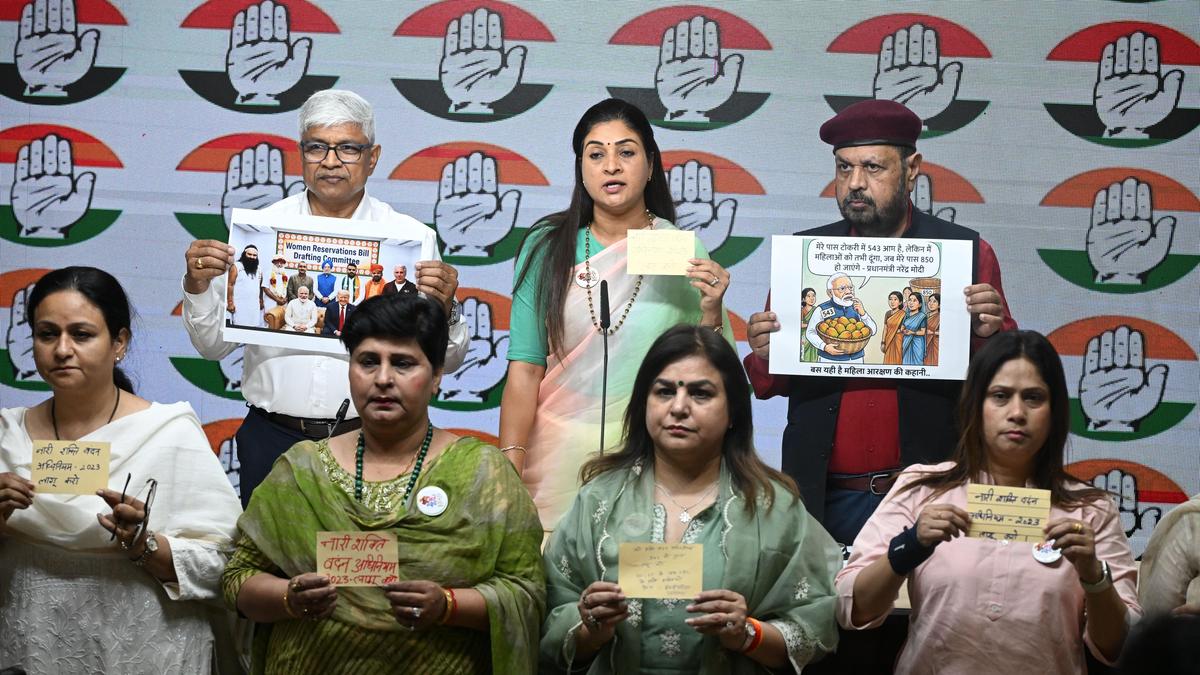
The Mahila Congress launches a postcard campaign to demand immediate implementation of the 33% women's reservation in India's Lok Sabha, targeting PM Modi.
India
Yogi Adityanath's BJP March on Women's Bill
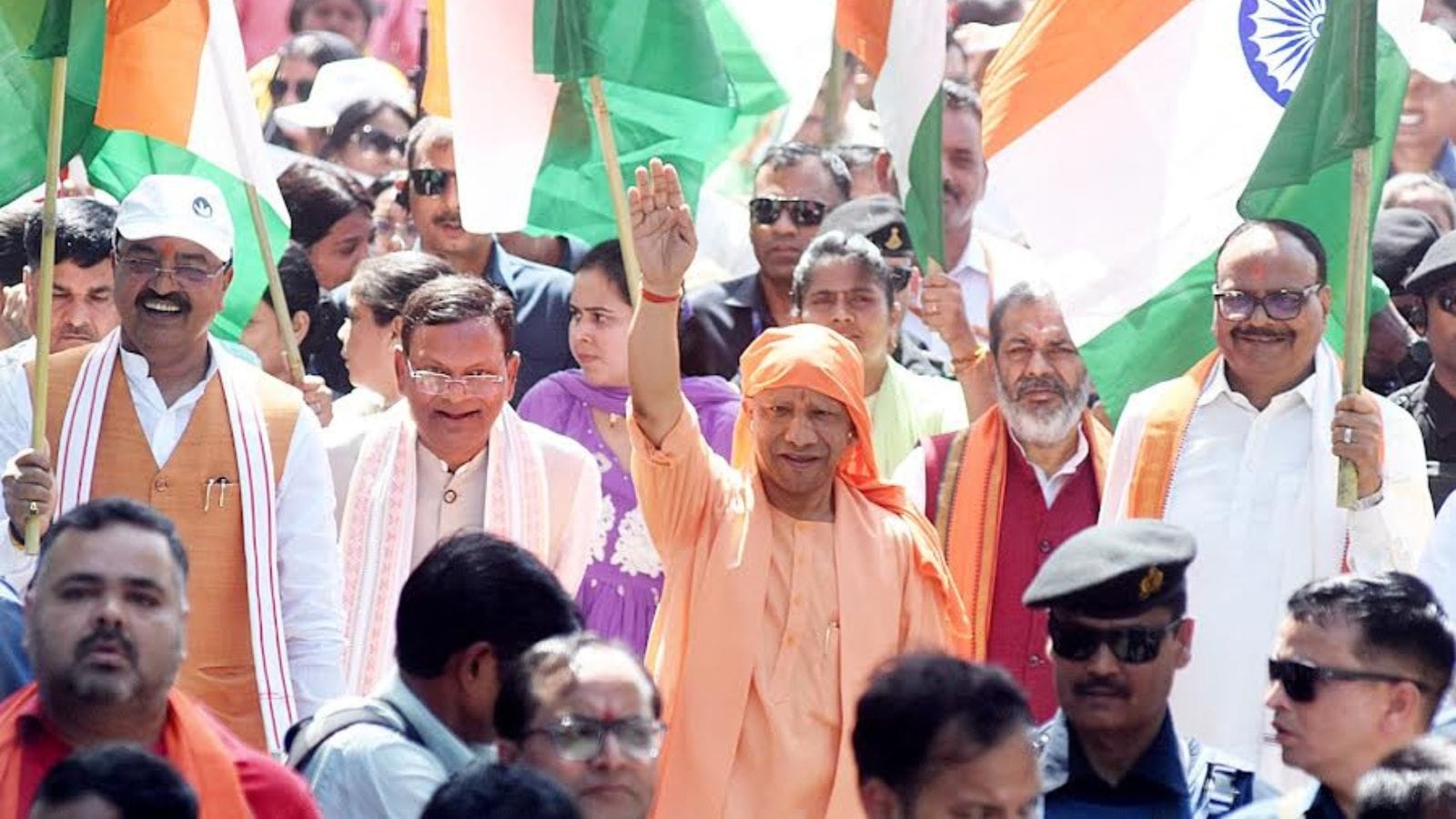
Yogi Adityanath's padyatra after the women's bill defeat aims to reshape UP's 2027 elections, targeting women's votes against the SP.
India
Women’s Reservation Bill 2026
The Constitution (131st Amendment) Bill, 2026 was defeated in Lok Sabha, revealing deeper political conflicts over women's reservation and delimitation.